
Steve Pollock
Author of Ecology (Eyewitness Books)
About the Author
Retired public school educator Steve Pollock fell in love with airliners at the age of five during a fateful encounter with a brand-new Pan Am 747. He lives in Nashville, Tennessee.
Works by Steve Pollock
Deadly Turbulence: The Air Safety Lessons of Braniff Flight 250 and Other Airliners, 1959-1966 (2014) 4 copies
Tagged
Common Knowledge
Members
Reviews

This book is fantastic. I have a soft spot for predators and a deep fear and respect of venomous and poisonous creatures. "Deadly Creatures" does an excellent job of explaining and illustrating the adaptations these creatures have that allow them to survive. The book as interactive pulls and flaps that are great to engage younger kids and that older kids would also enjoy. Who doesn't love seeing what's under the flap? "Deadly Creatures" is full of great little factoids and it succinctly and show more in understandable terms explains the mechanics behind these creatures survival techniques.
I'm not sure if I would have this book in my classroom, as it is for a younger audience, but I do really love it and if I were teaching middle school I would have it available to students. show less
I'm not sure if I would have this book in my classroom, as it is for a younger audience, but I do really love it and if I were teaching middle school I would have it available to students. show less
Pollock, S. (1996). Deadly Stings: Deadly Creatures. New York: Silver Dolphin, pp.16-17. by Steve Pollock

The author Steve Pollock discusses poisonous sea creatures who use their stings to grasp food and defend themselves. This chapter narrates the different types of deadly sea creatures like starfish, sea anemone, stonefish, Australian blue-ringed octopus, Stingrays, and etc. I prefer this topic for the middle school students in science because the pictures of the sea creatures’ physical characteristics are really exciting and interesting for discovery learning. The picture of the Australian show more blue-ringed octopus highlights how to kill a creature , such as shrimp, with tentacles which can extend above 8inches. This poisonous animal can bite and murder a person within a few minutes. Stonefish, the most poisonous fish can kill the prey with their poisonous spines and can protect themselves from sharks using their spines. The morphological characteristics of jellyfish is known as the Portuguese man of war because of their polyp and 20-foot long tentacles that can trap small sea creatures. The harpoon of a cone snail shows how to handicap the prey by using their poisonous harpoon.
Overall this topic will create various discussions and explores discovery learning in the brain of youngsters. show less
Overall this topic will create various discussions and explores discovery learning in the brain of youngsters. show less
Eyewitness: Ecology 1st edition by Pollock, Steve published by DK CHILDREN Hardcover by Steve Pollock
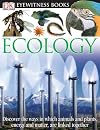
Every page is filled with information, perhaps too much information. The pages have a tendency to be a bit busy, with almost all available space on a page filled with either text (some of which is in very small font) or photographs. While the information is good and includes useful facts and information about influential people in the field such as Warder Clyde Allee and Charles Elton known as the father of ecology, the text is bland. The book is definitely meant for an older elementary show more classroom. The book could be used as a resource for a classroom when learning about the natural sciences. show less
Pollock, S. (1996). Canine and feline killers. In DEADLY CREATURES (pp. 6-7). NEW YORK: LADYBIRD BOOKS. by Steve Pollock
Steve Pollock narrates about canine and feline killers. He highlights significant features of wildcats and dogs like the species of big cats, African hyenas, cheetahs, lions, and tigers. Strength, speed, and a broad view are the elements to be a successful killer. The pictures of a cheetah’s running speed is important for the high school students because it will help explain the evolutionary theory of cheetah’s speed in relation to its flexible backbone’s curve. It helps to brainstorm show more the idea of a cheetah’s mobility when I see a picture illustrating the tough pads on the paws which help lions to increase their speed. Steve Pollock differentiates the canine teeth of dogs, lions, etc. It’s a inquiry-based topic which is based on a huge research involving feline and canine animals. I appreciate the part where Pollock discusses how leopards kill their prey and sleep on top of tree branches because it is really important for discovery learning. Students should further research on how the stalking position and crouching position of a tiger helps to catch the prey because it indirectly highlights the gradual changes of locomotory movements. show less
You May Also Like


Associated Authors
Statistics
- Works
- 23
- Members
- 536
- Popularity
- #46,471
- Rating
- 4.6
- Reviews
- 9
- ISBNs
- 71
- Languages
- 13