
John Dominic Crossan
Author of Jesus: A Revolutionary Biography
About the Author
Considered by many to be the most learned scholar on the topic of Jesus Christ, John Dominic Crossan's adversaries question how he reconciles his Catholic faith with 20th century secular study. A former priest, Crossan is the author of The Essential Jesus: Original Sayings and Earliest Images, The show more Historical Jesus: The Life of a Mediterranean Jewish Peasant, Jesus: A Revolutionary Biography; The Birth of Christianity: Discovering What Happened in the Years Immediately After the Execution of Jesus, and The Cross That Spoke: The Origins of the Passion Narrative, among others. (Bowker Author Biography) show less
Image credit: Donald Vish
Works by John Dominic Crossan
The Last Week: What the Gospels Really Teach About Jesus's Final Days in Jerusalem (2006) 1,101 copies, 15 reviews
The Birth of Christianity : Discovering What Happened in the Years Immediately After the Execution of Jesus (1998) 849 copies, 7 reviews
Excavating Jesus : Beneath the Stones, Behind the Texts: Revised and Updated (2001) 613 copies, 8 reviews
Who Killed Jesus?: Exposing the Roots of Anti-Semitism in the Gospel Story of the Death of Jesus (1995) 595 copies, 5 reviews
The First Christmas: What the Gospels Really Teach About Jesus's Birth (2007) 590 copies, 15 reviews
In Search of Paul: How Jesus' Apostle Opposed Rome's Empire with God's Kingdom (2004) 572 copies, 7 reviews
The First Paul: Reclaiming the Radical Visionary Behind the Church's Conservative Icon (2009) — Author — 559 copies, 11 reviews
Will the Real Jesus Please Stand Up?: A Debate between William Lane Craig and John Dominic Crossan (1995) 278 copies, 3 reviews
The Resurrection of Jesus: John Dominic Crossan And N.T. Wright in Dialogue (2006) — Contributor — 275 copies, 2 reviews
The Greatest Prayer: Rediscovering the Revolutionary Message of the Lord's Prayer (2010) 243 copies, 2 reviews
How to Read the Bible and Still Be a Christian: Struggling with Divine Violence from Genesis Through Revelation (2015) 173 copies, 2 reviews
A Long Way from Tipperary: What a Former Monk Discovered in His Search for the Truth (2000) 145 copies, 2 reviews
Resurrecting Easter: How the West Lost and the East Kept the Original Easter Vision (2018) 86 copies, 1 review
Render Unto Caesar: The Struggle Over Christ and Culture in the New Testament (2022) 29 copies, 2 reviews
Jesus and the Violence of Scripture: How to Read the Bible and Still be a Christian (2015) 13 copies
The Historical Jesus 3 copies
"Paul and the justice of equality" 2 copies
Violence Divine 2 copies
Jesus 1 copy
Jesus at 2000 : concluding panel: presentations and discussion [video recording] (1995) — Speaker — 1 copy
Bodily-Resurrection Faith 1 copy
The Power of the Dog 1 copy
Jesus and the Kingdom: peasants and scribes in earliest Christianity [Video recording] (1995) — Speaker — 1 copy
Mysticism 1 copy
Associated Works
The Complete Gospels : Annotated Scholars Version (Revised & expanded) (1992) — Contributor — 758 copies, 5 reviews
The Archaeology of Difference: Gender, Ethnicity, Class and the 'Other' in Antiquity. Studies in Honor of Eric M Meyers (Annual of ASOR) (2005) — Contributor — 6 copies
Dialogue: A Journal of Mormon Thought, Volume 26, Number 1, Spring 1993 (1993) — Contributor — 2 copies
The Jesus summit the historical Jesus & contemporary faith [video recording] (1994) — Panelist — 1 copy
Tagged
Common Knowledge
- Canonical name
- Crossan, John Dominic
- Legal name
- Crossan, John Dominic
- Birthdate
- 1934-02-17
- Gender
- male
- Education
- St. Eunan's College
Stonebridge Seminary
Maynooth College
Ponyifical Bible Institute
Ecole Biblioue - Occupations
- monk
priest
professor
reseacher
theologian - Organizations
- Roman Catholic Church
Servites
St. Mary of the Lake Seminary
Catholic Theological Union
DePaul University
Jesus Seminar (show all 8)
Studiorum Novi Testamenti Societas
Catholic Biblical Association - Awards and honors
- American academy of Religion 1989 [1989]
DePaul University 1991 and 1999 [1991, 1999]
Honorary Doctorate (PhD, Stetson University) - Relationships
- Dagenais, Margaret (1st spouse)
Sexton, Sarah (2nd spouse) - Nationality
- Ireland
- Birthplace
- Nenagh, County Tipperary, Ireland
- Places of residence
- Nenagh, Co. Tipperary, Ireland
Lake Bluff, Illinois, USA
Rome, Italy
Jerusalem, Jordan
Mundelin, Illinois, USA
Chicago, Illinois, USA (show all 7)
Orlando, Florida, USA
Members
Reviews
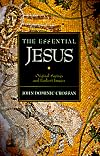
This is a book to make one think very hard about what it means to be a follower of Jesus and/or a Christian, and they’re not necessarily the same thing. For instance, I would consider Gandhi a follower, although not a Christian. On the other hand, most people who tout their membership in Christian organizations fall considerably short of what one would think is the ideal, given Jesus’ example and lessons. Most egregious, to me, are public figures and institutions who shout their show more Christianity even as they hoard millions (or billions) which could be used to give basic needs to the hungry and dying. And many of these insist they are “pro-life”, although apparently the already-living are expendable. Anyway, about the book:
Crossan is a well-known member of the Jesus Seminar and a scholar in the historical Jesus school. In this third entry in his biographies of Jesus, he presents the sayings he considers to be authentically spoken by Jesus (mostly parables and aphorisms, designed to provoke discussion among the oppressed) alongside examples of pre-Constantinian Christian art work. Although the art is mostly 3rd c., it was produced before the religion had any governmental organization and backs up the words written down over two centuries earlier, with both reflecting the message the earliest Christians received: radical egalitarianism, open commensality (indiscriminate table fellowship and healing), and the Kingdom here NOW, wherever people are willing to follow Jesus’ example. Crossan differentiates between John the Baptist’s teaching (apocalyptic eschatology, i.e., imminent and cataclysmic divine intervention) and Jesus’ (sapiential eschatology, i.e., living here and now so that God’s power is evident to all). It’s a huge difference, with the easier path clearly being the former, where we can let God take care of changing things when he’s ready and continue as we are in our day-to-day lives. Just as clearly, Crossan sees Jesus’s way as the more difficult and the reason Jesus, out of so many wandering preachers, dissidents, and trouble makers, got the death penalty instead of a lesser sentence: he was looking for a total change in how people acted right then, and he was convincing at it.
Whatever you’re approach to Bible study or belief, this is a provocative look at early Christian thought: that is, what Jesus said and how he was perceived by the people closest to him in time and still untouched by institutional dogma. show less
Crossan is a well-known member of the Jesus Seminar and a scholar in the historical Jesus school. In this third entry in his biographies of Jesus, he presents the sayings he considers to be authentically spoken by Jesus (mostly parables and aphorisms, designed to provoke discussion among the oppressed) alongside examples of pre-Constantinian Christian art work. Although the art is mostly 3rd c., it was produced before the religion had any governmental organization and backs up the words written down over two centuries earlier, with both reflecting the message the earliest Christians received: radical egalitarianism, open commensality (indiscriminate table fellowship and healing), and the Kingdom here NOW, wherever people are willing to follow Jesus’ example. Crossan differentiates between John the Baptist’s teaching (apocalyptic eschatology, i.e., imminent and cataclysmic divine intervention) and Jesus’ (sapiential eschatology, i.e., living here and now so that God’s power is evident to all). It’s a huge difference, with the easier path clearly being the former, where we can let God take care of changing things when he’s ready and continue as we are in our day-to-day lives. Just as clearly, Crossan sees Jesus’s way as the more difficult and the reason Jesus, out of so many wandering preachers, dissidents, and trouble makers, got the death penalty instead of a lesser sentence: he was looking for a total change in how people acted right then, and he was convincing at it.
Whatever you’re approach to Bible study or belief, this is a provocative look at early Christian thought: that is, what Jesus said and how he was perceived by the people closest to him in time and still untouched by institutional dogma. show less

This is a book I've been waiting to come along since I was in 2nd grade. That was back in the sixties when my family lived and worked on a farm in New Mexico and every Sunday went to a small Grace Assembly of God church. Even being so young, the convoluted Jesus story with its strange ancient magic didn't make sense to me. It wasn't supposed to make sense,I was told. It was all real and I just had to have faith.
Not being able to just have faith has continued my whole life. I don't reject show more Jesus. I believe he lived and remarkably changed the world. But I never have been able to throw in with Christianity and its oddly self-congratulatory emphasis on belief and conversely its general rejection of inquiry and doubt. In my Western culture it's a subject -- overt and covert -- that never goes away . It makes me ask periodically but regularly, who was Jesus really and how did "his" religion become derisive like this?
At last, in Jesus: A Revolutionary Biography there are answers, answers that don't dismiss the questions, answers that for me are even more inspirational because of their realism. In this "revolutionary biography," Crossan presents a realistic portrait of Jesus without dismissing his remarkable message. Of course, so much information has been lost to time, and so much was never saved in time anyway it's probably impossible to be sure about anything about Jesus, but Crossan puts the man Jesus in context based on what can be known by using contemporaneous written sources, plus modern archaeology and sociology. He places Jesus firmly in the life and times of a Jewish peasant man living under brutal Roman rule and steeped in a highly religious and highly regulated society that was under great pressure. Jesus had ideas and teachings that were original, amazingly progressive and, probably even then, puzzling. These ideas were -- and were not -- what we often are led to believe they were.
In a nutshell, Jesus was teaching and living radical social egalitarianism. (Remarkable how 2000 years of devotion and study later, we can fall so very far below the mark.) He used healing and communal eating to set the example of the Kingdom of God he believed in.
After his ignominious and tortuous death, the message morphed, and Crossan sifts through the many ways that happened.
Scribes went searching for and incorporating exegesis items to the gospels in order to boost Jesus as the Jewish prophesied messiah. Crossan points where messages were politically tweaked and subsequently encoded into the gospels based on the leadership struggles of the First Christian factions. Then there was even the need to make Jesus interesting and competitive with the standard gods of the day, when gentiles were accustomed to a good yarn about a god's magical life and was a virtual requirement in order for the new message to be received. In spite of all that, Jesus' message is still there to be teased out from the New Testament, and in the non-canonical gospels too. (Like Crossan, I dig the Gospel of Thomas for the feeling of it being the least adulterated voice and message of Jesus.)
Of course I'm not a Biblical scholar and am aware Crossan's ideas are controversial to some. While reading, I wasn't always fully convinced by certain of his arguments. But I doubt there is anyone else who has given more rational study and intelligence to Jesus than Crossan. I am indebted to his work, it's been a revelation. Good to know someone is out there dedicated to understanding a profound (not magical) Jesus. show less
Not being able to just have faith has continued my whole life. I don't reject show more Jesus. I believe he lived and remarkably changed the world. But I never have been able to throw in with Christianity and its oddly self-congratulatory emphasis on belief and conversely its general rejection of inquiry and doubt. In my Western culture it's a subject -- overt and covert -- that never goes away . It makes me ask periodically but regularly, who was Jesus really and how did "his" religion become derisive like this?
At last, in Jesus: A Revolutionary Biography there are answers, answers that don't dismiss the questions, answers that for me are even more inspirational because of their realism. In this "revolutionary biography," Crossan presents a realistic portrait of Jesus without dismissing his remarkable message. Of course, so much information has been lost to time, and so much was never saved in time anyway it's probably impossible to be sure about anything about Jesus, but Crossan puts the man Jesus in context based on what can be known by using contemporaneous written sources, plus modern archaeology and sociology. He places Jesus firmly in the life and times of a Jewish peasant man living under brutal Roman rule and steeped in a highly religious and highly regulated society that was under great pressure. Jesus had ideas and teachings that were original, amazingly progressive and, probably even then, puzzling. These ideas were -- and were not -- what we often are led to believe they were.
In a nutshell, Jesus was teaching and living radical social egalitarianism. (Remarkable how 2000 years of devotion and study later, we can fall so very far below the mark.) He used healing and communal eating to set the example of the Kingdom of God he believed in.
After his ignominious and tortuous death, the message morphed, and Crossan sifts through the many ways that happened.
Scribes went searching for and incorporating exegesis items to the gospels in order to boost Jesus as the Jewish prophesied messiah. Crossan points where messages were politically tweaked and subsequently encoded into the gospels based on the leadership struggles of the First Christian factions. Then there was even the need to make Jesus interesting and competitive with the standard gods of the day, when gentiles were accustomed to a good yarn about a god's magical life and was a virtual requirement in order for the new message to be received. In spite of all that, Jesus' message is still there to be teased out from the New Testament, and in the non-canonical gospels too. (Like Crossan, I dig the Gospel of Thomas for the feeling of it being the least adulterated voice and message of Jesus.)
Of course I'm not a Biblical scholar and am aware Crossan's ideas are controversial to some. While reading, I wasn't always fully convinced by certain of his arguments. But I doubt there is anyone else who has given more rational study and intelligence to Jesus than Crossan. I am indebted to his work, it's been a revelation. Good to know someone is out there dedicated to understanding a profound (not magical) Jesus. show less
Who killed Jesus?: Exposing the Roots of Anti-Semitism in the Gospel Story of the Death of Jesus by John Dominic Crossan

This book infuriated me.
I should start by explaining why I read it. Crossan has a deep understanding of the historical circumstances of first century Palestine. Throughout this book there were a number of nuggets drawn from Josephus, Philo, and elsewhere that shed real light on New Testament circumstances.
Now on to the frustration.
Here's Crossan's argument in a nutshell: the passion didn't happen. Theologians mined the Old Testament for ideas following the death of Jesus—a way to show more intellectually process what happened. They found texts like Psalm 2 and interpreted the significance of Jesus' death through that lens. Since the common folk couldn't understand such sophisticated theology, they invented stories that spread to confirm their hermeneutic. The passion is prophecy converted into a narrative fiction.
Crossan arrived at this conclusion through some clever redaction criticism. He finds the earliest stratum of the passion story embedded in the the Gospel of Peter (what he calls the "Cross Narrative"). Other sources include Q, Matthew, Mark, Luke-Acts, and John. He determines which story came first and which source is dependent on the others on order to play the differences between the narratives off each other.
Crossan's next step is reflected in the subtitle. The creators of such a grand fib need to be exposed and held responsible for the role their story played in the persecution of the Jewish people throughout history. At the heart of the Christian faith there's a lie that has harmed countless Jews.
"However explicable its origins, defensible its invectives, and understandable its motives among Christians fighting for survival, [the passion narrative's] repetition has now become the longest lie, and, for our own integrity, we Christians must at last name it as such" (152).
There are so many ways to respond to this. Here are a few thoughts:
1. Crossan discounts the very idea of predictive prophecy as ancient superstition. Once you take this step, it's easier to jump to prophecy-turned-story-telling.
2. Crossan's redaction criticism (which forms the foundation of his argument) is a castle of cards. He piles hypothesis upon hypothesis upon hypothesis to get to his conclusion. Surely at some point in the process it becomes more rational to take a more literal reading of the gospels. There are simpler ways to explain discrepancies between the accounts.
3. Crossan takes what historical accounts (besides the gospels) tells him of first century Palestine then assumes that every event must fit that mold. Therefore, nothing unusual can happen. For example, crucified victims were not usually given a decent burial. Therefore, the story of Jesus' burial must be a fiction. By this logic, nothing unusual can ever happen!
4. Even if you agree with his argument on the passion being prophecy turned into story, you cannot blame those storytellers for the horrible acts perpetrated against the Jewish people centuries later. This actually shifts blame from those who committed the atrocities to a minuscule minority of persecuted Christians with no hand in the later violence.
I'll stop my rant. It's time to put Who Killed Jesus? back up on the shelf. show less
I should start by explaining why I read it. Crossan has a deep understanding of the historical circumstances of first century Palestine. Throughout this book there were a number of nuggets drawn from Josephus, Philo, and elsewhere that shed real light on New Testament circumstances.
Now on to the frustration.
Here's Crossan's argument in a nutshell: the passion didn't happen. Theologians mined the Old Testament for ideas following the death of Jesus—a way to show more intellectually process what happened. They found texts like Psalm 2 and interpreted the significance of Jesus' death through that lens. Since the common folk couldn't understand such sophisticated theology, they invented stories that spread to confirm their hermeneutic. The passion is prophecy converted into a narrative fiction.
Crossan arrived at this conclusion through some clever redaction criticism. He finds the earliest stratum of the passion story embedded in the the Gospel of Peter (what he calls the "Cross Narrative"). Other sources include Q, Matthew, Mark, Luke-Acts, and John. He determines which story came first and which source is dependent on the others on order to play the differences between the narratives off each other.
Crossan's next step is reflected in the subtitle. The creators of such a grand fib need to be exposed and held responsible for the role their story played in the persecution of the Jewish people throughout history. At the heart of the Christian faith there's a lie that has harmed countless Jews.
"However explicable its origins, defensible its invectives, and understandable its motives among Christians fighting for survival, [the passion narrative's] repetition has now become the longest lie, and, for our own integrity, we Christians must at last name it as such" (152).
There are so many ways to respond to this. Here are a few thoughts:
1. Crossan discounts the very idea of predictive prophecy as ancient superstition. Once you take this step, it's easier to jump to prophecy-turned-story-telling.
2. Crossan's redaction criticism (which forms the foundation of his argument) is a castle of cards. He piles hypothesis upon hypothesis upon hypothesis to get to his conclusion. Surely at some point in the process it becomes more rational to take a more literal reading of the gospels. There are simpler ways to explain discrepancies between the accounts.
3. Crossan takes what historical accounts (besides the gospels) tells him of first century Palestine then assumes that every event must fit that mold. Therefore, nothing unusual can happen. For example, crucified victims were not usually given a decent burial. Therefore, the story of Jesus' burial must be a fiction. By this logic, nothing unusual can ever happen!
4. Even if you agree with his argument on the passion being prophecy turned into story, you cannot blame those storytellers for the horrible acts perpetrated against the Jewish people centuries later. This actually shifts blame from those who committed the atrocities to a minuscule minority of persecuted Christians with no hand in the later violence.
I'll stop my rant. It's time to put Who Killed Jesus? back up on the shelf. show less
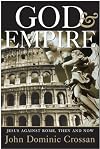
God and Empire: Jesus Against Rome, Then and Now is a book written to challenge Christians to choose between a God and Christianity of escalatory violence or a Jesus and Christianity of nonviolent resistance to the violent powers of empirical civilization. John Dominic Crossan leverages his scholarship and writing talents to achieve this purpose. The book is very well written, an easy read considering its scholarly content, and the aim is clear. Crossan wanted to draw a sharp line between show more human violence and divine nonviolence. (pg. 4) He succeeded if one accepts his premises, which this author does not. The entire book is based on one or more faulty premises, with buckets of false conclusions. These conclusions are used throughout the book to construct additional faulty arguments. Ironically, there is a copyright page near the end of the book that states, “This book is a work of fiction. The characters, incidents, and dialogue are drawn from the author’s imagination and are not to be construed as real.” (pg. 258) Although it may be a simple publisher’s mistake, it is a good summary of another of the chief problems of the book; so much of the content is simply made up.
Crossan’s arguments are based upon two essential presuppositions that should be understood before moving through the book. First, according to Crossan, humankind is on a devastating path of ever-increasing violence. The ultimate form of that violence can be found in what he called “civilization” or empire. In Crossan’s view, every civilization is founded and built upon the violent subjugation and control of others. (pg. 29) That is key to understanding his view of Rome at the time of Christ and America in the modern day. The second premise required to understand Crossan’s point is his belief that the Christian Bible presents two opposing visions of God. There is the violent God of judgment and retribution best seen in the Old Testament and the nonviolent, gentle, sweet, and lowly God best represented in Jesus of the New Testament. Where the New Testament seems to agree with the Old Testament, Crossan used higher criticism to dismiss and disparage the witness of Scripture. Beneath these two premises are much deeper presuppositions of philosophy and theology, some of which reveal themselves throughout the book's pages and some that remain hidden and unstated. There are other logical problems throughout the book, but they are grounded in these critical premises.
God and Empire is a tough read for anyone who takes Biblical study, Biblical truth, and sound reasoning seriously. Crossan has elevated unbelieving scholarship over foundational truths of the world and faith. Although he called himself a Christian, his understanding of what it means to be a Christian has very little to do with the Bible itself. Crossan does not believe in the deity of Christ or the atonement. He does not believe in the inspiration or inerrancy of Scripture. He rejects the miraculous works of Jesus and selectively excises what he likes from the pages of the Bible. The inference of his writing is a social gospel, with toothless hope for a peaceful and nonviolent future but no answer for the question of man’s sin and broken relationship with the God of heaven. The following quote as an example demonstrates that Crossan does not believe that Jesus was God incarnate. “Other human beings who had greatly benefited their fellows were divinized only after their death, but Caesar Augustus was unique in having achieved divine status while still alive.” (pg. 19) To make that statement, one must dismiss the New Testament claims to Jesus’ deity as mystical or parabolic or assign some other philosophical or arbitrary meaning. Some of the former assertions are not specifically evident in God and Empire, but they are essential parts of Crossan’s body of work, and consultation of even a single debate reveals that. (https://www.youtube.com/watch?v=BIX7eqTllEc&t=7868s) The logical problems discussed later in this review are superficial compared to these presuppositions, so these presuppositions must be held in the back of the reader’s mind to grasp the depth of the error Crossan put forward.
Crossan’s God and Empire was written to challenge Christians to choose between two visions of God. The violent God of the Old Testament and traditional Christianity who hates and punishes sin, or the nonviolent God of love and peace from the world beyond this one. The challenge is faulty, for it is a false dilemma, excluding the possibility of the Biblical God that is perfect in holiness, glory, and majesty. Crossan asks which God the Christian will choose, but the wise Christian must reject the false choice and the false unidimensional gods that Crossan has offered. Too much of this book is faulty. Too much of it is built on shaky ground. Too much is fiction.
Read the full academic review here: https://www.academia.edu/124631069/A_Critical_Review_of_GOD_and_EMPIRE_Jesus_Aga.... show less
Crossan’s arguments are based upon two essential presuppositions that should be understood before moving through the book. First, according to Crossan, humankind is on a devastating path of ever-increasing violence. The ultimate form of that violence can be found in what he called “civilization” or empire. In Crossan’s view, every civilization is founded and built upon the violent subjugation and control of others. (pg. 29) That is key to understanding his view of Rome at the time of Christ and America in the modern day. The second premise required to understand Crossan’s point is his belief that the Christian Bible presents two opposing visions of God. There is the violent God of judgment and retribution best seen in the Old Testament and the nonviolent, gentle, sweet, and lowly God best represented in Jesus of the New Testament. Where the New Testament seems to agree with the Old Testament, Crossan used higher criticism to dismiss and disparage the witness of Scripture. Beneath these two premises are much deeper presuppositions of philosophy and theology, some of which reveal themselves throughout the book's pages and some that remain hidden and unstated. There are other logical problems throughout the book, but they are grounded in these critical premises.
God and Empire is a tough read for anyone who takes Biblical study, Biblical truth, and sound reasoning seriously. Crossan has elevated unbelieving scholarship over foundational truths of the world and faith. Although he called himself a Christian, his understanding of what it means to be a Christian has very little to do with the Bible itself. Crossan does not believe in the deity of Christ or the atonement. He does not believe in the inspiration or inerrancy of Scripture. He rejects the miraculous works of Jesus and selectively excises what he likes from the pages of the Bible. The inference of his writing is a social gospel, with toothless hope for a peaceful and nonviolent future but no answer for the question of man’s sin and broken relationship with the God of heaven. The following quote as an example demonstrates that Crossan does not believe that Jesus was God incarnate. “Other human beings who had greatly benefited their fellows were divinized only after their death, but Caesar Augustus was unique in having achieved divine status while still alive.” (pg. 19) To make that statement, one must dismiss the New Testament claims to Jesus’ deity as mystical or parabolic or assign some other philosophical or arbitrary meaning. Some of the former assertions are not specifically evident in God and Empire, but they are essential parts of Crossan’s body of work, and consultation of even a single debate reveals that. (https://www.youtube.com/watch?v=BIX7eqTllEc&t=7868s) The logical problems discussed later in this review are superficial compared to these presuppositions, so these presuppositions must be held in the back of the reader’s mind to grasp the depth of the error Crossan put forward.
Crossan’s God and Empire was written to challenge Christians to choose between two visions of God. The violent God of the Old Testament and traditional Christianity who hates and punishes sin, or the nonviolent God of love and peace from the world beyond this one. The challenge is faulty, for it is a false dilemma, excluding the possibility of the Biblical God that is perfect in holiness, glory, and majesty. Crossan asks which God the Christian will choose, but the wise Christian must reject the false choice and the false unidimensional gods that Crossan has offered. Too much of this book is faulty. Too much of it is built on shaky ground. Too much is fiction.
Read the full academic review here: https://www.academia.edu/124631069/A_Critical_Review_of_GOD_and_EMPIRE_Jesus_Aga.... show less
Lists
You May Also Like


Associated Authors
Statistics
- Works
- 72
- Also by
- 11
- Members
- 11,316
- Popularity
- #2,074
- Rating
- 3.8
- Reviews
- 146
- ISBNs
- 185
- Languages
- 9
- Favorited
- 12
