
Erich Kästner (1899–1974)
Author of Emil and the Detectives
About the Author
Series
Works by Erich Kästner
Kästner für Kinder: Emil und die Detektive. Emil und die drei Zwillinge. Das doppelte Lottchen. Der 35.Mai. Als ich ein kleiner Junge war. Das verhexte Telefon (1985) — Author — 18 copies
Emil und die Detektive. einfach lesen. Ein Leseprojekt zum gleichnamigen Jugendbuch. (Lernmaterialien) (2000) 10 copies
Eine Auswahl 7 copies
Mein liebes gutes Muttchen du. Dein oller Junge. Briefe und Postkarten aus 30 Jahren. (1981) 6 copies
Das Erich Kästner-Buch 6 copies
"Als ich ein kleiner Junge war". "Notabene 45". "Erich Ohser aus Plauen". Bd. 4 (Kästner für Erwachsene) (1983) 3 copies
"Herz auf Teile". "Lärm im Spiegel". "Ein mann gibt Auskunft". Und noch 4 weiter Geschichten. Bd. 1 (Kästner für Erwachsene) (1983) 3 copies
Wer Kind bleibt, ist ein Mensch: Von Kicherfritzen, dem vergesslichen Christoph und anderen (2016) 3 copies
Klassiker-Kassette: Till Eulenspiegel /Doktor Dolittle und seine Tiere /Pu der Bär /Mary Poppins (2003) 3 copies
Fabian. Der Zauberlehrling. Die Schule der Diktatoren. Kästner für Erwachsene. Ausgewählte Schriften. Band drei. (2005) 3 copies
Herz auf Taille / Lärm im Spiegel / Ein Mann gibt Auskunft / Gesang zwischen den Stühlen — Author — 3 copies
Dvojčici 2 copies
Kästner für Studenten 2 copies
Gedichte 2 copies
Három ember a hóban regény 2 copies
Dikter ; ett dikturval 2 copies
サーカスの小びと 2 copies
Münchhausen báró csodálatos utazásai és kalandjai szárazon és vízen - Az elmés Don Quijote lovag élete és tettei - Gulliver utazásai (2007) 2 copies
שירים לרפואה 2 copies
Lustige Geschichtenkiste 1 copy
Heiterkeit aus aller Welt 1 copy
Plava knjiga 1 copy
Čovječuljak i Malena 1 copy
ha-Kitah ha-meʻofefet 1 copy
El telefono encantado/ The Enchanted Phone (Lee y repasatelo bien / Read, Review and Have Fun) (Spanish Edition) (2006) 1 copy
שלשים וחמישה במאי 1 copy
אריך קסטנר מספר: טיל אולנשפיגל, הרפתקאות הברון מינכהאוזן, עלילות דון קישוט, חכמי שלדה, מסעות גוליבר 1 copy
פצפנת ואנטון : רומן לילדים 1 copy
אריך קסטנר מספר 1 copy
אריך קסטנר מספר : טיל אולנשפיגל, הרפתקאות הברון מינכהאוזן, עלילות דון קישוט, חכמי שלדה, מסעות… 1 copy
Маленький Макс Маленький Макс и маленькая мисс; 35 мая / Эрих Кестнер; [Пер. с англ. Е. Вильмонт] (2002) 1 copy
Kästner Werke 3 - Romane I 1 copy
Salzburger Geschichten [VHS] 1 copy
Kästner für Kinder 3 Bände 1 copy
Kästner Werke 4 - Romane II 1 copy
Kästner Werke 5 - Hörspiele 1 copy
Lírai házipatika 1 copy
Das fliegende Klassenzimmer 1 copy
Kurz und bündig : Epigramme 1 copy
Kästner. Das lyrische Schaffen.: Interpretationen zu den wichtigsten Gedichten (Königs Erläuterungen. Spezial) (2010) 1 copy
Vermischte Beiträge I 1 copy
Selbstschüsse 1 copy
Gesammelte Prosa 1 copy
Als ich ein kleiner Junge war und Kästner über Kästner — Author — 1 copy
Kästner über Kästner 1 copy
Wir sind so frei . Band 1 1 copy
Emil and the Detectives and The 35th of May — Author — 1 copy
Kostproben 1 copy
Ich setze mich sehr gerne zwischen Stühle. Eine Auswahl von Gedichten mit zwölf Illustrationen von Eduard Prüssen. (1994) 1 copy
Heiteres von Walter Trier 1 copy
Die kleine Zauberflöte — Author — 1 copy
ذو القبعة السوداء 1 copy
Klaus im Schrank 1 copy
Uçan Sınıf 1 copy
Doubutsu kaigi どうぶつ会議 1 copy
Трима мъже в снега 1 copy
Päiväkirja 45 1 copy
Leteča učilnica 1 copy
Ko sem še majhen bil 1 copy
עצרת החיות 1 copy
The Animals' Conference [film] — Author — 1 copy
Associated Works
Spells of Enchantment: The Wondrous Fairy Tales of Western Culture (1991) — Contributor — 605 copies, 5 reviews
A Very German Christmas: The Greatest Austrian, Swiss and German Holiday Stories of All Time (2020) — Contributor — 36 copies, 1 review
German Satirical Writings: Wilhelm Busch and others (German Library) (1984) — Contributor — 14 copies
Geschichten, Geschichten, Geschichten. ( Ab 8 J.). Zum Vorlesen und zum Selberlesen. (1988) — Contributor — 11 copies
Der wohltemperierte Leierkasten : 12 mal 12 Gedichte für Kinder, Eltern und andere Leute. (1989) — Afterword — 11 copies
Winterzeit : eine fotografisch-poetische Betrachtung — Contributor — 1 copy
Kinder sind auch Menschen : Heiteres gezeichnet und geschrieben für alle, die Kinder lieben — Contributor — 1 copy
Tagged
Common Knowledge
- Canonical name
- Kästner, Erich
- Legal name
- Kästner, Emil Erich
- Other names
- Bürger, Berthold (pseudonym)
Kurtz, Melchior (pseudonym)
Flint, Peter (pseudonym)
Neuner, Robert (pseudonym) - Birthdate
- 1899-02-23
- Date of death
- 1974-07-29
- Gender
- male
- Education
- University of Leipzig (Dr. phil|History, Philosophy, German Studies, Theatre Sciences, 1925)
- Occupations
- poet
novelist
playwright
magazine editor
screenwriter - Organizations
- Gruppe 47 (guest)
- Awards and honors
- Georg Büchner Preis (1957)
Hans Christian Andersen Award (Writing, 1960) - Relationships
- Enderle, Luiselotte (partner, from 1935)
Kästner, Thomas (son)
Trier, Walter (illustrator, friend)
Maschler, Kurt Leo (friend)
Löhr, Hans Albrecht (friend)
Ohser, Erich (illustrator, friend) - Cause of death
- cancer (esophagus)
- Nationality
- Germany
- Birthplace
- Dresden, Kingdom of Saxony, German Empire
- Places of residence
- Leipzig, Germany
Berlin, Germany - Place of death
- Munich, Germany
- Burial location
- Bogenhausener Friedhof, Munich, Germany
- Associated Place (for map)
- Germany
Members
Discussions
Going to the Dogs by Erich Kastner in The Chapel of the Abyss (January 2024)
Reviews
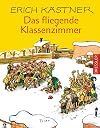
Translated into English as The Flying Classroom.
For the longest time I've always associated the 'right books' with immense bouts of depression. Since I was a kid, I would happily spend the day reading tonnes of charming little tales about brave princes, mysterious elves and clever talking tigers. But then some busybody teacher would inevitably ruin my enjoyment by letting me know that these books were not age-appropriate anymore. I needed to read stories with more depth! I would generally show more relent and give the suggested books a try, only to end up neck deep in melancholy. And people wonder why kids are reluctant to take up reading...
How about telling them about an author's trials in finishing a story that is 2 years overdue? Let them giggle at his pathetic attempts to claim that Christmas stories cannot possibly be penned in August. Failing that, tell them about giving butterflies auspicious names like Gottfried, in attempt to hone their stalling techniques.
As for the story itself, wouldn't your inner child rather read about rowdy kids preparing for their winter holiday? Now don't dismiss these activities as meaningless, just because of our protagonists' age: waging a snowball-fight to liberate your friend, or protect your school's honor is no small feat. Plenty of planning is needed for this. Tactical approach to battle, stalling methodology to gain time to liberate the captive, and not least dealing with the consequences of unauthorized rule breaking.
Still seems too cheerful a representation of the real world? How about being 'unfairly' stuck in detention while your sick mother is waiting for you to visit her at the hospital?
By the end of the story, I was freely bawling my eyes out. This is the kind of story you should want 12-year-olds to discuss. Not stuffy old poems, entrenched so deep in their own metaphors that even the teachers have to rely on heavy guesswork to analyze them.
The only thing I was not too keen on, were the chapter titles. They gave away the entire plot of the story!
Score: 4.2/5 stars
This is the kind of story that will make children want to dive into a book and not emerge until they've scoured its every nook and cranny. show less
For the longest time I've always associated the 'right books' with immense bouts of depression. Since I was a kid, I would happily spend the day reading tonnes of charming little tales about brave princes, mysterious elves and clever talking tigers. But then some busybody teacher would inevitably ruin my enjoyment by letting me know that these books were not age-appropriate anymore. I needed to read stories with more depth! I would generally show more relent and give the suggested books a try, only to end up neck deep in melancholy. And people wonder why kids are reluctant to take up reading...
How about telling them about an author's trials in finishing a story that is 2 years overdue? Let them giggle at his pathetic attempts to claim that Christmas stories cannot possibly be penned in August. Failing that, tell them about giving butterflies auspicious names like Gottfried, in attempt to hone their stalling techniques.
As for the story itself, wouldn't your inner child rather read about rowdy kids preparing for their winter holiday? Now don't dismiss these activities as meaningless, just because of our protagonists' age: waging a snowball-fight to liberate your friend, or protect your school's honor is no small feat. Plenty of planning is needed for this. Tactical approach to battle, stalling methodology to gain time to liberate the captive, and not least dealing with the consequences of unauthorized rule breaking.
Still seems too cheerful a representation of the real world? How about being 'unfairly' stuck in detention while your sick mother is waiting for you to visit her at the hospital?
By the end of the story, I was freely bawling my eyes out. This is the kind of story you should want 12-year-olds to discuss. Not stuffy old poems, entrenched so deep in their own metaphors that even the teachers have to rely on heavy guesswork to analyze them.
The only thing I was not too keen on, were the chapter titles. They gave away the entire plot of the story!
Score: 4.2/5 stars
This is the kind of story that will make children want to dive into a book and not emerge until they've scoured its every nook and cranny. show less

The shelves of the world's libraries are groaning with childhood memoirs of the great and the good, but Erich Kästner is unusual in that he chose to address his main autobiographical work, describing growing up in Dresden before 1914, specifically to young readers. "Dear children and non-children" is the formula he uses to open his Foreword, and it's obvious throughout that, whilst the presence of non-children is to be tolerated, it's not exactly encouraged, and they are admitted only as show more long as they keep quiet and don't interrupt. They would be wise not to provoke expulsion, because there is actually at least as much in this book that is interesting for adult readers as there is for children.
As always, Kästner treats his young readers as responsible, intelligent people, with a clear, sane gaze capable of puncturing the stupidities and hypocrisies of the adult world. He doesn't shelter them from "difficult" topics: we are told about how he had to help his mother through episodes of depression when she would go missing and he would find her standing on one of the bridges over the Elbe, looking longingly at the water; about how his fear of and disgust for a brutal teacher changed to compassion when he spent time with the man outside school and realised how trapped he was in a job he wasn't fitted for; and about his reaction to returning to the destroyed city after the 1945 bombing. And we learn a lot about how class-prejudice worked in Wilhelmite Germany, about poverty and child mortality, about militarism and pacifism, about what intellectual life looks like from the perspective of a working-class child, and much more.
It's a charming, funny, period piece, and the illustrations by Horst Lemke are a delight, of course, but it certainly isn't a trivial book. Still just as interesting as it was sixty years ago. show less
As always, Kästner treats his young readers as responsible, intelligent people, with a clear, sane gaze capable of puncturing the stupidities and hypocrisies of the adult world. He doesn't shelter them from "difficult" topics: we are told about how he had to help his mother through episodes of depression when she would go missing and he would find her standing on one of the bridges over the Elbe, looking longingly at the water; about how his fear of and disgust for a brutal teacher changed to compassion when he spent time with the man outside school and realised how trapped he was in a job he wasn't fitted for; and about his reaction to returning to the destroyed city after the 1945 bombing. And we learn a lot about how class-prejudice worked in Wilhelmite Germany, about poverty and child mortality, about militarism and pacifism, about what intellectual life looks like from the perspective of a working-class child, and much more.
It's a charming, funny, period piece, and the illustrations by Horst Lemke are a delight, of course, but it certainly isn't a trivial book. Still just as interesting as it was sixty years ago. show less

A mixed bag of Kästner's writings about snow and the strange German cult of winter-sports holidays, something that he was extremely fond of, although his heart problems meant that he was mostly restricted to sitting on sunny traces watching the skiers exert themselves. We get the snowy bits of several of his full-length books for children or adults (Das fliegende Klassenzimmer, Drei Männer im Schnee, Der Zauberlehrling), plus a couple of short stories and newspaper articles, some lyrics, show more and a large selection of postcards and letters written to his mother from places like Garmisch, Oberstdorf, Kitzbühel and Davos. Most of the material is from the 1930s.
There's a lot of amused observation of the complex social world of the alpine Grand-Hotel, of the odd ways city-dwellers behave on holiday in the mountains, of the ingenious ways indigenous people find to make money out of them, and so on. He's amused by the way farm-boys turn into sex-gods when they declare themselves to be ski-instructors, by the interesting sexual ambiguity of ski costume, and by the strange rules of the fancy-dress ball (the unfortunate who turns up at an "Apache Ball" in Native American dress, unaware that to the fashionable mind, an Apache is a French gangster...). And, like every observer of the winter-sport theme before and since, he jokes about the prevalence of broken legs and bemoans the way mass tourism is ruining the mountains. Not that that stops him boasting (for the censor's benefit) about finding himself lunching at the next table to Reichsführer Rudolf Hess and friends. I imagine his mother would have been able to guess how he really felt about that.
This is a nicely-produced book, issued by Kästner's long-standing Swiss publishers and helpfully annotated by Sylvia List, but about half the book is taken up by the long extracts from the three full-length books, which most people likely to pick this up will have read already, and which are probably rather frustrating if you don't know the rest of the story. The other half is either unpublished material or less well-known pieces, and it's probably worth getting the book for those. I particularly enjoyed the short story "Zwei Schüler sind verschwunden," featuring Matz and Uli from Das fliegende Klassenzimmer, which I hadn't seen before. show less
There's a lot of amused observation of the complex social world of the alpine Grand-Hotel, of the odd ways city-dwellers behave on holiday in the mountains, of the ingenious ways indigenous people find to make money out of them, and so on. He's amused by the way farm-boys turn into sex-gods when they declare themselves to be ski-instructors, by the interesting sexual ambiguity of ski costume, and by the strange rules of the fancy-dress ball (the unfortunate who turns up at an "Apache Ball" in Native American dress, unaware that to the fashionable mind, an Apache is a French gangster...). And, like every observer of the winter-sport theme before and since, he jokes about the prevalence of broken legs and bemoans the way mass tourism is ruining the mountains. Not that that stops him boasting (for the censor's benefit) about finding himself lunching at the next table to Reichsführer Rudolf Hess and friends. I imagine his mother would have been able to guess how he really felt about that.
This is a nicely-produced book, issued by Kästner's long-standing Swiss publishers and helpfully annotated by Sylvia List, but about half the book is taken up by the long extracts from the three full-length books, which most people likely to pick this up will have read already, and which are probably rather frustrating if you don't know the rest of the story. The other half is either unpublished material or less well-known pieces, and it's probably worth getting the book for those. I particularly enjoyed the short story "Zwei Schüler sind verschwunden," featuring Matz and Uli from Das fliegende Klassenzimmer, which I hadn't seen before. show less

A dark, satirical account of a young man trying to make sense of the absurd, morally vacuous world of Berlin in the late 1920s. It's the Berlin of Alfred Döblin and Christopher Isherwood, rather than that of Emil and the Detectives — but despite all the grotesque sex scenes that could be out of a painting by George Grosz or Otto Dix, it's still really informed by the same reasonable, liberal, enlightened and slightly off-axis view of how the world should be that defines Kästner's books show more for children. Very disconcerting, somehow.
Something else that struck me was how much it echoes the satirical novels of British writers of about the same time, especially Evelyn Waugh and Anthony Powell. The plot of Fabian is pretty much interchangeable with that of Vile bodies, for instance, but the feeling you get when you read it is quite different. Waugh's pessimism looks like an intellectual affectation, but you have to take Kastner's as the real thing, because you know that Weimar Berlin was living on borrowed time; the world — as far as Fabian is concerned — was about to end. Hindsight is a wonderful thing, sometimes. show less
Something else that struck me was how much it echoes the satirical novels of British writers of about the same time, especially Evelyn Waugh and Anthony Powell. The plot of Fabian is pretty much interchangeable with that of Vile bodies, for instance, but the feeling you get when you read it is quite different. Waugh's pessimism looks like an intellectual affectation, but you have to take Kastner's as the real thing, because you know that Weimar Berlin was living on borrowed time; the world — as far as Fabian is concerned — was about to end. Hindsight is a wonderful thing, sometimes. show less
Lists
Schwob Nederland (1)
Ulenspiegel (1)
Awards


You May Also Like


Associated Authors
Statistics
- Works
- 298
- Also by
- 21
- Members
- 8,932
- Popularity
- #2,692
- Rating
- 4.0
- Reviews
- 166
- ISBNs
- 1,001
- Languages
- 36
- Favorited
- 37

