
Toon Tellegen
Author of Misschien wisten zij alles
About the Author
Works by Toon Tellegen
Na aan het hart: dierenverhalen over vriendschap: dierenverhalen vol vriendschap (Dutch Edition) (2004) 24 copies
Beterschap: dierenverhalen over ziekte en gezondheid: dierenverhalen over ziekte en pijn (2009) 9 copies
Alsjeblieft 4 copies
Wachten op wonderen 4 copies
El cumpleaños de Ardilla 2 copies
Gelukkig nieuwjaar — Author — 2 copies
Maar kom wel terug! 1 copy
La curación del grillo 1 copy
De vuurzeevlieg 1 copy
Denk af en toe aan mij 1 copy
I'm Curious 1 copy
Of ik 1 copy
Een man en een engel 1 copy
Nedostajati 1 copy
Associated Works
De Nederlandse poëzie van de negentiende en twintigste eeuw in duizend en enige gedichten (1979) — Contributor, some editions — 210 copies, 1 review
De Nederlandse en Vlaamse literatuur vanaf 1880 in 250 verhalen (2005) — Contributor — 79 copies, 2 reviews
Tagged
Common Knowledge
- Canonical name
- Tellegen, Toon
- Legal name
- Tellegen, Antonius Otto Hermannus
- Birthdate
- 1941-11-18
- Gender
- male
- Education
- medicine
- Occupations
- writer
poet
physician
general practitioner - Awards and honors
- Theo Thijssen prijs (1997)
Constantijn Huygensprijs (2007)
ANV-Visser Neerlandia-prijs (1969)
Gouden Griffel (1988, 1994, )
Zilveren Griffel (1990, 1994, 1997, 1999)
Woutertje Pieterse Prijs (1992,1994) (show all 8)
Jan Campert-Prijs (1993)
Gouden Uil (2000) - Short biography
- He told his daughter every night bedtime stories.
- Nationality
- Netherlands
- Birthplace
- Brielle, Netherlands
- Places of residence
- Brielle, Netherlands
Voorburg, Netherlands
USA
Utrecht, Netherlands
Kenya, Africa
Amsterdam, Netherlands - Associated Place (for map)
- Netherlands
Members
Reviews
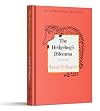
Not to be confused with the non-fiction work of the same name, this is a whimsical tale of an introverted yet lonely hedgehog, who contemplates sending out an invitation to all the woodland creatures to visit him. Then, he spends agonizing days and nights imagining and dreaming of what could happen if those creatures (and the airborne and water-dwelling contingent as well) actually took him up on it. Oh, no good can come of any of it, surely. And what if some of them wanted to hug him...or show more what if his prickles all fell off just before they arrived? And what sort of cake should he have on hand that would please everybody? Too much, too much...he can't, it's all too much. We've all been there, innit? Absolutely marvelous as the author gives full distinct personality to each and every one of dozens of critters in Hedgehog's fertile anxiety-ridden imagination. show less

Thirty-three poems from prolific Dutch children's author Toon Tellegen are paired with around fifty-four portraits done by artist Ingrid Godon in this unusual volume, presented to the English-speaking market by the wonderful Brooklyn-based Elsewhere Editions. The artwork came first, and the poems were written and/or chosen to explore the stories behind that artwork. They are the musings of children - the wishes they make, their attempts to understand the world around them, and their place in show more it. Often sad, sometimes hopeful, full of wonder and confusion, they grapple with the self, caught in a larger world of experiences and of others...
Originally published in the Netherlands as Ik Wouk, this unusual title is one that I found very interesting, and occasionally moving, but that I would struggle to place, in terms of which children would make its best audience. Perhaps introspective youngsters who are full of questions themselves? I'm not sure. In any case, I was struck by a number of the selections here, from the one about Leonard, who wishes to keep God to himself, to the one devoted to Nora, who thinks that blushing is a war on her face. Wishing to be brave, wondering how one came to be oneself, rather than another, feeling responsible for the ills of the world - all of these are explored here, in short pieces that are thought-provoking, while also evoking a sense of fellow-feeling, a memory of having had similar thoughts. The artwork is striking, with a melancholy, somewhat dreamy sensibility, featuring figures who look somehow distorted or off. I found it very interesting, and enjoyed it, even though I also sometimes found it off-putting. Again, I'm not sure to whom I would recommend this one. Dreamy children who enjoy poetry, and like to think about life, the universe and everything? Children's book readers looking for something unusual? Readers interested, as I am, in translated children's literature? Yes, all of these, I suppose. show less
Originally published in the Netherlands as Ik Wouk, this unusual title is one that I found very interesting, and occasionally moving, but that I would struggle to place, in terms of which children would make its best audience. Perhaps introspective youngsters who are full of questions themselves? I'm not sure. In any case, I was struck by a number of the selections here, from the one about Leonard, who wishes to keep God to himself, to the one devoted to Nora, who thinks that blushing is a war on her face. Wishing to be brave, wondering how one came to be oneself, rather than another, feeling responsible for the ills of the world - all of these are explored here, in short pieces that are thought-provoking, while also evoking a sense of fellow-feeling, a memory of having had similar thoughts. The artwork is striking, with a melancholy, somewhat dreamy sensibility, featuring figures who look somehow distorted or off. I found it very interesting, and enjoyed it, even though I also sometimes found it off-putting. Again, I'm not sure to whom I would recommend this one. Dreamy children who enjoy poetry, and like to think about life, the universe and everything? Children's book readers looking for something unusual? Readers interested, as I am, in translated children's literature? Yes, all of these, I suppose. show less
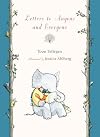
I wonder if your sense of wonder is getting enough exercise. Have you believed two impossible things before noon? Have you made a note to be grateful to the table you sit down to eat in front of, quite probably without ever so much as saying a quiet "thank you, dear table"? I'm betting you haven't. After all, the squirrel...a most loving and patient friend to the elephant and even the bear...had never said his thank-yous to the table. You can imagine the table's joy when he does write that show more letter!
Oh, and the elephant! The elephant visits the squirrel in his house up the beech tree. It's no surprise that the elephant breaks all the squirrel's furniture before falling out of the tree on the way home. Clumsy, clumsy elephant, who simply doesn't have any sense of balance. I suppose it's no wonder that the snail, to whom the elephant wrote a letter asking for the pleasure of a dance atop the snail's roof, said it wasn't a great idea. But what's an elephant to do when the only thing left to do is build a raft and go to sea?
The sea appears to have taught the elephant how to balance. At least, that's what the squirrel thinks when missing the dear old elephant during a quiet moment amid his next birthday celebration.
And the bear! What a trencherman...trencherbear, I suppose...and the nerve that appetite on legs has! The bear writes to all the animals and asks them if they would please celebrate all their birthdays at once so they can all have cakes which the bear (politely) tells them are really bear food!
But no one minds because that's what the bear always does and is always, always polite about it. So all those visits the bear pays are friendly ones.
These charming short poems masquerading as tales are designed to give the young reader a sense of the magic that the world can't exactly refuse to them yet. The adult reading the poems to the youngest readers who could reasonably be expected to follow them, say six or so, has plenty of opportunities to bring the lessons to life. The lessons aren't necessarily part of the tale. That's such a great idea. Don't tell the kid about selfishness and loneliness and losing someone you love. The animals are doing the learning. The boy who cried wolf? Grim and violent and old hat. Here, the cricket learns about telling the truth by writing a letter saying "The cricket is not here" while chirping madly! Of course that would confuse others.
But the cricket needs to learn another lesson, it seems, since learning the word "not" was accomplished by stealing that word from the letter the elephant wrote. The one that said, "You will not fall," that the elephant was going to read from the top of the beech tree! I don't need to tell you what happened, do I.
I loved the time I spent in this world where all letters are answered by return wind, and all the animals and tables and letters that received the letters were excited to get them and write return letters. The wind always delivers the letters...sometimes huge huge stacks of letters, just ask the ant!...to just the right person. The concepts are ideal for younger readers and the execution, both text and art, is ideal for post-magical thinkers of eight or so to experience as solo reads. There are enough vocabulary words to keep adults involved but the gentle, charming world need cause them no anxiety. Here is a safe space to turn loose of the still-forming mind and soul.
My dear old LibraryThing friend Anita has my smiling thanks and deep gratitude for introducing me to this lovely world. show less
Oh, and the elephant! The elephant visits the squirrel in his house up the beech tree. It's no surprise that the elephant breaks all the squirrel's furniture before falling out of the tree on the way home. Clumsy, clumsy elephant, who simply doesn't have any sense of balance. I suppose it's no wonder that the snail, to whom the elephant wrote a letter asking for the pleasure of a dance atop the snail's roof, said it wasn't a great idea. But what's an elephant to do when the only thing left to do is build a raft and go to sea?
The sea appears to have taught the elephant how to balance. At least, that's what the squirrel thinks when missing the dear old elephant during a quiet moment amid his next birthday celebration.
And the bear! What a trencherman...trencherbear, I suppose...and the nerve that appetite on legs has! The bear writes to all the animals and asks them if they would please celebrate all their birthdays at once so they can all have cakes which the bear (politely) tells them are really bear food!
But no one minds because that's what the bear always does and is always, always polite about it. So all those visits the bear pays are friendly ones.
These charming short poems masquerading as tales are designed to give the young reader a sense of the magic that the world can't exactly refuse to them yet. The adult reading the poems to the youngest readers who could reasonably be expected to follow them, say six or so, has plenty of opportunities to bring the lessons to life. The lessons aren't necessarily part of the tale. That's such a great idea. Don't tell the kid about selfishness and loneliness and losing someone you love. The animals are doing the learning. The boy who cried wolf? Grim and violent and old hat. Here, the cricket learns about telling the truth by writing a letter saying "The cricket is not here" while chirping madly! Of course that would confuse others.
But the cricket needs to learn another lesson, it seems, since learning the word "not" was accomplished by stealing that word from the letter the elephant wrote. The one that said, "You will not fall," that the elephant was going to read from the top of the beech tree! I don't need to tell you what happened, do I.
I loved the time I spent in this world where all letters are answered by return wind, and all the animals and tables and letters that received the letters were excited to get them and write return letters. The wind always delivers the letters...sometimes huge huge stacks of letters, just ask the ant!...to just the right person. The concepts are ideal for younger readers and the execution, both text and art, is ideal for post-magical thinkers of eight or so to experience as solo reads. There are enough vocabulary words to keep adults involved but the gentle, charming world need cause them no anxiety. Here is a safe space to turn loose of the still-forming mind and soul.
My dear old LibraryThing friend Anita has my smiling thanks and deep gratitude for introducing me to this lovely world. show less
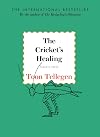
I’m wondering about the mental state of the author who created this bizarre “fable for adults” or if the prerequisite for appreciating it as a reader is being stoned. At the centre of this rambling narrative of 52-chapters are two animal characters: a cricket attempting to find relief from the heavy “sombreness” that has descended upon him and an elephant who persistently climbs trees, only to fall from every single one. I’d like to say that the multitude of other animals that show more make up the cast of this ridiculously longwinded and nonsensical tale offer support to these two afflicted beings, but that wouldn’t quite be accurate. The “assistance” given is neither sensible nor helpful. For example, towards the end of the book, a sparrow attempts to teach the elephant to never fall again, and he has the cricket copy the following lines from a chalkboard: “Getting better is being better.”
I liked only one chapter in the whole thing: Chapter 49, which is written from the point of view of the sun, who shines down day after day with varying degrees of intensity on the little specks—apparently the animals—flittering about or standing still below. The sun has no idea who they are; he just does his job, shining no matter what. Is that the point? The indifference of the source of warmth and light to the absurd little dramas going on below.
Who knows what this about? Maybe Toon Tellegen and his Dutch readers do, but this Canadian did not. The other mystery is why Pushkin Press believed this to be worthy of publication in English. show less
I liked only one chapter in the whole thing: Chapter 49, which is written from the point of view of the sun, who shines down day after day with varying degrees of intensity on the little specks—apparently the animals—flittering about or standing still below. The sun has no idea who they are; he just does his job, shining no matter what. Is that the point? The indifference of the source of warmth and light to the absurd little dramas going on below.
Who knows what this about? Maybe Toon Tellegen and his Dutch readers do, but this Canadian did not. The other mystery is why Pushkin Press believed this to be worthy of publication in English. show less
Lists
Awards


You May Also Like


Associated Authors
Statistics
- Works
- 179
- Also by
- 7
- Members
- 2,398
- Popularity
- #10,706
- Rating
- 4.0
- Reviews
- 54
- ISBNs
- 328
- Languages
- 14
- Favorited
- 10