
Alice B. McGinty
Author of Thank You, World
About the Author
Image credit: via Charlesbridge
Series
Works by Alice B. McGinty
The Buzzy Bee Book for Kids: Storybook, Bee Facts, and Activities! (Let's Learn About Bugs and Animals) (2021) 5 copies
Wild and Watery Predators 5 copies
Edward Lear and His Friends 5 copies
Temple Grandin's Squeeze Machine 4 copies
Ahmed's Invention 4 copies
Whiskers 4 copies
Albert's Big Discovery 3 copies
Seashell Detective 3 copies
Sea Turtle Farm 3 copies
Trailblazing Surfer Girls 2 copies
Fennec Fox Desert Survivor 2 copies
Gentle Giants of the Sea 2 copies
Red-Eyed Tree Frog 2 copies
Story for small bear 2 copies
Friends Are Not for Me 1 copy
Bathe the cat 1 copy
From Garbage to Garden 1 copy
The Galloping Green Hat 1 copy
Wild and Watery 1 copy
Slinky and Scaly 1 copy
Crispy Invention, A 1 copy
Arctic Fox: Clever Hunter 1 copy
Galloping Green Hat, The 1 copy
Tagged
Common Knowledge
- Gender
- female
- Nationality
- USA
- Places of residence
- Urbana, Illinois, USA
- Associated Place (for map)
- Illinois, USA
Members
Reviews
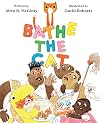
With a wildly mixed-up list of chores, will the house ever get cleaned?
Grandma is on her way over, and the house is a mess. Using colorful magnetic letters on the refrigerator, Daddy—one of two dark-skinned fathers—makes a to-do list that consists of mopping the floor, scrubbing the dishes, vacuuming the rug, feeding the fish, mowing the lawn, sweeping the mat, rocking the baby, and bathing the cat. That last instruction gets the attention of the marmalade-colored feline, whose ears perk show more up. In the next spread, readers see a paw rearranging the letters on the refrigerator, which results in utter confusion for the family—and subsequent slapstick adventures. Bobby rocks the rug; Dad attempts to mow the cat; and Sarah mops the baby. Daddy tries his best to get the chores in order, but the kitty continues to wreak havoc at the refrigerator. More than once, confused Daddy returns to the list but continues to dole out chores. In the end, the lucky cat merely gets a cuddle (no baths), and Grandma visits a clean house. McGinty’s jaunty, rhyming text makes for a fun read-aloud, but Roberts’ brightly colored, energetic illustrations are the real attraction. The increasingly frantic family, with light to dark skin tones, doing silly tasks from a muddled list will incite giggles. (This book was reviewed digitally).
The smart and sneaky puss wins the day. (Picture book. 3-5)
-Kirkus Review show less
Grandma is on her way over, and the house is a mess. Using colorful magnetic letters on the refrigerator, Daddy—one of two dark-skinned fathers—makes a to-do list that consists of mopping the floor, scrubbing the dishes, vacuuming the rug, feeding the fish, mowing the lawn, sweeping the mat, rocking the baby, and bathing the cat. That last instruction gets the attention of the marmalade-colored feline, whose ears perk show more up. In the next spread, readers see a paw rearranging the letters on the refrigerator, which results in utter confusion for the family—and subsequent slapstick adventures. Bobby rocks the rug; Dad attempts to mow the cat; and Sarah mops the baby. Daddy tries his best to get the chores in order, but the kitty continues to wreak havoc at the refrigerator. More than once, confused Daddy returns to the list but continues to dole out chores. In the end, the lucky cat merely gets a cuddle (no baths), and Grandma visits a clean house. McGinty’s jaunty, rhyming text makes for a fun read-aloud, but Roberts’ brightly colored, energetic illustrations are the real attraction. The increasingly frantic family, with light to dark skin tones, doing silly tasks from a muddled list will incite giggles. (This book was reviewed digitally).
The smart and sneaky puss wins the day. (Picture book. 3-5)
-Kirkus Review show less
In this comedy of the absurd, chaos reigns when you write your to-do list with refrigerator magnets and have a very smart and sneaky cat! When the last item on the list is to "bathe the cat," cat takes matters into their own paws and the household starts working on some silly tasks, like vacuuming the lawn, feeding the floor, and scrubbing the fishes. The use of rhyming words adds to the fun, and kids will adore how matter-of-factly the whole family sets to work on these ridiculous chores. show more Cheers to the two mustachioed dads and multicultural kids, one of whom wears a dinosaur costume throughout. The color palette with prominent hot pinks, neon oranges, and lemon yellows works so well and just makes me want to tack pages up on my fridge to enjoy all the time. (But I promise I won't.) show less

A picture-book hymn of thankfulness for all the good things of the world - the wakeful sun, the shining blue sky, the rocking swing, the soft grass, and the dancing breeze - things that children everywhere can enjoy, Thank You, World is a simple, but lovely reminder that, regardless of where we are in the world, we benefit from many of the same blessings. Each two-page spread features eight inset square illustrations, depicting children from eight different countries - the United States, show more Mexico, Mail, Saudi Arabia, Bolivia, France, India and China - all experiencing the same thing, in different ways. The conclusion, in which eight mothers tuck their children into bed, and nighttime is thanked for bringing soft gray shadows, and dreams, is a fitting finale for this quiet bedtime book.
I'm so very glad that my online friends rated this one so highly, and recommended it so sincerely (thanks, Kathryn & Lisa!), as I don't think I would have picked it up, otherwise, and that would have been a shame. Not only is the simple narrative very effective, at communicating the beauty of the world around us, and the feelings of gratitude that this beauty calls forth, the artwork by Wendy Anderson Halperin in a multitude of soft crayon colors, is simply gorgeous! I loved everything about this book, visually speaking, from the decorative endpapers to the eight inset illustrations on each two-page spread. This is just a lovely, lovely book, one I recommend to anyone looking for titles that emphasize the idea of global community, and of thankfulness. show less
I'm so very glad that my online friends rated this one so highly, and recommended it so sincerely (thanks, Kathryn & Lisa!), as I don't think I would have picked it up, otherwise, and that would have been a shame. Not only is the simple narrative very effective, at communicating the beauty of the world around us, and the feelings of gratitude that this beauty calls forth, the artwork by Wendy Anderson Halperin in a multitude of soft crayon colors, is simply gorgeous! I loved everything about this book, visually speaking, from the decorative endpapers to the eight inset illustrations on each two-page spread. This is just a lovely, lovely book, one I recommend to anyone looking for titles that emphasize the idea of global community, and of thankfulness. show less

This book begins with a glossary of Navaho words. The story it relates takes place on the Diné, or Navajo, reservation that spans parts of Arizona, New Mexico, and Utah, and which is home to more than 150,000 people. The author tells us in her note at the end of the book that almost 40 percent of the people living on the reservation do not have running water in their homes.
The narrative focuses on a fictional Diné boy named Cody, but the circumstances of his life are real and show more representative of others on the reservation. Cody looks forward to visits from Darlene Arviso, who delivers 3,500 gallons of water to between ten and twelve homes a day on a route that includes 220 homes without water lines. She is called the “Water Lady.”
The author shares what a day is like on Darlene’s route, where not only the people but the animals and plants are starved for water. McGinty writes:
“She knows that the families will make careful use of their gift:
They’ll fill the chickens’ feeder with just enough fresh water.
They’ll catch each drop from a shower to water the flowers.
They’ll reuse dishwater to mop floors and bathwater to do laundry.
They’ll use laundry water again to wash the car.”
In the back matter, which includes an Author’s Note, sources, and “A Note from the Water Lady,” McGinty explains what other efforts are being made to bring water to the reservation.
The illustrator, Shonto Begay, is a member of the Navajo Nation. He uses watercolors that emphasize desert hues accentuated by the colorful clothing and artwork of the Diné.
Evaluation: Children who have more privileged lives will learn that America is not the “land of plenty” for all people, and will get an introduction to the conditions in the reservations where Native People have lived since they were rounded up and sent there. Adults may want to help children explore why it has been so difficult to improve the situation on reservations, such as the reluctance of businesses to locate there, and the debilitating and cascading effects of poverty. show less
The narrative focuses on a fictional Diné boy named Cody, but the circumstances of his life are real and show more representative of others on the reservation. Cody looks forward to visits from Darlene Arviso, who delivers 3,500 gallons of water to between ten and twelve homes a day on a route that includes 220 homes without water lines. She is called the “Water Lady.”
The author shares what a day is like on Darlene’s route, where not only the people but the animals and plants are starved for water. McGinty writes:
“She knows that the families will make careful use of their gift:
They’ll fill the chickens’ feeder with just enough fresh water.
They’ll catch each drop from a shower to water the flowers.
They’ll reuse dishwater to mop floors and bathwater to do laundry.
They’ll use laundry water again to wash the car.”
In the back matter, which includes an Author’s Note, sources, and “A Note from the Water Lady,” McGinty explains what other efforts are being made to bring water to the reservation.
The illustrator, Shonto Begay, is a member of the Navajo Nation. He uses watercolors that emphasize desert hues accentuated by the colorful clothing and artwork of the Diné.
Evaluation: Children who have more privileged lives will learn that America is not the “land of plenty” for all people, and will get an introduction to the conditions in the reservations where Native People have lived since they were rounded up and sent there. Adults may want to help children explore why it has been so difficult to improve the situation on reservations, such as the reluctance of businesses to locate there, and the debilitating and cascading effects of poverty. show less
Lists
Awards


You May Also Like


Associated Authors
Statistics
- Works
- 94
- Members
- 2,891
- Popularity
- #8,867
- Rating
- 4.0
- Reviews
- 67
- ISBNs
- 145
- Languages
- 2