
Gary B. Nash (1933–2021)
Author of The Unknown American Revolution: The Unruly Birth of Democracy and the Struggle to Create America
About the Author
Gary B. Nash was born in Philadelphia, Pennsylvania on July 27, 1933. He received a B. A. in 1955 and a Ph.D. in 1964 from Princeton University. He has taught colonial and revolutionary American history at the University of California at Los Angeles since 1966. He won the University of California show more Distinguished Emeriti Award and the Defense of Academic Freedom Award from the National Council for Social Studies. He is the author of numerous books including Quakers and Politics: Pennsylvania, 1681-1726; Red, White and Black: The Peoples of Early America; The Urban Crucible: Social Change, Political Consciousness, and the Origins of the American Revolution; Forging Freedom: The Black Urban Experience in Philadelphia, 1720-1840; and The Forgotten Fifth: African Americans in the Age of Revolution. (Bowker Author Biography) show less
Image credit: via Jazz in America
Series
Works by Gary B. Nash
The Unknown American Revolution: The Unruly Birth of Democracy and the Struggle to Create America (2005) 473 copies, 3 reviews
The Urban Crucible: The Northern Seaports and the Origins of the American Revolution (1979) 225 copies, 6 reviews
The American People, Brief Edition: Creating a Nation and a Society, Volume I (to 1877) (5th Edition) (1986) 100 copies, 1 review
Friends of Liberty: A Tale of Three Patriots, Two Revolutions, and the Betrayal that Divided a Nation: Thomas Jefferson, Thaddeus Kosciuszko, and Agrippa Hull (2008) 95 copies, 2 reviews
The American People, Volume II - Since 1865: Creating a Nation and a Society (5th Edition) (1986) — Editor — 84 copies, 1 review
The American People: Creating a Nation and a Society, Concise Edition, Volume 1 (7th Edition) (2010) 38 copies
The American People: Creating a Nation and a Society, Concise Edition, Volume 2 (7th Edition) (2010) 9 copies
Retracing the Past: Readings in the History of the American People, Volume II--Since 1865 (4th Edition) (1999) 7 copies
In the Hands of African-American Collectors: The Personal Treasures of Bernard and Shirley Kinsey (2006) 5 copies
The American People: Creating A Nation and a Society Brief, Volume II: From 1865 (Chapters 16-30) (3rd Edition) (1999) 5 copies
The American People: Creating a Nation and a Society: Concise Edition, Volume 2 (8th Edition) (2016) 4 copies
Encyclopedia of American History: The Emergence of Modern America 1900 to 1928 (Volume VII) (2003) 3 copies
Encyclopedia of American History: The Great Depression and World War II 1929 to 1945 (Volume VIII) (2003) 3 copies
Encyclopedia of American History: The Development of the Industiral United States 1870 to 1899 (Volume VI) (2003) 3 copies
The American People: Creating a Nation and a Society, Volume II (since 1865) (Book Alone) (MyHistoryLab Series) (2005) 3 copies
The American People: Creating a Nation and a Society, Volume I, Books a la Carte Edition (8th Edition) (2016) 2 copies
Scale Model Trucking 1 copy
Forging Freedom 1 copy
The American People: Creating a Nation and a Society, Volume II, Books a la Carte Edition (8th Edition) (2016) 1 copy
Study Guide to Accompany the American People: Creating a Nation and a Society to 1865 (American People (Addison-Wesley)) (1997) 1 copy
The American People and the Struggle for Freedom, Volume Two: Custom Edition for Tennessee State University (2011) 1 copy
Supplement: American People: Creating a Nation and a Society, Volume I (Chapters 1-16), S.O.S. Editi (Chapters 1-16 v. 1) (2004) 1 copy
National History Standards 1 copy
The American People: Creating A Nation And A Society Brief, Volume Ii: From 1865 (chapters 16-30) (1998) 1 copy
Associated Works
Colonial America: Essays in Politics and Social Development (1983) — Contributor, some editions — 176 copies, 1 review
Slavery and Public History: The Tough Stuff of American Memory (2006) — Contributor — 154 copies, 1 review
Forgotten Heroes: Inspiring American Portraits from Our Leading Historians (1999) — Contributor — 123 copies, 1 review
Colonial British America: Essays in the New History of the Early Modern Era (1983) — Contributor — 112 copies
The American Revolution: Explorations in the History of American Radicalism (1976) — Contributor — 90 copies
Knowing, Teaching, and Learning History: National and International Perspectives (2000) — Contributor — 50 copies
The William and Mary Quarterly, July 1987: Constitution of the United States — Contributor — 2 copies
Tagged
Common Knowledge
- Legal name
- Nash, Gary Baring
- Birthdate
- 1933-07-27
- Date of death
- 2021-07-29
- Gender
- male
- Education
- Princeton University (BA, 1955)
Princeton University (Ph.D., 1964) - Occupations
- historian
- Organizations
- Princeton University
University of California, Los Angeles
Organization of American Historians (past president) - Cause of death
- colon cancer
- Nationality
- USA
- Places of residence
- Los Angeles, California, USA
- Place of death
- Los Angeles, California, USA
- Associated Place (for map)
- Los Angeles, California, USA
Members
Reviews
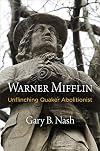
Warner Mifflin—energetic, uncompromising, and reviled—was the key figure connecting the abolitionist movements before and after the American Revolution. A descendant of one of the pioneering families of William Penn's "Holy Experiment," Mifflin upheld the Quaker pacifist doctrine, carrying the peace testimony to Generals Howe and Washington across the blood-soaked Germantown battlefield and traveling several thousand miles by horse up and down the Atlantic seaboard to stiffen the spines show more of the beleaguered Quakers, harried and exiled for their neutrality during the war for independence. Mifflin was also a pioneer of slave reparations, championing the radical idea that after their liberation, Africans in America were entitled to cash payments and land or shared crop arrangements. Preaching "restitution," Mifflin led the way in making Kent County, Delaware, a center of reparationist doctrine.
After the war, Mifflin became the premier legislative lobbyist of his generation, introducing methods of reaching state and national legislators to promote antislavery action. Detesting his repeated exercise of the right of petition and hating his argument that an all-seeing and affronted God would punish Americans for "national sins," many Southerners believed Mifflin was the most dangerous man in America—"a meddling fanatic" who stirred the embers of sectionalism after the ratification of the Constitution of 1787. Yet he inspired those who believed that the United States had betrayed its founding principles of natural and inalienable rights by allowing the cancer of slavery and the dispossession of Indian lands to continue in the 1790s.
Writing in beautiful prose and marshaling fascinating evidence, Gary B. Nash constructs a convincing case that Mifflin belongs in the Quaker antislavery pantheon with William Southeby, Benjamin Lay, John Woolman, and Anthony Benezet. - from the publisher show less
After the war, Mifflin became the premier legislative lobbyist of his generation, introducing methods of reaching state and national legislators to promote antislavery action. Detesting his repeated exercise of the right of petition and hating his argument that an all-seeing and affronted God would punish Americans for "national sins," many Southerners believed Mifflin was the most dangerous man in America—"a meddling fanatic" who stirred the embers of sectionalism after the ratification of the Constitution of 1787. Yet he inspired those who believed that the United States had betrayed its founding principles of natural and inalienable rights by allowing the cancer of slavery and the dispossession of Indian lands to continue in the 1790s.
Writing in beautiful prose and marshaling fascinating evidence, Gary B. Nash constructs a convincing case that Mifflin belongs in the Quaker antislavery pantheon with William Southeby, Benjamin Lay, John Woolman, and Anthony Benezet. - from the publisher show less
This is the definitive account of the political battle over the National History Standards of the 1990s, but that's not all it has to offer. Nash and his colleagues give historical perspective through accounts of other, similar battles over the teaching of history in the U.S. and abroad. It is indispensable to historians who are thinking of venturing into the public square to contribute to some current debate — something that I agree historians ought to do, but not naively.
I have held show more onto the book's evocative metaphor of the "sheepskin curtain," meaning the cultural gulf between professional (academic) historians and the public schools and museums. I suspect this book has played a role in helping, if not to tear down, then at least to draw aside this curtain since the '90s. show less
I have held show more onto the book's evocative metaphor of the "sheepskin curtain," meaning the cultural gulf between professional (academic) historians and the public schools and museums. I suspect this book has played a role in helping, if not to tear down, then at least to draw aside this curtain since the '90s. show less
A sort of joint biography of Jefferson, Kósciuszko, and Agrippa "Grippy" Hull, a free black man who served Kósciuszko during the Revolution and went on to lead a successful life in Stockbridge, Massachusetts after the war. Nash and Hodges focus on the connections between the three men, though Hull by necessity gets short shrift given the dearth of surviving documentation of his life (and the authors do the thing that annoys me most when writing about someone in this situation: "supposing" show more that Hull "must have read" such and such, or presuming that he felt or acted in ways that we simply cannot know).
The bulk of the book is concerned with Jefferson's handling of Kósciuszko's will, which was designed to allow Jefferson to use the proceeds from Kósciuszko's American estates to fund the education and manumission of Jefferson's slaves and others. Jefferson decided he didn't want to abide by these terms, and spent several years trying to figure out how to extricate himself from the wishes of his longtime friend. The legal maneuvering was complex, and Nash and Hodges ably reconstruct the narrative of this period.
Imperfect, but very interesting nonetheless, and for its account of the Jefferson-Kósciuszko estate wranglings, quite worth a read. show less
The bulk of the book is concerned with Jefferson's handling of Kósciuszko's will, which was designed to allow Jefferson to use the proceeds from Kósciuszko's American estates to fund the education and manumission of Jefferson's slaves and others. Jefferson decided he didn't want to abide by these terms, and spent several years trying to figure out how to extricate himself from the wishes of his longtime friend. The legal maneuvering was complex, and Nash and Hodges ably reconstruct the narrative of this period.
Imperfect, but very interesting nonetheless, and for its account of the Jefferson-Kósciuszko estate wranglings, quite worth a read. show less
The unknown American Revolution : the unruly birth of democracy and the struggle to create America by Gary B. Nash
Nash's retelling of the American Revolution focuses on the disenfanchised: women, Negroes (slave and free), Native Americans, and men of modest means--mariners, artisans, small merchants, farmers. He relates these people's stories to the received narrative to describe how the people that won the war may have lost the revolution, as a real possibility existed at the time for the abolition of slavery, enhancement of the rights of women (though probably not full citizenship), honorable show more treatment of the natives and construction of a political/economic system that did not privilege wealth.
Nash doesn't denigrate (nor do I) what was achieved in the American Revolution, but only recounts what may have been a series of lost opportunities. My take is that although the War for Independance has been over for centuries, the Revolution is still underway. I highly recommend this book. show less
Nash doesn't denigrate (nor do I) what was achieved in the American Revolution, but only recounts what may have been a series of lost opportunities. My take is that although the War for Independance has been over for centuries, the Revolution is still underway. I highly recommend this book. show less
Lists
Awards


You May Also Like


Associated Authors
Statistics
- Works
- 77
- Also by
- 12
- Members
- 2,646
- Popularity
- #9,705
- Rating
- 3.8
- Reviews
- 23
- ISBNs
- 216
- Languages
- 1
- Favorited
- 2