
Alfred Runte
Author of National Parks: The American Experience, 4th Edition
About the Author
Image credit: Alfred Runte
Works by Alfred Runte
Associated Works
Major Problems in the History of the American West: Documents and Essays (1989) — Contributor — 65 copies
Tagged
Common Knowledge
- Canonical name
- Runte, Alfred
- Other names
- Runte, Al
- Birthdate
- 1947-04-16
- Gender
- male
- Education
- University of California, Santa Barbara (PhD)
Illinois State University (MA)
State University of New York, Binghamton - Occupations
- environmental historian
politician
author
historian - Organizations
- University of Washington
Baylor University - Nationality
- USA
- Birthplace
- Binghamton, New York, USA
- Places of residence
- Seattle, Washington, USA
- Associated Place (for map)
- USA
Members
Reviews
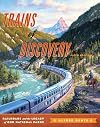
In [Trains of Discovery], Alfred Runte brings to life both the public and behind-the-scene role that America's railroads played in the development of our National Park system. It's fascinating to learn that the railroad barons were among the early preservationists. Runte makes a convincing argument that this was a case of enlightened self-interest -- the railroaders wanted beautiful SCENERY for their passengers to view out the windows of their trains, not an ocean of billboards. The lure of show more marvelous scenery was used to promote travel on their railroads -- but all that promotion also popularized the establishment of the National Parks which have, in turn, preserved some of the most stunning landscapes in our nation.
Runte also comments on the present and possible future role of railroads in preservation, protecting vulnerable parks from the crowding, emissions, and acres of parking lots that accompany ever-increasing motor-vehicle traffic.
The book contains plentiful and beautiful illustrations, many in color, including period railroad posters, post-cards, dining car menus, and magazine ads, as well as paintings and photographs of some of America's most scenic spots and the railroads which have served them.
Runte's earlier volumes had focused on the Western US, where the railroads had the most interest and influence in the development of the parks. But this volume includes information about sites in the East, too -- particulary in Pennsylvania and New England.
At around 150 pages with many pages of illustrations, this was a quick read. But I'm sure I'll look back over it again and again to enjoy the wonderful illustrations. show less
Runte also comments on the present and possible future role of railroads in preservation, protecting vulnerable parks from the crowding, emissions, and acres of parking lots that accompany ever-increasing motor-vehicle traffic.
The book contains plentiful and beautiful illustrations, many in color, including period railroad posters, post-cards, dining car menus, and magazine ads, as well as paintings and photographs of some of America's most scenic spots and the railroads which have served them.
Runte's earlier volumes had focused on the Western US, where the railroads had the most interest and influence in the development of the parks. But this volume includes information about sites in the East, too -- particulary in Pennsylvania and New England.
At around 150 pages with many pages of illustrations, this was a quick read. But I'm sure I'll look back over it again and again to enjoy the wonderful illustrations. show less
 This review was written for LibraryThing Early Reviewers.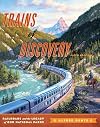
Taking the reader back 100 years into America's past, this book celebrates the marriage of private railroad corporations and the National Park System. Using the National Parks as a lure, the railroads built special lines and hotels to accommodate thousands of tourists a year, mainly in the summer months. Sadly, this era was short-lived as the popularity of the family car soon supplanted the railroad as the primary means of visiting the great National Parks of the western United States. show more Railroads are making a comeback, however, and the author includes a list of rail excursions to National Parks that are available today. Makes a person want to go explore!
There's a picture near the end of the book that contrasts the embankment of I-70 west of Georgetown, Colorado with the Georgetown Loop Railroad in the distance. The interstate is stark, flat, and stripped of all natural beauty while the railroad is nestled down in the contours of the hillside with magnificent evergreen trees practically hiding it's very existence. That one picture tells the story of the entire book.
The book itself is beautiful. Practically every page has reproductions of railroad advertisements, National Park brochures, menus and photographs of the passenger trains that served the area. It will appeal to anyone who appreciates the National Parks, railroad history, and western art. I loved it. show less
There's a picture near the end of the book that contrasts the embankment of I-70 west of Georgetown, Colorado with the Georgetown Loop Railroad in the distance. The interstate is stark, flat, and stripped of all natural beauty while the railroad is nestled down in the contours of the hillside with magnificent evergreen trees practically hiding it's very existence. That one picture tells the story of the entire book.
The book itself is beautiful. Practically every page has reproductions of railroad advertisements, National Park brochures, menus and photographs of the passenger trains that served the area. It will appeal to anyone who appreciates the National Parks, railroad history, and western art. I loved it. show less
This review was written for LibraryThing Early Reviewers.This book is an interesting melding of stories of the railroad with stories of the National Parks System. The premise of the book is different than you may have heard of in the past; that the development and success of National Parks owes a debt of gratitude to the railroads. It also makes the (very strong) case that the intrusion of the rails into our National Parks would have been far less offensive than the current rash of automobiles.
There is no doubt that Runte’s love for both the show more rails and National Parks colors his arguments. But that does not detract from the beauty, nor the message of this book. Drawing heavily from his personal collection as well as the collections of others, the book is heavily populated with beautiful prints of advertising brochures and menus and flyers and paintings, all originally designed to draw people to the National Parks. The book starts with a background on how trains have worked with nature, not against it. It then discusses the role of Yellowstone (starting where any book on National Parks must begin) and works its way through the rise of the parks and the railroads. It then describes how the role of the railroads in our National Parks began to fall. It does try to sound a good note towards the end with an entire chapter on the revitalization of the Grand Canyon railroad.
For me, personally, one of the most intriguing chapters was on the 1915 Pan American-Pacific Exposition in San Francisco. Pavilion after pavilion, sponsored by various rail lines, showed the treasures that were the new National Parks. This included recreations of Yellowstone and Glacier and the Grand Canyon (not quite a National Park at that point, but that is beside the point.) This is an aspect of the growth of the nation and the growth of National Parks that is seldom explored.
If there is one distraction, it is that the make up of the book is a little choppy. A middle section is a portfolio that includes some of the best art, but interrupts the flow of the narrative. The last section – a list of areas where trains are still in proximity to the parks – appears stuck on; more appendix than actual “chapter.”
These are quibbles. The book is an interesting read. But the real draw is the art – art worth reproducing that you probably won’t see anywhere else. show less
There is no doubt that Runte’s love for both the show more rails and National Parks colors his arguments. But that does not detract from the beauty, nor the message of this book. Drawing heavily from his personal collection as well as the collections of others, the book is heavily populated with beautiful prints of advertising brochures and menus and flyers and paintings, all originally designed to draw people to the National Parks. The book starts with a background on how trains have worked with nature, not against it. It then discusses the role of Yellowstone (starting where any book on National Parks must begin) and works its way through the rise of the parks and the railroads. It then describes how the role of the railroads in our National Parks began to fall. It does try to sound a good note towards the end with an entire chapter on the revitalization of the Grand Canyon railroad.
For me, personally, one of the most intriguing chapters was on the 1915 Pan American-Pacific Exposition in San Francisco. Pavilion after pavilion, sponsored by various rail lines, showed the treasures that were the new National Parks. This included recreations of Yellowstone and Glacier and the Grand Canyon (not quite a National Park at that point, but that is beside the point.) This is an aspect of the growth of the nation and the growth of National Parks that is seldom explored.
If there is one distraction, it is that the make up of the book is a little choppy. A middle section is a portfolio that includes some of the best art, but interrupts the flow of the narrative. The last section – a list of areas where trains are still in proximity to the parks – appears stuck on; more appendix than actual “chapter.”
These are quibbles. The book is an interesting read. But the real draw is the art – art worth reproducing that you probably won’t see anywhere else. show less
This review was written for LibraryThing Early Reviewers.Trains of Discovery is a look at the lengthy ties between passenger rail and America's national parks.
The primary draw of this book is the beautiful reproductions of some of the art work that has been used to advertise the national parks and the railways. The railroads commissioned magnificent artists to produce this advertising and it shows.
That said, the book's imagery grabbed me but the story did not. It was well written but the overall story was simply not that engaging to me. show more
Ultimately, I enjoyed paging through the book with my young, train-obsessed son but it is not a book that I am likely to try and read again. show less
The primary draw of this book is the beautiful reproductions of some of the art work that has been used to advertise the national parks and the railways. The railroads commissioned magnificent artists to produce this advertising and it shows.
That said, the book's imagery grabbed me but the story did not. It was well written but the overall story was simply not that engaging to me. show more
Ultimately, I enjoyed paging through the book with my young, train-obsessed son but it is not a book that I am likely to try and read again. show less
This review was written for LibraryThing Early Reviewers.You May Also Like


Associated Authors
Statistics
- Works
- 8
- Also by
- 1
- Members
- 298
- Popularity
- #78,714
- Rating
- 3.8
- Reviews
- 11
- ISBNs
- 29
