
Frances M. Young
Author of From Nicaea to Chalcedon: A Guide to the Literature and Its Background
About the Author
Frances M. Young was Edward Cadbury Professor of Theology in the University of Birmingham, UK. She began teaching in 1971, and is the author of many books and articles. She is known particularly for Biblical Exegesis and the Formation of Christian Culture (1997), as well as Pace to Face (1990), an show more account of life with her profoundly disabled son, Arthur. In retirement she continues to write and to lead worship as a Methodist minister. show less
Image credit: Berkley Center for Religion, Peace & World Affairs
Works by Frances M. Young
The Cambridge History of Christianity: Volume 1, Origins to Constantine (2006) 106 copies, 2 reviews
Scripture, the Genesis of Doctrine: Doctrine and Scripture in Early Christianity, vol 1. (2023) 25 copies
Scripture in Doctrinal Dispute: Doctrine and Scripture in Early Christianity, vol. 2 (2024) 16 copies, 1 review
The Use of Sacrificial Ideas in Greek-Christian Writers from the New Testament to John Chrysostom (1979) 11 copies
Inspiring Service: Interfaith Remarks With Elder Jeffrey R. Holland at Oxford (2019) — Contributor — 4 copies
By Frances M. Young - From Nicaea to Chalcedon: A Guide to the Literature and Its Backg (1983-11-16) [Hardcover] (1983) 1 copy
Studia Patristica. Vol. XXXIX - Historica, Biblica, Ascetica et Hagiographica (2006) — Editor — 1 copy
Ways of Reading Scripture: Collected Papers (Wissenschaftliche Untersuchungen zum Neuen Testament) (2018) 1 copy
Face to Face 1 copy
Associated Works
The Cambridge History of Greek and Roman Political Thought (2000) — Contributor — 81 copies, 2 reviews
The New Cambridge History of the Bible: Volume 1, From the Beginnings to 600 (2013) — Contributor — 37 copies
Christology, Hermeneutics, and Hebrews: Profiles from the History of Interpretation (2012) — Contributor — 25 copies
Within the Love of God: Essays on the Doctrine of God in Honour of Paul S. Fiddes (2014) — Contributor — 9 copies
Crossing the boundaries : essays in Biblical interpretation in honour of Michael D. Goulder (1994) — Contributor — 6 copies
Studia Patristica. Volume XLVI: Tertullian to Tyconius, Egypt before Nicaea, Athanasius and his Opponents (2010) — Contributor — 6 copies
Tagged
Common Knowledge
- Legal name
- Young, Frances Margaret
- Birthdate
- 1939
- Gender
- female
- Education
- University of Cambridge
- Occupations
- Methodist minister
professor - Nationality
- UK
- Places of residence
- Birmingham, England, UK
- Associated Place (for map)
- England, UK
Members
Reviews
Scripture in Doctrinal Dispute: Doctrine and Scripture in Early Christianity, vol. 2 by Frances M. Young
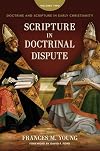
Summary: A study of how scripture was used in the doctrinal controversies concerning the Trinity and Christology.
One of the challenge early teachers in the church faced was how to articulate the evidence of the biblical text when discussing the nature of God as well as the nature of Christ as the Incarnate Son of God. These questions came to a head in the fourth and fifth centuries. The Council of Nicea in 325 AD and Constantinople in 381 AD articulated the church’s doctrine of the show more Trinity, of God’s singular nature subsisting in three persons. The Council of Chalcedon in 451 AD addressed the nature of the Incarnate Christ as the person of the divine Son, who subsisted in two natures, divine and human.
What Frances M. Young does in this second volume of her study of doctrine and scripture in early Christianity is show how the scriptures were used by the different parties to these controversies. The book begins in setting the stage with the discussions on the nature of God in the earliest centuries where the Oneness of God was affirmed but also the three persons of the Godhead. The ambiguities that remained led to further controversy.
Chapters 2 and 3 focus on the discussions of the Trinity. Chapter 2 addresses the challenge of Arius and his use of scripture and the response of Athanasius and Basil of Caesarea. Chapter 3 focuses on the Cappadocians and the decisive work of Gregory of Nyssa leading up to Constantinople. Chapters 4 and 5 turn to the unresolved questions about Christology. Chapter 4 contrasts the exegesis of Hebrews by Chrysostom and the interpretation of the Gospel of John by Cyril of Alexander. Chapter 5 centers on the polemic between Cyril and Nestorius over whether Mary was theotokos (Cyril) or christotokos (Nestorius).
Then Chapter 6 summarizes Young’s findings of the use of scripture. One was the importance of the Rule of Faith and baptismal creeds as summaries of scripture. These didn’t resolve controversy but pushed the church to articulate clearly the nature of the Godhead, Father, Son and Spirit, in whose name new converts were baptized and the person of the Lord Jesus Christ who they confessed. Young also observes how the process of “prooftexting” and the effort to express the overall teaching called for extrabiblical terms to express the mind of scripture, terms like ousia (substance) and hypostases (persons). Citing Augustine, Young notes both how doctrine informs right reading of scripture and the wrestling with the body of scripture leads to refined doctrinal understanding. She concludes that it is in worship where scripture and doctrine coinhere.
I would say in reading Young, one has to work to keep the forest in view with all the “trees” in the discussion. In addition to keeping a thumb in the detailed table of contents, it might have helped to have some summaries in tabular form. Absent these, the studious reader may want to take their own notes and outline.
Young describes a process far “messier” than many of us might like. Even after the councils, not all agree, as is the case with the Nestorians. Her discussion also underscores that everyone here treated scripture as authoritative and appealed to the Rule of Faith. As I personally consider the outcomes of the Councils, I see not a power struggle with winners and losers but a process superintended by God that led to wise formulations that guide us well to this day in articulating the sense of scripture.
_____________
Disclosure of Material Connection: I received a complimentary copy of this book from the publisher for review. show less
One of the challenge early teachers in the church faced was how to articulate the evidence of the biblical text when discussing the nature of God as well as the nature of Christ as the Incarnate Son of God. These questions came to a head in the fourth and fifth centuries. The Council of Nicea in 325 AD and Constantinople in 381 AD articulated the church’s doctrine of the show more Trinity, of God’s singular nature subsisting in three persons. The Council of Chalcedon in 451 AD addressed the nature of the Incarnate Christ as the person of the divine Son, who subsisted in two natures, divine and human.
What Frances M. Young does in this second volume of her study of doctrine and scripture in early Christianity is show how the scriptures were used by the different parties to these controversies. The book begins in setting the stage with the discussions on the nature of God in the earliest centuries where the Oneness of God was affirmed but also the three persons of the Godhead. The ambiguities that remained led to further controversy.
Chapters 2 and 3 focus on the discussions of the Trinity. Chapter 2 addresses the challenge of Arius and his use of scripture and the response of Athanasius and Basil of Caesarea. Chapter 3 focuses on the Cappadocians and the decisive work of Gregory of Nyssa leading up to Constantinople. Chapters 4 and 5 turn to the unresolved questions about Christology. Chapter 4 contrasts the exegesis of Hebrews by Chrysostom and the interpretation of the Gospel of John by Cyril of Alexander. Chapter 5 centers on the polemic between Cyril and Nestorius over whether Mary was theotokos (Cyril) or christotokos (Nestorius).
Then Chapter 6 summarizes Young’s findings of the use of scripture. One was the importance of the Rule of Faith and baptismal creeds as summaries of scripture. These didn’t resolve controversy but pushed the church to articulate clearly the nature of the Godhead, Father, Son and Spirit, in whose name new converts were baptized and the person of the Lord Jesus Christ who they confessed. Young also observes how the process of “prooftexting” and the effort to express the overall teaching called for extrabiblical terms to express the mind of scripture, terms like ousia (substance) and hypostases (persons). Citing Augustine, Young notes both how doctrine informs right reading of scripture and the wrestling with the body of scripture leads to refined doctrinal understanding. She concludes that it is in worship where scripture and doctrine coinhere.
I would say in reading Young, one has to work to keep the forest in view with all the “trees” in the discussion. In addition to keeping a thumb in the detailed table of contents, it might have helped to have some summaries in tabular form. Absent these, the studious reader may want to take their own notes and outline.
Young describes a process far “messier” than many of us might like. Even after the councils, not all agree, as is the case with the Nestorians. Her discussion also underscores that everyone here treated scripture as authoritative and appealed to the Rule of Faith. As I personally consider the outcomes of the Councils, I see not a power struggle with winners and losers but a process superintended by God that led to wise formulations that guide us well to this day in articulating the sense of scripture.
_____________
Disclosure of Material Connection: I received a complimentary copy of this book from the publisher for review. show less
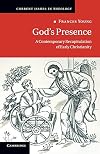
This is a profoundly moving book. Now, in retirement, Frances Young is trying to bring together three major themes in her life. One is her career as a theologian and teacher specialising in patristic theology. Another is as mother and carer of Arthur, severely handicaped from birth. The third is as an Methodist minister, preaching to and interacting with modern congregations. As she considers important areas of doctrine, she tries to bring all three threads into a single yarn that works show more together. show less

The first book by Frances Young that I ever read was 'Face to Face' - the story of dealing with a severly handicapped son. Several years later I read 'the Making of the Creeds' as part of a theology course. Both are very good books, but it took me a while to connect the two. Since then I read anything of hers I get my hands on.
This book is in many ways more challenging to read than either of the first two. It is a very personal theology of the connection in her life of themes of those two show more books - living with the severly handicapped, and studying the early Christian Fathers - combined with the love of Christian Hymnody that could be expected of a Methodist minister.
The introduction has a long reference list of names and theological terms. I found that I did fairly well on recognizing the people. Less well on the words - and that list was not complete enough for me. This is serious theology, and although it might well be useful for someone not used to theological writing, it might be difficult to get through.
I love hymns, and found myself singing several that she mentions, but as neither Methodist nor British, there were many more that I did not recognize. She also includes a lot of references to her personal life and cultural background that were sometimes hard to follow.
I called this book 'challenging' . I mean that in two ways. It was not easy to read. And it will make changes in the way I think. The later is more important. show less
This book is in many ways more challenging to read than either of the first two. It is a very personal theology of the connection in her life of themes of those two show more books - living with the severly handicapped, and studying the early Christian Fathers - combined with the love of Christian Hymnody that could be expected of a Methodist minister.
The introduction has a long reference list of names and theological terms. I found that I did fairly well on recognizing the people. Less well on the words - and that list was not complete enough for me. This is serious theology, and although it might well be useful for someone not used to theological writing, it might be difficult to get through.
I love hymns, and found myself singing several that she mentions, but as neither Methodist nor British, there were many more that I did not recognize. She also includes a lot of references to her personal life and cultural background that were sometimes hard to follow.
I called this book 'challenging' . I mean that in two ways. It was not easy to read. And it will make changes in the way I think. The later is more important. show less
I made it through this time! Quite honestly, I was way out of my depth, but Frances Young must have anticipated that, because most chapters ended with a summary of what all of that meant. Also the last chapter of the book is again a summary of the conclusions this whole study lead her to. I understand that! No, don't just read the conclusions. The journey is also important, and I think I have come away with several new ideas, and also a few books to read. I might even have another go at show more Augustine's Confessions. show less
You May Also Like


Associated Authors
Statistics
- Works
- 33
- Also by
- 12
- Members
- 1,324
- Popularity
- #19,418
- Rating
- 4.0
- Reviews
- 11
- ISBNs
- 75
- Languages
- 1
- Favorited
- 1