
Frances FitzGerald
Author of Fire in the Lake: The Vietnamese and the Americans in Vietnam
About the Author
Frances FitzGerald lives in New York.
Image credit: Credit: David Shankbone, 2007
Works by Frances FitzGerald
Cities on a Hill: A Brilliant Exploration of Visionary Communities Remaking the American Dream (1986) 292 copies, 1 review
Way Out There in the Blue: Reagan, Star Wars and the End of the Cold War (2000) 214 copies, 3 reviews
Associated Works
Last Night I Dreamed of Peace: The Diary of Dang Thuy Tram (2005) — Introduction, some editions — 370 copies, 13 reviews
Reporting Vietnam: American Journalism 1959-1969, Volume 1 (1998) — Contributor — 345 copies, 3 reviews
What Orwell Didn't Know: Propaganda and the New Face of American Politics (2007) — Contributor — 132 copies, 1 review
Tagged
Common Knowledge
- Canonical name
- FitzGerald, Frances
- Birthdate
- 1940-10-21
- Gender
- female
- Education
- Radcliffe College
Foxcroft School, Middleburg, Virginia, USA - Occupations
- journalist
historian - Awards and honors
- American Academy of Arts and Letters Academy Award (Literature, 1973)
- Relationships
- Sterba, James P. (husband)
- Nationality
- USA
- Birthplace
- New York, New York, USA
- Places of residence
- New York, New York, USA
Maine, USA - Associated Place (for map)
- USA
Members
Reviews
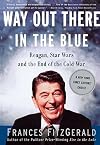
Reagan's legacy is a complex topic, and unfortunately I felt that Way Out There in the Blue didn't do it justice. FitzGerald used Strategic Missile Defense to approach Reagan's time in office, but SDI never amounted to much. At best, it was just a poker chip bounced around between the Department of Defense, State, the National Security Council, and arms treaty negotiators, as various factions within the American government tried to advance any kind of coherent Soviet policy. Reagan and his show more administration do not come off looking well in this account. The man himself is profoundly disinterested in both policy and personnel, the movie star who sees his job as selling the American public on whatever his advisers have decided. Reagan was an idealist in the worst sense of the word, someone who dreamed of a world without nuclear weapons and of an American triumph, but without the fortitude to work out the messy details of his technologically impossible visions. Perhaps the most damning flaw is that despite the billions of dollars poured into SDI and new strategic weapons during the 80s, the Soviets never bit at the arms race, keeping their expenditures essentially flat without changing the classic Mutually Assured Destruction balance. According to FitzGerald, the USSR fell because of internal flaws and Gorbachev's overly ambitious reforms, not anything Reagan did. If that's the case, why should we even care about Reagan's foreign policy? And finally, despite the billions of dollars invested in basic research, science and scientists barely appear in this work, aside from a few pages with Edward Teller. How can you write the history of a scientifically dependent weapons system without the science?
There's probably an interesting (and much more theoretically ambitious) book about the imaginaries of strategic missile defense out there, but it isn't this book. show less
There's probably an interesting (and much more theoretically ambitious) book about the imaginaries of strategic missile defense out there, but it isn't this book. show less

FitzGerald furnishes a dense, well-documented narrative that gave me insight into and a surprising amount of context for my own family history, as well as a better grasp of the forces at work in the current right-versus-left political and cultural wars in the U.S.
It's a pretty hefty volume, and not light reading. Its tone is scholarly but not overly academic. The way that it put things I thought I knew into a wider context and gave them new meaning kept me going.
The background and growth of show more the various evangelical movements, their impact on the past century and a half of social and political history in the U.S., and in particular the role of high-profile evangelists and religious leaders made for fascinating reading. I wish I'd known more about these things decades ago. It might not have changed what I did, but it would have given me a better understanding of the context in which I grew up and perhaps a bit more charity toward some of the key players.
One of many arresting and paradigm-jostling passages reminds us that Christianity represents a "spiritual aristocracy" and that is is emphatically not democratic. With God on your side, you have no need of majoritarian politics. Those who can embrace the idea that God's use of flawed instruments and outnumbered troops redounds to his greater glory see victory differently from the rest of us. show less
It's a pretty hefty volume, and not light reading. Its tone is scholarly but not overly academic. The way that it put things I thought I knew into a wider context and gave them new meaning kept me going.
The background and growth of show more the various evangelical movements, their impact on the past century and a half of social and political history in the U.S., and in particular the role of high-profile evangelists and religious leaders made for fascinating reading. I wish I'd known more about these things decades ago. It might not have changed what I did, but it would have given me a better understanding of the context in which I grew up and perhaps a bit more charity toward some of the key players.
One of many arresting and paradigm-jostling passages reminds us that Christianity represents a "spiritual aristocracy" and that is is emphatically not democratic. With God on your side, you have no need of majoritarian politics. Those who can embrace the idea that God's use of flawed instruments and outnumbered troops redounds to his greater glory see victory differently from the rest of us. show less

A sweeping and comprehensive history of the evangelical movement from its earliest days to the brink of the 2016 presidential election. My interest in evangelism stems in part from living in upstate New York where the fiery evangelism of the Second Great Awakening flourished from the 1820's on. Charles Grandison Finney got his start in 1826 in the village of Westernville, NY that led to naming the region the "burned over district". Finney preached in our village church and even in our home show more as recounted in dramatic passages in his memoirs. The area was a hotbed of abolitionism, notable in one respect by the Oneida Institute, a religious training academy founded by Rev. George Gale, a pastor in our village church. (The institute is one of the first to offer training for black as well as white students.) Finney is identified as promoting the "new theology" that broke from traditional Calvinist doctrine to a pathway to salvation by individual choice of will.
Fitzgerald recounts the schism between the modernists and fundamentalists that erupted over the the challenges that Darwin's and others' science posed for the biblical view of origins. The modernists, to a great degree, moved away from biblical literalism as the complete explanation of origins. The fundamentalists held fast to the inerrancy of the bible as the only means to know history. While it seemed for a time that fundamentalism might fade, she points out that in many forms and through diverse acolytes it continued to be held widely across the nation, particularly, but not only, in the South. One aspect of evangelism that did change in the 20th century was the notion that evangelicals should maintain a separation from the secular world, that the realms of politics and culture were not within their purview. This began to be seen in the pronouncements of Billy Graham in his crusades and identification with presidents and other politicians. Engagement in politics grew substantially in the 80's and beyond by national religious organizations led by Jerry Falwell, Pat Robertson and James Dobson. Under the "pro-family" banner these leaders brought their followers deeply into political advocacy and became closely identified with the Republican party. Two issues drove these efforts and alliances: abortion and same-sex marriage/non-discrimination against homosexuals. (Fitzgerald terms these "below-the-belt issues). Courting leaders like Reagan, George H. W. Bush, Clinton and George W. Bush, the evangelicals were frustrated by the tepid results of their lobbying and political action. Despite their concerted efforts to inhibit access to abortions, Roe v Wade continues to buttress a woman's right to choose. The seismic shift in public acceptance toward sexual orientation and the rights of LGBTQ persons was seen by evangelical leaders as a devastating repudiation of their aims by the nation. What seems to have emerged as a reaction from these set backs is a sense of martyrdom and victimization of Christians on the religious right. There is also a strong connection of the most fervent of the evangelicals and right-wing movements like the Tea Party.
Emerging near the end of Bush's second term is a new school of evangelicals who connect their scriptural exegesis with other concerns such as poverty, disease and climate change. One leader said that evangelicals must let the world know what they are for, not just what they are against. show less
Fitzgerald recounts the schism between the modernists and fundamentalists that erupted over the the challenges that Darwin's and others' science posed for the biblical view of origins. The modernists, to a great degree, moved away from biblical literalism as the complete explanation of origins. The fundamentalists held fast to the inerrancy of the bible as the only means to know history. While it seemed for a time that fundamentalism might fade, she points out that in many forms and through diverse acolytes it continued to be held widely across the nation, particularly, but not only, in the South. One aspect of evangelism that did change in the 20th century was the notion that evangelicals should maintain a separation from the secular world, that the realms of politics and culture were not within their purview. This began to be seen in the pronouncements of Billy Graham in his crusades and identification with presidents and other politicians. Engagement in politics grew substantially in the 80's and beyond by national religious organizations led by Jerry Falwell, Pat Robertson and James Dobson. Under the "pro-family" banner these leaders brought their followers deeply into political advocacy and became closely identified with the Republican party. Two issues drove these efforts and alliances: abortion and same-sex marriage/non-discrimination against homosexuals. (Fitzgerald terms these "below-the-belt issues). Courting leaders like Reagan, George H. W. Bush, Clinton and George W. Bush, the evangelicals were frustrated by the tepid results of their lobbying and political action. Despite their concerted efforts to inhibit access to abortions, Roe v Wade continues to buttress a woman's right to choose. The seismic shift in public acceptance toward sexual orientation and the rights of LGBTQ persons was seen by evangelical leaders as a devastating repudiation of their aims by the nation. What seems to have emerged as a reaction from these set backs is a sense of martyrdom and victimization of Christians on the religious right. There is also a strong connection of the most fervent of the evangelicals and right-wing movements like the Tea Party.
Emerging near the end of Bush's second term is a new school of evangelicals who connect their scriptural exegesis with other concerns such as poverty, disease and climate change. One leader said that evangelicals must let the world know what they are for, not just what they are against. show less
Understanding That Old Time Religion
Readers who are not evangelical or fundamentalist Christians, who are not religious at all, or who merely pay lip service to the idea, will learn a lot from Frances Fitzgerald’s new, and at times numbingly detailed, history of these two groups, as well as their many splinters.
Perhaps the most intriguing and, when considered carefully in the light of reality, is the thorough infusion of religious mysticism into the world, as if God and the eternal were show more palpable participants in our physical world, or something like a parallel dimension separated by a most porous, frequently traversed membrane. Writing a sentence like the preceding, however, does little to capture how disturbing (yet also insightful) many will find the manifestations of an overarching, other worldly belief system, because whether or not you believe, it impacts your life. Fitzgerald illustrates how when she reaches “Jerry Falwell and the Moral Majority” (just short of halfway) and proceeds through most of the high points of recent history, with particular concentration and insight into the theologizing, philosophizing, and politicizing not visible to non, marginal, and true believers. For this reason, for its practical value, many will find this an invaluable history and resource.
While readers will find it tempting, given the length and density of this history, to sprint or just leap to current times, spending time with the first half of the history will help you frame current times. After all, the belief systems, some of which feel simplistic, spring from some deep thinking, particularly in the era when religion dominated the landscape. Thus, Fitzgerald takes readers through the First (1730-40s) and Second (1800 through the 1830s) Great Awakenings, the days of Calvinist Jonathan Edwards and the personalization of the religious experience, and Charles Finney’s “burnt-over district,” a period marked by the rise of revivalism and the jettisoning of rationalism in favor of emotion. Then follows the Civil War and wrapped around it from antebellum to post reconstruction the splintering over slavery and other issues related to the experience of religion. Finally, in the run up to current days, readers walk through the preaching of the latter 19th and early 20th centuries, from Dwight Moody to Billy Sunday, until they reach the days of the influential Falwell, the scandalous Jim and Tammy and Jimmy Swaggart, the monumentally influential Billy Graham, and, regardless of what you think of him, the immense influencer, the game changer extraordinaire, Pat Robertson.
The ground Fitzgerald tills here is a truck farm of religion, politics, business; of larger than life personalities; of theologies and philosophies that will strike nonbelievers as bizarre. You’ll learn much that may surprise you, too, such as the fact that before our days of politicalized religion, Protestants in their various manifestations agreed in steering clear of politics. How things have changed, indeed. show less
Readers who are not evangelical or fundamentalist Christians, who are not religious at all, or who merely pay lip service to the idea, will learn a lot from Frances Fitzgerald’s new, and at times numbingly detailed, history of these two groups, as well as their many splinters.
Perhaps the most intriguing and, when considered carefully in the light of reality, is the thorough infusion of religious mysticism into the world, as if God and the eternal were show more palpable participants in our physical world, or something like a parallel dimension separated by a most porous, frequently traversed membrane. Writing a sentence like the preceding, however, does little to capture how disturbing (yet also insightful) many will find the manifestations of an overarching, other worldly belief system, because whether or not you believe, it impacts your life. Fitzgerald illustrates how when she reaches “Jerry Falwell and the Moral Majority” (just short of halfway) and proceeds through most of the high points of recent history, with particular concentration and insight into the theologizing, philosophizing, and politicizing not visible to non, marginal, and true believers. For this reason, for its practical value, many will find this an invaluable history and resource.
While readers will find it tempting, given the length and density of this history, to sprint or just leap to current times, spending time with the first half of the history will help you frame current times. After all, the belief systems, some of which feel simplistic, spring from some deep thinking, particularly in the era when religion dominated the landscape. Thus, Fitzgerald takes readers through the First (1730-40s) and Second (1800 through the 1830s) Great Awakenings, the days of Calvinist Jonathan Edwards and the personalization of the religious experience, and Charles Finney’s “burnt-over district,” a period marked by the rise of revivalism and the jettisoning of rationalism in favor of emotion. Then follows the Civil War and wrapped around it from antebellum to post reconstruction the splintering over slavery and other issues related to the experience of religion. Finally, in the run up to current days, readers walk through the preaching of the latter 19th and early 20th centuries, from Dwight Moody to Billy Sunday, until they reach the days of the influential Falwell, the scandalous Jim and Tammy and Jimmy Swaggart, the monumentally influential Billy Graham, and, regardless of what you think of him, the immense influencer, the game changer extraordinaire, Pat Robertson.
The ground Fitzgerald tills here is a truck farm of religion, politics, business; of larger than life personalities; of theologies and philosophies that will strike nonbelievers as bizarre. You’ll learn much that may surprise you, too, such as the fact that before our days of politicalized religion, Protestants in their various manifestations agreed in steering clear of politics. How things have changed, indeed. show less
Lists
Awards


You May Also Like


Associated Authors
Statistics
- Works
- 6
- Also by
- 3
- Members
- 2,133
- Popularity
- #12,067
- Rating
- 4.0
- Reviews
- 30
- ISBNs
- 29
- Favorited
- 4