
Matt Kish
Author of Moby-Dick in Pictures: One Drawing for Every Page
Works by Matt Kish
Associated Works
The Graphic Canon, Vol. 3: From Heart of Darkness to Hemingway to Infinite Jest (2013) — Illustrator — 160 copies, 1 review
Tagged
Common Knowledge
- Gender
- male
Members
Reviews
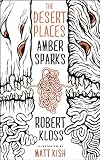
The Desert Places, by Amber Sparks and Robert Kloss, illustrated with eery satisfaction by Matt Kish, is “… an incomplete history of what passes for evil …” It can be read as a fabulist sequel to the Biblical Book of Job. In that ancient story — part folk-tale, part radical theology, part traditional Wisdom Literature — the “perfect and upright” Job dares to challenge God about the problem of evil. Why do the innocent suffer? Like a claimant in a lawsuit, Job files his show more complaint directly against the tribal god Yahweh. A courtroom drama follows, during which Job argues his case. We hear interminable examination and cross examination of Yahweh’s priests and wise men, until, at chapter 38, the big guy Himself takes the stand. Yahweh delivers from “out of the whirlwind” his blistering, sublime, majestic rant. I have always thought it the Bible’s greatest poem.
Job is smacked down. He bows and back-pedals and blubbers about “things too wonderful for me,” and then, having admitted his ignorance, his insignificance, is awarded damages. Case closed.
What Sparks and Kloss have done in The Desert Places is materialize a sublime, powerful voice capable of answering back to God. Job was just a mortal and out of his league. This voice emerges from what we call evil … Evil personified … a power on level with what Western religion thinks of as the “good” God. But God, Himself, had to be young once, “a nervous god, still virgin to creation,” who invented physical reality in which a fundamental element was this “negative, a dark absence, a clump of cells crying to come together. … a pause in the flickering before consciousness.”
“What passes for evil” was born as the “Clumsy thumbprint of an awkward deity.” (Kindle loc. 49)
Lyrical, frightening, and redundantly grotesque, The Desert Places allows “what passes for evil” to talk freely, to describe its terrible arc through history. “Once I thought I could be the lonely void, the hollow pit in the stomach, the vapor left behind by man’s voyage through the clouds. Once but no more. I am the counter-weight of the world.” (loc. 272) By the end, the reader knows Evil as a character in a character-driven story. That ending is not predictable. show less
Job is smacked down. He bows and back-pedals and blubbers about “things too wonderful for me,” and then, having admitted his ignorance, his insignificance, is awarded damages. Case closed.
What Sparks and Kloss have done in The Desert Places is materialize a sublime, powerful voice capable of answering back to God. Job was just a mortal and out of his league. This voice emerges from what we call evil … Evil personified … a power on level with what Western religion thinks of as the “good” God. But God, Himself, had to be young once, “a nervous god, still virgin to creation,” who invented physical reality in which a fundamental element was this “negative, a dark absence, a clump of cells crying to come together. … a pause in the flickering before consciousness.”
“What passes for evil” was born as the “Clumsy thumbprint of an awkward deity.” (Kindle loc. 49)
Lyrical, frightening, and redundantly grotesque, The Desert Places allows “what passes for evil” to talk freely, to describe its terrible arc through history. “Once I thought I could be the lonely void, the hollow pit in the stomach, the vapor left behind by man’s voyage through the clouds. Once but no more. I am the counter-weight of the world.” (loc. 272) By the end, the reader knows Evil as a character in a character-driven story. That ending is not predictable. show less
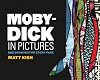
What a wonderful tribute to a great novel.
When I received Moby-Dick in Pictures I decided it was imperative I view the book simultaneously with [b:Moby-Dick|153747|Moby-Dick|Herman Melville|http://photo.goodreads.com/books/1327940656s/153747.jpg|2409320]. With a full reading list and an uncertainty about Melville's classic work, it took a little too long to get around to it. Thumbing through these artistic interpretations, I appreciated the work, but viewing these as I believe the artist show more intended them to be viewed, alongside Moby Dick, made them immensely richer.
There is so much that makes Moby-Dick in Pictures amazing: the sheer scope, the variety of styles and media, the progression of the artist. Kish worked on this project for over a year, making one picture on average for every day. Looking at these pictures, you get a sense of the day the artist was having, his relationship with the words on the page, his interpret ion of Melville. You see the growth of the art from a hobby to a passion. And knowing that Kish is not a trained artist makes his art all the more meaningful; here is an artist putting a face to his love of literature with no idea what he'll find; what I believe Kish may have found in the end was a reflection of himself in the waters of Herman Melville.
Reading the introduction is a requirement to better understanding and appreciating this book. Even without this understanding, I believe the work is strong. I am eager to see what other works of art Kish produces in the future.
*Received from Goodreads' First Reads program* show less
When I received Moby-Dick in Pictures I decided it was imperative I view the book simultaneously with [b:Moby-Dick|153747|Moby-Dick|Herman Melville|http://photo.goodreads.com/books/1327940656s/153747.jpg|2409320]. With a full reading list and an uncertainty about Melville's classic work, it took a little too long to get around to it. Thumbing through these artistic interpretations, I appreciated the work, but viewing these as I believe the artist show more intended them to be viewed, alongside Moby Dick, made them immensely richer.
There is so much that makes Moby-Dick in Pictures amazing: the sheer scope, the variety of styles and media, the progression of the artist. Kish worked on this project for over a year, making one picture on average for every day. Looking at these pictures, you get a sense of the day the artist was having, his relationship with the words on the page, his interpret ion of Melville. You see the growth of the art from a hobby to a passion. And knowing that Kish is not a trained artist makes his art all the more meaningful; here is an artist putting a face to his love of literature with no idea what he'll find; what I believe Kish may have found in the end was a reflection of himself in the waters of Herman Melville.
Reading the introduction is a requirement to better understanding and appreciating this book. Even without this understanding, I believe the work is strong. I am eager to see what other works of art Kish produces in the future.
*Received from Goodreads' First Reads program* show less
If the idea of flipping one by one through 500+ art prints depicting every single page of Moby Dick sounds at all appealing to you, then this is certainly the book for you. To me, that sounds incredible, and I’m so glad this book exists so I can do so.
This is not at all the way I pictured Moby Dick, but it’s the way Matt Kish does. And it was fascinating to get a glimpse into another interpretation. Not that many people have actually read Moby Dick, so it’s not always easy to have a show more detailed conversation about it. Flipping through this art, noticing the lines of text he pulls off each page and the ones he skips, and studying his interpretation of each scene felt like a conversation (albeit one in which not a lot was expected from me). A fantastic work of art. show less
This is not at all the way I pictured Moby Dick, but it’s the way Matt Kish does. And it was fascinating to get a glimpse into another interpretation. Not that many people have actually read Moby Dick, so it’s not always easy to have a show more detailed conversation about it. Flipping through this art, noticing the lines of text he pulls off each page and the ones he skips, and studying his interpretation of each scene felt like a conversation (albeit one in which not a lot was expected from me). A fantastic work of art. show less
At first glance, the low-tech art in this massive book seems odd and simplistic, but it soon grows obvious that Matt Kish's interpretation of Melville's novel is nothing short of inspired. He made one illustration a day, each referring to one page of the Signet Classics edition. It's an unbelievable feat, and a feast for the senses.
Awards

You May Also Like


Associated Authors
Statistics
- Works
- 3
- Also by
- 3
- Members
- 200
- Popularity
- #110,007
- Rating
- 3.6
- Reviews
- 10
- ISBNs
- 6
- Languages
- 1