
Vincent O'Sullivan (1) (1937–2024)
Author of An Anthology of Twentieth Century New Zealand Poetry
For other authors named Vincent O'Sullivan, see the disambiguation page.
About the Author
Vincent Gerald O'sullivan was born on September 28, 1937 in New Zealand. He is a poet, short story writer, novelist, editor, and playwright. He was chosen the New Zealand Poet Laureate for the term 2013-2015. He attended Grey Lynn and Sacred Heart College. He graduated from the University of show more Auckland aand Oxford University. He then went on to lecture at Victoria University of Wellington and the University of Waikato. His poetry titles include Our Burning Time, Bearings, Butcher and Co., and The Pilate Tapes. His short stories include: The Boy, The Bridge, The River; Survivals, and Palms and Minarets: Selected Stories. In 2015 his work, Grahame Syndney Paintings 1974-2014, made The New Zealand Best Seller List. (Bowker Author Biography) show less
Series
Works by Vincent O'Sullivan
The Collected Letters of Katherine Mansfield: Volume 2: 1918 - September 1919 (1987) — Editor — 15 copies
The Edinburgh Edition of the Collected Fiction of Katherine Mansfield: The Collected Fiction of Katherine Mansfield, 1916-1922 (The Collected Works of Katherine Mansfield EUP)… (2012) — Editor — 4 copies
New Zealand poetry in the sixties 2 copies
The Edinburgh Edition of the Collected Fiction of Katherine Mansfield: Fiction 1898--1915 (Volume 1) (2012) — Editor — 2 copies
Eminent Victorians : great teachers and scholars from Victoria's first 100 years (2000) — Editor — 2 copies
The Families {short story} 1 copy
Survivals and Other Stories 1 copy
Associated Works
Are Angels OK?: The Parallel Universes of New Zealand Writers and Scientists (2006) — Contributor — 16 copies, 1 review
The Colour of Distance: New Zealand Writers in France, French Writers in New Zealand (2006) — Contributor — 3 copies
Katherine Mansfield's Men: Perspectives from the 2004 Katherine Mansfield Birthplace Lecture Series (2004) — Contributor — 2 copies
Tagged
Common Knowledge
- Legal name
- O'Sullivan, Vincent O'Sullivan
- Birthdate
- 1937-09-28
- Date of death
- 2024-04-28
- Gender
- male
- Education
- University of Auckland
University of Oxford
St Joseph's Primary School, Grey Lynn, Auckland, New Zealand
Sacred Heart College, Auckland, New Zealand - Occupations
- poet
professor (English)
editor
novelist
short story writer
playwright (show all 8)
critic
biographer - Organizations
- Victoria University of Wellington
University of Waikato
New Zealand Listener - Awards and honors
- Robert Lord Writers Cottage Residency (2007-2008)
Prime Minister's Award for Literary Achievement (2006)
Katherine Mansfield Memorial Fellow (1994)
Michael King Writer’s Fellowship (2004)
Distinguished Companion of the New Zealand Order of Merit (2000)
New Zealand Poet Laureate (2013-15) - Nationality
- New Zealand
- Birthplace
- Auckland, New Zealand
- Places of residence
- Wellington, New Zealand
Auckland, New Zealand
Dunedin, New Zealand - Place of death
- Dunedin, New Zealand
- Associated Place (for map)
- New Zealand
Members
Reviews
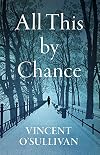
This is quite an artful novel. It has such elegance in the way the prose unfolds. It reminds me of Henry James, but without the meanness of Henry James. O'Sullivan, born in 1937, must have drawn on childhood memories of WWII and the immediate post-war era, because there is such a lively reality in this novel, and especially in the early scenes, set immediately after the war. It feels like we're running out of time to be graced with such fictional realism of these times. The author creates a show more sense of place that is very hard to pull off for writers born after the era they're writing about--something is lost once a given era recedes into the category of 'historical novel.'
There are so many small gestures and so many distinct and vivid observations in each scene. The things that O'Sullivan chooses to write about, and those he chooses to leave out, feel like unique and thoughtful choices, and nothing like the other 2018 novels I've read. A word that comes to mind to describe this novel is "genteel." An old-fashioned word for a quality that's difficult to find in contemporary fiction. The novel is filled with wonderful humane characters whom I cared about and who were remarkable individuals, people I would recognize if I ever met them.
My deep thanks to Marcus Hobson for sending me a copy of this wonderful novel! show less
There are so many small gestures and so many distinct and vivid observations in each scene. The things that O'Sullivan chooses to write about, and those he chooses to leave out, feel like unique and thoughtful choices, and nothing like the other 2018 novels I've read. A word that comes to mind to describe this novel is "genteel." An old-fashioned word for a quality that's difficult to find in contemporary fiction. The novel is filled with wonderful humane characters whom I cared about and who were remarkable individuals, people I would recognize if I ever met them.
My deep thanks to Marcus Hobson for sending me a copy of this wonderful novel! show less

I chose this thinking it was a shorter book than some others. However, it soon became clear that this would be a slow careful read.
The book is divided into five sections and as an introduction to each section there is a separate narrative about a woman in hospital. Each section is then narrated from the perspective of one of the characters and the reader is often a few pages in before discovering which character from the first section we are now following. In this way, all the main show more characters become fleshed out and witnessed from different perceptions. Sometimes going back in time and moving forward eventually, past the opening section. All the threads are skilfully drawn together to a satisfying conclusion. From the cover...
In the deceptively quiet Waikato of the 1930s and 1940s, a number of lives connect in a complex web of family ties, desire and violence. The events of this story also take in boxing, farming, devotion and perversion, ranging as far as Tasmania and the Spanish Civil War. Alex, tall and solitary, striding through this novel . . . Barbara, his first love . . . Bet, strong and unobtrusive . . . And the enigmatic man in the balaclava.
I very much enjoyed this book. The author has created a sense of place and time in NZ and I can appreciate why it won the Montana NZ Book Award in 1994. (8.5) show less
The book is divided into five sections and as an introduction to each section there is a separate narrative about a woman in hospital. Each section is then narrated from the perspective of one of the characters and the reader is often a few pages in before discovering which character from the first section we are now following. In this way, all the main show more characters become fleshed out and witnessed from different perceptions. Sometimes going back in time and moving forward eventually, past the opening section. All the threads are skilfully drawn together to a satisfying conclusion. From the cover...
In the deceptively quiet Waikato of the 1930s and 1940s, a number of lives connect in a complex web of family ties, desire and violence. The events of this story also take in boxing, farming, devotion and perversion, ranging as far as Tasmania and the Spanish Civil War. Alex, tall and solitary, striding through this novel . . . Barbara, his first love . . . Bet, strong and unobtrusive . . . And the enigmatic man in the balaclava.
I very much enjoyed this book. The author has created a sense of place and time in NZ and I can appreciate why it won the Montana NZ Book Award in 1994. (8.5) show less

This book combines some extremely good descriptive writing with a frustrating and unnecessarily complex structure. The core of the story is a quite gripping thriller, but the book takes over half of its length to get to that core, and much of the detailed character description in the first part of the novel could have been achieved more simply and more effectively by showing the three central characters reacting under stress in the second and much more compelling part of the novel. The show more journey is worthwhile in the end, but the motor of the story spends a long time getting started. show less
All This by Chance was the last for me to read of the four titles shortlisted for the 2019 Ockham New Zealand Book Awards. Like the other titles (see links to my reviews gathered in one place here) it explores what it means to tell the truth:
“They stood out for their ability to explore personal memory and collective mediation of the truth in new and provocative ways that have a lasting impact on the reader,” says the Fiction category convenor of judges Sally Blundell. (Auckland Literary show more Festival website, viewed 10/4/19)
O'Sullivan, who among other distinctions was Poet Laureate in NZ from 2013-2015, is of Irish heritage, but the characters in All This by Chance have a heritage that they themselves are unsure about. The story is told in parts, from the unshared perspective and chronology of different generations, but all in third person narrative which effectively distances the characters from each other.
The story begins in postwar Britain, where a shy young pharmacist called Stephen escapes from Auckland, a place he sometimes hated, to a place he knew nothing of. There in 1947, in London, under the benign paternalism of David Golson, he begins both his career and a puzzled engagement with a post-Holocaust world. He meets and marries Eva, a woman without a past because she knows nothing at all about her family. As a baby she had been adopted out from Berlin, and then sent to safety with a Quaker family in England when anti-Semitism was on the rise. So it is a shock when the past that Eva has been shielded from emerges into their lives: an elderly aunt of whom she knew nothing has survived the Holocaust and been brought to London to be with the sole remnant of her family.
Ruth goes with them when the couple set sail for Auckland. She is, they were warned, badly damaged by her experience, but the gulf between them is not just because of the impenetrable barrier of unshared languages. A specialist tells them one day that they should be grateful that she remembers so little of the dreadful years in the camp. Yet Ruth seemed to know Miss McGovern when they recognised each other on the ship, and Miss McGovern becomes a regular if not really welcome visitor in Auckland. The genesis of their curious friendship remains unexplained for a long time, until in 1976 a Holocaust researcher panics Miss McGovern into telling Stephen their shared story. She and her sister Irma were imprisoned because they would not renounce their beliefs as Jehovah's Witnesses, and Ruth had suffered brutal and enduring punishment because she tried to help Irma in a moment of crisis. Miss McGovern now is terrified that the researcher will trigger cruel memories which have mercifully been lost. show less
“They stood out for their ability to explore personal memory and collective mediation of the truth in new and provocative ways that have a lasting impact on the reader,” says the Fiction category convenor of judges Sally Blundell. (Auckland Literary show more Festival website, viewed 10/4/19)
O'Sullivan, who among other distinctions was Poet Laureate in NZ from 2013-2015, is of Irish heritage, but the characters in All This by Chance have a heritage that they themselves are unsure about. The story is told in parts, from the unshared perspective and chronology of different generations, but all in third person narrative which effectively distances the characters from each other.
The story begins in postwar Britain, where a shy young pharmacist called Stephen escapes from Auckland, a place he sometimes hated, to a place he knew nothing of. There in 1947, in London, under the benign paternalism of David Golson, he begins both his career and a puzzled engagement with a post-Holocaust world. He meets and marries Eva, a woman without a past because she knows nothing at all about her family. As a baby she had been adopted out from Berlin, and then sent to safety with a Quaker family in England when anti-Semitism was on the rise. So it is a shock when the past that Eva has been shielded from emerges into their lives: an elderly aunt of whom she knew nothing has survived the Holocaust and been brought to London to be with the sole remnant of her family.
Ruth goes with them when the couple set sail for Auckland. She is, they were warned, badly damaged by her experience, but the gulf between them is not just because of the impenetrable barrier of unshared languages. A specialist tells them one day that they should be grateful that she remembers so little of the dreadful years in the camp. Yet Ruth seemed to know Miss McGovern when they recognised each other on the ship, and Miss McGovern becomes a regular if not really welcome visitor in Auckland. The genesis of their curious friendship remains unexplained for a long time, until in 1976 a Holocaust researcher panics Miss McGovern into telling Stephen their shared story. She and her sister Irma were imprisoned because they would not renounce their beliefs as Jehovah's Witnesses, and Ruth had suffered brutal and enduring punishment because she tried to help Irma in a moment of crisis. Miss McGovern now is terrified that the researcher will trigger cruel memories which have mercifully been lost. show less
Awards


You May Also Like


Associated Authors
Statistics
- Works
- 55
- Also by
- 15
- Members
- 435
- Popularity
- #56,231
- Rating
- 3.8
- Reviews
- 6
- ISBNs
- 97
- Languages
- 1
- Favorited
- 1