

Geoffrey Samuel (1) (1946–)
Author of Civilized shamans : Buddhism in Tibetan societies
For other authors named Geoffrey Samuel, see the disambiguation page.
About the Author
Geoffrey Samuel is a Professor based in the School of History, Archaeology and Religion at Cardiff University, UK, and an experienced teacher or Tibetan religion.
Works by Geoffrey Samuel
The Origins of Yoga and Tantra: Indic Religions to the Thirteenth Century (2008) 44 copies, 3 reviews
Religion and the Subtle Body in Asia and the West: Between Mind and Body (Routledge Studies in Asian Religion and Philosophy) (2013) 13 copies
Tantric Revisionings: New Understandings of Tibetan Buddhism and Indian Religion (2005) 9 copies, 1 review
Tagged
Common Knowledge
- Birthdate
- 1946-11-22
- Gender
- male
- Education
- University of Cambridge (PhD|religion and Tibetan society)
- Occupations
- professor (religions, social anthropology, comparative sociology)
anthropologist
researcher - Organizations
- Cardiff University
University of Sydney
University of Newcastle - Nationality
- UK
- Associated Place (for map)
- UK
Members
Reviews
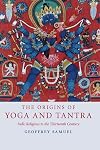
Samuel is an anthropologist and his book discusses the social and cultural contexts through which yoga and tantra developed, from roughly 400 BCE up to 1200 CE. So he doesn't go into deep meanings of terms such as "Tantra". Maybe it means continuity, like tradition, but it seems also to mean woven fabric - perhaps referring to the interweaving of relative and absolute truths, the mundane and the sacred, in our experience. Tantra is a method for dissolving our habitual tendency to maintain a show more wall between these poles. Samuel shows how this spiritual understanding of Tantra is interwoven with pragmatic magical purposes for such ritual practice, such as healing, or success in battle. Samuel doesn't give us any simple linear story of origination, but presents a multi-faceted collection of stories, some combination of which might be the ultimate explanation... to whatever extent any explanation can actually be ultimate.
Samuel does a great job of presenting and weighing evidence. While he is clearly a major player in the academic world where spirituality is held at arm's length as an object of study, Samuel does not in the least belittle that object's value. Indeed he manages an occasional humorous notice of the limitation of the academic approach: p. 334 mentions the "demythologized universe" that "most contemporary Western Academics" live in.
I am a very lazy and occasional student of the history of South Asian history, but at least I have learned the most elementary ABC over the years. This book certainly got me up toward FGH at the very least. I learned about the distinction between herders and farmers - ah, Cain and Abel, it is a widespread distinction - but here is seems to get embodied e.g. in the Mahabharata vs. the Ramayana.
This book doesn't tell us what happened but shows us much of the key evidence and some of the ways we can connect the dots to make a story from that. Many committed practitioners will likely be frustrated - this book won't side with any of the traditional stories. Nor does it dismiss the traditional stories. They are simply given a place alongside whatever other evidence the academic world has managed to piece together so far. Samuel seems quite up to date with the current state of research in this area. Anyone curious and open-minded is sure to learn a lot from this book. It is not so dense in academic minutae to frustrate an occasional amateur like myself. I imagine that even a committed academic will find some fresh and valuable perspectives here too. show less
Samuel does a great job of presenting and weighing evidence. While he is clearly a major player in the academic world where spirituality is held at arm's length as an object of study, Samuel does not in the least belittle that object's value. Indeed he manages an occasional humorous notice of the limitation of the academic approach: p. 334 mentions the "demythologized universe" that "most contemporary Western Academics" live in.
I am a very lazy and occasional student of the history of South Asian history, but at least I have learned the most elementary ABC over the years. This book certainly got me up toward FGH at the very least. I learned about the distinction between herders and farmers - ah, Cain and Abel, it is a widespread distinction - but here is seems to get embodied e.g. in the Mahabharata vs. the Ramayana.
This book doesn't tell us what happened but shows us much of the key evidence and some of the ways we can connect the dots to make a story from that. Many committed practitioners will likely be frustrated - this book won't side with any of the traditional stories. Nor does it dismiss the traditional stories. They are simply given a place alongside whatever other evidence the academic world has managed to piece together so far. Samuel seems quite up to date with the current state of research in this area. Anyone curious and open-minded is sure to learn a lot from this book. It is not so dense in academic minutae to frustrate an occasional amateur like myself. I imagine that even a committed academic will find some fresh and valuable perspectives here too. show less
CIVILIZED SHAMANS: Buddhism in Tibetan Societies (Smithsonian Series in Ethnographic Inquiry) by Geoffrey Samuel
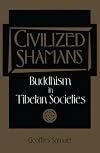
Samuel wrote Civilized Shamans for an anthropological audience, but the book has become a key text for students of Tibet’s history and religion. He proposes that shamanic influence is greater in Tibetan Buddhism than in other Asian Buddhist societies because Tibet lacked a strong, centralized state. Aside from his persuasive theory, the book is a brilliant, impartial overview of Tibetan Buddhist practice and its historical roots. He covers all culturally Tibetan regions – Tibet, Ladakh, show more Bhutan, Sikkim, Nepal and Tibetans in exile.
Samuel differentiates between Karmic, Bodhi and Pragmatic orientations in Buddhism. Karmic orientations are concerned with the cycle of samsara and rebirth; they maintain an external moral code for social order. The Bodhi orientation is soteriological: individual enlightenment means transcendental salvation. In the worldly, Pragmatic orientation, revered individuals intervene in the relationships of people and things to maintain well-being and harmony. All three orientations are found in all Buddhist societies to varying degrees, but he suggests that South Asian Theravadin states were strong enough to relegate shamanic practitioners to the margins of society. Shamanism in Tibetan societies, by contrast, compromised monastic authority and became centrally important through the role of the Tantric lama.
The book has three parts. Part One describes Tibetan societies in the premodern period. Samuel’s emphasis is their diversity; he categorises them into geographically distinct regions and describes their cultural differences. This shows the relatively small impact of a central authority in all areas other than central Tibet.
Part Two describes religion in premodern Tibetan societies. Here Samuel revisits the different orientations and explains how they appear in practice. He covers Tibetan values and worldview, folk religion, Tantra and Tantric deities, lamas, monks and yogins, the ‘crazy siddha’ tradition and gompa (monasteries or religious communities). Part Two finishes with a delightful chapter describing some recent lamas’ biographies – a good way to show how social and religious traditions synthesise in practice.
Part Three brings the themes of the first two parts together. It traces the philosophical and cultural lineages from early Buddhism in India through its decline there and growth in Tibet.
Samuel focuses on two uniquely Tibetan syntheses between the different Buddhist orientations: the Gelug tradition and the Rimed movement. He traces the development of shamanic, inspirational Buddhism and its clerical, rational counterpart since early Buddhism in India. The former relies on personal contact with an alternative reality for authority, the latter on a hierarchy of scholarship. These two distinct philosophical heritages offer alternate conceptions of enlightenment. The Gelugpa tradition, originating in Tsongk’apa’s work, leans towards a conceptual synthesis, the Rimed movement of the other schools towards revelatory practice.
Samuel’s work is a synthesis itself. He leaves no stone unturned; he navigates skilfully between large bodies of religious, philosophical, anthropological and historical literature, his detailed description always relevant to a wider picture. One thing I like best about his work is his clear thinking. Though this is an academic book, he does not indulge in needless jargon – he guides the reader through a potential quagmire of conflicting material with dexterity. For the most part he is careful to separate visionary history from historical fact, clearly, at the same time respecting his subject matter. His skilful presentation is inspiring. show less
Samuel differentiates between Karmic, Bodhi and Pragmatic orientations in Buddhism. Karmic orientations are concerned with the cycle of samsara and rebirth; they maintain an external moral code for social order. The Bodhi orientation is soteriological: individual enlightenment means transcendental salvation. In the worldly, Pragmatic orientation, revered individuals intervene in the relationships of people and things to maintain well-being and harmony. All three orientations are found in all Buddhist societies to varying degrees, but he suggests that South Asian Theravadin states were strong enough to relegate shamanic practitioners to the margins of society. Shamanism in Tibetan societies, by contrast, compromised monastic authority and became centrally important through the role of the Tantric lama.
The book has three parts. Part One describes Tibetan societies in the premodern period. Samuel’s emphasis is their diversity; he categorises them into geographically distinct regions and describes their cultural differences. This shows the relatively small impact of a central authority in all areas other than central Tibet.
Part Two describes religion in premodern Tibetan societies. Here Samuel revisits the different orientations and explains how they appear in practice. He covers Tibetan values and worldview, folk religion, Tantra and Tantric deities, lamas, monks and yogins, the ‘crazy siddha’ tradition and gompa (monasteries or religious communities). Part Two finishes with a delightful chapter describing some recent lamas’ biographies – a good way to show how social and religious traditions synthesise in practice.
Part Three brings the themes of the first two parts together. It traces the philosophical and cultural lineages from early Buddhism in India through its decline there and growth in Tibet.
Samuel focuses on two uniquely Tibetan syntheses between the different Buddhist orientations: the Gelug tradition and the Rimed movement. He traces the development of shamanic, inspirational Buddhism and its clerical, rational counterpart since early Buddhism in India. The former relies on personal contact with an alternative reality for authority, the latter on a hierarchy of scholarship. These two distinct philosophical heritages offer alternate conceptions of enlightenment. The Gelugpa tradition, originating in Tsongk’apa’s work, leans towards a conceptual synthesis, the Rimed movement of the other schools towards revelatory practice.
Samuel’s work is a synthesis itself. He leaves no stone unturned; he navigates skilfully between large bodies of religious, philosophical, anthropological and historical literature, his detailed description always relevant to a wider picture. One thing I like best about his work is his clear thinking. Though this is an academic book, he does not indulge in needless jargon – he guides the reader through a potential quagmire of conflicting material with dexterity. For the most part he is careful to separate visionary history from historical fact, clearly, at the same time respecting his subject matter. His skilful presentation is inspiring. show less
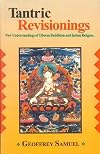
the essay material is between supplementary to "civilized shamans" and precursor to "tantric origins", but the valuable part of the work is samuel's self-conscious efforts to situate his own scholarship explicitly vis-a-vis other subfields and writers
Let me start with two negatives, which explain the 4 (rather than 5) star rating:
First of all, the academic practise of inserting credits to authors mid-sentence is immensely irritating, and this is a constant sin in this book. A typical, not the worst, example: "Certainly such practitioners have been important in more recent times in most Theravadin countries (Tambiah 1984; Carrithers 1983; Taylor 1993; Tiyaranich 1997, 2004; see also Keyes 1987; Lehman 1987; Tambiah 1987)." -- Editors and show more publishers, please, when you have academic authors, insist that they put these references either at the bottom of the page or as end notes. These constant interruptions only detract from the key messages. Readers are not on a Ph.D. committee and do not need the constant credential reminders.
I also felt that the author kept hedging on issues--'it could be this, it could be that' positioning. A word count on 'seems', 'appears' 'has suggested' would have been a useful exercise. Samuel is an expert; he should voice and support his own position. Put conflicting views in the footnotes.
But to turn to the content, the sections on the central relationship in Brahmanical thought between celibacy, religion and male identity, were illuminating and helpful in understanding the rise of tantra in Indic religions.
Also excellent was the entire 'story' of the role of Siva and how Siva (and such forms as Bhairava) became associated with yogic and Tantric practices as "he became the first and supreme example of a fundamental principle of Indian religious life; the power of disorder, destruction and transgression...the need to come to terms and worship the things that can go wrong and create misfortune" (p. 114). The subsequent section on Saiva Tantra and the Yogini cults, which begins with the statement that "the Saiva ascetics were consciously positioning themselves outside of respectable society" was also one of those 'ah ha!' moments for me.
If you can sustain patience through the constant academic referrals and fence-walking, the rewards are many. show less
First of all, the academic practise of inserting credits to authors mid-sentence is immensely irritating, and this is a constant sin in this book. A typical, not the worst, example: "Certainly such practitioners have been important in more recent times in most Theravadin countries (Tambiah 1984; Carrithers 1983; Taylor 1993; Tiyaranich 1997, 2004; see also Keyes 1987; Lehman 1987; Tambiah 1987)." -- Editors and show more publishers, please, when you have academic authors, insist that they put these references either at the bottom of the page or as end notes. These constant interruptions only detract from the key messages. Readers are not on a Ph.D. committee and do not need the constant credential reminders.
I also felt that the author kept hedging on issues--'it could be this, it could be that' positioning. A word count on 'seems', 'appears' 'has suggested' would have been a useful exercise. Samuel is an expert; he should voice and support his own position. Put conflicting views in the footnotes.
But to turn to the content, the sections on the central relationship in Brahmanical thought between celibacy, religion and male identity, were illuminating and helpful in understanding the rise of tantra in Indic religions.
Also excellent was the entire 'story' of the role of Siva and how Siva (and such forms as Bhairava) became associated with yogic and Tantric practices as "he became the first and supreme example of a fundamental principle of Indian religious life; the power of disorder, destruction and transgression...the need to come to terms and worship the things that can go wrong and create misfortune" (p. 114). The subsequent section on Saiva Tantra and the Yogini cults, which begins with the statement that "the Saiva ascetics were consciously positioning themselves outside of respectable society" was also one of those 'ah ha!' moments for me.
If you can sustain patience through the constant academic referrals and fence-walking, the rewards are many. show less
You May Also Like


Associated Authors
Statistics
- Works
- 9
- Members
- 204
- Popularity
- #108,206
- Rating
- 4.2
- Reviews
- 7
- ISBNs
- 65