
Charles R. Morris (1) (1939–2021)
Author of The Tycoons: How Andrew Carnegie, John D. Rockefeller, Jay Gould, and J. P. Morgan Invented the American Supereconomy
For other authors named Charles R. Morris, see the disambiguation page.
About the Author
Charles R. Morris has written fifteen books, including The Coming Global Boom, a New York Times Notable Book, and The Trillion Dollar Meltdown, a New York Times bestseller. His recent book, The Dawn of Innovation, was named a Wall Street Journal Best Business Book of 2012. A lawyer and former show more banker, Morris's articles and reviews have appeared in many publications, including the Atlantic Monthly, New York Times, and Wall Street Journal. show less
Image credit: via Amazon.com
Works by Charles R. Morris
The Tycoons: How Andrew Carnegie, John D. Rockefeller, Jay Gould, and J. P. Morgan Invented the American Supereconomy (2005) 431 copies, 6 reviews
The Trillion Dollar Meltdown: Easy Money, High Rollers, and the Great Credit Crash (2008) 412 copies, 11 reviews
American Catholic:: The Saints and Sinners Who Built America's Most Powerful Church (1997) 259 copies, 4 reviews
The Sages: Warren Buffett, George Soros, Paul Volcker, and the Maelstrom of Markets (2009) 70 copies, 1 review
A Rabble of Dead Money: The Great Crash and the Global Depression: 1929–1939 (2017) 64 copies, 1 review
Iron Destinies, Lost Opportunities: The Arms Race Between the United States and the Soviet Union, 1945-1987 (1988) 15 copies
Associated Works
Tagged
Common Knowledge
- Legal name
- Morris, Charles Richard
- Birthdate
- 1939-10-23
- Date of death
- 2021-12-13
- Gender
- male
- Education
- University of Pennsylvania
- Occupations
- lawyer
banker - Cause of death
- complications of dementia
- Nationality
- USA
- Birthplace
- Oakland, California, USA
- Place of death
- Hampton, New Hampshire, USA
- Associated Place (for map)
- USA
Members
Reviews
American Catholic : the saints and sinners who built America's most powerful church by Charles Morris
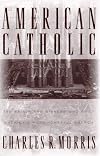
Breezy history of the American Catholic Church up till the 90s, so out of date but a really great set of base notes to observe the forces that shaped Cardinal Ratzinger (Pope Benedict), and the contours of the American Racial Church going into the all consuming sex scandals and other rot that came to the fore in the 2000s.
American Catholic:: The Saints and Sinners Who Built America's Most Powerful Church by Charles Morris
4325. American Catholic The Saints and Sinners Who Built America's Most Powerful Church, by Charles R. Morris (read 8 June 2007) I found this book unfailingly interesting, telling me things I had not heard before, even though I have done a lot of reading in Catholic history, including reading (on 30 Sept 1961) the classic account of the Americanist 'heresy': The Great Crisis in American Catholic History, 1895-1900 by Thomas T. McAvoy, C.S.C. But while the history part of this book is of high show more interest, the survey of Catholicism today, including the story of his visits to the very orthodox diocese of Lincoln, Neb., and to the liberal diocese of Saginaw, Mich., under Bishop Untener, make for fascinating reading and are handled not judgmentally in either case. I found this book held my interest all the way thru. show less
The Two Trillion Dollar Meltdown: Easy Money, High Rollers, and the Great Credit Crash by Charles R. Morris
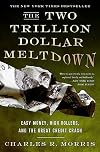
In 2008, economic analyst and former banker Charles R. Morris published The Trillion Dollar Meltdown, outlining the global economy's credit woes and detailing the events he thought would follow. A year later, Morris published a revised & updated version: The Two Trillion Dollar Meltdown. With so much happening in this arena on a monthly, if not daily, basis, the book is already out of date, of course. But for economic neophytes like me, who eyes glaze at the mention of any investment tools show more more complicated that stocks and mutual funds, Morris' book is an eye-opening and clear description of the many-faceted ways that the banking and investment industry put the world at risk in a mad, decades-long profit grab.
Morris' hero is Paul Volker, the former head of the Federal Reserve Bank, who, he says, stabilized the dollar and pushed the country away from the inflation ledge in the 1980s thorugh tough but disciplined monetary policies. His villain is Alan Greenspan, whom Morris accuses of siting by as the Free Market profiteers began their money-grab party. Morris describes (as the Businessweek review of the first edition put it) "the mechanics of slicing and dicing collateralized debt obligations (CDOs) and why these and similar securitized credits and derivative securities went spectacularly bust."
The book is only 177 pages long and moves quickly. But still, for someone like myself, unfamiliar with all the terms and acronyms, some of the explanations can become hard to unravel. Morris clearly defines each of the security tools (like the aforementioned CDOs), but by the time he's talking about how all these things work together, and the acronyms start flying, it's a bit hard to keep track. Nevertheless, the overall picture come clear, indeed. Also nice is that Morris isn't an ideologue. Although he believes the extreme free-marketeers have done significant harm and calls for better regulation of the financial industry, he begins the book by decrying the failure, also, of Keynsian liberalism. The Carter administration, in particular, comes in for a scalding.
Although you wouldn't know it from Meltdown, it looks like Morris sees better days ahead. I note on wikipedia that his 2013 book was titled Comeback: America's New Economic Boom. show less
Morris' hero is Paul Volker, the former head of the Federal Reserve Bank, who, he says, stabilized the dollar and pushed the country away from the inflation ledge in the 1980s thorugh tough but disciplined monetary policies. His villain is Alan Greenspan, whom Morris accuses of siting by as the Free Market profiteers began their money-grab party. Morris describes (as the Businessweek review of the first edition put it) "the mechanics of slicing and dicing collateralized debt obligations (CDOs) and why these and similar securitized credits and derivative securities went spectacularly bust."
The book is only 177 pages long and moves quickly. But still, for someone like myself, unfamiliar with all the terms and acronyms, some of the explanations can become hard to unravel. Morris clearly defines each of the security tools (like the aforementioned CDOs), but by the time he's talking about how all these things work together, and the acronyms start flying, it's a bit hard to keep track. Nevertheless, the overall picture come clear, indeed. Also nice is that Morris isn't an ideologue. Although he believes the extreme free-marketeers have done significant harm and calls for better regulation of the financial industry, he begins the book by decrying the failure, also, of Keynsian liberalism. The Carter administration, in particular, comes in for a scalding.
Although you wouldn't know it from Meltdown, it looks like Morris sees better days ahead. I note on wikipedia that his 2013 book was titled Comeback: America's New Economic Boom. show less
The Tycoons: How Andrew Carnegie, John D. Rockefeller, Jay Gould, and J. P. Morgan Invented the American Supereconomy by Charles R. Morris
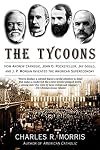
The premise of this history of business and industrial development between the Civil War and WWI is that four men—Andrew Carnegie, John D. Rockefeller, Jay Gould, and J. P. Morgan—played THE dominant roles in transforming the way goods were manufactured and distributed. The book is is a good exposition of that history in general. The contributions of the four tycoons are highlighted, but so is the truth that "the American supereconomy"—a late 20th century concept in my opinion—is show more hardly a result of any particular individuals. It’s a collective achievement.
Carnegie was diminutive, smart, resourceful, devious, imperious, driven. He had a vision of steel manufacture that was bigger, faster, continuous. His factories were mammoth and were shaped by the newest technology. His cost cutting was relentless. Despite soaring profits—and despite pro-labor columns he wrote and published in Scottish newspapers he owned—he sought to cut wages, stubbornly willing to endure disruptive strikes. Carnegie Steel was the biggest and most profitable steel producer at the turn of the 20th century.
Rockefeller mastered vertical integration, controlling oil practically from well-head to the retail customer. His Standard Oil Company owned the rail cars that moved the crude from the oil fields to his refineries. The same cars further transported the refined product to Standard’s regional depots, and Standard workers carried it directly to retailers. Generally, he worked quickly, quietly, methodically, fairly, and without rancor. To swallow a competitor, he'd offer a fair price and would often bring the firm's executives into his Standard Oil operation. Anyone who rejected an offer would find his business cut off from suppliers and customers.
Gould was a consummate Wall Street manipulator. He was a master at concealing his purchases and sales of stock; one day he’d suddenly be in control of some key asset, disrupting monopolistic deals among competitors intended to control routes and rates. Contrary to legend, Gould wasn’t a railroad looter, rather he sometimes put more money into a railroad. He was focused on progress, experiment, and speed.
Morgan was the premier financier and banker of that time. His father was a leading banker and financier, and J.P. followed in his footsteps. While he seldom innovated in industry, he arbitrated the propositions and innovated ways of financing projects he approved. What he valued was market stability, and if he had to sideline a mover-and-shaker to achieve or maintain that stability, well, so be it.
For the most part, The Tycoons was excellent. The passages describing the financial jiggery-pokery were opaque to me. I just didn't know what the author, a one-time banker, was writing about, didn't know the terminology. On the other hand, the author wrote good sections on actually achieving the manufacture of truly replaceable parts, on Carnegie's disruptive status as a steel tycoon, on Morgan's endeavor to launch U. S. Steel as a means of shutting out Andy the Disruptor and calming and stabilizing that segment of the industrial economy. I enjoyed too the description of Frederick Taylor's bamboozling of many industrialists with his time-and-motion studies; the bosses wanted to cut wages, and Taylor's consultations provided a scientific gloss to what they wanted to do.
A good read, if somewhat dry in spots.
The author, Charles R. Morris, has written eight other books, including [Money, Greed, and Risk] and [American Catholic]. He is a banker and lawyer, as well as a historian. show less
Carnegie was diminutive, smart, resourceful, devious, imperious, driven. He had a vision of steel manufacture that was bigger, faster, continuous. His factories were mammoth and were shaped by the newest technology. His cost cutting was relentless. Despite soaring profits—and despite pro-labor columns he wrote and published in Scottish newspapers he owned—he sought to cut wages, stubbornly willing to endure disruptive strikes. Carnegie Steel was the biggest and most profitable steel producer at the turn of the 20th century.
Rockefeller mastered vertical integration, controlling oil practically from well-head to the retail customer. His Standard Oil Company owned the rail cars that moved the crude from the oil fields to his refineries. The same cars further transported the refined product to Standard’s regional depots, and Standard workers carried it directly to retailers. Generally, he worked quickly, quietly, methodically, fairly, and without rancor. To swallow a competitor, he'd offer a fair price and would often bring the firm's executives into his Standard Oil operation. Anyone who rejected an offer would find his business cut off from suppliers and customers.
Gould was a consummate Wall Street manipulator. He was a master at concealing his purchases and sales of stock; one day he’d suddenly be in control of some key asset, disrupting monopolistic deals among competitors intended to control routes and rates. Contrary to legend, Gould wasn’t a railroad looter, rather he sometimes put more money into a railroad. He was focused on progress, experiment, and speed.
Morgan was the premier financier and banker of that time. His father was a leading banker and financier, and J.P. followed in his footsteps. While he seldom innovated in industry, he arbitrated the propositions and innovated ways of financing projects he approved. What he valued was market stability, and if he had to sideline a mover-and-shaker to achieve or maintain that stability, well, so be it.
For the most part, The Tycoons was excellent. The passages describing the financial jiggery-pokery were opaque to me. I just didn't know what the author, a one-time banker, was writing about, didn't know the terminology. On the other hand, the author wrote good sections on actually achieving the manufacture of truly replaceable parts, on Carnegie's disruptive status as a steel tycoon, on Morgan's endeavor to launch U. S. Steel as a means of shutting out Andy the Disruptor and calming and stabilizing that segment of the industrial economy. I enjoyed too the description of Frederick Taylor's bamboozling of many industrialists with his time-and-motion studies; the bosses wanted to cut wages, and Taylor's consultations provided a scientific gloss to what they wanted to do.
A good read, if somewhat dry in spots.
The author, Charles R. Morris, has written eight other books, including [Money, Greed, and Risk] and [American Catholic]. He is a banker and lawyer, as well as a historian. show less
Lists
For Commonweal (1)
Economics (1)
Awards


You May Also Like


Associated Authors
Statistics
- Works
- 22
- Also by
- 1
- Members
- 1,625
- Popularity
- #15,832
- Rating
- 3.4
- Reviews
- 30
- ISBNs
- 89
- Languages
- 5