
Scott Westerfeld
Author of Uglies
About the Author
Scott Westerfeld was born in Dallas, Texas on May 5, 1963. He received a degree in philosophy from Vassar College in 1985. Before becoming a full time writer, he held several jobs including factory worker, software designer, editor, and substitute teacher. His works for young adults include the show more Uglies series, the Midnighters series, and The Last Days. He is the co-author of the Zeroes series written with Margo Lanagan and Deborah Biancotti. He also writes science fiction novels for adults. He has won numerous awards including a Special Citation for the 2000 Philip K. Dick Award for Evolution's Darling, a Victorian Premier's Award for So Yesterday, and an Aurealis Award for The Secret Hour. (Bowker Author Biography) show less
Image credit: Photo by Samantha Jones
Series
Works by Scott Westerfeld
The Manual of Aeronautics: An Illustrated Guide to the Leviathan Series (2012) 163 copies, 5 reviews
Mind-Rain: Your Favorite Authors on Scott Westerfeld's Uglies Series (2009) — Editor — 125 copies, 2 reviews
The World of the Golden Compass: The Otherworldly Ride Continues (2007) — Editor & Contributor — 71 copies, 2 reviews
Before You Were Here: Where We Come From, What We're Made Of, and How We Got Here (2024) 12 copies, 1 review
Spill Night 10 copies
[Title missing] 9 copies
The Movements of Her Eyes 3 copies
The Trumpet of the Swan 1 copy
V Virus 1 copy
Uglies (Graphic Novel) — Author — 1 copy
Inoculata [short story] 1 copy
Zeróis (Portuguese Edition) 1 copy
Associated Works
Seven Seasons of Buffy: Science Fiction and Fantasy Writers Discuss Their Favorite Television Show (2003) — Contributor — 415 copies, 10 reviews
First Kiss (Then Tell): A Collection of True Lip-Locked Moments (2007) — Contributor — 92 copies, 3 reviews
Willful Impropriety: 13 Tales of Society, Scandal, and Romance (2012) — Foreword — 87 copies, 4 reviews
Sex in the System: Stories of Erotic Futures, Technological Stimulation, and the Sensual Life of Machines (2006) — Contributor — 27 copies, 1 review
Tagged
Common Knowledge
- Legal name
- Westerfeld, Scott David
- Birthdate
- 1963-05-05
- Gender
- male
- Education
- Vassar College (BA | 1985 | Philosophy)
- Occupations
- textbook editor
software designer
composer
science fiction writer - Agent
- Jill Grinberg (Jill Grinberg Literary Management)
- Relationships
- Larbalestier, Justine (spouse)
- Nationality
- USA
- Birthplace
- Dallas, Texas, USA
- Places of residence
- New York, New York, USA
Sydney, New South Wales, Australia - Map Location
- Texas, USA
Members
Discussions
Found: Town of perfect kids in Name that Book (February 2025)
Fiction- Move to a party city when you turn 21, must wear rings in Name that Book (June 2023)
Aliens, genetically engineered monsters, develop language in Name that Book (January 2017)
Group Read (April): Leviathan by Scott Westerfeld ***SPOILER thread*** in The 11 in 11 Category Challenge (April 2011)
Leviathan - A Fantasy February Group Read in 75 Books Challenge for 2011 (February 2011)
Reviews

(Note: in the UK, Succession was published as one novel, The Risen Empire, comprising The Risen Empire and The Killing of Worlds. This review is for the two-book omnibus edition. Some spoiilerism may occur, especially as it's unclear as to where the split occurs in the narrative.)
A very different space opera, despite the outward appearance of fairly conventional ingredients. Galactic Empire - check. Space fleet - check. Small fighter ships - check. An Undead Emperor - check. An implacable show more cyborg foe - check. A Senate - check. Suicide rituals - check. Artificial intelligences - check.
But - the first chapter pitches us into the cockpit of a fast fighter ship, or so it seems. Except that by the end of the chapter, we realise that the ship is microscopic and piloted by VR remote control. And everything else that looks so much like 'by the numbers' space opera isn't. There's not too much hand-waving in the science, and every so often Westerfeld deals us a surprise in some idea that comes at the reader from out of the left field. For instance, the space fleet has something not unlike Political Officers along the old Soviet model - though they don't enforce any sort of ideology that we'd recognise. And just how implacable is that implacable foe?
We start with a rescue mission for a hostage situation on a distant world which goes badly wrong. The implacable foe has a hidden agenda; but along the way to putting that into action, a greater secret is uncovered. The Emperor's position is threatened by that secret; and his efforts to cover it up and contain the situation fill the rest of the book.
The story moves between the points of view of various different protagonists, though we quickly realise that there are a handful of important ones - a starship captain; his lover, a Senator; his Executive Officer; and a female commando who is the sole survivor of the hostage situation. Other characters also get their moments in the spotlight; some last longer than others. One character's situation is reflected in an interesting shift in the point of view. Back histories are told in regular flashbacks that paint in some more of the characters' motivations. And there's a house run by an AI who is almost a character in their own right.
The political manoeuvring is clever and consistent with the invented society. Characterisation generally is adequate; but this is a 700-page novel and there's a lot of activity to get in there, so characters are drawn no more deeply than they need to be. That's not too much of a problem, though, and I did read the last twenty pages cheering for the Senator rather.
The late Brian Aldiss coined the term "wide-screen baroque" for a particular species of space opera, and the term definitely applies here - but the trappings, and the terminology, and the overall thoughtfulness in the way the story unfolds, exceeds all expectations. This may be space opera, but certainly not as we know it. show less
A very different space opera, despite the outward appearance of fairly conventional ingredients. Galactic Empire - check. Space fleet - check. Small fighter ships - check. An Undead Emperor - check. An implacable show more cyborg foe - check. A Senate - check. Suicide rituals - check. Artificial intelligences - check.
But - the first chapter pitches us into the cockpit of a fast fighter ship, or so it seems. Except that by the end of the chapter, we realise that the ship is microscopic and piloted by VR remote control. And everything else that looks so much like 'by the numbers' space opera isn't. There's not too much hand-waving in the science, and every so often Westerfeld deals us a surprise in some idea that comes at the reader from out of the left field. For instance, the space fleet has something not unlike Political Officers along the old Soviet model - though they don't enforce any sort of ideology that we'd recognise. And just how implacable is that implacable foe?
We start with a rescue mission for a hostage situation on a distant world which goes badly wrong. The implacable foe has a hidden agenda; but along the way to putting that into action, a greater secret is uncovered. The Emperor's position is threatened by that secret; and his efforts to cover it up and contain the situation fill the rest of the book.
The story moves between the points of view of various different protagonists, though we quickly realise that there are a handful of important ones - a starship captain; his lover, a Senator; his Executive Officer; and a female commando who is the sole survivor of the hostage situation. Other characters also get their moments in the spotlight; some last longer than others. One character's situation is reflected in an interesting shift in the point of view. Back histories are told in regular flashbacks that paint in some more of the characters' motivations. And there's a house run by an AI who is almost a character in their own right.
The political manoeuvring is clever and consistent with the invented society. Characterisation generally is adequate; but this is a 700-page novel and there's a lot of activity to get in there, so characters are drawn no more deeply than they need to be. That's not too much of a problem, though, and I did read the last twenty pages cheering for the Senator rather.
The late Brian Aldiss coined the term "wide-screen baroque" for a particular species of space opera, and the term definitely applies here - but the trappings, and the terminology, and the overall thoughtfulness in the way the story unfolds, exceeds all expectations. This may be space opera, but certainly not as we know it. show less
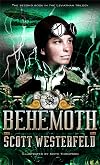
While I don't regret the enjoyable time reading about the wacky armies Westerfeld dreamed up (while the steam-powered walkers seem a sort of homage to Star Wars, the fighting ecosystems - that's what I said, ecosystems, including flying whales that host legions of shrapnel-pooping bats, six-legged dogs, fighting hawks, and more - are an imaginative reader's treat), I felt like the illustrations distracted from more than added to the story.
Though deliberately woodcut-like in style, the show more pictures demonstrated a very cinematic sensibility, packed with action and trying to give a sense of scale to the enormous gizmos and animals of war, and that seemed to compete with the inventiveness of the story. I'm much more of a fan of N. C. Wyeth and Howard Pyle, who created images capturing the tone of the stories they illustrated. While they did depict a few climactic moments, many of their illustrations simply portrayed the meeting of two sets of characters, giving clues for the reader about the unfamiliar or sometimes just plain not described costumes and landscapes of the story. Keith Thompson, the illustrator for Behemoth, definitely had a chance to show the reader unfamiliar things and did do so, but most of the illustrations, besides being almost annoyingly numerous, depict the characters in action from a camera's eye view and with a camera's detail (the full-page illustrations are so dark that the print on the reverse of the page actually ends up being lower-contrast). In the Victorian era, there was a difference between woodcut illustrations in a classic and the frontispieces of penny dreadfuls, and Thompson seems to have done the latter.
In fairness, Westerfeld didn't really help. The pacing of the book is cinematic, there is the apparently requisite unrequited teen love story (dressed up for the Victorian setting by placing the girl in drag, also a tired device), and while the characters mature somewhat in this second installment of the trilogy beginning with Leviathan, they are and have always been so - so - capable. Which brings me to my biggest problem with the entire genre of steampunk.
The principal characters of the steampunk genre are the hero and the heroine (one or both are usually mechanically gifted), a gifted scientist/wizard (or two or ten), a British leader figure (or two or ten), and an unBritish leader figure (who rejects British technologies and imperialism). The plot, whatever it is (and it's usually about the British enlightening or conquering some 'luddites,' and that word, or some synonym thereof, is the demonized aspect of the antagonists), showcases British ingenuity, which of course has been given an enormous boost, either with advanced clockwork, inventive use of steam power or even petrol, and in Westerfeld's case DNA manipulation, and keeps a sensibility of Enlightening the Brutes.
Problem: Who paid for the gizmos? Who mined the metal, built factories or laboratories, assembled the machines, risked death in unsafe working conditions, suffered from the industrial pollutants, wheezed in the smoky air, gave up forests and bogs for fuel, moved off the farm to live in the grime of the big city, succumbed to the diseases that always follow large rural to urban migrations, bought food at the inflated prices one would expect from a deflated agricultural sector or at regular prices made possible by virtually unpaid labor in a farm colony somewhere? Why didn't the 'luddites' or religious conservatives or social conservatives or the not insubstantial racial purist factions fight to suppress scary new sciences at home, even before the gizmos went out to fight abroad? Were women allowed to work in the factories, thus increasing the work force without significantly increasing the wage base? If so, did the family as an economic unit change more quickly? Where are the economics?
And of course it's glorious to imagine a world with accelerated technology, but did conscience accelerate too? If so, then where are the trade unions, the suffrage movements, the colonial rebellions, the public and egalitarian educational institutions? Where are the recycling centers, the solar panels, the emissions caps? If humans tinkered with DNA, were there no consequences to the environment?
I like technology. I like adventure stories. I'm going to recommend Leviathan and Behemoth, because they are good stories with some interesting minor characters (Volger=Snape), and they do actually address some ideological issues, if at a distance, and more importantly, they don't promote narcissistic, responsibility-free romantic relationships (coughTwilightcough). I'm also going to keep recommending Jay Lake's Mainspring trilogy, which remains the best work I've read in the genre and is, I would even say, more literary. Lake's books have a complexity that is mindful of religion, economics, sociology, and history, as some of these more popular titles don't.
But basically, I've got this issue with a world in which technology lifts us up without pushing something down. Science can, when applied with wisdom and foresight, fix a lot of stuff. But for every action, guys. Remember? For every action. Which isn't a reason not to try to advance. It's just a reason to think about all the angles when you're imagining a world balanced differently from this one, whether for publication as fiction or for production in the world. show less
Though deliberately woodcut-like in style, the show more pictures demonstrated a very cinematic sensibility, packed with action and trying to give a sense of scale to the enormous gizmos and animals of war, and that seemed to compete with the inventiveness of the story. I'm much more of a fan of N. C. Wyeth and Howard Pyle, who created images capturing the tone of the stories they illustrated. While they did depict a few climactic moments, many of their illustrations simply portrayed the meeting of two sets of characters, giving clues for the reader about the unfamiliar or sometimes just plain not described costumes and landscapes of the story. Keith Thompson, the illustrator for Behemoth, definitely had a chance to show the reader unfamiliar things and did do so, but most of the illustrations, besides being almost annoyingly numerous, depict the characters in action from a camera's eye view and with a camera's detail (the full-page illustrations are so dark that the print on the reverse of the page actually ends up being lower-contrast). In the Victorian era, there was a difference between woodcut illustrations in a classic and the frontispieces of penny dreadfuls, and Thompson seems to have done the latter.
In fairness, Westerfeld didn't really help. The pacing of the book is cinematic, there is the apparently requisite unrequited teen love story (dressed up for the Victorian setting by placing the girl in drag, also a tired device), and while the characters mature somewhat in this second installment of the trilogy beginning with Leviathan, they are and have always been so - so - capable. Which brings me to my biggest problem with the entire genre of steampunk.
The principal characters of the steampunk genre are the hero and the heroine (one or both are usually mechanically gifted), a gifted scientist/wizard (or two or ten), a British leader figure (or two or ten), and an unBritish leader figure (who rejects British technologies and imperialism). The plot, whatever it is (and it's usually about the British enlightening or conquering some 'luddites,' and that word, or some synonym thereof, is the demonized aspect of the antagonists), showcases British ingenuity, which of course has been given an enormous boost, either with advanced clockwork, inventive use of steam power or even petrol, and in Westerfeld's case DNA manipulation, and keeps a sensibility of Enlightening the Brutes.
Problem: Who paid for the gizmos? Who mined the metal, built factories or laboratories, assembled the machines, risked death in unsafe working conditions, suffered from the industrial pollutants, wheezed in the smoky air, gave up forests and bogs for fuel, moved off the farm to live in the grime of the big city, succumbed to the diseases that always follow large rural to urban migrations, bought food at the inflated prices one would expect from a deflated agricultural sector or at regular prices made possible by virtually unpaid labor in a farm colony somewhere? Why didn't the 'luddites' or religious conservatives or social conservatives or the not insubstantial racial purist factions fight to suppress scary new sciences at home, even before the gizmos went out to fight abroad? Were women allowed to work in the factories, thus increasing the work force without significantly increasing the wage base? If so, did the family as an economic unit change more quickly? Where are the economics?
And of course it's glorious to imagine a world with accelerated technology, but did conscience accelerate too? If so, then where are the trade unions, the suffrage movements, the colonial rebellions, the public and egalitarian educational institutions? Where are the recycling centers, the solar panels, the emissions caps? If humans tinkered with DNA, were there no consequences to the environment?
I like technology. I like adventure stories. I'm going to recommend Leviathan and Behemoth, because they are good stories with some interesting minor characters (Volger=Snape), and they do actually address some ideological issues, if at a distance, and more importantly, they don't promote narcissistic, responsibility-free romantic relationships (coughTwilightcough). I'm also going to keep recommending Jay Lake's Mainspring trilogy, which remains the best work I've read in the genre and is, I would even say, more literary. Lake's books have a complexity that is mindful of religion, economics, sociology, and history, as some of these more popular titles don't.
But basically, I've got this issue with a world in which technology lifts us up without pushing something down. Science can, when applied with wisdom and foresight, fix a lot of stuff. But for every action, guys. Remember? For every action. Which isn't a reason not to try to advance. It's just a reason to think about all the angles when you're imagining a world balanced differently from this one, whether for publication as fiction or for production in the world. show less
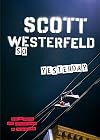
What is cool? According to Hunter Braque, most people need to be told the answer to this question, and he's one of those who know: he's a 'cool hunter,' meaning he gets paid to inform his boss of the cool things he sees on the streets. When his boss goes missing, however, he must team up with an Innovator (one of those people who effortlessly is cool) to find her.
This was pretty awesome - Hunter is an appealing character, up-front, easy-going and pretty knowledgeable about 'cool,' how 'cool' show more happens, and how 'cool' spreads. He's also very funny, and his observations (he's a paid observer, and it's what he does best) are pretty often spot-on. As his boss works for 'the client' (a shoe company that's VERY well known) and Hunter's shy of endorsements, he almost never names brands, instead talking around them, and it's a lot of fun to try and identify those brands.
Hunter spends a lot of time talking about trends and trendsetters, and how companies have taken a major interest in trendsetters, in the hopes of starting and profiting off of trends themselves, and so the reader gets a lot of mini, yet completely fascinating history lessons on how things - fashion, trends, even viruses - spread.
A lot of this book reminded me of Malcolm Gladwell's The Tipping Point, and I'm now rereading the Tipping Point so I can talk to my book group about it as well as this one.
Again, Westerfeld writes a clever, fast-paced, fully fascinating book (I'm remembering his fully awesome Peeps as I write this).
Highly recommended. show less
This was pretty awesome - Hunter is an appealing character, up-front, easy-going and pretty knowledgeable about 'cool,' how 'cool' show more happens, and how 'cool' spreads. He's also very funny, and his observations (he's a paid observer, and it's what he does best) are pretty often spot-on. As his boss works for 'the client' (a shoe company that's VERY well known) and Hunter's shy of endorsements, he almost never names brands, instead talking around them, and it's a lot of fun to try and identify those brands.
Hunter spends a lot of time talking about trends and trendsetters, and how companies have taken a major interest in trendsetters, in the hopes of starting and profiting off of trends themselves, and so the reader gets a lot of mini, yet completely fascinating history lessons on how things - fashion, trends, even viruses - spread.
A lot of this book reminded me of Malcolm Gladwell's The Tipping Point, and I'm now rereading the Tipping Point so I can talk to my book group about it as well as this one.
Again, Westerfeld writes a clever, fast-paced, fully fascinating book (I'm remembering his fully awesome Peeps as I write this).
Highly recommended. show less

My biases are showing: as much as I'm a sucker for a splash of supernatural in my fiction, I'm even more a sucker for books that try to explain something everyone else takes as fiction with straight-up science. And this book succeeds, admirably. In Westerfeld's world, vampires exist, but they're simply hosts of a nasty parasite. This is a brilliant idea, and Westerfeld succeeds on two fronts: not only does he explain almost every facet of vampire legend (cruciphobia, mirrors, nocturnalism, show more etc.) through the lens of parasitology, but all of his science is accurate and plausible (the biggest stretch is the existence of an "anathema" "switch" in the the brain that can be triggered by the parasite, but as he amply points out, biology contains other examples just as weird.) The action is pretty consistent, and exciting, and the inserted tidbits about other (real) parasites don't break the flow of the story at all. Four and a half stars because Cal occasionally was a little flat as a narrator, and because the ending was a little silly, but overall, an extremely fun (and scientifically accurate!) take on vampirism. show less
Lists
Gaslamp Fantasy (1)
To Read - Horror (1)
Graphic Novels (1)
Absolute Power (1)
Favorite Series (1)
Oklahoma (3)
Steampunk (3)
Best Young Adult (4)
Next in Series (1)
Best Dystopias (1)
Science Fiction (2)
Sonlight Books (1)
Awards


You May Also Like


Associated Authors
Statistics
- Works
- 65
- Also by
- 17
- Members
- 76,472
- Popularity
- #162
- Rating
- 3.8
- Reviews
- 2,734
- ISBNs
- 762
- Languages
- 21
- Favorited
- 207


