
Simon Wilson (1) (1942–)
Author of Tate Gallery: An Illustrated Companion
For other authors named Simon Wilson, see the disambiguation page.
Works by Simon Wilson
Tate Modern Teacher's Kit 1 copy
Associated Works
Les Realismes, 1919-1939: [exposition], Centre Georges Pompidou, 17 decembre 1980-20 avril 1981, Staatliche Kunsthalle Berlin, 10 mai-30 juin 1981 (French Edition) (1980) — Contributor — 29 copies, 1 review
Tagged
Common Knowledge
- Birthdate
- 1942
- Gender
- male
- Occupations
- art curator
museum curator - Organizations
- Tate Gallery
- Nationality
- UK
- Associated Place (for map)
- UK
Members
Reviews
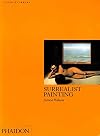
The Phaidon Colour Library is a remarkably cheap set of full colour guides to the great artists and to some of the schools of art that make up the canon. This particular book is a superb short introduction to the Surrealist School with 48 full colour plates.
The author briefly tells the story of surrealism and its emergence out of Dadaism, in reaction to the First World War and as a response to the discovery of the unconscious. He then splits it into its two main 'traditions' - the oneiric or show more dreamlike (of which Ernst, Dali and Delvaux are typical) and the automatic (of which Miro, Tanguy and Matta are the types) - all under the intellectual leadership of the poet Andre Breton.
Ernst and Magritte adopted an intellectual and poetic approach just as more complex artists such as Picasso and Giacometti responded to surrealist ideas and engaged with them before moving on. The oneiric style eventually had massive effects on popular culture, if only through advertising and the movies, while the automatic moved to New York as the second world war raged where it influenced acceptance of Abstract Expressionism, a whole new world of thinking about art and the artist. Surrealism is thus far more than the melting clocks of Salvador Dali or Magritte's phallic trains.
The English school is well represented with five plates from different artists, women less so and not with work that really impresses. Surrealist ruminations on sexuality seem to have been masculine - or rather open rumination on sexuality in this way is only now, in our culture, being allowed to women by women themselves. Perhaps a new and great art will appear from this growing cultural revolution in female sexuality.
To an extent, surrealist thinking has so entered into our culture that it is very hard to see much of it now except in terms of art history. But, placing to one side the issues of innovation or intellectual importance, some paintings (such as Miro's 'Birth of the World' (1925) and Salvador Dali's 'The Metamorphosis of Narcissus' (1938)) are 'eternals'.
Similarly, Max Ernst's almost Lovecraftian fantastic creations of the late 1930s and early 1940s and the erotic dream worlds of Paul Delvaux in the oneiric tradition still hold attention in their own right.
But the great discovery is a late artist, the Chilean, Roberto Matta, who produced, in the 1940s, dense three-dimensional attempts to create the landscapes of the mind without obviously coherent biomorphs (as in Tanguy's work) or figurative images (as in the oneiric tradition).
These canvases by Matta are the climax of surrealism as a serious contributor to cultural history. Bellmer's raw and disturbing expressions of sexuality provide another climax (pun intended) which has spawned a whole art based on the tearing away of taboo. Matta was interested in magic, the occult and tarot but somehow the impetus for an exploration of the dark side began to be sidelined, perhaps because it conflicted with the concerns of a post war Western elite that was determined to see things only in terms of the light and the individual after the experience of the 1930s and war and in opposition to the cold logic (as some saw it at the time) of communism and its socialist realism.
The next stage was to move away from the collective unconscious with its limbic aspects and into the ego-individualism of the American avant garde.
From Pollock and Rothko to Warhol and the post-war cult of Picasso is a perhaps the story of a cold Apollonian denial of the Dionysiac (even in the vices of a commercialised Factory that leads ineluctably towards the commodity orientation of the Saatchis and Damien Hirst). It was where the West chose to go for a while, away from the particular and the hermetic to the universal and the consciously reproducible and tradable. show less
The author briefly tells the story of surrealism and its emergence out of Dadaism, in reaction to the First World War and as a response to the discovery of the unconscious. He then splits it into its two main 'traditions' - the oneiric or show more dreamlike (of which Ernst, Dali and Delvaux are typical) and the automatic (of which Miro, Tanguy and Matta are the types) - all under the intellectual leadership of the poet Andre Breton.
Ernst and Magritte adopted an intellectual and poetic approach just as more complex artists such as Picasso and Giacometti responded to surrealist ideas and engaged with them before moving on. The oneiric style eventually had massive effects on popular culture, if only through advertising and the movies, while the automatic moved to New York as the second world war raged where it influenced acceptance of Abstract Expressionism, a whole new world of thinking about art and the artist. Surrealism is thus far more than the melting clocks of Salvador Dali or Magritte's phallic trains.
The English school is well represented with five plates from different artists, women less so and not with work that really impresses. Surrealist ruminations on sexuality seem to have been masculine - or rather open rumination on sexuality in this way is only now, in our culture, being allowed to women by women themselves. Perhaps a new and great art will appear from this growing cultural revolution in female sexuality.
To an extent, surrealist thinking has so entered into our culture that it is very hard to see much of it now except in terms of art history. But, placing to one side the issues of innovation or intellectual importance, some paintings (such as Miro's 'Birth of the World' (1925) and Salvador Dali's 'The Metamorphosis of Narcissus' (1938)) are 'eternals'.
Similarly, Max Ernst's almost Lovecraftian fantastic creations of the late 1930s and early 1940s and the erotic dream worlds of Paul Delvaux in the oneiric tradition still hold attention in their own right.
But the great discovery is a late artist, the Chilean, Roberto Matta, who produced, in the 1940s, dense three-dimensional attempts to create the landscapes of the mind without obviously coherent biomorphs (as in Tanguy's work) or figurative images (as in the oneiric tradition).
These canvases by Matta are the climax of surrealism as a serious contributor to cultural history. Bellmer's raw and disturbing expressions of sexuality provide another climax (pun intended) which has spawned a whole art based on the tearing away of taboo. Matta was interested in magic, the occult and tarot but somehow the impetus for an exploration of the dark side began to be sidelined, perhaps because it conflicted with the concerns of a post war Western elite that was determined to see things only in terms of the light and the individual after the experience of the 1930s and war and in opposition to the cold logic (as some saw it at the time) of communism and its socialist realism.
The next stage was to move away from the collective unconscious with its limbic aspects and into the ego-individualism of the American avant garde.
From Pollock and Rothko to Warhol and the post-war cult of Picasso is a perhaps the story of a cold Apollonian denial of the Dionysiac (even in the vices of a commercialised Factory that leads ineluctably towards the commodity orientation of the Saatchis and Damien Hirst). It was where the West chose to go for a while, away from the particular and the hermetic to the universal and the consciously reproducible and tradable. show less


You May Also Like


Associated Authors
Statistics
- Works
- 25
- Also by
- 2
- Members
- 735
- Popularity
- #34,565
- Rating
- 3.7
- Reviews
- 5
- ISBNs
- 70
- Languages
- 5