
William Faulkner (1897–1962)
Author of The Sound and the Fury
About the Author
Born in an old Mississippi family, William Faulkner made his home in Oxford, seat of the University of Mississippi. After the fifth grade he went to school only off and on-lived, read, and wrote much as he pleased. In 1918, refusing to enlist with the "Yankees," he joined the Canadian Air Force, show more and was transferred to the British Royal Air Force. After the war he studied a little at the University, did house painting, worked as a night superintendent at a power plant, went to New Orleans and became a friend of Sherwood Anderson, then to Europe and back home to Oxford. By this time he had written two novels. The Sound and the Fury followed in 1929. Financial success came with Sanctuary in 1931, which he assisted in filming. Faulkner 's novels are intense in their character portrayals of disintegrating Southern aristocrats, poor whites, and African Americans. A complex stream-of-consciousness rhetoric often involves Faulkner in lengthy sentences of anguished power. Most of his tales are set in the mythical Yoknapatawpha County, Mississippi, and are characterized by the use of many recurring characters from families of different social levels spanning more than a century. His best subjects are the old, dying South and the newer materialistic South. As I Lay Dying (1930), is a grotesquely tragicomic story about a family of poor southern whites. With Absalom, Absalom! (1936); the difficult parts of his famous short novel "The Bear" (published in Go Down, Moses, 1942); and the allegorical A Fable (1954), a non-Yoknapatawpha novel set in France during World War I; Faulkner returned to an innovative and difficult style that most readers have trouble with. Yet, interspersed among such works are collections of easily read stories originally published in popular magazines. There seems to be a growing sentiment among critics that the Snopes trilogy-The Hamlet (1940), The Town (1957), and The Mansion (1959)-for the most part an example of Faulkner's "moderate" style, could well be among his most important works. Faulkner was awarded the 1949 Nobel Prize for literature "for his powerful and artistically independent contribution to the new American novel," but it would appear now that he also deserved to win that honor for his contribution to world literature. When reporting his death, the Boston Globe quoted Faulkner's having once told an interviewer: "Since man is mortal, the only immortality for him is to leave something behind him that is immortal since it will always move. That is the artist's way of scribbling "Kilroy was here" on the wall of the final and irrevocable oblivion through which he must some day pass." In addition to the Nobel Prize, Faulkner received the Howells Medal of the American Academy of Arts and Letters in 1950, and in 1951 he was given the National Book Award for his Collected Stories Collected Stories. For his novel A Fable he received the National Book Award for the second time, as well as the Pulitzer Prize in 1955. The Reivers (1962) was awarded the Pulitzer Prize in 1963. In 1957 and 1958, he was the University of Virginia's first writer-in-residence, and in January 1959 he accepted an appointment as consultant on contemporary literature to the Alderman Library of that university. Although Faulkner was not without honors in his lifetime and has received world recognition since then, it is surprising to learn that, when Malcolm Cowley edited The Portable Faulkner in 1946, he found that almost all of Faulkner's books were out of print. By arranging selections from the works to form a continuous chronicle, Cowley deserves much of the credit for making readers aware of the way in which Faulkner was creating a fictive world on a scale grander than that of any novelist since Balzac. William Faulkner died in Oxford, Mississippi, in 1962. (Bowker Author Biography) show less
Disambiguation Notice:
This is not the same person as William Falkner (d. 1682), English theologian. Do not combine the two.
Image credit: William Faulkner, 1954
Series
Works by William Faulkner
Novels 1930-1935 : As I Lay Dying, Sanctuary, Light in August, Pylon (1985) — Author — 779 copies, 9 reviews
Novels 1936-1940 : Absalom, Absalom! / The Unvanquished / If I Forget Thee, Jerusalem / The Hamlet (1990) 644 copies, 5 reviews
Novels 1942-1954 : Go Down, Moses / Intruder in the Dust / Requiem for a Nun / A Fable (1994) — Author — 506 copies, 4 reviews
Novels 1926-1929 : Soldiers' Pay / Mosquitoes / Flags in the Dust / The Sound and the Fury (2006) 432 copies, 1 review
Faulkner in the university : class conferences at the University of Virginia, 1957-1958 (1959) 86 copies, 1 review
Works of William Faulkner: The Sound and the Fury / Sanctuary / Light in August / As I Lay Dying (1929) 66 copies
Thinking of Home: William Faulkner's Letters to His Mother and Father, 1918-1925 (1992) 36 copies, 1 review
Ghosts of Rowan Oak: William Faulkner's Ghost Stories for Children (1980) — Contributor — 34 copies, 1 review
Czerwone liście : opowiadania 13 copies
A Fable: William Faulkner Manuscripts 20, Volume 1: Miscellaneous Manuscript & Typescript Pages, Part 1 (1987) 12 copies
Yoknapatawpha vanaaeg. jutustused / 1 {Yoknapatawpha Olden Time: Tales} — Author — 8 copies
Lo! 8 copies
A Faulkner Perspective A Companion-Guide to the Limited First Edition of the Selected Letters of William Faulkner (1976) 7 copies
William Faulkner's speech of acceptance upon the award of the Nobel Prize for literature : delivered in Stockholm o 6 copies, 1 review
Red Leaves {story} — Author — 6 copies
Yoknapatawpha uusaeg. jutustused / 2 {Yoknapatawpha Modern Times: Tales} — Author — 6 copies
Obras escogidas 5 copies
Shimgles for the Lord 5 copies
SARTORIS - SIGNET CLASSIC 5 copies
A Justice 4 copies
The Modern Library 4 copies
A Bear Hunt 4 copies
Hell Creek Crossing 4 copies
The Saint Magazine Reader 4 copies
Septembertørke og andre noveller 3 copies
Best-in-Books: Grand Hotel / Voice of Bugle Ann / Life with Father / Mutiny on the Bounty / Postman Always Rings Twice (1962) — Contributor — 3 copies
世界文学全集 : カラー版. 第50巻 (フォークナー). 3 copies
Father Abraham Tree: William Faulkner Manuscripts II: Holograph Manuscript and Typescripts; and, The Wishing Tree: Ribbon and Carbon Typescripts (1987) 3 copies
Kirjailijan työ : Saul Bellow, William Faulkner, Ernest Hemingway, Boris Pasternak, Kurt Vonnegut (1985) 3 copies
William Faulkner Manuscripts 22, Volumes I and II: The Mansion: The Early Typescript, Parts 1 and 2 3 copies
Mule in the Yard 3 copies
The Broach 3 copies
The Tall Men 3 copies
Elly 3 copies
A Courtship 3 copies
That Will Be Fine 3 copies
Mistral 3 copies
Centaur in Brass 3 copies
Shall Not Perish 3 copies
Honor 3 copies
Stary 3 copies
I fantasmi di Rowan Oak. Storie di sogno e di paura scritte e raccontate da William Faulkner (2005) 3 copies
Zstąp, Mojżeszu 2 copies
Mosquitoes 2 copies
Literatura-Mundo Comparada: Perspectivas em Português III Pelo Tejo Vai-se para o Mundo (vol. 5 e 6) (2020) 2 copies
Poesía reunida : El fauno de mármol ; Una rama verde ; Poemas de Misisipi ; Helen ; Un cortejo (2008) 2 copies
os desgarrados 2 copies
Faulkner William (William Falkner) 2 copies
Els invictes 2 copies
Neodpočívej v pokoji 2 copies
Correspondance Malcolm Cowley-William Faulkner.Lettres et souvenirs de 1944 à 1962 commentés par M.Cowley traduit de l'anglais par René Hilleret (1970) 2 copies
O Homem e o Rio Livro 1 2 copies
Pylon Los invictos 2 copies
Beyond 2 copies
The Leg 2 copies
There Was a Queen 2 copies
Golden Land 2 copies
Crevasse 2 copies
Light in August / The Mansion 2 copies
Carcassonne — Author — 2 copies
I negri e gli indiani 2 copies
Fox Hunt 2 copies
Victory 2 copies
Death Drag 2 copies
Tomorrow [short story] 2 copies
Hajnali hajtóvadászat : elbeszélések 2 copies
Divorce in Naples 2 copies
Discurso en el banquete del premio Nobel: Discurso en el Delta Council (Colección Discursos Alpha Decay) (2008) 2 copies
FAULKNER: NOVELS 1930-1935 2 copies
Artist at Home 2 copies
Novelas escogidas, II (Una fábula; El ruido y la furia; Santuario; ¡Absalom, Absalom!; Novelas cortas) (1960) 2 copies
William Faulkner. Sanctuaire. Préface d'André Malraux. Traduit de l'anglais par B. N. Raimbault et Henri Delgove (1933) 1 copy
William Faulkner. Le Docteur Martino : Et autres histoires eDoctor Martino and other storiese, traduit de l'américain par R.-N. Raimbault et Ch.-P. Vorce (1948) 1 copy, 1 review
Pylone. Traduit de l'anglais par R.-N. Raimbault avec la collaboration de G. Louis-Rousselet. 1 copy, 1 review
The Sound And the Fury - William Faulkner - Oxford University Press (1983) - The Oxford Library Of The World's Great Books (1967) 1 copy
BJÖRNEN 1 copy
Jefferson, Mississippi; Anthologie établie et présenté par Michel Mohrt; illustrations de Jacques Noël; typographie Massin. (1956) 1 copy, 1 review
Griðastaður 1 copy
Семь рассказов 1 copy
Gespräche mit Faulkner 1 copy
Two Decades of Criticism 1 copy
mansión, La 1 copy
Copacul Dorintelor 1 copy
Ὁ γέρος 1 copy
TYMI 1 copy
DUMAN 1 copy
Obras escogidas I 1 copy
Die Stadt, Roman 1 copy
Obras Completas III 1 copy
Obras Completas II 1 copy
A William Faulkner Reader 1 copy
La Pallida Zilphia Gant 1 copy
Três Histórias de Guerra 1 copy
Humphrey Bogart Classics: Volume 2 — Writer — 1 copy
Moskity 1 copy
Sartoris 1 copy
Opowiadania. T. 1 1 copy
Opowiadania. T. 2 1 copy
Nepřemožení 1 copy
Requiem for a Nun: William Faulkner Manuscripts 19, Volume III: Typescript Setting Copy (1987) 1 copy
Elmer; and, "A Portrait of Elmer": William Faulker Manuscripts I: The Typescripts, Manuscripts, and Miscellaneous Pages (1987) 1 copy
Pylon: William Faulkner Manuscripts 12: Typescript Setting Copy and Miscellaneous Holograph Pages (1987) 1 copy
Larmen Og Vreden 1 copy
Obras Completas III 1 copy
Amerikaanse verhalen — Contributor — 1 copy
A Cosmos of My Own 1 copy
The Road to Glory 1 copy
Country Lawyer 1 copy
Rose of Lebanon 1 copy
Wilde Palmen und Der Strom 1 copy
Faulkner - Premio Nobel 1949 1 copy
Monk [short story] 1 copy
The Mansion: Typescript Setting Copy & Miscellaneous Material (William Faulkner Manuscripts 22, Volumes III & IV) (1991) 1 copy
The Waifs 1 copy
Absalom, Absalom! / Intruder in the Dust / Light in August / The Reivers / The Sound and the Fury 1 copy
An Error in Chemistry 1 copy
With Caution and Dispatch 1 copy
A Point of Law 1 copy
Folklore of the Air 1 copy
Hand Upon the Waters 1 copy
Faulkner's University Pieces 1 copy
Opere 1 copy
Selected Short Works of William Faulkner — Author — 1 copy
Pennsylvania Station 1 copy
The Evening Sun 1 copy
My Grandmother Millard 1 copy
Erzählungen II 1 copy
Růže pro Emilii 1 copy
Snobovi 1 copy
Svetloba v avgustu 1 copy
Smásögur 1 copy
Az öreg [kisregény] 1 copy
“The Tall Men” 1 copy
Le opere 1 copy
Lion in the Garden: Interviews with William Faulkner 1926-1962 Edited By James B. Meriwether and Michael Millgate (1968) 1 copy
William Faulkner Collection 1926-1929: Soldiers' Pay / Mosquitoes / Intruder in the Dust / The Sound and the Fury (1926) 1 copy
Het oude volk 1 copy
Mink 1 copy
Extrait - L'Intrus 1 copy
[Title missing] 1 copy
The Story of My Life 1 copy
Novelas escogidas, I (Mientras agonizo; Pylon, Los invictos; El villorrio; ¿Desciende, Moisés?) 1 copy
Aşk ve Ölüm 1 copy
Kırmızı Yapraklar 1 copy
Duman 1 copy
Rare -SELECTED LETTERS OF WILLIAM FAULKNER First ed! Deluxe Leather! & Companion Guide (1976) 1 copy
This Earth : A Poem 1 copy
Fumo 1 copy
Smasogur 1 copy
Khi tôi nằm chết 1 copy
Associated Works
Literature: An Introduction to Fiction, Poetry, and Drama (1995) — Contributor, some editions — 1,012 copies, 7 reviews
Perrine's Literature: Structure, Sound, and Sense (1970) — Contributor, some editions — 892 copies, 4 reviews
The World of the Short Story: A 20th Century Collection (1986) — Contributor — 511 copies, 4 reviews
Great Detectives: A Century of the Best Mysteries from England and America (1984) — Contributor — 404 copies, 4 reviews
The American Short Story: A Collection of the Best Known and Most Memorable Stories by the Great American Authors (1994) — Contributor — 370 copies
The Arbor House Treasury of Horror and the Supernatural (1981) — Contributor — 218 copies, 3 reviews
This is My Best: American Greatest Living Authors Present and Give Their Reasons Why (1942) — Contributor — 215 copies
First Fiction: An Anthology of the First Published Stories by Famous Writers (1994) — Contributor — 197 copies, 1 review
In Another Part of the Forest: An Anthology of Gay Short Fiction (1994) — Contributor — 191 copies, 2 reviews
Growing Up in the South: An Anthology of Modern Southern Literature (1991) — Contributor — 164 copies, 1 review
The Graphic Canon, Vol. 3: From Heart of Darkness to Hemingway to Infinite Jest (2013) — Contributor — 162 copies, 1 review
An American Album: One Hundred and Fifty Years of Harper's Magazine (2000) — Contributor — 145 copies, 1 review
Adaptations: From Short Story to Big Screen: 35 Great Stories That Have Inspired Great Films (2005) — Contributor — 136 copies, 1 review
The Norton Anthology of American Literature, Volume 2: 1865 to Present (1979) — Contributor, some editions — 135 copies
The Sophisticated Cat: A Gathering of Stories, Poems, and Miscellaneous Writings About Cats (1992) — Contributor — 112 copies, 1 review
The Heath Anthology of American Literature, Concise Edition (2003) — Contributor — 73 copies, 1 review
Gentlemen, Scholars and Scoundrels: A Treasury of the Best of Harper's Magazine from 1850 to the Present (1972) — Contributor — 62 copies
The World of Law, Volumes I-II: The Law in Literature, The Law as Literature (1960) — Contributor — 54 copies
The lucifer society;: Macabre tales by great modern writers (1972) — Contributor — 52 copies, 1 review
The Edge of the Chair: A Superlative Collection, Some Fact, Some Fiction, All Suspense (1967) — Contributor — 50 copies, 1 review
The Signet Classic Book of Contemporary American Short Stories (1985) — Contributor — 47 copies, 1 review
Best of The Oxford American: Ten Years from the Southern Magazine of Good Writing {anthology} (2002) — Contributor — 45 copies
Out of the Best Books: An Anthology of Literature, Vol. 1: The Individual and Human Values (1964) — Contributor — 40 copies
The Greatest War Stories Ever Told: Twenty-Four Incredible War Tales (2001) — Contributor — 31 copies, 1 review
The Greatest American Short Stories: Twenty Classics of Our Heritage (1953) — Contributor — 21 copies, 1 review
Fifty Years of the American Short Story from the O. Henry Awards 1919-1970 (1970) — Contributor — 17 copies, 1 review
The Best Short Stories of 1932 and the Yearbook of the American Short Story (1932) — Contributor — 15 copies
The night before Chancellorsville, and other Civil War stories (1957) — Contributor — 14 copies, 1 review
The Best Short Stories of 1941 and the Yearbook of the American Short Story (1941) — Contributor — 11 copies
Amerikanische Kurzgeschichten (American Short Stories) (English and German Edition) (1956) — Contributor — 10 copies
Yoknapatawpha, Images and Voices: A Photographic Study of Faulkner's County (2009) — Contributor — 9 copies
The Best Short Stories of 1937 and the Yearbook of the American Short Story (1937) — Contributor — 8 copies
The Best Short Stories of 1940 and the Yearbook of the American Short Story (1940) — Contributor — 8 copies
The Best Short Stories of 1931 and the Yearbook of the American Short Story (1931) — Contributor — 7 copies, 1 review
Contemporary Short Stories: Representative Selections, Volume 3 — Contributor — 6 copies
De mooiste verhalen van James Baldwin, John Berger, Jorge Luis Borges, Jane Bowles, Joseph Brodsky, Charles Bukowski, Wi (1990) — Contributor — 6 copies
The Best Short Stories of 1936 and the Yearbook of the American Short Story (1936) — Contributor — 5 copies
Reader's Digest Condensed Books 1951 v02: Blandings' Way / Operation Cicero / Two Soldiers / The Nymph and the Lamp (1951) — Author — 4 copies
Modern Short Stories — Contributor — 3 copies
Story in America, 1933-1934: Thirty-Four Selections from the American Issues of "Story," the Magazine Devoted Solely to the Short Story (1934) — Contributor — 3 copies
Fifty Years of the American Short Story from the O. Henry Awards 1919-1970, Volume 1 (1970) — Contributor — 3 copies
Reader's Digest Condensed Books: The Desperate Hours • The Goat Boy • My Brother's Keeper • Two Soldiers • The Young Elizabeth (1956) 2 copies
The Best Short Stories of 1935 and the Yearbook of the American Short Story (1935) — Contributor — 2 copies
Modern Short Stories — Contributor — 2 copies
American Short Stories: Anthology [Mi-Sefarim Amerikai'im: Antologiyah shel Ha-Sipur Ha-Ketsar Ha-Amerkai] — Contributor — 1 copy
Um pilar de ferro - A travessia de Hell Creek - O advogado do diabo - Flor do mar (1965) — Contributor — 1 copy, 1 review
The New York quarterly : NYQ : Number 36, Summer 1988 — Contributor — 1 copy
The Ethnic Image in Modern American Literature, 1900-1950, Volumes 1-2 (1984) — Contributor — 1 copy
Los premios Nobel de literatura. En la ciudad / Elias Portolu / El Maestro — Contributor — 1 copy
Mine Verdener / To Soldater / Digby / Pashaen på Gudindeøen / Det Store X — Contributor — 1 copy
The Saturday Evening Post Stories 1957 — Contributor — 1 copy
Tagged
Common Knowledge
- Legal name
- Faulkner, William Cuthbert
- Other names
- Faulkner, Will
- Birthdate
- 1897-09-25
- Date of death
- 1962-07-06
- Gender
- male
- Education
- University of Mississippi
- Occupations
- novelist
short story writer
poet
literary critic
essayist
screenwriter (show all 14)
playwright
bank clerk
postmaster
roof painter
carpenter
deckhand
coal shoveler
pilot - Organizations
- British Armed Forces
American Academy of Arts and Letters
Sigma Alpha Epsilon
University of Mississippi (postmaster)
Metro-Goldwyn-Mayer (screenwriter)
Warner Brothers (screenwriter) (show all 8)
University of Virginia (writer-in-residence)
National Institute of Arts and Letters - Awards and honors
- Nobel Prize (Literature, 1949)
National Institute of Arts and Letters (1939)
American Academy of Arts and Letters (1948)
William Dean Howells Medal (1950)
Chevalier de la Legion d'honneur (1951)
Silver Medal of the Greek Academy (1957) (show all 8)
National Institute of Arts and Letters Gold Medal (1962)
Created the PEN/Faulkner Award - Relationships
- Faulkner, John (brother)
Falkner, Murry C. (brother)
Faulkner, Jim (nephew)
Falkner, William Clark (great-grandfather)
Percy, William Alexander (friend)
Anderson, Sherwood (friend) (show all 9)
West, Nathanael (friend)
Franklin, Malcolm A. (stepson)
Wells, Dean Faulkner (niece) - Short biography
- William Cuthbert Faulkner (September 25, 1897 – July 6, 1962) was an American writer and Nobel Prize laureate from Oxford, Mississippi. Faulkner wrote novels, short stories, screenplays, poetry, essays, and a play. He is primarily known for his novels and short stories set in the fictional Yoknapatawpha County, based on Lafayette County, Mississippi, where he spent most of his life.
Faulkner is one of the most celebrated writers in American literature generally and Southern literature specifically. Though his work was published as early as 1919 and largely during the 1920s and 1930s, Faulkner's renown reached its peak upon the publication of Malcolm Cowley's The Portable Faulkner and his 1949 Nobel Prize in Literature, making him the only Mississippi-born Nobel winner. Two of his works, A Fable (1954) and his last novel The Reivers (1962), each won the Pulitzer Prize for Fiction. In 1998, the Modern Library ranked his 1929 novel The Sound and the Fury sixth on its list of the 100 best English-language novels of the 20th century; also on the list were As I Lay Dying (1930) and Light in August (1932). Absalom, Absalom! (1936) appears on similar lists. - Cause of death
- a fall (from his horse)
thrombosis - Nationality
- USA
- Birthplace
- New Albany, Mississippi, USA
- Places of residence
- Oxford, Mississippi, USA
New Orleans, Louisiana, USA - Place of death
- Byhalia, Mississippi, USA
- Burial location
- St. Peter's Cemetery, Oxford, Mississippi, USA
- Map Location
- USA
- Disambiguation notice
- This is not the same person as William Falkner (d. 1682), English theologian. Do not combine the two.
Members
Discussions
Folio Society Devotees: Sound and Fury in Book talk (October 2023)
Folio Society Devotees: Sound and Fury in Folio Society Devotees (October 2023)
The Snopes Trilogy, Volume III, The Mansion in Club Read 2023 (September 2023)
The Snopes Trilogy, Volume II, The Town in Club Read 2023 (August 2023)
The Snopes Trilogy Group Read: The Hamlet in Club Read 2023 (July 2023)
The Sound and the Fury LE in Folio Society Devotees (May 2021)
Faulkner and james Branch Cabell in William Faulkner and his Literary Kin (October 2020)
As I Lay Dying: The More You Know. in William Faulkner and his Literary Kin (November 2018)
William Faulkner- American Author Challenge in 75 Books Challenge for 2014 (March 2014)
LIGHT IN AUGUST - Group Read Discussion Thread in 75 Books Challenge for 2013 (August 2013)
The Sound and the Fury GROUP READ in 2013 Category Challenge (April 2013)
Reviews
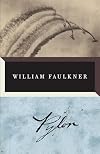
66. Pylon by William Faulkner
OPD: 1935
format: 285-page paperback, 2011 edition
acquired: March from The Faulkner House in New Orleans read: Sep 22 – Oct 2 time reading: 10:53, 2.3 mpp
rating: 4
genre/style: classic fiction theme: Faulkner
locations: then-contemporary New Orleans
about the author: 1897-1962. American Noble Laureate who was born in New Albany, MS, and lived most of his life in Oxford, MS.
Yair. That word, which must occur a hundred times here, always in dialogue, is apparently a show more Faulkner neologism disguised as a local word in his heavily fictionalized not-New Orleans. It means roughly "yeah", but with its own sonic undertones, I guess. This is Faulkner's flying book. He was pilot himself, but he wrote this to get it published ASAP. He must have needed the money. He wrote it a furious pace while taking a break from [Absalom Absalom!] It was apparently written from scratch, edited and published all within a several months. It's a one-off, disconnected with Yoknapatawpha County. What comes out is a mostly, but not entirely, coherent drunk fest. It has distinct prose. Not careless, but weighted, and that is both slowed by its weight and energetic - its energy propelled by sentences and dialogues and points never concluding, but going on and on, ever expanding, the reader desperate to know where this thought will end. Sometimes the text just gets lost. A quote:
That's only the 1st 1/3 of that sentence. In his defense, it is Mardi Gras, and we must decorate Catholically.
The story itself is about a New Orlean reporter who falls for the mechanic-wife of a competitive pilot. This fictionalized New Orleans is here called New Valois, but there is plenty real New Orleans in the location and in the story of its then new airport, which also opened with a competitive air show to celebrate. The opening day death of a famous pilot is factual. Our reporter is covering the show and gets obsessed with Laverne, who he first sees in mechanic's overalls working on her husband's plane. The reporter ingratiates himself with the whole crew - the pilot, his wife, a parachute jumper, a mechanic, a six-year-old child, son of the pilot's wife, but with an unknown father. There is a quiet but widely known controversy around this boy. The reporter is probably more interested in what this means about Laverne's sex life than anything about flying. But he never says. When the crew lack a place to stay one night, he offers them his place, and then inappropriately gets everyone except Laverne, but including himself, sick-drunk. They have to dodge the parades to reach his bachelor pad in the French Quarter.
The book carries on to Tomorrow, And Tomorrow, these two Macbeth-like chapter titles taking us through a hungover Ash Wednesday and into Lent. The story is really about Laverne. But the telling is through the reporter. It makes for an interesting structure. Much of the book wanders without a clear direction, and with long dialogue paragraphs of backhanded storytelling. It's flush with the reporter's energy, and his confidence in whatever he's doing. But this is all a false confidence in that nothing the reporter says means anything. He knows a lot, and talks a lot, but the two don't overlap much. He's also careless, irresponsible, unreliable, bold, but full of energy and friendship, giving anything he has away without considerations, and causing a lot of problems. He is both cause and observer of this story, but a cause in ways he couldn't himself possibly understand.
The book is a mess. But it's a Faulknerian mess. And for all its flaws and pointlessness, it accumulates a meaning, it becomes fun and curiously strange and lingering at the same time. Recommended for Faulkner completists. But, if you're not that, and interested and wondering whether to take a look, I would of course say, "Yair".
2024
https://www.librarything.com/topic/362165#8640313 show less
OPD: 1935
format: 285-page paperback, 2011 edition
acquired: March from The Faulkner House in New Orleans read: Sep 22 – Oct 2 time reading: 10:53, 2.3 mpp
rating: 4
genre/style: classic fiction theme: Faulkner
locations: then-contemporary New Orleans
about the author: 1897-1962. American Noble Laureate who was born in New Albany, MS, and lived most of his life in Oxford, MS.
Yair. That word, which must occur a hundred times here, always in dialogue, is apparently a show more Faulkner neologism disguised as a local word in his heavily fictionalized not-New Orleans. It means roughly "yeah", but with its own sonic undertones, I guess. This is Faulkner's flying book. He was pilot himself, but he wrote this to get it published ASAP. He must have needed the money. He wrote it a furious pace while taking a break from [Absalom Absalom!] It was apparently written from scratch, edited and published all within a several months. It's a one-off, disconnected with Yoknapatawpha County. What comes out is a mostly, but not entirely, coherent drunk fest. It has distinct prose. Not careless, but weighted, and that is both slowed by its weight and energetic - its energy propelled by sentences and dialogues and points never concluding, but going on and on, ever expanding, the reader desperate to know where this thought will end. Sometimes the text just gets lost. A quote:
"And here also the cryptic shieldcaught (i n r i) loops of bunting giving an appearance temporary and tentlike to the interminable long corridor of machine plush and gilded synthetic plaster running between anonymous and rentable space or alcoves from sunrise to sunset across America...."
That's only the 1st 1/3 of that sentence. In his defense, it is Mardi Gras, and we must decorate Catholically.
The story itself is about a New Orlean reporter who falls for the mechanic-wife of a competitive pilot. This fictionalized New Orleans is here called New Valois, but there is plenty real New Orleans in the location and in the story of its then new airport, which also opened with a competitive air show to celebrate. The opening day death of a famous pilot is factual. Our reporter is covering the show and gets obsessed with Laverne, who he first sees in mechanic's overalls working on her husband's plane. The reporter ingratiates himself with the whole crew - the pilot, his wife, a parachute jumper, a mechanic, a six-year-old child, son of the pilot's wife, but with an unknown father. There is a quiet but widely known controversy around this boy. The reporter is probably more interested in what this means about Laverne's sex life than anything about flying. But he never says. When the crew lack a place to stay one night, he offers them his place, and then inappropriately gets everyone except Laverne, but including himself, sick-drunk. They have to dodge the parades to reach his bachelor pad in the French Quarter.
The book carries on to Tomorrow, And Tomorrow, these two Macbeth-like chapter titles taking us through a hungover Ash Wednesday and into Lent. The story is really about Laverne. But the telling is through the reporter. It makes for an interesting structure. Much of the book wanders without a clear direction, and with long dialogue paragraphs of backhanded storytelling. It's flush with the reporter's energy, and his confidence in whatever he's doing. But this is all a false confidence in that nothing the reporter says means anything. He knows a lot, and talks a lot, but the two don't overlap much. He's also careless, irresponsible, unreliable, bold, but full of energy and friendship, giving anything he has away without considerations, and causing a lot of problems. He is both cause and observer of this story, but a cause in ways he couldn't himself possibly understand.
The book is a mess. But it's a Faulknerian mess. And for all its flaws and pointlessness, it accumulates a meaning, it becomes fun and curiously strange and lingering at the same time. Recommended for Faulkner completists. But, if you're not that, and interested and wondering whether to take a look, I would of course say, "Yair".
2024
https://www.librarything.com/topic/362165#8640313 show less
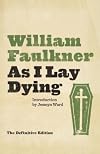
Faulkner is an author I discovered in high school and come back to periodically. I think his writing is pretty close to brilliant. I also find it difficult to really understand one of his novels with only one reading. [As I Lay Dying] is no exception.
In this novel Addie Bundren, mother and wife, dies, and at her request the family is tasked to bring her body to her home town of Jefferson, Mississippi for burial. For this poor, large, rural family, this is a large undertaking. It's a slim show more novel, but so much happens - destroyed bridges and dangerous river crossings, a broken leg idiotically set with cement, a hard-earned horse sold by a shiftless father, an arson and arrest, and a quest for an abortion. Seriously, all of that. But I didn't even realize how much I was learning about the family until the short book ended and I reflected back.
The story is told by 15 different narrators and each has a distinctive voice and point of view to add. It did make it hard to get in the flow of the book, but it also works very well. show less
In this novel Addie Bundren, mother and wife, dies, and at her request the family is tasked to bring her body to her home town of Jefferson, Mississippi for burial. For this poor, large, rural family, this is a large undertaking. It's a slim show more novel, but so much happens - destroyed bridges and dangerous river crossings, a broken leg idiotically set with cement, a hard-earned horse sold by a shiftless father, an arson and arrest, and a quest for an abortion. Seriously, all of that. But I didn't even realize how much I was learning about the family until the short book ended and I reflected back.
The story is told by 15 different narrators and each has a distinctive voice and point of view to add. It did make it hard to get in the flow of the book, but it also works very well. show less

Faulkner's novels are designed to be read twice. You don't know what you're reading early on. I mean, you usually think you do (there are exceptions!), but it's not until the end that the significance of the beginning, and everything it was doing, comes into place. I'm not yet reading his novels twice. 🙂 But I've been tempted a few times, and this one really left me feeling that need to.
The first surprise for me was that it's not really a novel. This is a collection of linked short show more stories. One, the longest, I've heard talked about a lot. This is The Bear, one of Faulkner's better known short stories. It's in here and it's the longest short story I have ever read. Not because of the page count, or the pace, but because it keeps switching what it's doing. It's a novel-long - a coming-of-age story becomes a kind of backhanded naturalist writing as our character slowly becomes one of the last truly expert woodsmen in the Mississippi delta. But this story becomes a ranting reflection on the south and race (not a comfortable reflection, especially from today's perspective). And this becomes a reflection of the disappearing woods and the vastly expanding human economic footprint - farming, logging etc.
But I didn't know that. What I knew coming in was that this was the story of a mixed-race black man trying to maintain his finances and dignity in this very racist south. This is Lucas Buchannon, the last male descendent of the 1st white farm owner of the farm he always lived on, and always worked on, but doesn't own. The farm inheritance went through the white lineage, through the wives' descendants. "through the distaff", as Faulkner, or his narrator, puts it. Lucas holds a literary weight our woodsman (named Ike McCaslin, also mixed race, but considered white) cannot hold. But his literary purpose is not simply himself, and maybe not himself at all. Faulkner is doing a lot with his own sort of pully system.
This was a rough read. Many times I felt completely lost. Who was talking? What were they saying? Do I need to care? Will they ever find a period? Ever? What does it mean if you start your paragraph with a lower-case letter, and mid-sentence? Especially if I didn't understand the previous paragraph.
But cumulatively this book is truly something. It worked on this reader. I would like to reread it.
2025
https://www.librarything.com/topic/372264#8899458 show less
The first surprise for me was that it's not really a novel. This is a collection of linked short show more stories. One, the longest, I've heard talked about a lot. This is The Bear, one of Faulkner's better known short stories. It's in here and it's the longest short story I have ever read. Not because of the page count, or the pace, but because it keeps switching what it's doing. It's a novel-long - a coming-of-age story becomes a kind of backhanded naturalist writing as our character slowly becomes one of the last truly expert woodsmen in the Mississippi delta. But this story becomes a ranting reflection on the south and race (not a comfortable reflection, especially from today's perspective). And this becomes a reflection of the disappearing woods and the vastly expanding human economic footprint - farming, logging etc.
But I didn't know that. What I knew coming in was that this was the story of a mixed-race black man trying to maintain his finances and dignity in this very racist south. This is Lucas Buchannon, the last male descendent of the 1st white farm owner of the farm he always lived on, and always worked on, but doesn't own. The farm inheritance went through the white lineage, through the wives' descendants. "through the distaff", as Faulkner, or his narrator, puts it. Lucas holds a literary weight our woodsman (named Ike McCaslin, also mixed race, but considered white) cannot hold. But his literary purpose is not simply himself, and maybe not himself at all. Faulkner is doing a lot with his own sort of pully system.
This was a rough read. Many times I felt completely lost. Who was talking? What were they saying? Do I need to care? Will they ever find a period? Ever? What does it mean if you start your paragraph with a lower-case letter, and mid-sentence? Especially if I didn't understand the previous paragraph.
But cumulatively this book is truly something. It worked on this reader. I would like to reread it.
2025
https://www.librarything.com/topic/372264#8899458 show less

"My mother is a dead fish"
What does a sentence like that mean? And what do you make of a book that has a chapter containing nothing but this weird single sentence?
It has all to do with representation I guess; with Mimesis, as the Greeks used to call it, the perception and the rendering of reality through fiction. Of a reality I should say, a truth, for does the truth really exist and can we reproduce it in our narratives?
After the dead end reached by the Realists and the Naturalists in show more depicting the “real” world around them, Artists of the late 19th and early 20th century had to try alternative ways to get even closer to that elusive “experience of reality”. Painters were switching to impressionism and later to expressionism and writers were looking at new ways to tell their stories. Not only did they find new techniques, but in the process they uncovered a plethora of philosophical issues, which today still occupy our greatest minds.
The American writer William Faulkner (1897 – 1962) is one of the masters of these experimental writings. Through the genius of his craft, he earned himself a Nobel Prize and a permanent seat in the Canon of World literature.
It is therefore fitting, when appraising “As I lay dying” to look at the “Art” first, to study the way Faulkner tells his story before we look at the narrative that emerges from the pages of this brilliant book.
Questioned about how he started to work on his novel, Faulkner said: “I simply imagined a group of people and subjected them to the simple universal natural catastrophes, which are flood and fire, with a simple natural motive to give direction to their progress”.
That simple group of people is the Bundren family: father Anse and the five children, the grown-up boys Cash, Darl and Jewel, the seventeen year old daughter Dewey Dell and Vardaman the youngest.
The reason they “move” is to indulge their deceased Mother’s last wish to be buried with her “kin” in Jefferson, the fictional county capital, 40 miles away from where they live.
Place? Somewhere in Faulkner’s fictional Southern county of Yoknapatawpha.
Time? Probably in the same year as when Faulkner wrote his book, 1929.
The Art
The most noticeable feature of “As I lay dying” is that Faulkner uses multiple narratives to tell his story. Fifteen characters to be more precise, all witnesses of the Brundren’s odyssey, with 15 different viewpoints, who in turn relate a part of the story as it develops.
No one tells the whole story but all of them get their say. Each time Faulkner switches the viewpoint, he uses a new chapter, (part is a better word), and uses the name of the narrator as a title. Faulkner switches the narrator 59 times and the book is thus chopped up in 59 short (some very short) chapters. But rather than being cumbersome this is a big aid to the attentive reader.
Who speaks and at what moment is important.
The voice of Darl, for example is used when things are straightforward but in period of crisis, when all is chaos and mayhem, when the mother dies for instance or when an accident happens, we look at the events through the naïve eyes and thoughts of young Vardaman, which enhances the confusion.
Darl, the second oldest boy takes the word nineteen times and his kid brother 10 times. Together they account thus for half of the voices of the book.
Faulkner is aware that the numerous viewpoint technique is demanding for the reader and he takes the necessary precautions, when we need a summary of the situation, to insert a “reliable”, rational view outside the Bundren family group. This is the role of the “neighbours” who offer, often un-demanded their opinions and views on what is happening to the Brundrens. So there are Mr and Mrs Cora Tull, their immediate and nosy neighbours ( together they account for 10 chapters ) and the different “hosts” along the route ( 3 chapters ). The remaining chapters are divided between the other Brundrens ( Pa, Dewey Dell and Cash ), the doctor who twice assesses the physical damage and two voices from men who give ill advice and take advantage of Dewey.
The most surprising of viewpoints, is the dead Mother, who bloated and stinking in her coffin has her opinion too.
When I say that the fifteen characters “relate” the story, it is not entirely correct. Faulkner uses even more techniques. We are in the head of these fifteen characters, each with their own interests and biases, and the chapters are not only relations of what they see and what they hear but also their interior monologues, stream of consciousness, thoughts. It is as if thoughts are being read as the characters are thinking them. They are also not per se reliable, for the characters recall occurrences that they didn’t witness, there are their thoughts, sometimes misbegotten, fantasies, dreams, lies…
Finally, to complete the realistic appearance of his book, Faulkner renders huge chunks of what the characters say in a phonetic rendition of their simple country folk vernacular, in their “hilly-billy language”. This is an additional difficulty for the reader and one has to get accustomed to it.
Now does the use of these techniques work ?
Yes they do, and very much so. Faulkner’s technique is incredibly effective. It made reading “As I lay dying”, at least for me, into some corporeal experience, visceral and at moments literally gut-wrenching.
The reason for that is that Faulkner effectively bypasses the third – person omniscient narrator. The only omniscient one in fact, is the reader himself who, if he takes the pains to read closely and fill the gaps empathically, pieces all the voices together into a tapestry showing his version of the “true circumstances” of the story. Together with the omniscient narrator, the author steps aside and pushes the reader as it were to the front row of the spectacle. Because of this, we get a more limited but intimate perspective.
There is no one left to soften the emotional blows between what happens to the characters and how it is experienced by the reader.
Early in 1956, Jean Stein, the very young editor of the “Paris Review” interviewed William Faulkner. Through his answers, Faulkner sounds a bit annoyed, cocky, arrogant even and we cannot know if he means what he says about his writing or if he is showing off in front of that nice woman. Fact is that what he says in the interview and what I have experienced while reading “As I lay dying” doesn’t really match.
Take for instance what he says about the writing of As I Lay Dying : ". . . I wrote it in six weeks, without changing a word." Faulkner endorsed herewith the myth he had initiated in the introduction of the 1932 Modern Library publication of Sanctuary where he implied that he had the whole book in his head and that he banged it crisp and clear out of his typewriter in a handful of evenings (Faulkner had a twelve-hour-a-day manual job during the day). This bold statement captivated the imagination of the reading public and back-cover blurbs and admiring blogs have since then consistently emphasized this “tour de force”.
Such remarks make Faulkner appear as some kind of literary freak, an autistic savant who masterminded the whole complexity of his brilliant book within his head. Even if it were true, As I lay dying does not need the myth of an “immaculate conception” to be lauded as a tremendous, baffling piece of literature. Even if it took a lot of work, reshuffling the 59 chapters, checking them for the correct voice and consistency and even if Faulkner worked with index cards, like Alain Robbe – Grillet explained when he wrote his “Gommes”, there is no need to present Faulkner as a freak to be impressed by the book he wrote.
When Jean Stein asked him afterwards if there was a formula to follow to be a good novelist, Faulkner confessed: “. . . ninety-nine percent discipline . . . ninety-nine percent work” and then he added “…Ninety-nine percent talent…”. When questioned about inspiration, he answered “I don't know anything about inspiration because I don't know what inspiration is—I've heard about it, but I never saw it”.
But later he took away all confusion and said: “Sometimes technique charges in and takes command of the dream before the writer himself can get his hands on it. That is tour de force and the finished work is simply a matter of fitting bricks neatly together, since the writer knows probably every single word right to the end before he puts the first one down. This happened with As I Lay Dying. It was not easy. No honest work is. It was simple that all the material was already at hand.
The Story
The story that emerges form the pages of “As I lay dying” is the story of the Brundren family. Addie Bundren, a mother of five, has died and her husband decides to cart her coffin to the town of Jefferson to bury her with her kin as she requested on her deathbed. The whole family embarks on a delayed macabre funeral journey. Beside father Anse, there are the young adult sons Cash, Darl and Jewel, the seventeen year old daughter Dewey Dell and the boy Vardaman.
It is summer time. The hot days are cooled by regular torrential rains that swell the river. The flood, accidents along the road and personal matters slow down the family and turns their voyage in a dark odyssey. The corpse of the mother starts decomposing and the stench soon attracts scavenger birds.
Anse Bundren is adamant about burying his wife in Jefferson and his children undergo the terrible conditions of their trip. All of them seem to have their own agendas as they travel toward the burial. But Anse, in his monomaniacal obsession to execute his wife last wish, is no Ahab. In the terrible conclusion of the book we understand that even Anse’s folly is not even genuine.
Despite the simple plot and Faulkner diminishing his story, I found that the odyssey of the Bundren family had the allures of a Christian allegory, the strength of a dark parable, a metaphor of life. But is also a ghastly comedy, it is a Southern Gothic after all.
Cash, the carpenter son, just like Jesus, is taking all the physical suffering. The family sin he suffers most from is their ignorance but all other mortal sins are present in one way or another. Anse Brundren, who has never seen sweating, is a personification of Sloth. The extremely fat doctor Peabody, who has to be hauled up the hill with mules, is Gluttony. There is the pride of Jewel, the rebel. Lust is present too: Dead mother Addie confesses it in her oblong box. Lust is also the cause of Dewey Dell’s misfortune and constant treat. There is the greed of the horse trader, the Wrath of Darl and even the envy to have a toy train.
Unexpectedly, feminist themes strongly appear. Addie Bundren’s monologue from beyond the grave touches some sobering issues like Addie's scathing denunciation of her marriage, which is depicted as no more than a random occurrence. There is also her ambivalent motherhood as she appears to be as possessive of her children, as she is repulsed by them. A steady flow of babies who arrive without rhyme or reason has turned her into a slave of her condition.
And what to say about Dewey Dell’s ordeal? The poor girl is pregnant, her boyfriend nowhere in sight although he has paid her off to get an abortion. The men she sees in order to help her are useless and even dangerous. Moseley the pharmacist refuses to help her for he fears his reputation and Mc Gowan, a phoney doctor, tricks her in having sex with him in exchange of abortion pills, pills which the reader knows will not work anyway.
But the main theme of Faulkner’s book, to come back to what I stated in the opening of this review is: Does objective truth really exist and can we reproduce it in our narratives?
While Faulkner has indeed created a certain intimacy between the reader and the occurrences that develop through the pages, all the information the reader gets is subjective. The wide variety of narrators, the stream of consciousness technique, the structure of the monologues, the disconnected speakers, the different point of views and the many linguistic devices have all obscured whatever single truth or reality makes up the story. Who is the real victim of this drama? The dead mother? The father who goes to the utmost to indulge his wife last wish? The children who suffer the monomaniac desire of the father? Again, what is the relation between Addie Brundren and her children? How religious are these people? We do not know for sure. Even after several re-readings we can only advance careful suppositions. The facts, the truth is hidden by the many representations and our poor understanding is just another, rather than explicative is nothing more than just one additional opinion.
So we get stuck with a number of open questions, different understandings, and tentative explanations. But paradoxically, this body of uncertainties gives the reader a truer image of what happens to the Brundren family. There in lies the whole genius of this unusual narrative approach and of Faulkner’s art.
The reality, which then emerges, is that we are all disconnected individuals, even if we live and grow up in the tight nucleus of a family. For while the Brundren’s go through hell to burry their mother, they all have their own reasons to sit on that coffin out of which the decomposing stench of their mother’s body oozes. Once she is buried and the true personal agenda’s are uncovered we have lost whatever hope we still had for this family. By the time we understand the father’s true reason of travelling to the capital, we have not only lost our hope but also all our illusions. show less
What does a sentence like that mean? And what do you make of a book that has a chapter containing nothing but this weird single sentence?
It has all to do with representation I guess; with Mimesis, as the Greeks used to call it, the perception and the rendering of reality through fiction. Of a reality I should say, a truth, for does the truth really exist and can we reproduce it in our narratives?
After the dead end reached by the Realists and the Naturalists in show more depicting the “real” world around them, Artists of the late 19th and early 20th century had to try alternative ways to get even closer to that elusive “experience of reality”. Painters were switching to impressionism and later to expressionism and writers were looking at new ways to tell their stories. Not only did they find new techniques, but in the process they uncovered a plethora of philosophical issues, which today still occupy our greatest minds.
The American writer William Faulkner (1897 – 1962) is one of the masters of these experimental writings. Through the genius of his craft, he earned himself a Nobel Prize and a permanent seat in the Canon of World literature.
It is therefore fitting, when appraising “As I lay dying” to look at the “Art” first, to study the way Faulkner tells his story before we look at the narrative that emerges from the pages of this brilliant book.
Questioned about how he started to work on his novel, Faulkner said: “I simply imagined a group of people and subjected them to the simple universal natural catastrophes, which are flood and fire, with a simple natural motive to give direction to their progress”.
That simple group of people is the Bundren family: father Anse and the five children, the grown-up boys Cash, Darl and Jewel, the seventeen year old daughter Dewey Dell and Vardaman the youngest.
The reason they “move” is to indulge their deceased Mother’s last wish to be buried with her “kin” in Jefferson, the fictional county capital, 40 miles away from where they live.
Place? Somewhere in Faulkner’s fictional Southern county of Yoknapatawpha.
Time? Probably in the same year as when Faulkner wrote his book, 1929.
The Art
The most noticeable feature of “As I lay dying” is that Faulkner uses multiple narratives to tell his story. Fifteen characters to be more precise, all witnesses of the Brundren’s odyssey, with 15 different viewpoints, who in turn relate a part of the story as it develops.
No one tells the whole story but all of them get their say. Each time Faulkner switches the viewpoint, he uses a new chapter, (part is a better word), and uses the name of the narrator as a title. Faulkner switches the narrator 59 times and the book is thus chopped up in 59 short (some very short) chapters. But rather than being cumbersome this is a big aid to the attentive reader.
Who speaks and at what moment is important.
The voice of Darl, for example is used when things are straightforward but in period of crisis, when all is chaos and mayhem, when the mother dies for instance or when an accident happens, we look at the events through the naïve eyes and thoughts of young Vardaman, which enhances the confusion.
Darl, the second oldest boy takes the word nineteen times and his kid brother 10 times. Together they account thus for half of the voices of the book.
Faulkner is aware that the numerous viewpoint technique is demanding for the reader and he takes the necessary precautions, when we need a summary of the situation, to insert a “reliable”, rational view outside the Bundren family group. This is the role of the “neighbours” who offer, often un-demanded their opinions and views on what is happening to the Brundrens. So there are Mr and Mrs Cora Tull, their immediate and nosy neighbours ( together they account for 10 chapters ) and the different “hosts” along the route ( 3 chapters ). The remaining chapters are divided between the other Brundrens ( Pa, Dewey Dell and Cash ), the doctor who twice assesses the physical damage and two voices from men who give ill advice and take advantage of Dewey.
The most surprising of viewpoints, is the dead Mother, who bloated and stinking in her coffin has her opinion too.
When I say that the fifteen characters “relate” the story, it is not entirely correct. Faulkner uses even more techniques. We are in the head of these fifteen characters, each with their own interests and biases, and the chapters are not only relations of what they see and what they hear but also their interior monologues, stream of consciousness, thoughts. It is as if thoughts are being read as the characters are thinking them. They are also not per se reliable, for the characters recall occurrences that they didn’t witness, there are their thoughts, sometimes misbegotten, fantasies, dreams, lies…
Finally, to complete the realistic appearance of his book, Faulkner renders huge chunks of what the characters say in a phonetic rendition of their simple country folk vernacular, in their “hilly-billy language”. This is an additional difficulty for the reader and one has to get accustomed to it.
Now does the use of these techniques work ?
Yes they do, and very much so. Faulkner’s technique is incredibly effective. It made reading “As I lay dying”, at least for me, into some corporeal experience, visceral and at moments literally gut-wrenching.
The reason for that is that Faulkner effectively bypasses the third – person omniscient narrator. The only omniscient one in fact, is the reader himself who, if he takes the pains to read closely and fill the gaps empathically, pieces all the voices together into a tapestry showing his version of the “true circumstances” of the story. Together with the omniscient narrator, the author steps aside and pushes the reader as it were to the front row of the spectacle. Because of this, we get a more limited but intimate perspective.
There is no one left to soften the emotional blows between what happens to the characters and how it is experienced by the reader.
Early in 1956, Jean Stein, the very young editor of the “Paris Review” interviewed William Faulkner. Through his answers, Faulkner sounds a bit annoyed, cocky, arrogant even and we cannot know if he means what he says about his writing or if he is showing off in front of that nice woman. Fact is that what he says in the interview and what I have experienced while reading “As I lay dying” doesn’t really match.
Take for instance what he says about the writing of As I Lay Dying : ". . . I wrote it in six weeks, without changing a word." Faulkner endorsed herewith the myth he had initiated in the introduction of the 1932 Modern Library publication of Sanctuary where he implied that he had the whole book in his head and that he banged it crisp and clear out of his typewriter in a handful of evenings (Faulkner had a twelve-hour-a-day manual job during the day). This bold statement captivated the imagination of the reading public and back-cover blurbs and admiring blogs have since then consistently emphasized this “tour de force”.
Such remarks make Faulkner appear as some kind of literary freak, an autistic savant who masterminded the whole complexity of his brilliant book within his head. Even if it were true, As I lay dying does not need the myth of an “immaculate conception” to be lauded as a tremendous, baffling piece of literature. Even if it took a lot of work, reshuffling the 59 chapters, checking them for the correct voice and consistency and even if Faulkner worked with index cards, like Alain Robbe – Grillet explained when he wrote his “Gommes”, there is no need to present Faulkner as a freak to be impressed by the book he wrote.
When Jean Stein asked him afterwards if there was a formula to follow to be a good novelist, Faulkner confessed: “. . . ninety-nine percent discipline . . . ninety-nine percent work” and then he added “…Ninety-nine percent talent…”. When questioned about inspiration, he answered “I don't know anything about inspiration because I don't know what inspiration is—I've heard about it, but I never saw it”.
But later he took away all confusion and said: “Sometimes technique charges in and takes command of the dream before the writer himself can get his hands on it. That is tour de force and the finished work is simply a matter of fitting bricks neatly together, since the writer knows probably every single word right to the end before he puts the first one down. This happened with As I Lay Dying. It was not easy. No honest work is. It was simple that all the material was already at hand.
The Story
The story that emerges form the pages of “As I lay dying” is the story of the Brundren family. Addie Bundren, a mother of five, has died and her husband decides to cart her coffin to the town of Jefferson to bury her with her kin as she requested on her deathbed. The whole family embarks on a delayed macabre funeral journey. Beside father Anse, there are the young adult sons Cash, Darl and Jewel, the seventeen year old daughter Dewey Dell and the boy Vardaman.
It is summer time. The hot days are cooled by regular torrential rains that swell the river. The flood, accidents along the road and personal matters slow down the family and turns their voyage in a dark odyssey. The corpse of the mother starts decomposing and the stench soon attracts scavenger birds.
Anse Bundren is adamant about burying his wife in Jefferson and his children undergo the terrible conditions of their trip. All of them seem to have their own agendas as they travel toward the burial. But Anse, in his monomaniacal obsession to execute his wife last wish, is no Ahab. In the terrible conclusion of the book we understand that even Anse’s folly is not even genuine.
Despite the simple plot and Faulkner diminishing his story, I found that the odyssey of the Bundren family had the allures of a Christian allegory, the strength of a dark parable, a metaphor of life. But is also a ghastly comedy, it is a Southern Gothic after all.
Cash, the carpenter son, just like Jesus, is taking all the physical suffering. The family sin he suffers most from is their ignorance but all other mortal sins are present in one way or another. Anse Brundren, who has never seen sweating, is a personification of Sloth. The extremely fat doctor Peabody, who has to be hauled up the hill with mules, is Gluttony. There is the pride of Jewel, the rebel. Lust is present too: Dead mother Addie confesses it in her oblong box. Lust is also the cause of Dewey Dell’s misfortune and constant treat. There is the greed of the horse trader, the Wrath of Darl and even the envy to have a toy train.
Unexpectedly, feminist themes strongly appear. Addie Bundren’s monologue from beyond the grave touches some sobering issues like Addie's scathing denunciation of her marriage, which is depicted as no more than a random occurrence. There is also her ambivalent motherhood as she appears to be as possessive of her children, as she is repulsed by them. A steady flow of babies who arrive without rhyme or reason has turned her into a slave of her condition.
And what to say about Dewey Dell’s ordeal? The poor girl is pregnant, her boyfriend nowhere in sight although he has paid her off to get an abortion. The men she sees in order to help her are useless and even dangerous. Moseley the pharmacist refuses to help her for he fears his reputation and Mc Gowan, a phoney doctor, tricks her in having sex with him in exchange of abortion pills, pills which the reader knows will not work anyway.
But the main theme of Faulkner’s book, to come back to what I stated in the opening of this review is: Does objective truth really exist and can we reproduce it in our narratives?
While Faulkner has indeed created a certain intimacy between the reader and the occurrences that develop through the pages, all the information the reader gets is subjective. The wide variety of narrators, the stream of consciousness technique, the structure of the monologues, the disconnected speakers, the different point of views and the many linguistic devices have all obscured whatever single truth or reality makes up the story. Who is the real victim of this drama? The dead mother? The father who goes to the utmost to indulge his wife last wish? The children who suffer the monomaniac desire of the father? Again, what is the relation between Addie Brundren and her children? How religious are these people? We do not know for sure. Even after several re-readings we can only advance careful suppositions. The facts, the truth is hidden by the many representations and our poor understanding is just another, rather than explicative is nothing more than just one additional opinion.
So we get stuck with a number of open questions, different understandings, and tentative explanations. But paradoxically, this body of uncertainties gives the reader a truer image of what happens to the Brundren family. There in lies the whole genius of this unusual narrative approach and of Faulkner’s art.
The reality, which then emerges, is that we are all disconnected individuals, even if we live and grow up in the tight nucleus of a family. For while the Brundren’s go through hell to burry their mother, they all have their own reasons to sit on that coffin out of which the decomposing stench of their mother’s body oozes. Once she is buried and the true personal agenda’s are uncovered we have lost whatever hope we still had for this family. By the time we understand the father’s true reason of travelling to the capital, we have not only lost our hope but also all our illusions. show less
Lists
bound (1)
scav (1)
el (1)
1900s: America (1)
Existentialism (1)
100 knjiga (1)
Fave Books (1)
Elegant Prose (1)
1920s (1)
1950s (1)
Dead narrators (1)
100 (1)
BitLife (1)
A Novel Cure (1)
Schwob Nederland (1)
Romans (1)
Unread books (4)
Modernism (3)
. (3)
Southern Fiction (8)
1930s (6)
Favourite Books (5)
. (4)
Five star books (4)
AP Lit (4)
Carole's List (2)
Overdue Podcast (2)
Reiny (2)
To read (1)
Read These Too (1)
Backlisted (1)
Robin (1)
My TBR (2)
Best First Lines (2)
"We" narration (2)
Folio Society (2)
history (1)
Awards


You May Also Like


Associated Authors
Statistics
- Works
- 460
- Also by
- 214
- Members
- 98,850
- Popularity
- #92
- Rating
- 3.9
- Reviews
- 1,216
- ISBNs
- 1,598
- Languages
- 34
- Favorited
- 504


