
Neville Morley
Author of Ancient History: Key Themes and Approaches
About the Author
Neville Morley is Professor of Classics and Ancient History at the University of Exeter. He is the author of nine books, and blogs about classics at thesphinxblog.com.
Image credit: Neville Morley [credit: The Bristol Tab]
Series
Works by Neville Morley
Associated Works
The Cambridge World History of Slavery: Volume 1, The Ancient Mediterranean World (2011) — Contributor — 29 copies
Translation and the Classic: Identity as Change in the History of Culture (2008) — Contributor — 17 copies
The western time of ancient history historiographical encounters with the Greek and Roman pasts (2011) — Contributor — 8 copies
Classical Antiquity in Video Games: Playing with the Ancient World (IMAGINES – Classical Receptions in the Visual and Performing Arts) (2020) — Contributor — 7 copies
Debt in the Ancient Mediterranean and Near East: Credit, Money, and Social Obligation (2022) — Contributor — 7 copies
Brill's Companion to the Reception of Herodotus in Antiquity and Beyond (Brill's Companions to Classical Reception) (2016) — Contributor — 7 copies
Globalisation and the Roman World: World History, Connectivity and Material Culture (2014) — Contributor — 7 copies
Nietzsche and Antiquity: His Reaction and Response to the Classical Tradition (Studies in German Literature Linguistics and Culture) (2004) — Contributor — 7 copies
People, Land, and Politics : Demographic Developments and the Transformation of Roman Italy, 300 BC–AD 14 (2008) — Contributor — 6 copies
Reconciling Ancient and Modern Philosophies of History (Trends in Classics - Pathways of Reception, 3) (2020) — Contributor — 4 copies
Tagged
Common Knowledge
- Legal name
- Morley, Neville Daniel Gregory
- Birthdate
- 1969-03-12
- Gender
- male
- Education
- University of Cambridge
- Occupations
- historian
- Organizations
- University of Bristol
- Nationality
- UK
- Associated Place (for map)
- UK
Members
Reviews
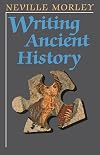
Delightful, deceptively simple discourse on why it matters how we express our thoughts when writing about history and how we interpret the thoughts of others. Morley examines how tenuous the assumed connections can be among ‘facts’ and illuminates the power and the problem of narrative structure; the form of the content is, in fact, a rhetorical choice. A great pointer to Hayden White’s work on historical text as literary artifact. Discussion includes the limits of defining history, show more challenges of how to evaluate different interpretations of the same presented evidence, language choices and what our views regarding history’s purpose says about us.
While the book may have been aimed at students and post-grads, its message should be internalized by anyone writing history (of any era) with a mixed audience in mind. On a fun note, Thucydides gives good challenge to Herodotus for the Father of History title — everyone’s a critic. show less
While the book may have been aimed at students and post-grads, its message should be internalized by anyone writing history (of any era) with a mixed audience in mind. On a fun note, Thucydides gives good challenge to Herodotus for the Father of History title — everyone’s a critic. show less
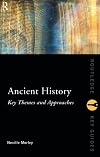
This anthology of brief extracts from modern writers on ancient Greece and Rome is divided into two parts. One is based on themes such as slavery, or death and burial. The other is arranged by writer and is meant to illustrate each writer's approach to the subject.
On the whole I think the first part based on themes worked better. I found the second half difficult to follow except where I already had some knowledge of the writer's works.
On the whole I think the first part based on themes worked better. I found the second half difficult to follow except where I already had some knowledge of the writer's works.
Lists
You May Also Like


Associated Authors
Statistics
- Works
- 11
- Also by
- 22
- Members
- 270
- Popularity
- #85,637
- Rating
- 3.6
- Reviews
- 2
- ISBNs
- 48
- Languages
- 1
