
Christopher Lukas
Author of Silent Grief: Living in the Wake of Suicide
Works by Christopher Lukas
Tagged
Common Knowledge
- Birthdate
- 1935-03-06
- Gender
- male
Members
Reviews
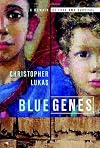
Stephen King once wrote that suicide “slithers like a snake off the tongue.” Say the word aloud and hear its venomous hiss. In his 1938 masterwork on the subject, “Man Against Himself,” Karl Menninger spoke of suicide’s stigma in polite society, “So great is the taboo on suicide that some people will not say the word…a taboo related to strongly repressed emotions. People do not like to think seriously and factually about suicide”. Should Menninger’s comments describe your show more perspective on this difficult topic, then Christopher Lukas’ beautifully written, heartbreaking memoir, “Blue Genes,” may not be for you. I didn’t think it was for me at first, but to my surprise, discovered as the pages sped past, and I began relating to so much of Lukas' intertwined, complexly enmeshed relationships and their complicated baggage of emotions, how much it truly was. Christopher Lukas, in “Blue Genes,” has somehow, with his poignant pen, transformed the carbon from the most unbelievably painful, reoccurring events in the history of his seemingly doomed-from-the-start family, into diamonds resplendent with hope and cautious optimism, despite all he’s suffered and tragically lost.
Christopher Lukas lost a lot early in life. At the age of six, circa 1941, his mother, Elizabeth, long-time battler against depression and a then undiagnosed Bipolar disorder, after a couple of hospitalizations involving risky coma-inducing insulin therapy of all things, succumbed to her mental illnesses and committed suicide. She was 33, attractive, talented, an aspiring actress, though admittedly, not able to provide the consistent emotional support her sons, Lukas and Anthony, especially needed. Nonetheless, her death would reverberate forever in the lives she left behind, even if no one in the family talked about her death for the first decade following it. Lukas and Anthony, in fact, did not even learn that their mother had taken her own life until the respective ages of 16 and 18. The silence, the taboo of suicide, ate away at the family like cancer. Only Lukas, through psychotherapy, creative enterprises in television, theatre, literature (he authored “Silent Grief” for suicide survivors), and the amazing love of his understanding wife, and unconditional acceptance of his adoring daughters, would ultimately resolve (mostly resolve) and work through his lifelong grief. Lifelong because the others in his family of origin, one by one – alcoholic father, meddling grandmother, steady uncle, eccentric aunts, and perhaps the worst and final blow of all, his older brother, J. Anthony Lukas, acclaimed NY Times journalist, two-time Pulitzer prize winning author of “Common Ground” and “Big Trouble” – would eventually commit suicide, leaving Lukas alone yet again, distraught and despairing.
Will Christopher Lukas one day die of natural causes, or obey the cruel and merciless dictates of the “blue genes” inherited from his family and die by his own hand? Not really my question, but one Lukas has asked himself over and over again, even now, in his seventies.
“There are days – too many of them – when I ponder,” Lukas concludes, “whether I would prefer to be dead and famous rather than alive and ‘just another striver’ in the world of arts and crafts. Had my brother shown me a way out of the pain of never quite achieving a grander status, or had he shown me what happens when you do achieve that status and it’s not enough?
“Still, with full confidence, I know that I will never go into a room at the end of a day and kill myself.
“Too many deaths in my family, too many suicides.
“I will not follow suit”. show less
Christopher Lukas lost a lot early in life. At the age of six, circa 1941, his mother, Elizabeth, long-time battler against depression and a then undiagnosed Bipolar disorder, after a couple of hospitalizations involving risky coma-inducing insulin therapy of all things, succumbed to her mental illnesses and committed suicide. She was 33, attractive, talented, an aspiring actress, though admittedly, not able to provide the consistent emotional support her sons, Lukas and Anthony, especially needed. Nonetheless, her death would reverberate forever in the lives she left behind, even if no one in the family talked about her death for the first decade following it. Lukas and Anthony, in fact, did not even learn that their mother had taken her own life until the respective ages of 16 and 18. The silence, the taboo of suicide, ate away at the family like cancer. Only Lukas, through psychotherapy, creative enterprises in television, theatre, literature (he authored “Silent Grief” for suicide survivors), and the amazing love of his understanding wife, and unconditional acceptance of his adoring daughters, would ultimately resolve (mostly resolve) and work through his lifelong grief. Lifelong because the others in his family of origin, one by one – alcoholic father, meddling grandmother, steady uncle, eccentric aunts, and perhaps the worst and final blow of all, his older brother, J. Anthony Lukas, acclaimed NY Times journalist, two-time Pulitzer prize winning author of “Common Ground” and “Big Trouble” – would eventually commit suicide, leaving Lukas alone yet again, distraught and despairing.
Will Christopher Lukas one day die of natural causes, or obey the cruel and merciless dictates of the “blue genes” inherited from his family and die by his own hand? Not really my question, but one Lukas has asked himself over and over again, even now, in his seventies.
“There are days – too many of them – when I ponder,” Lukas concludes, “whether I would prefer to be dead and famous rather than alive and ‘just another striver’ in the world of arts and crafts. Had my brother shown me a way out of the pain of never quite achieving a grander status, or had he shown me what happens when you do achieve that status and it’s not enough?
“Still, with full confidence, I know that I will never go into a room at the end of a day and kill myself.
“Too many deaths in my family, too many suicides.
“I will not follow suit”. show less
The story of Christopher Lukas and his brother, award-winning journalist J. Anthony Lukas, is a chronicle of mental health medicine’s evolution in the 20th century. Their family is struck again and again by bipolar disorder, a disease not yet understood or properly treated until late in the century. Unfortunately, the repercussions from misdiagnosis and lack of proper treatment echo through the lives of these brothers with shattering immediacy, starting with the suicide of their mother show more when the boys were only eight and six years old. Through the years one after another family member succumbs to the disease, ending finally with the suicide of Tony, the story that begins the memoir. The tragedy is in the sheer magnitude of the toll it takes on the family, but Mr. Lukas tells it not only as a memorial to what the he and his brother went through, but as a testament to the fact that, despite it all, he survived.
After relating the account of his family’s origins beginning with his great-grandparents, Lukas chronicles the heartbreaking story of his mother’s death, and how the boys were immediately shipped off to boarding school with no explanation for their mother’s disappearance or chance to say good-bye. This forced delay of grieving was to influence and haunt both men throughout their lives, an added burden to their already confusing personal battles with depression and bipolar disorder. Sadly, in the end it proved a burden too heavy for Tony.
While interesting and thoroughly well-written, this book is a difficult read, mainly due to the pervasive sadness that permeates this family’s history. Mr. Lukas does an excellent job of conveying the struggle the boys underwent throughout their lives, but he pays scant attention to the good moments he has enjoyed through the years, flying by his wife and daughter’s impact on his health and well-being. Ultimately, Lukas triumphs in the story, but his victory seems almost Pyrrhic - a survivor alone, among the ashes. show less
After relating the account of his family’s origins beginning with his great-grandparents, Lukas chronicles the heartbreaking story of his mother’s death, and how the boys were immediately shipped off to boarding school with no explanation for their mother’s disappearance or chance to say good-bye. This forced delay of grieving was to influence and haunt both men throughout their lives, an added burden to their already confusing personal battles with depression and bipolar disorder. Sadly, in the end it proved a burden too heavy for Tony.
While interesting and thoroughly well-written, this book is a difficult read, mainly due to the pervasive sadness that permeates this family’s history. Mr. Lukas does an excellent job of conveying the struggle the boys underwent throughout their lives, but he pays scant attention to the good moments he has enjoyed through the years, flying by his wife and daughter’s impact on his health and well-being. Ultimately, Lukas triumphs in the story, but his victory seems almost Pyrrhic - a survivor alone, among the ashes. show less
Blue Genes is the memoir of producer/director Christopher (Kit) Lukas, which regales his life and his relationship with his brother, Tony. The Lukas boy’s mother committed suicide when they were children, something the kids didn’t know until much later. Both boys battled depression at different points during their lives and Tony eventually follows his mother’s path. This memoir tells not only Kit’s life, but more importantly, it tells how he came to deal with his past, his family, show more and his so-called blue genes.
Lucas succeeds in Blue Genes by making it very easy for the reader to relate to him in every stage of his life. Looking back at his childhood we find ourselves knowing both the boy and the man looking back at the boy. This is the way we see every event in the book- as Lukas saw it at the time, and as he is able to look back and dissect it as an adult.
Unfortunately, Lukas’ ability to look back at his life is also the biggest fault with the book. Not often, but at times, it seems his clinical nature gets in the way of the story itself. Yes, Lukas studied psychology in school, but this doesn’t mean we want to hear every iota of psycho-babble he can relate to his family. If this dissection has helped him heal then good for him, but as a reader it gets old after a while. It’s great when we get to see Lukas looking back at his life with adult insight, minus the clinical talk.
Still, Blue Genes is a great look at the life of an amazing man, and in some ways it’s a look at both Kit and Tony. The biggest surprise is the way the two brothers turn out differently, even though they experienced the same relative childhood. Lukas’ memoir is inspiring to anyone, but especially to anyone with a history of depression in his or her family. He’s living proof that we can overcome our genes and find satisfaction and happiness in life. show less
Lucas succeeds in Blue Genes by making it very easy for the reader to relate to him in every stage of his life. Looking back at his childhood we find ourselves knowing both the boy and the man looking back at the boy. This is the way we see every event in the book- as Lukas saw it at the time, and as he is able to look back and dissect it as an adult.
Unfortunately, Lukas’ ability to look back at his life is also the biggest fault with the book. Not often, but at times, it seems his clinical nature gets in the way of the story itself. Yes, Lukas studied psychology in school, but this doesn’t mean we want to hear every iota of psycho-babble he can relate to his family. If this dissection has helped him heal then good for him, but as a reader it gets old after a while. It’s great when we get to see Lukas looking back at his life with adult insight, minus the clinical talk.
Still, Blue Genes is a great look at the life of an amazing man, and in some ways it’s a look at both Kit and Tony. The biggest surprise is the way the two brothers turn out differently, even though they experienced the same relative childhood. Lukas’ memoir is inspiring to anyone, but especially to anyone with a history of depression in his or her family. He’s living proof that we can overcome our genes and find satisfaction and happiness in life. show less

This is a moving account of Mr. Lukas' family experiences with depression. What is most interesting is that he is coming out of a generation where treatment for mental illness was primitive and not very effective. His losses because of that tragic fact are at times overwhelming. When I reached the end of the book I felt that it was a miracle that Mr. Lukas was still alive considering the history he has lived through! I wanted to say to him, "You are extraordinary and accepted and valued show more exactly for who you are!" His examination has a flavor of psychoanalysis - how have events played themselves out in relationship to his earliest experiences as a boy. Overall, a moving picture of one man's attempt to understand his family relationships. show less
You May Also Like


Statistics
- Works
- 4
- Members
- 212
- Popularity
- #104,833
- Rating
- 3.2
- Reviews
- 13
- ISBNs
- 15
- Languages
- 1