
Scott Westerfeld
Author of Uglies
About the Author
Scott Westerfeld was born in Dallas, Texas on May 5, 1963. He received a degree in philosophy from Vassar College in 1985. Before becoming a full time writer, he held several jobs including factory worker, software designer, editor, and substitute teacher. His works for young adults include the show more Uglies series, the Midnighters series, and The Last Days. He is the co-author of the Zeroes series written with Margo Lanagan and Deborah Biancotti. He also writes science fiction novels for adults. He has won numerous awards including a Special Citation for the 2000 Philip K. Dick Award for Evolution's Darling, a Victorian Premier's Award for So Yesterday, and an Aurealis Award for The Secret Hour. (Bowker Author Biography) show less
Image credit: Photo by Samantha Jones
Series
Works by Scott Westerfeld
The Manual of Aeronautics: An Illustrated Guide to the Leviathan Series (2012) 162 copies, 5 reviews
Mind-Rain: Your Favorite Authors on Scott Westerfeld's Uglies Series (2009) — Editor — 125 copies, 2 reviews
The World of the Golden Compass: The Otherworldly Ride Continues (2007) — Editor & Contributor — 70 copies, 2 reviews
Before You Were Here: Where We Come From, What We're Made Of, and How We Got Here (2024) 12 copies, 1 review
Spill Night 10 copies
[Title missing] 9 copies
The Movements of Her Eyes 3 copies
The Trumpet of the Swan 1 copy
Inoculata [short story] 1 copy
Uglies (Graphic Novel) — Author — 1 copy
V Virus 1 copy
Associated Works
Seven Seasons of Buffy: Science Fiction and Fantasy Writers Discuss Their Favorite Television Show (2003) — Contributor — 414 copies, 10 reviews
First Kiss (Then Tell): A Collection of True Lip-Locked Moments (2007) — Contributor — 92 copies, 3 reviews
Willful Impropriety: 13 Tales of Society, Scandal, and Romance (2012) — Foreword — 89 copies, 4 reviews
Sex in the System: Stories of Erotic Futures, Technological Stimulation, and the Sensual Life of Machines (2006) — Contributor — 27 copies, 1 review
Tagged
Common Knowledge
- Legal name
- Westerfeld, Scott David
- Birthdate
- 1963-05-05
- Gender
- male
- Education
- Vassar College (BA | 1985 | Philosophy)
- Occupations
- textbook editor
software designer
composer
science fiction writer - Agent
- Jill Grinberg (Jill Grinberg Literary Management)
- Relationships
- Larbalestier, Justine (spouse)
- Nationality
- USA
- Birthplace
- Dallas, Texas, USA
- Places of residence
- New York, New York, USA
Sydney, New South Wales, Australia - Map Location
- Texas, USA
Members
Discussions
Found: Town of perfect kids in Name that Book (February 2025)
Fiction- Move to a party city when you turn 21, must wear rings in Name that Book (June 2023)
Aliens, genetically engineered monsters, develop language in Name that Book (January 2017)
Group Read (April): Leviathan by Scott Westerfeld ***SPOILER thread*** in The 11 in 11 Category Challenge (April 2011)
Leviathan - A Fantasy February Group Read in 75 Books Challenge for 2011 (February 2011)
Reviews
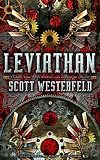
Alternate title: An Adventure in Which an Aristocratic Young Man Discovers How to Pilot an All-Terrain Walker and that he is Now an Orphan, and a Young Woman Disguises Herself as a Young Man and Joins the Navy to Pilot Flying Octopi and Whales.
I rarely read Young Adult, so it is a mark of Westerfeld’s credit that I didn’t abandon ship immediately. I picked it up as a monthly read, mistakenly assuming the group disqualified the genre from nominations. I know what you are thinking–why show more didn’t I quit? Well, Leviathan has been making reading lists for some time with solid ratings from my friends. And every now and then I do read some fantastic young adult. It isn’t the book’s fault, exactly–it’s mine.
“It felt odd fencing in farmer’s clothes, without servants standing ready to bring water and towels. Mice scrambled underfoot, and the giant Stormwalker watched over them like some iron god of war. Every few minutes Count Volger called a halt and stared up at the machine, as if hoping to find in its stoic silence the patience to endure Alek’s clumsy technique.”
It begins with Prince Aleksandar Ferdinand of Austria-Hungary headed to bed, musing on the battle he was enacting with his little tin soldiers. Before long, he’s awakened by his father’s trusted adviser on what he thinks is a nighttime training mission–piloting a land-walker in the dark. Try as I might, I could not stop visualizing the Star Wars edition, circa 1983:
Prince Alek is young, and makes all sorts of silly mistakes: thinking the advisers might be out to kidnap him, not believing his parents were killed and accidentally betraying his noble upbringing. It’s hard to be in disguise as a peasant! Apparently his situation is the byproduct of an attempt to incite a war. Meanwhile, Deryn Sharp is also discovering it is hard to live in disguise–in her case, as a boy. You have to swagger and hit people a lot, but she’s learning fast as she goes through training in the British Air Service. During her test flight, her balloon/octopus accidentally gets away and results in her being picked up by a mammoth–excuse me, whale–of a flying warship. She gets a place in the crew and manages to become part of an important diplomatic mission. Of course, the two worlds will collide. Oh, did I mention they are also the Romeo and Juliet of the European world, representing opposite sides in the conflict, who in turn represent opposite applications of technology?
“According to her aerology manual, the big hydrogen breathers were modeled on the tiny South American islands where Darwin had made his famous discoveries. The Leviathan wasn’t one beastie, but a vast web of life in ever shifting balance.”
The most engaging aspect of the tale was the cultural construct of how scientific thought was applied. In the English faction, science dove right into “Darwinism,” gene-splicing and biotech. Inventions are based upon biological creations operating in mechanical ways. Thus, the flying octopus balloons and the whale-based airships powered by renewable biomass. It’s extremely interesting and creative and was, without doubt, one of the reasons I kept reading.
Plotting felt solid. Relatively predictable, of course, given our YA heroes, but with a twist or turn along the way as to the structure of the conflict. I read the hardcover, which not only has a lovely jacket but a creative European-west Asian map on the faceplate. The illustrations by Keith Thompson are shown in perfect detail. I thought they added a great deal to the story, occasionally providing some imagery to hook the story on, and was glad I was reading paper. It wouldn’t have worked as well on my e-reader.
Writing style was excellent, and again, sign of Westerfeld’s skill, as far as I’m concerned. Deryn does speak in a heavy slang at times, to the point that Alek complains she is almost incomprehensible.
Confession time: not only to I not enjoy Young Adult as a genre, I really don’t enjoy modern human history. Part of it is the arbitrariness of the detail for me: Leader X of Y ate apples and bananas in 1935 and might have set off a world war when he accidentally tipped the farmer who lost his shirt in the milk shortage a gold coin. I just can’t remember that kind of arbitrary minutia; I’m much better with cardiovascular output, baroreceptors and red blood cells porting around oxygen to the outer perimeters. Westerfeld’s set up has to do with Leader Somebody So-and-So not being something or another in 19-Something-Something, only it went the Other Way in real life. I didn’t care when I tried to learn it in 1985, and I really don’t care now. But kudos to you, Westerfeld for making a pivotal historical event your story lynchpin. The other reason it is was never going to work for me: fighting. Events leading up to war. Young people discovering adult politics. Mounted scouts. Flying stuff shooting at other flying stuff. Land stuff shooting at flying stuff. Skirmishes. You know–tin soldiers.
Upshot? Hugely readable, well-written and illustrated book that almost completely misses my reading interests and manages to be entertaining anyways. If any of that appeals to you, I highly recommend it. show less
I rarely read Young Adult, so it is a mark of Westerfeld’s credit that I didn’t abandon ship immediately. I picked it up as a monthly read, mistakenly assuming the group disqualified the genre from nominations. I know what you are thinking–why show more didn’t I quit? Well, Leviathan has been making reading lists for some time with solid ratings from my friends. And every now and then I do read some fantastic young adult. It isn’t the book’s fault, exactly–it’s mine.
“It felt odd fencing in farmer’s clothes, without servants standing ready to bring water and towels. Mice scrambled underfoot, and the giant Stormwalker watched over them like some iron god of war. Every few minutes Count Volger called a halt and stared up at the machine, as if hoping to find in its stoic silence the patience to endure Alek’s clumsy technique.”
It begins with Prince Aleksandar Ferdinand of Austria-Hungary headed to bed, musing on the battle he was enacting with his little tin soldiers. Before long, he’s awakened by his father’s trusted adviser on what he thinks is a nighttime training mission–piloting a land-walker in the dark. Try as I might, I could not stop visualizing the Star Wars edition, circa 1983:
Prince Alek is young, and makes all sorts of silly mistakes: thinking the advisers might be out to kidnap him, not believing his parents were killed and accidentally betraying his noble upbringing. It’s hard to be in disguise as a peasant! Apparently his situation is the byproduct of an attempt to incite a war. Meanwhile, Deryn Sharp is also discovering it is hard to live in disguise–in her case, as a boy. You have to swagger and hit people a lot, but she’s learning fast as she goes through training in the British Air Service. During her test flight, her balloon/octopus accidentally gets away and results in her being picked up by a mammoth–excuse me, whale–of a flying warship. She gets a place in the crew and manages to become part of an important diplomatic mission. Of course, the two worlds will collide. Oh, did I mention they are also the Romeo and Juliet of the European world, representing opposite sides in the conflict, who in turn represent opposite applications of technology?
“According to her aerology manual, the big hydrogen breathers were modeled on the tiny South American islands where Darwin had made his famous discoveries. The Leviathan wasn’t one beastie, but a vast web of life in ever shifting balance.”
The most engaging aspect of the tale was the cultural construct of how scientific thought was applied. In the English faction, science dove right into “Darwinism,” gene-splicing and biotech. Inventions are based upon biological creations operating in mechanical ways. Thus, the flying octopus balloons and the whale-based airships powered by renewable biomass. It’s extremely interesting and creative and was, without doubt, one of the reasons I kept reading.
Plotting felt solid. Relatively predictable, of course, given our YA heroes, but with a twist or turn along the way as to the structure of the conflict. I read the hardcover, which not only has a lovely jacket but a creative European-west Asian map on the faceplate. The illustrations by Keith Thompson are shown in perfect detail. I thought they added a great deal to the story, occasionally providing some imagery to hook the story on, and was glad I was reading paper. It wouldn’t have worked as well on my e-reader.
Writing style was excellent, and again, sign of Westerfeld’s skill, as far as I’m concerned. Deryn does speak in a heavy slang at times, to the point that Alek complains she is almost incomprehensible.
Confession time: not only to I not enjoy Young Adult as a genre, I really don’t enjoy modern human history. Part of it is the arbitrariness of the detail for me: Leader X of Y ate apples and bananas in 1935 and might have set off a world war when he accidentally tipped the farmer who lost his shirt in the milk shortage a gold coin. I just can’t remember that kind of arbitrary minutia; I’m much better with cardiovascular output, baroreceptors and red blood cells porting around oxygen to the outer perimeters. Westerfeld’s set up has to do with Leader Somebody So-and-So not being something or another in 19-Something-Something, only it went the Other Way in real life. I didn’t care when I tried to learn it in 1985, and I really don’t care now. But kudos to you, Westerfeld for making a pivotal historical event your story lynchpin. The other reason it is was never going to work for me: fighting. Events leading up to war. Young people discovering adult politics. Mounted scouts. Flying stuff shooting at other flying stuff. Land stuff shooting at flying stuff. Skirmishes. You know–tin soldiers.
Upshot? Hugely readable, well-written and illustrated book that almost completely misses my reading interests and manages to be entertaining anyways. If any of that appeals to you, I highly recommend it. show less
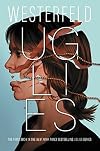
I am definitely hooked. I didn't know too much about this book before I started it, and didn't really have any expectations, but I was really impressed. Among the proliferation of YA dystopias, this stands out as one of the best I've read.
Like many dystopian novels, what happened to the world as we (the readers) know it is vague for a while; it is implied only that we (the "Rusties") brought about our own destruction through environmental carelessness. Tally's society, by contrast, is show more unwasteful and footprint-free (though it's not really clear how, especially since the society seems based on entertainment and enjoyment, and little hard work or education). In this world, everyone is transformed surgically at age 16 from an ugly to a pretty. Tally is awaiting her transformation with excitement - especially since her best friend Peris turned before her, and she has only seen him once since - but her new friend, Shay, doesn't want to become pretty, and plans to escape: "We don't have to look like everyone else, Tally, and act like everyone else. We've got a choice. We can grow up any way we want" (86). Shay does escape successfully, leaving Tally, who refused to go with her, behind. However, Special Circumstances intervenes: they won't let Tally become a pretty until she goes after Shay and finds her and the others who have escaped. Once Tally has betrayed her friend, she can turn into a pretty.
Tally ventures through the outside world and eventually makes her way to the Smoke, where Shay is; there, she is supposed to activate her locket, sending a signal that will alert Special Circumstances to her whereabouts and the location of the camp. However, she is reluctant to do so, and the longer she stays in the camp with other runaway uglies, the more her way of thinking changes. She meets David, who was born outside the city to doctor parents who fled when they discovered that the surgery didn't just make people pretty: it changed their brains. Tally decides to destroy the locket instead of activating it - but its destruction, unbeknownst to Tally, also summons Special Circumstances. The camp is attacked, and only Tally and David escape. Then they journey to the city to rescue Shay, David's parents, and the others - before they are turned into pretties against their will.
"Doing what you're supposed to do is always boring. I can't imagine anything worse than being required to have fun." -Shay
...
"Better dead than ugly." -Tally (48)
"Out here, you find out that the city fools you about how things really work." -Shay
...
"I kind of like being fooled about some things." -Tally (57)
Maybe this really would be an adventure. Of course, at the end of the journey there would be only betrayal. (137)
This was the wild, she reminded herself. Mistakes had serious consequences. (145)
"Everything's so big." -Tally
"That's what you can never tell from inside. How small the city is. How small they have to make everyone to keep them trapped there." -Shay (199)
Tally had spent the last four years staring at the skyline of New Pretty Town, thinking it was the most beautiful sight in the world, but she didn't think so anymore. (199)
Nature, at least, didn't need an operation to be beautiful. It just was. (219)
"We wanted to start a community of people...who were free from pretty thinking." -Maddy (256)
Perhaps the logical conclusion of everyone looking the same was everyone thinking the same. (259)
Maybe he really could see past her ugly face. Maybe what was inside her did matter more to him than anything else. (264)
"You really think I'm beautiful."
"Yes. What you do, the way you think, makes you beautiful." (264)
Not just your face was changed by the knife. Your personality - the real you inside - was the price of beauty. (388) show less
Like many dystopian novels, what happened to the world as we (the readers) know it is vague for a while; it is implied only that we (the "Rusties") brought about our own destruction through environmental carelessness. Tally's society, by contrast, is show more unwasteful and footprint-free (though it's not really clear how, especially since the society seems based on entertainment and enjoyment, and little hard work or education). In this world, everyone is transformed surgically at age 16 from an ugly to a pretty. Tally is awaiting her transformation with excitement - especially since her best friend Peris turned before her, and she has only seen him once since - but her new friend, Shay, doesn't want to become pretty, and plans to escape: "We don't have to look like everyone else, Tally, and act like everyone else. We've got a choice. We can grow up any way we want" (86). Shay does escape successfully, leaving Tally, who refused to go with her, behind. However, Special Circumstances intervenes: they won't let Tally become a pretty until she goes after Shay and finds her and the others who have escaped. Once Tally has betrayed her friend, she can turn into a pretty.
Tally ventures through the outside world and eventually makes her way to the Smoke, where Shay is; there, she is supposed to activate her locket, sending a signal that will alert Special Circumstances to her whereabouts and the location of the camp. However, she is reluctant to do so, and the longer she stays in the camp with other runaway uglies, the more her way of thinking changes. She meets David, who was born outside the city to doctor parents who fled when they discovered that the surgery didn't just make people pretty: it changed their brains. Tally decides to destroy the locket instead of activating it - but its destruction, unbeknownst to Tally, also summons Special Circumstances. The camp is attacked, and only Tally and David escape. Then they journey to the city to rescue Shay, David's parents, and the others - before they are turned into pretties against their will.
"Doing what you're supposed to do is always boring. I can't imagine anything worse than being required to have fun." -Shay
...
"Better dead than ugly." -Tally (48)
"Out here, you find out that the city fools you about how things really work." -Shay
...
"I kind of like being fooled about some things." -Tally (57)
Maybe this really would be an adventure. Of course, at the end of the journey there would be only betrayal. (137)
This was the wild, she reminded herself. Mistakes had serious consequences. (145)
"Everything's so big." -Tally
"That's what you can never tell from inside. How small the city is. How small they have to make everyone to keep them trapped there." -Shay (199)
Tally had spent the last four years staring at the skyline of New Pretty Town, thinking it was the most beautiful sight in the world, but she didn't think so anymore. (199)
Nature, at least, didn't need an operation to be beautiful. It just was. (219)
"We wanted to start a community of people...who were free from pretty thinking." -Maddy (256)
Perhaps the logical conclusion of everyone looking the same was everyone thinking the same. (259)
Maybe he really could see past her ugly face. Maybe what was inside her did matter more to him than anything else. (264)
"You really think I'm beautiful."
"Yes. What you do, the way you think, makes you beautiful." (264)
Not just your face was changed by the knife. Your personality - the real you inside - was the price of beauty. (388) show less
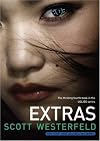
I don't know what it was, but it is possible I loved this book more than any of the original "Uglies" trilogy. Maybe it was that Westerfeld got the chance to take his world in a new direction, or maybe it was the awesome new characters. But this was one companion novel that did it right.
Aya Fuse lives in a city in what today we would know as Japan, several years after Tally Youngblood toppled the hierarchy of the cities and brought about the "mind-rain." Now, the population of the cities is show more focused on a new form of hierarchy; popularity. All over the city, cliques and individuals try to boost their social status using strange surgery, new technology, weird concepts, and filmed news stories called "kicks" that are akin to modern day blogs. And Tally, who has achieved hero status, is the most famous of all, though no one has ever seen her.
Aya is a relative unknown in the shadow of her famous older brother Hiro, who is ruthless in his stories. But her whole life changes when she meets the Sly Girls, an exclusive clique who do daredevil tricks and find off-limits secrets. And when Aya and the Sly Girls discover strange humanoid figures loading equipment into a mountain, Aya may have the chance to kick the biggest story ever; the end of the world.
Aya herself is a worthy heroine follow-up to Tally, adventurous but still trying to unravel the ethics and identity behind her desire to be popular. Fun new characters bring a whole different level of awesome: Aya's cocky brother Hiro, his tech-head friend Ren, and Aya's crush Frizz Mizuno, a sweet, gorgeous guy with a Radical Honesty brain surge that renders him incapable of lying (and my favorite guy of the whole series ;) ). Add in an encounter with the famous Tally, along with her group of friends (yes, including Shay and David), and the mysterious danger of the humanoid aliens, and this is just a riot of adventure, and proof that the future of the "Uglies" world is going to do okay. show less
Aya Fuse lives in a city in what today we would know as Japan, several years after Tally Youngblood toppled the hierarchy of the cities and brought about the "mind-rain." Now, the population of the cities is show more focused on a new form of hierarchy; popularity. All over the city, cliques and individuals try to boost their social status using strange surgery, new technology, weird concepts, and filmed news stories called "kicks" that are akin to modern day blogs. And Tally, who has achieved hero status, is the most famous of all, though no one has ever seen her.
Aya is a relative unknown in the shadow of her famous older brother Hiro, who is ruthless in his stories. But her whole life changes when she meets the Sly Girls, an exclusive clique who do daredevil tricks and find off-limits secrets. And when Aya and the Sly Girls discover strange humanoid figures loading equipment into a mountain, Aya may have the chance to kick the biggest story ever; the end of the world.
Aya herself is a worthy heroine follow-up to Tally, adventurous but still trying to unravel the ethics and identity behind her desire to be popular. Fun new characters bring a whole different level of awesome: Aya's cocky brother Hiro, his tech-head friend Ren, and Aya's crush Frizz Mizuno, a sweet, gorgeous guy with a Radical Honesty brain surge that renders him incapable of lying (and my favorite guy of the whole series ;) ). Add in an encounter with the famous Tally, along with her group of friends (yes, including Shay and David), and the mysterious danger of the humanoid aliens, and this is just a riot of adventure, and proof that the future of the "Uglies" world is going to do okay. show less
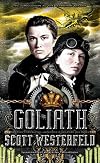
I don't use the word "heteronormative" lightly, but.....
(Ugh.)
Apart from the increasingly annoying Certified 100% Heterosexual Relationship that Westerfeld made central to the story, this was pretty good. It really didn't need the romance driving it; "romance" mostly just tosses a hat over gaping ridiculous plot developments likeAlek literally throwing away his royalty (very punny; I'm still wincing), and Alek having an actual consistent political position (if that's too much to expect from show more a teenager, then how does Dylan have such freedom of action in her relatively low-on-the-totem-pole military rank?) . Story itself was a little disjointed and strung-together, but it worked, and overall I really like Westerfeld's warping of history. I am still confused about Dylan's rank; the first two books make it seem like she was more of a cabin boy, but she always had a lot more latitude than I expected, even accounting for the "bell captain" effect (where the people who carry out the orders have a kind of power that the people giving the orders do not).
I liked the characterization of Tesla, although maybe it helps that I find his adoring present-day fan club annoying.
The social barriers Dylan ran up against, even with Dr. Barlow, were really painful to read. Maybe I took it too personally. I kept having flashes to [b:Monstrous Regiment|386371|Monstrous Regiment (Discworld, #31)|Terry Pratchett|https://d202m5krfqbpi5.cloudfront.net/books/1347894977s/386371.jpg|25787074]; I would have loved to see how Dylan was going to keep living her dream, or how other women were dealing with things-as-they-were. Which begs the question, is Dylan going to keep living as a man? Some hints are certainly dropped in that direction. Isn't that going to create some sticky social issues if she and Alek pursue their romantic relationship?
If so, Westerfeld isn't going to be the one to tell us about it. I've liked his work for a long time, his books are generally thoughtful and don't talk down to his young readers, but right now I am incredibly disappointed in him. Either he knew what he was doing with his queer subtext and was too cowardly to make it text/caved to the editors, or it was all just a joke to him. show less
(Ugh.)
Apart from the increasingly annoying Certified 100% Heterosexual Relationship that Westerfeld made central to the story, this was pretty good. It really didn't need the romance driving it; "romance" mostly just tosses a hat over gaping ridiculous plot developments like
I liked the characterization of Tesla, although maybe it helps that I find his adoring present-day fan club annoying.
The social barriers Dylan ran up against, even with Dr. Barlow, were really painful to read. Maybe I took it too personally. I kept having flashes to [b:Monstrous Regiment|386371|Monstrous Regiment (Discworld, #31)|Terry Pratchett|https://d202m5krfqbpi5.cloudfront.net/books/1347894977s/386371.jpg|25787074]; I would have loved to see how Dylan was going to keep living her dream, or how other women were dealing with things-as-they-were. Which begs the question, is Dylan going to keep living as a man? Some hints are certainly dropped in that direction. Isn't that going to create some sticky social issues if she and Alek pursue their romantic relationship?
If so, Westerfeld isn't going to be the one to tell us about it. I've liked his work for a long time, his books are generally thoughtful and don't talk down to his young readers, but right now I am incredibly disappointed in him. Either he knew what he was doing with his queer subtext and was too cowardly to make it text/caved to the editors, or it was all just a joke to him. show less
Lists
Gaslamp Fantasy (1)
To Read - Horror (1)
Graphic Novels (1)
Absolute Power (1)
Favorite Series (1)
Oklahoma (3)
Steampunk (3)
Best Young Adult (4)
Next in Series (1)
Best Dystopias (1)
Science Fiction (2)
Sonlight Books (1)
Awards


You May Also Like


Associated Authors
Statistics
- Works
- 64
- Also by
- 17
- Members
- 76,254
- Popularity
- #163
- Rating
- 3.8
- Reviews
- 2,733
- ISBNs
- 762
- Languages
- 21
- Favorited
- 207


