
Baruch Spinoza (1632–1677)
Author of Ethics
About the Author
Baruch Spinoza was born in Amsterdam, the son of Portuguese Jewish refugees who had fled from the persecution of the Spanish Inquisition. Although reared in the Jewish community, he rebelled against its religious views and practices, and in 1656 was formally excommunicated from the show more Portuguese-Spanish Synagogue of Amsterdam and was thus effectively cast out of the Jewish world. He joined a group of nonconfessional Christians (although he never became a Christian), the Collegiants, who professed no creeds or practices but shared a spiritual brotherhood. He was also apparently involved with the Quaker mission in Amsterdam. Spinoza eventually settled in The Hague, where he lived quietly, studying philosophy, science, and theology, discussing his ideas with a small circle of independent thinkers, and earning his living as a lens grinder. He corresponded with some of the leading philosophers and scientists of his time and was visited by Leibniz and many others. He is said to have refused offers to teach at Heidelberg or to be court philosopher for the Prince of Conde. During his lifetime he published only two works, The Principles of Descartes' Philosophy (1666) and the Theological Political Tractatus (1670). In the first his own theory began to emerge as the consistent consequence of that of Descartes (see also Vol. 5). In the second, he gave his reasons for rejecting the claims of religious knowledge and elaborated his theory of the independence of the state from all religious factions. After his death (probably caused by consumption resulting from glass dust), his major work, the Ethics, appeared in his Opera Posthuma, and presented the full metaphysical basis of his pantheistic view. Spinoza's influence on the Enlightenment, on the Romantic Age, and on modern secularism has been tremendous. (Bowker Author Biography) show less
Image credit: From Wikipedia
Series
Works by Baruch Spinoza
The Ethics ; Treatise on the Emendation of the Intellect ; Selected Letters (1883) 855 copies, 4 reviews
The Rationalists: Descartes: Discourse on Method & Meditations; Spinoza: Ethics; Leibniz: Monadology & Discourse on Metaphysics (1960) 355 copies, 1 review
Chief Works of Benedict De Spinoza: A Theologico-Political Treatise and a Political Treatise (1951) 319 copies, 8 reviews
Court traité ; Traité de la réforme de l'entendement ; Principes de la philosophie de Descartes ; Pensées métaphysiques (1988) 66 copies, 2 reviews
Principles of Cartesian Philosophy, with Metaphysical Thoughts and Lodewijk Meyer's Inaugural Dissertation (1998) 41 copies
Tratado de la reforma del entendimiento y otros escritos (Clásicos - Clásicos del Pensamiento) (Spanish Edition) (1989) 15 copies
Spinoza Collection: Ethics, Theologico-Political Treatise, On the Improvement of the Understanding (2025) 13 copies
The Philosophy of Spinoza - Special Edition: On God, On Man, and On Man's Well Being (2010) 11 copies
The Political Works: The Tractatus Theologico-Politicus in Part and the Tractatus Politicus in Full (1958) 8 copies
Pensamentos metafísicos; Tratado da correção do intelecto; Tratado político; Correspondência 7 copies
Opera, quotquot reperta sunt 7 copies
Pensamentos metafísicos ; Tratado da correção do intelecto ; Ética ; Tratado político ; Correspondência (2004) 7 copies
Princípios da Filosofia Cartesiana e Pensamentos Metafísicos (Em Portuguese do Brasil) (2015) 6 copies, 1 review
Ética 4 copies
Traktaty; Etyka 4 copies
Spinoza I: Etica 3 copies
Politikai tanulmány és levelezés Maximilian Lucas és Johannes Colerus Spinoza-életrajzaival (1980) 3 copies
Dio 3 copies
On the Improvement of Understanding 3 copies
The Chief Works of Benedict De Spinoza Volume 2 The Ethics / Selected letters / On the improvement of human understanding (1951) 3 copies
La superstizione 3 copies
知性改善論 2 copies
Πολιτική πραγματεία (Spinoza opera; Gebhardt, Carl (ed.); Carl Winters Universitaetsbuchhandlung; vol. III, p. 272-360); (1925)); (Greek ed.) (2013) 2 copies
Tratado da Correção do Intelecto 2 copies
Tractat de l'esmena de l'enteniment. 2 copies
Great Philosophers Volume One: The Road to Inner Freedom, The Art of Philosophizing, and Pilgrimage to Humanity (2018) 2 copies
Wijsgeerige fragmenten 2 copies
Etica: passi scelti 2 copies
B. V. Spinoza's Sämmtliche Werke, Vol. 1: Aus dem Lateinischen mit dem Leben Spinoza's (Classic Reprint) (German Edition) (2017) 2 copies
Ἡ ἐλευθερία τῆς σκέψης σέ ἓνα ἐλεύθερο κράτος: πρόλογος καί κεφάλαιο 20 τῆς θεολογικοπολιτικῆς… (2014) 2 copies
Spinoza Selected Works Collection: Ethics, Theologico-Political Treatise, On the Improvement of the Understanding (2024) 2 copies
Benedicti de Spinoza opera : quotquot reperta sunt; recognoverunt J.van Vloten et J.P.N.Land (2022) 2 copies
Opera quae supersunt omnia. v. 1 2 copies
The Philosophy Of Spinoza As Contained In The First, Second And Fifth Parts Of The Ethics, And In Extracts From The Third And Fourth (2007) 2 copies
אגרות 2 copies
Ètica 2 copies
Spinoza válogatott művei 1 copy
Oeuvres completes 1 copy
TRAKTATI POLITIK 1 copy
Benedicti de Spinoza Opera Quae Supersunt Omnia, Volume 1 - Primary Source Edition (Latin Edition) (2014) 1 copy
No title 1 copy
תורת - המדות 1 copy
Spinoza 1 copy
Spinoza Etica 1 copy
Tractatus De Intellectus Emendatione: Et De Via, Qua Optime in Veram Rerum Cognitionem Dirigitur (Classic Reprint) (2018) 1 copy
The political works. The Tractatus theologico-politicus in part and the Tractatus politicus in full 1 copy
Spinoza - Opera: Ethica - Tractatus politicus - Tractatus theologico-politicus (Latin Edition) (2021) 1 copy
Triết học Spinoza 1 copy
Despre Dumnezeu. Etica 1 copy
スピノザ全集 III エチカ 1 copy
スピノザ全集 VI 往復書簡集 1 copy
Tolv brev : om Gudnaturen, förnuftet och vidskepelsen, den kristna ortodoxin, tiden och evigheten : 1661-1676 (1993) 1 copy
Oeuvres 3. Éthique 1 copy
Zum Gedenken an den 300. Todestag von Benedict de Spinoza, 24. November 1632 - 21. Februar 1677 1 copy
Benedictus de Spinoza: Ethics, On the Improvement of the Understanding, & Theologico-Political Treatise (2015) 1 copy
Politiek traktaat 1 copy
Torat ha-midot 1 copy
TRAKTAT PËR INTELEKTIN 1 copy
Traité de la réforme de l'entendement - Court traité - Les Principes de la philosophie de Descartes - Pensées métaphysiques (2022) 1 copy
Spinoza [opere di] 1 copy
Tractatus politicus 1 copy
Selected Letters 1 copy
Lettere2 1 copy
Tom. 3-4 1 copy
Tom. 1-2 1 copy
Lettere 1 1 copy
Espinosa 1 copy
Tratado da reforma do entendimento e do caminho para chegar ao verdadeiro conhecimento das coisas 1 copy
Tratado político 1 copy
Trattato sull'emendazione dell'intelletto: Princ©Ơpi della filosofia cartesiana: Pensieri metafisici 1 copy
Opere scelte 1 copy
Spinozas udødelige tanker 1 copy
[Works and Epistles] 1 copy
Antologia/ Spinoza. 1 copy
Works of Spinoza: Volume 2 1 copy
Der politische Traktat 1 copy
Sämmtliche Werke 1 copy
The Chief Works Of Benedict De Spinoza Vol. I: Introduction, Tractatus Theologico-Politicus, Tractatus Politicus (2010) 1 copy
court traité oeuvre 1 1 copy
Trattato sull'emendazione dell'intelletto-Principi della filosofia di Cartesio. Pensieri metafisici [Lingua latina] (2017) 1 copy
La libertà di pensiero 1 copy
The Rationalists 1 copy
اخلاق 1 copy
tica 1 copy
L'Etica 1 copy
Associated Works
Oogst Der Tijden. keur uit de werken van schrijvers en dichters aller volken en eeuwen (1940) — Contributor — 12 copies
Tagged
Common Knowledge
- Canonical name
- Spinoza, Baruch
- Legal name
- Espinosa, Baruch
Spinosa, Bento de - Other names
- Spinoza, Benedictus de
Spinoza, Baruch de - Birthdate
- 1632-11-24
- Date of death
- 1677-02-21
- Gender
- male
- Education
- Pereira yeshibah, Amsterdam, Netherlands
- Occupations
- optician
philosopher
theologian
lens grinder - Short biography
- Baruch Spinoza was born in Amsterdam, the Netherlands, to a Sephardic Jewish family whose recent ancestors had been expelled from or fled Spain and Portugal. He received a thorough education, including the study of medieval philosophy as well as the works of Descartes, Hobbes, and other contemporaries. He became a key philosopher and writer laying the groundwork for the Enlightenment, though the importance of his work was not fully realized until many years after his death.
Based on his radical views, the Jewish religious authorities in Amsterdam banned him from their society at age 23. Around this time, he adopted the Latin form of his name, Benedictus de Spinoza. He made a living grinding optical lenses, and continued his scholarly writing. He died in 1677 at age 44, allegedly of a lung illness, perhaps caused by the dust inhaled during his work. Of his writings, only A Treatise on Religious and Political Philosophy (1670) was published during his lifetime. His books Ethics, Political Treatise, and Hebrew Grammar appeared posthumously in 1677. - Nationality
- Netherlands
- Birthplace
- Amsterdam, Holland
- Places of residence
- Amsterdam, Holland
The Hague, Holland, Dutch Republic
Rijnsburg, Netherlands - Place of death
- The Hague, Holland, Dutch Republic
- Burial location
- Cemetery of the New Church on the Spui, The Hague, Netherlands
- Associated Place (for map)
- Holland, Dutch Republic
Members
Discussions
Mini flash-mob for Spinoza's Library in Legacy Libraries (October 2012)
I believe in the God of Spinoza Albert Einstein in Philosophy and Theory (August 2009)
Reviews
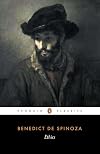
I do not even know where I should begin with praising this book... The Ethics by Spinoza is one of the bravest and most successful attempts in philosophy. By applying an analytical method (beginning at the beginning) Spinoza unwraps for us a universe of joy, parallelism and determinism. His most notorious idea, and the reason why up till Kant every philosopher was scared to be called a Spinozist, is that God is not some loving guy with a beard. Spinoza's God is substance: the one thing show more that created itself and everything else out of necessity. This means that everything that happens, every existing thing is an expression of God. I cannot explain this idea much clearer here than Spinoza did in Part I, so if you are interested, read it. In my opinion, he did a great job: his definitions are not outrageous and his axioms seem fair enough.
What the goal of the Ethics is, is to move from inadequate understanding towards understanding of the essences of the things as they are in God. Understanding is for Spinoza the highest perfection our mind can attain and this kind of knowledge will lead us to endless joy.
In Nietzsche we can hear an echo so clear of Spinoza's philosophy that every Nietzschean should take time to read this masterpiece. Just like Nietzsche, Spinoza's philosophy is one of joy, understanding what drives us and eventually of affirming life at it is. It is a beautiful book. show less
What the goal of the Ethics is, is to move from inadequate understanding towards understanding of the essences of the things as they are in God. Understanding is for Spinoza the highest perfection our mind can attain and this kind of knowledge will lead us to endless joy.
In Nietzsche we can hear an echo so clear of Spinoza's philosophy that every Nietzschean should take time to read this masterpiece. Just like Nietzsche, Spinoza's philosophy is one of joy, understanding what drives us and eventually of affirming life at it is. It is a beautiful book. show less
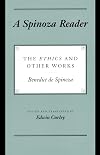
The ultimate end of the man who is led by reason, that is, his highest desire, by which he strives to moderate all the others, is that by which he is led to conceive adequately both himself and all things which can fall under his understanding.
The central role of reason in Spinoza's philosophy borders on the mystical. To the extent that we conform to reason, we conform to the true nature of reality. What is good is what is realized upon reason. God is pure reason. The ethical human being in show more the Spinozist conception consists of an almost monastic dedication to reason, through which joy is realized. Not sure of its veracity, but of all the pseudo-religious philosophies out there, this is the one I would be willing to make the leap of faith on. show less
The central role of reason in Spinoza's philosophy borders on the mystical. To the extent that we conform to reason, we conform to the true nature of reality. What is good is what is realized upon reason. God is pure reason. The ethical human being in show more the Spinozist conception consists of an almost monastic dedication to reason, through which joy is realized. Not sure of its veracity, but of all the pseudo-religious philosophies out there, this is the one I would be willing to make the leap of faith on. show less
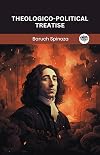
When Spinoza’s Theological-Political Treatise was published in 1670, it was immediately attacked as a “godless”, “atheistic” book intended to attack all religions. Many considered it the most dangerous book ever written and one reviewer described it as a “book forged in Hell.”
The reason it upset so many people was it said so many shocking things including that the “Bible is not literally the word of God, and ‘true religion’ has nothing to do with theology or liturgical show more ceremonies” and that religion boils down to the simple rule to love your neighbor. He dismissed the existence of miracles, said that Moses did not write the first five books of the Bible, and pioneered the use of critical text analysis for the Bible saying that the Bible is just a work of human literature.
This is a remarkably readable book and, despite all of the negative things said about it, it is actually very devout. The reason to book is so powerful and persuasive is that Spinoza provides detailed reasoning for all of his conjectures and his reasoning always start with a very precise reading of scripture.
Particularly interesting were the many chapters where Spinoza illustrated his methodology for critical text analysis. Although very detailed, it is fascinating to watch unfold. When he begins with the text, he looks at the original Hebrew letters and surmises that some misreading of specific letters could have led to erroneous translations. He also goes into great detail illustrating where scripture contradicts itself. He then concludes which passages can and cannot be believed due to these likely distortions. Spinoza shows genuine contempt for theologians who provide twisted reasoning in an effort to explain away these contradictions in order to defend Biblical inerrancy.
After reading Steven Nadler’s A Book Forged in Hell about Spinoza’s book, I felt compelled to read the original from Spinoza. I am glad I did. I read a very inexpensive e-book published by Grapevine and found the edition of high quality. There are, however, no footnotes or introductory remarks for this edition. show less
The reason it upset so many people was it said so many shocking things including that the “Bible is not literally the word of God, and ‘true religion’ has nothing to do with theology or liturgical show more ceremonies” and that religion boils down to the simple rule to love your neighbor. He dismissed the existence of miracles, said that Moses did not write the first five books of the Bible, and pioneered the use of critical text analysis for the Bible saying that the Bible is just a work of human literature.
This is a remarkably readable book and, despite all of the negative things said about it, it is actually very devout. The reason to book is so powerful and persuasive is that Spinoza provides detailed reasoning for all of his conjectures and his reasoning always start with a very precise reading of scripture.
Particularly interesting were the many chapters where Spinoza illustrated his methodology for critical text analysis. Although very detailed, it is fascinating to watch unfold. When he begins with the text, he looks at the original Hebrew letters and surmises that some misreading of specific letters could have led to erroneous translations. He also goes into great detail illustrating where scripture contradicts itself. He then concludes which passages can and cannot be believed due to these likely distortions. Spinoza shows genuine contempt for theologians who provide twisted reasoning in an effort to explain away these contradictions in order to defend Biblical inerrancy.
After reading Steven Nadler’s A Book Forged in Hell about Spinoza’s book, I felt compelled to read the original from Spinoza. I am glad I did. I read a very inexpensive e-book published by Grapevine and found the edition of high quality. There are, however, no footnotes or introductory remarks for this edition. show less
The word on the street is that one can safely skip the first two of the five parts of this book—difficult to understand—and jump straight to what the book is ostensibly about, ethics. I’m not sure, though, that the reader who begins with part three or four would be able to make much sense of it. Spinoza’s treatise begins and ends with God, and the “ethics” it offers are not so much moral prescriptions as they are a way to combat the storms to which our passions are prey.
If that show more makes it sound as if it’s a rehash of ancients such as Epictetus, in a way it is, but with crucial differences, particularly in that Spinoza denies that either God or man has free will. The God he demonstrates in the manner of Euclidean geometry is not the one you heard about in Sunday school. Spinoza’s alternate term for God is “nature,” which often brings the label “pantheist” to his philosophy. To an extent, that’s justified; God is the sum total of what is. Still, that equivalence affects not only what we mean by “God,” but also by “nature.”
Since there is no free will, nothing in the universe is arbitrary, except perhaps for the fact that the universe exists. Or maybe even that’s not an exception. In Spinoza’s take, the universe cannot not exist. Whatever happens is the result of a chain of causes. To that extent, life is determined, but not predetermined.
So where do ethics fit into this? As far as I can understand, the point is to come to know and embrace what is and thereby overcome emotions based on inadequate knowledge through stronger emotions that make us more fit to act (in Spinoza's system, to act is categorically better than to be passive). In so far as we grow in knowledge, the actions we take are more likely to be toward objects that benefit both us and other humans.
At least, that’s what I understand him to say. At one point, Spinoza’s insistence that virtue is nothing other than “acting according to the laws of our nature.” That’s a sentence the self-aggrandizers of our day might applaud, except that Spinoza doesn’t mean material things beyond those necessary for living. Those governed by reason “desire nothing for themselves which they do not desire for others.”
For the most part, Spinoza presents his case for the virtuous life—which for him is the only life that can be called free—on its own merits. His rare departures from this admirable strategy include a couple of negative remarks about conventional religion. His complaint about “the superstitious, who know better how to rail at vice than to teach virtue” (part IV, scholium to proposition 63) is close to the mark, as is his description of “the creed of the multitude” (the scholium to proposition 41 in part V).
The translation I read is the one by Hale White, first published 1883, revised by Amelia Hutchison in 1910, and reprinted in volume 31 of the Great Books of the Western World. It’s serviceable, from what I can tell by comparing a few passages to the Latin text. Still, I found I could follow Spinoza’s argument better if I mentally substituted “emotion” every time the translation spoke of an “affect.” But overall, the struggle I had with the book had more to do with the stringency of Spinoza’s thought and writing style than any faults in the translation. Nevertheless, I found this a worthwhile read. show less
If that show more makes it sound as if it’s a rehash of ancients such as Epictetus, in a way it is, but with crucial differences, particularly in that Spinoza denies that either God or man has free will. The God he demonstrates in the manner of Euclidean geometry is not the one you heard about in Sunday school. Spinoza’s alternate term for God is “nature,” which often brings the label “pantheist” to his philosophy. To an extent, that’s justified; God is the sum total of what is. Still, that equivalence affects not only what we mean by “God,” but also by “nature.”
Since there is no free will, nothing in the universe is arbitrary, except perhaps for the fact that the universe exists. Or maybe even that’s not an exception. In Spinoza’s take, the universe cannot not exist. Whatever happens is the result of a chain of causes. To that extent, life is determined, but not predetermined.
So where do ethics fit into this? As far as I can understand, the point is to come to know and embrace what is and thereby overcome emotions based on inadequate knowledge through stronger emotions that make us more fit to act (in Spinoza's system, to act is categorically better than to be passive). In so far as we grow in knowledge, the actions we take are more likely to be toward objects that benefit both us and other humans.
At least, that’s what I understand him to say. At one point, Spinoza’s insistence that virtue is nothing other than “acting according to the laws of our nature.” That’s a sentence the self-aggrandizers of our day might applaud, except that Spinoza doesn’t mean material things beyond those necessary for living. Those governed by reason “desire nothing for themselves which they do not desire for others.”
For the most part, Spinoza presents his case for the virtuous life—which for him is the only life that can be called free—on its own merits. His rare departures from this admirable strategy include a couple of negative remarks about conventional religion. His complaint about “the superstitious, who know better how to rail at vice than to teach virtue” (part IV, scholium to proposition 63) is close to the mark, as is his description of “the creed of the multitude” (the scholium to proposition 41 in part V).
The translation I read is the one by Hale White, first published 1883, revised by Amelia Hutchison in 1910, and reprinted in volume 31 of the Great Books of the Western World. It’s serviceable, from what I can tell by comparing a few passages to the Latin text. Still, I found I could follow Spinoza’s argument better if I mentally substituted “emotion” every time the translation spoke of an “affect.” But overall, the struggle I had with the book had more to do with the stringency of Spinoza’s thought and writing style than any faults in the translation. Nevertheless, I found this a worthwhile read. show less
Lists
Awards


You May Also Like


Associated Authors
Statistics
- Works
- 333
- Also by
- 12
- Members
- 10,063
- Popularity
- #2,359
- Rating
- 4.0
- Reviews
- 111
- ISBNs
- 723
- Languages
- 26
- Favorited
- 60


