
Kristen Ghodsee
Author of Why Women Have Better Sex Under Socialism: And Other Arguments for Economic Independence
About the Author
Kristen R. Ghodsee is professor of Russian and East European studies at the University of Pennsylvania and the author of six books on gender, socialism, and post socialism in Eastern Europe. Her work has been translated into over a dozen languages and has appeared in publications such as Dissent, show more Foreign Affairs, Jacobin, The Baffler, the New Republic, the Washington Post, and the New York Times. show less
Works by Kristen Ghodsee
Why Women Have Better Sex Under Socialism: And Other Arguments for Economic Independence (2020) — Author — 372 copies, 4 reviews
Everyday Utopia: What 2,000 Years of Wild Experiments Can Teach Us About the Good Life (2023) 96 copies, 2 reviews
The Left Side of History: World War II and the Unfulfilled Promise of Communism in Eastern Europe (2015) 36 copies, 1 review
The Red Riviera: Gender, Tourism, and Postsocialism on the Black Sea (Next Wave: New Directions in Women's Studies) (2005) 16 copies
Second World, Second Sex: Socialist Women's Activism and Global Solidarity during the Cold War (2019) 8 copies, 1 review
Associated Works
Tagged
Common Knowledge
- Legal name
- Ghodsee, Kristen Rogheh
- Birthdate
- 1970-04-26
- Gender
- female
- Education
- Université de Berkeley (Ph. D., 20 02)
Université de Californie, Santa Cruz (B.A., 19 97, M.A., 19 97) - Occupations
- Professeur
Ethnographe - Organizations
- université de Pennsylvanie (Professeur, Etudes russes et est-européennes)
- Awards and honors
- John Simon Guggenheim Fellowship (For her work in Anthropology and Cultural Studies, 20 12)
- Nationality
- USA
- Map Location
- USA
Members
Reviews
Everyday Utopia: What 2,000 Years of Wild Experiments Can Teach Us About the Good Life by Kristen R. Ghodsee
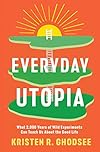
I got this book after hearing Prof. Ghodsee interviewed on "Refamulating" podcast - I had her as a Bowdoin professor twenty years ago and I immediately recognized her voice and her insistence on hope. I'd call this a lightly academic text - lots of facts and well-supported arguments but not at all dense or intimidating. She defines utopian thinking very broadly and looks at examples across the world and across human history of different ways people have built and structured community. She show more calls for grand hope and blue sky thinking, but also celebrates very accessible small ways people today are rethinking family and community. I really enjoyed this read, especially at this moment when I needed a hopeful text. show less
Second world, second sex: socialist women's activism and global solidarity during the Cold War by Kristen Ghodsee
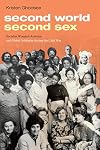
Kristin Ghodsee brings a vivid account of socialist women's activism during the cold war, focusing particularly on Bulgaria and Zambia. The reader learns about various individual feminists and broader movements, and their impacts on their respective state's laws, and advancements of women's rights.
Ghodsee demonstrates these impacts in comparison to Western states as well, analysing issues of maternity leave, abortion rights and access, working women's rights, and more.
She concludes her work show more by demonstrating how this history can be important for modern feminists work as well, in tackling the variegated issues of oppression affecting working women today. Overall, this work is highly recommended for anyone interested in a history of socialist feminism, and/or those interested in the socialist feminist philosophy more broadly. show less
Ghodsee demonstrates these impacts in comparison to Western states as well, analysing issues of maternity leave, abortion rights and access, working women's rights, and more.
She concludes her work show more by demonstrating how this history can be important for modern feminists work as well, in tackling the variegated issues of oppression affecting working women today. Overall, this work is highly recommended for anyone interested in a history of socialist feminism, and/or those interested in the socialist feminist philosophy more broadly. show less
Why Women Have Better Sex Under Socialism: And Other Arguments for Economic Independence by Kristen R. Ghodsee
Well worth the read!
If only for this:
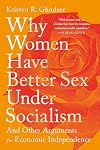
The 588th Night Bomber Regiment of the Soviet Air Force consisted of pilots who “flew in stealth mode at night and dropped precision bombs on German targets. The women pilots were all in their late teens and early twenties, and they flew about 30,000 missions between 1941 and 1945.” (p89 Kristen R. Ghodsee, Why women have better sex under socialism and other arguments for economic independence, p.89).
And my addendum:
Apparently many men fear that show more socialism will encourage parasites—people who won’t work because, due to socialism, everything they need will be paid for anyway. Hm. I suspect they’re thinking of people like themselves. Men would rather be unemployed than accept a job that’s beneath them. That is, jobs they consider fit only for immigrants or women. They’re the welfare bums.
Show me women who are freeloaders. Welfare moms? Explain to me how a woman can work if she has a child under six years old to look after. She’s supposed to leave it unattended for eight hours? She’s supposed to pay $10-$20/hour for daycare on a $10-$20/hour job? There would be nothing left for things like, I don’t know, food, clothing, and rent. Well, I hear some guy say, she shouldnt’ve gotten pregnant in the first place. No, YOU shouldn’t’ve fucked her. In the first place. show less
If only for this:
The 588th Night Bomber Regiment of the Soviet Air Force consisted of pilots who “flew in stealth mode at night and dropped precision bombs on German targets. The women pilots were all in their late teens and early twenties, and they flew about 30,000 missions between 1941 and 1945.” (p89 Kristen R. Ghodsee, Why women have better sex under socialism and other arguments for economic independence, p.89).
And my addendum:
Apparently many men fear that show more socialism will encourage parasites—people who won’t work because, due to socialism, everything they need will be paid for anyway. Hm. I suspect they’re thinking of people like themselves. Men would rather be unemployed than accept a job that’s beneath them. That is, jobs they consider fit only for immigrants or women. They’re the welfare bums.
Show me women who are freeloaders. Welfare moms? Explain to me how a woman can work if she has a child under six years old to look after. She’s supposed to leave it unattended for eight hours? She’s supposed to pay $10-$20/hour for daycare on a $10-$20/hour job? There would be nothing left for things like, I don’t know, food, clothing, and rent. Well, I hear some guy say, she shouldnt’ve gotten pregnant in the first place. No, YOU shouldn’t’ve fucked her. In the first place. show less
The Left Side of History: World War II and the Unfulfilled Promise of Communism in Eastern Europe by Kristen Ghodsee

Ghodsee's book gives subtle reasoning to why people supported communism at the end of World War 2 beyond the knee-jerk reaction where “communism” is a dirty word that is quickly matched with Stalin and the Soviet labour camps.
The book centres around Ghodsee's quest to find out more about why a British Army Officer would have been working with the communist partisans. It's a mixed book. I had expected more detail on the partisan movement on Bulgaria, particularly the work of the British show more officer Frank Thompson (brother of the historian E.P. Thompson), and fourteen-year-old Elena Lagadinova, the youngest female member of the resistance.
Ghodsee contrasts the motivations and beliefs of Thompson with the present day realities of life in Bulgaria using personal interviews with those that lived through World War 2 and their hopes for a better society.
The story of Elena Lagadinova,"The Amazon", is particularly interesting as she rose through the ranks of the Communist Party to become deputy to the National Assembly and President of the Committee of the Movement of Bulgarian Women and advanced women's rights in Bulgaria against much patriarchal opposition. She is described as being far from a conformist party member.
The baseline of the book is that despite the excesses of the communist government there is nostalgia for the communist period in Bulgaria, particularly in the face of the economic and social impacts of democracy and free markets after 1989.
Underlining this is the revulsion of the new democrats for anything created by the communists regardless of the wider social benefits.
As is always the case it is the victors who write the history. The old communist monuments built in Bulgaria were demolished post 1989. New memorials to the Victims of Communism carry the names of people were active allies and collaborators with the Nazis and who's hands were just as bloody as those who were hard-core adherents of Stalin.
All in all an interesting book that gives insight into the motivations and aspirations of those that fought with the communist partisans in World War 2 as well as their post war aspirations to build a better society based on social justice rather than purely profit margins. show less
The book centres around Ghodsee's quest to find out more about why a British Army Officer would have been working with the communist partisans. It's a mixed book. I had expected more detail on the partisan movement on Bulgaria, particularly the work of the British show more officer Frank Thompson (brother of the historian E.P. Thompson), and fourteen-year-old Elena Lagadinova, the youngest female member of the resistance.
Ghodsee contrasts the motivations and beliefs of Thompson with the present day realities of life in Bulgaria using personal interviews with those that lived through World War 2 and their hopes for a better society.
The story of Elena Lagadinova,"The Amazon", is particularly interesting as she rose through the ranks of the Communist Party to become deputy to the National Assembly and President of the Committee of the Movement of Bulgarian Women and advanced women's rights in Bulgaria against much patriarchal opposition. She is described as being far from a conformist party member.
The baseline of the book is that despite the excesses of the communist government there is nostalgia for the communist period in Bulgaria, particularly in the face of the economic and social impacts of democracy and free markets after 1989.
Underlining this is the revulsion of the new democrats for anything created by the communists regardless of the wider social benefits.
As is always the case it is the victors who write the history. The old communist monuments built in Bulgaria were demolished post 1989. New memorials to the Victims of Communism carry the names of people were active allies and collaborators with the Nazis and who's hands were just as bloody as those who were hard-core adherents of Stalin.
All in all an interesting book that gives insight into the motivations and aspirations of those that fought with the communist partisans in World War 2 as well as their post war aspirations to build a better society based on social justice rather than purely profit margins. show less
Lists
2024 (1)
Awards


You May Also Like


Associated Authors
Statistics
- Works
- 13
- Also by
- 1
- Members
- 732
- Popularity
- #34,694
- Rating
- 3.8
- Reviews
- 8
- ISBNs
- 63
- Languages
- 5
- Favorited
- 1


