
Richard Ned Lebow
Author of Archduke Franz Ferdinand Lives!: A World without World War I
About the Author
Richard Ned Lebow is James O. Freedman Presidential Professor at Dartmouth College and Centennial Professor at the London School of Economics and Political Science. He is the author of, among other books, A Cultural Theory of International Relations (Cambridge, 2008) which won the 2009 American show more Political Science Association Jervis and Schroeder Award for the Best Book on International History and Politics as well as the British International Studies Association Susan Strange Book Award for the Best Book of the Year, and The Tragic Vision of Politics (Cambridge, 2003) which won the 2005 Alexander L. George Book Award of the International Society for Political Psychology. show less
Series
Works by Richard Ned Lebow
Richard Ned Lebow: Key Texts in Political Psychology and International Relations Theory (2016) 8 copies
The Return of the Theorists Dialogues with Great Thinkers in International Relations (2016) 8 copies
Associated Works
Tagged
Common Knowledge
- Birthdate
- 1941
- Gender
- male
- Occupations
- professor
- Organizations
- Dartmouth College
Kings College London - Nationality
- USA
- Birthplace
- France
- Places of residence
- New York, New York, USA
Long Island, New York, USA
London, England, UK - Associated Place (for map)
- New York, USA
Members
Reviews

Disclosure: I received this book as part of the LibraryThing Early Reviewers program. Some people think this may bias a reviewer so I am making sure to put this information up front. I don't think it biases my reviews, but I'll let others be the judge of that.
Archduke Franz Ferdinand Lives! imagines a world in which the titular archduke and his spouse manage to avoid being killed by Gavrilo Princip in Sarajevo on June 28, 1914. From there, Lebow posits that World War I could have been show more avoided, resulting in a posited pair of alternative histories, one alleged to be "better", and one described as "worse". Unfortunately, Lebow's hypothesized counterfactuals are poorly supported, tediously overlong, and ultimately unconvincing.
In the opening pages of the book, Lebow discusses the primary point of departure from history that he envisions - Archduke Franz Ferdinand's motorcade does not take a wrong turn, does not pass near where Princep lay in wait, and the Archduke doesn't die with a bullet in his neck. This, Lebow contends, would be sufficient to avert World War I, asserting that without this one incident, the great powers of Europe would behave reasonably and rationally, and, if no similar trigger occurred by 1919 or so, everyone would realize that peace was in their national interest and give up war permanently. This assessment seems, at best, overly optimistic. Even if the provocation of Ferdinand's assassination not happened, the powers of Europe were poised for war, harboring ambitions and grievances that probably would have put them on a collision course.
Lebow contends that it would not have been in the best interests of the European powers to fight a war, but nations often do not act rationally. Germany was hungry for the prestige that came with colonies. That, and Kaiser Wilhelm's obsession with naval power, put Germany on a collision course with Britain. France was still seething over the loss of Alsace-Lorraine forty years earlier, and Austro-Hungary itself had been willing to precipitate an international crisis that almost resulted in war as recently as 1908 when it annexed Bosnia-Herzegovina. Italy had territorial ambitions in land that was controlled by Austro-Hungary, and Russia was a dangerous combination of apparently powerful and self-consciously insecure, politically positioned in such a way that it had to respond to almost any provocation to maintain its status as a great power. But Lebow dismisses this and all of the other intertwined tensions with little more than a hand wave.
And this reveals what is essentially the weakness that runs through the book. Lebow takes complex situations and then uses simplistic and reductive assertions to brush reality aside to fit the conclusion he wants. Lebow doesn't come up with reasoned arguments in support of his proffered counterfactuals so much as he simply asserts that his preferred outcome is the most reasonable one and then forges ahead blithely dismissing that there could be counterarguments in an off-hand manner. Between Lebow's wildly optimistic faith in the reasonableness of nations and his raw assertions of how events would play out, the book feels more like a wish-list of fantasies rather than an evaluation of what might happen had history been different.
I don't mean to suggest that all of Lebow's predicted changes are ill-supported: So long as he is dealing with the broad strokes of history he seems to be on reasonably solid ground. Had World War I never happened, the Versailles Treaty would have never happened, which makes World War II less likely. Without World War I, the Russian Revolution would have been far less likely, meaning the Soviet Union would likely not have existed, and the Cold War would have not taken place. And so on. But these sorts of observations are trivial, and even banal, and not the sort of thing that one could build a book upon.
Lebow could have chosen to fill out his book in one of two ways. He could have, for example, focused on the impact of Franz Ferdinand himself, given that in the alternate worlds he envisioned, Ferdinand lives past 1914. Lebow does this to some extent, but it is an altogether one sided analysis - in Lebow's view Ferdinand would have been a liberalizing influence had he survived to become Emperor of the dual monarchy, a position backed up by Ferdinand's historical writings. But the problem is that Lebow doesn't even seem to consider the possibility that Ferdinand would behave differently if he actually ascended to power. History is replete with examples of men who were advocates of political liberalization while they sat on the outside of the corridors of power, but became staunch supporters of the status quo once they were ensconced on the throne. Lebow could have evaluated the differences that would have resulted depending upon which direction Ferdinand took, and provided an interesting analysis of the differences that would result. But Lebow doesn't do that. In both of his proffered scenarios, Ferdinand is a liberal influence, and in both of his proffered scenarios Austro-Hungary offers greater autonomy to the various national groups under its banner.
Instead, Lebow fills up the pages of his book with nearly endless, mind-numbingly tedious detail. But this detail is not only exhausting and dreary, it is often also complete unsupported by anything other than Lebow's assertion that the world would be as he envisions it. For example, in his description of the alternate life of Egon Schiele (who died in the influenza epidemic of 1918 along with his wife, and whose work was considered so pornographic that a judge in a trial burned one of Schiele's erotic drawings), Lebow states:
"He responds well to fatherhood and begins a series of paintings of his son. They are initially similar to his paintings of adult nudes: contorted, outlined figures composed of pale, sometimes sickly, flesh tones, accented with res and blues that suggest erotic potential but severe alienation. Gradually his portraits of his son, and to some extent those of other people, become less angular and show more of an inner light, heightening the tension between the human potential and the social situation."
But this isn't a conclusion that is based upon anything more than wishful thinking. There isn't anything in Schiele's life that would suggest that his art would have developed in the direction Lebow confidently asserts that it would. Lebow isn't taking reality, changing an element, and then projecting what consequences would flow from the change. Instead, he is simply indulging in wild speculation without even so much as a cursory nod to actual history. Time and again, Lebow makes very detailed, but almost completely unsupported, and often implausible claims as to the course history would take. Physicists would demand, and be able to enforce, in an international accord to limit the development of nuclear weapons. Humphrey Bogart would become a well-regarded Shakespearean stage actor, but would get involved in the farm labor movement in California, resulting in his getting roughed up by anti-union thugs. Richard Nixon would become a televangelist instead of a politician, but his preaching career would play out almost exactly like his actual political career did. And on and on and on and on.
And on. Most of the book is taken up by these sorts of descriptions. Lebow seems to have taken the position that if two or three representative examples would be good, ten or fifteen would be that much better. So instead of describing the alternate lives of one or two jazz musicians, Lebow gives long and convoluted descriptions of the alternate world careers of almost a dozen. And, as long-winded as these descriptions seem, they amount to nothing more than a collection of flat assertions: Duke Ellington would abandon the Jim Crow South for Britain, play shows there, work with Cole Porter, get praise from Igor Stravinsky, get knighted by the British monarch, and share a Nobel Peace Prize with Louis Armstrong. This seems like a moderately interesting scenario, but this is pretty much all Lebow tells us about it, and all the justification he gives for it as well. But Lebow doesn't bother to explain what Ellington might have done other than move to Europe that would have resulted in a Nobel Prize. Nor does Lebow explain why Armstrong shared the honor with Ellington. It seems easy to believe that the fictional Ellington and Armstrong would be brilliant musicians, as they clearly were in the real world, but Lebow doesn't bother to give any explanation for why he thought they would earn a Nobel Prize in the fictional world. And the problem is that the book is, for the most part, these skeletal fictional biographies, repeated ad nauseum. Filled with prolonged skeletal descriptions of the lives of various noteworthies, the book reads like a highlight catalogue without the substance that would give the entries any significance.
Lebow does present two alternate visions of a world in which World War I never took place: The first is a "better" world where peace breaks out with art, music, and flowers for everyone, and the second is a "worse" world that ends with a limited nuclear exchange between Britain and Germany in the 1970s. But these aren't explorations extrapolating what might happen if World War I had never happened. They are wild flights of fantasy that start with the counterfactual hypothesis that World War I was avoided, and then run off in unsupported directions racing past the line of "extrapolation" and into "self-indulgent daydreams". This sort of unrestrained speculation might support a fictional work, especially if it were fleshed out from the bare bones presentation Lebow provides, but it is entirely unsatisfying when one is expected to take it seriously as an academic evaluation of possible alternative history.
Even in Lebow's "better" world he avers that some things would be worse than in our actual world. Without the impetus provided by two world wars and a cold war, technological development in the "better" world lags. But more troublingly, in the "better" world, colonialism persists much longer, antisemitism is pervasive throughout Europe and the United States, and both racism and sexism remain dominant and unchecked forces for far longer. All of these problems are simply hand-waved away by Lebow with little more than a shrug. It seems that a world is "better" in Lebow's estimation, so long as it is better for white male Christians.
Overall, Franz Ferdinand Lives! is both overly long and tedious, and yet much too short. The predictions that the author makes are mostly obvious and banal, and are leavened with tiresomely detailed skeletons of biographies that lack the muscle that would give them any kind of life. On the whole, this book feels more like an outline for a fictional book of alternate history rather than an actual book in itself. This isn't so much a bad book, as it is merely an unconvincing and forgettable one.
This review has also been posted on my blog Dreaming About Other Worlds. show less
Archduke Franz Ferdinand Lives! imagines a world in which the titular archduke and his spouse manage to avoid being killed by Gavrilo Princip in Sarajevo on June 28, 1914. From there, Lebow posits that World War I could have been show more avoided, resulting in a posited pair of alternative histories, one alleged to be "better", and one described as "worse". Unfortunately, Lebow's hypothesized counterfactuals are poorly supported, tediously overlong, and ultimately unconvincing.
In the opening pages of the book, Lebow discusses the primary point of departure from history that he envisions - Archduke Franz Ferdinand's motorcade does not take a wrong turn, does not pass near where Princep lay in wait, and the Archduke doesn't die with a bullet in his neck. This, Lebow contends, would be sufficient to avert World War I, asserting that without this one incident, the great powers of Europe would behave reasonably and rationally, and, if no similar trigger occurred by 1919 or so, everyone would realize that peace was in their national interest and give up war permanently. This assessment seems, at best, overly optimistic. Even if the provocation of Ferdinand's assassination not happened, the powers of Europe were poised for war, harboring ambitions and grievances that probably would have put them on a collision course.
Lebow contends that it would not have been in the best interests of the European powers to fight a war, but nations often do not act rationally. Germany was hungry for the prestige that came with colonies. That, and Kaiser Wilhelm's obsession with naval power, put Germany on a collision course with Britain. France was still seething over the loss of Alsace-Lorraine forty years earlier, and Austro-Hungary itself had been willing to precipitate an international crisis that almost resulted in war as recently as 1908 when it annexed Bosnia-Herzegovina. Italy had territorial ambitions in land that was controlled by Austro-Hungary, and Russia was a dangerous combination of apparently powerful and self-consciously insecure, politically positioned in such a way that it had to respond to almost any provocation to maintain its status as a great power. But Lebow dismisses this and all of the other intertwined tensions with little more than a hand wave.
And this reveals what is essentially the weakness that runs through the book. Lebow takes complex situations and then uses simplistic and reductive assertions to brush reality aside to fit the conclusion he wants. Lebow doesn't come up with reasoned arguments in support of his proffered counterfactuals so much as he simply asserts that his preferred outcome is the most reasonable one and then forges ahead blithely dismissing that there could be counterarguments in an off-hand manner. Between Lebow's wildly optimistic faith in the reasonableness of nations and his raw assertions of how events would play out, the book feels more like a wish-list of fantasies rather than an evaluation of what might happen had history been different.
I don't mean to suggest that all of Lebow's predicted changes are ill-supported: So long as he is dealing with the broad strokes of history he seems to be on reasonably solid ground. Had World War I never happened, the Versailles Treaty would have never happened, which makes World War II less likely. Without World War I, the Russian Revolution would have been far less likely, meaning the Soviet Union would likely not have existed, and the Cold War would have not taken place. And so on. But these sorts of observations are trivial, and even banal, and not the sort of thing that one could build a book upon.
Lebow could have chosen to fill out his book in one of two ways. He could have, for example, focused on the impact of Franz Ferdinand himself, given that in the alternate worlds he envisioned, Ferdinand lives past 1914. Lebow does this to some extent, but it is an altogether one sided analysis - in Lebow's view Ferdinand would have been a liberalizing influence had he survived to become Emperor of the dual monarchy, a position backed up by Ferdinand's historical writings. But the problem is that Lebow doesn't even seem to consider the possibility that Ferdinand would behave differently if he actually ascended to power. History is replete with examples of men who were advocates of political liberalization while they sat on the outside of the corridors of power, but became staunch supporters of the status quo once they were ensconced on the throne. Lebow could have evaluated the differences that would have resulted depending upon which direction Ferdinand took, and provided an interesting analysis of the differences that would result. But Lebow doesn't do that. In both of his proffered scenarios, Ferdinand is a liberal influence, and in both of his proffered scenarios Austro-Hungary offers greater autonomy to the various national groups under its banner.
Instead, Lebow fills up the pages of his book with nearly endless, mind-numbingly tedious detail. But this detail is not only exhausting and dreary, it is often also complete unsupported by anything other than Lebow's assertion that the world would be as he envisions it. For example, in his description of the alternate life of Egon Schiele (who died in the influenza epidemic of 1918 along with his wife, and whose work was considered so pornographic that a judge in a trial burned one of Schiele's erotic drawings), Lebow states:
"He responds well to fatherhood and begins a series of paintings of his son. They are initially similar to his paintings of adult nudes: contorted, outlined figures composed of pale, sometimes sickly, flesh tones, accented with res and blues that suggest erotic potential but severe alienation. Gradually his portraits of his son, and to some extent those of other people, become less angular and show more of an inner light, heightening the tension between the human potential and the social situation."
But this isn't a conclusion that is based upon anything more than wishful thinking. There isn't anything in Schiele's life that would suggest that his art would have developed in the direction Lebow confidently asserts that it would. Lebow isn't taking reality, changing an element, and then projecting what consequences would flow from the change. Instead, he is simply indulging in wild speculation without even so much as a cursory nod to actual history. Time and again, Lebow makes very detailed, but almost completely unsupported, and often implausible claims as to the course history would take. Physicists would demand, and be able to enforce, in an international accord to limit the development of nuclear weapons. Humphrey Bogart would become a well-regarded Shakespearean stage actor, but would get involved in the farm labor movement in California, resulting in his getting roughed up by anti-union thugs. Richard Nixon would become a televangelist instead of a politician, but his preaching career would play out almost exactly like his actual political career did. And on and on and on and on.
And on. Most of the book is taken up by these sorts of descriptions. Lebow seems to have taken the position that if two or three representative examples would be good, ten or fifteen would be that much better. So instead of describing the alternate lives of one or two jazz musicians, Lebow gives long and convoluted descriptions of the alternate world careers of almost a dozen. And, as long-winded as these descriptions seem, they amount to nothing more than a collection of flat assertions: Duke Ellington would abandon the Jim Crow South for Britain, play shows there, work with Cole Porter, get praise from Igor Stravinsky, get knighted by the British monarch, and share a Nobel Peace Prize with Louis Armstrong. This seems like a moderately interesting scenario, but this is pretty much all Lebow tells us about it, and all the justification he gives for it as well. But Lebow doesn't bother to explain what Ellington might have done other than move to Europe that would have resulted in a Nobel Prize. Nor does Lebow explain why Armstrong shared the honor with Ellington. It seems easy to believe that the fictional Ellington and Armstrong would be brilliant musicians, as they clearly were in the real world, but Lebow doesn't bother to give any explanation for why he thought they would earn a Nobel Prize in the fictional world. And the problem is that the book is, for the most part, these skeletal fictional biographies, repeated ad nauseum. Filled with prolonged skeletal descriptions of the lives of various noteworthies, the book reads like a highlight catalogue without the substance that would give the entries any significance.
Lebow does present two alternate visions of a world in which World War I never took place: The first is a "better" world where peace breaks out with art, music, and flowers for everyone, and the second is a "worse" world that ends with a limited nuclear exchange between Britain and Germany in the 1970s. But these aren't explorations extrapolating what might happen if World War I had never happened. They are wild flights of fantasy that start with the counterfactual hypothesis that World War I was avoided, and then run off in unsupported directions racing past the line of "extrapolation" and into "self-indulgent daydreams". This sort of unrestrained speculation might support a fictional work, especially if it were fleshed out from the bare bones presentation Lebow provides, but it is entirely unsatisfying when one is expected to take it seriously as an academic evaluation of possible alternative history.
Even in Lebow's "better" world he avers that some things would be worse than in our actual world. Without the impetus provided by two world wars and a cold war, technological development in the "better" world lags. But more troublingly, in the "better" world, colonialism persists much longer, antisemitism is pervasive throughout Europe and the United States, and both racism and sexism remain dominant and unchecked forces for far longer. All of these problems are simply hand-waved away by Lebow with little more than a shrug. It seems that a world is "better" in Lebow's estimation, so long as it is better for white male Christians.
Overall, Franz Ferdinand Lives! is both overly long and tedious, and yet much too short. The predictions that the author makes are mostly obvious and banal, and are leavened with tiresomely detailed skeletons of biographies that lack the muscle that would give them any kind of life. On the whole, this book feels more like an outline for a fictional book of alternate history rather than an actual book in itself. This isn't so much a bad book, as it is merely an unconvincing and forgettable one.
This review has also been posted on my blog Dreaming About Other Worlds. show less
 This review was written for LibraryThing Early Reviewers.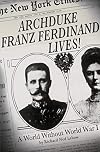
Counterfactuals have long fascinated me. In the case of the First World War, previous reading had made it clear that a) Franz Ferdinand’s assassination very nearly failed and b) most European nations were by no means eager to go to war in 1914. Lebow’s book builds alternate worlds on these two suppositions, inferring that if the assassination had failed there would not have been a first world war. He takes the view that there was a window of only three years when war could have been show more triggered. Had this not occurred, the subsequent events of the twentieth century collapse like a house of cards. Without the First World War, there would have been no Second World War, no Holocaust, and no Cold War between the USA and USSR.
Lebow also takes the view that without WWI no communist regimes would have been established, although I found that claim less convincing. Whilst Russia and China’s communist dictatorships may have been precipitated by world wars, in the counterfactual worlds envisaged here workers' rights and representative democracy would have been slower to spread in Europe and beyond. Surely this could have created conditions of pervasive worker dissatisfaction, especially as without WWI to decimate the population there would have been a lot more unemployed young men? A recession/depression under such circumstances could have been seized upon by communists. That then raises the question of whether an absence of seismic war-induced political change would have stored up enough social fractures to create conditions for civil war in European countries. Who knows - definitely not me, as I’m not even a historian. Nonetheless it is fascinating to reflect upon.
‘Archduke Franz Ferdinand Lives!’ presents two families of counterfactuals for a world without WWI. In the happier set, Europe remains peaceful, democratic reform gradually spreads, and America never gains hegemony. In the worse alternate world, Germany and its 1914 allies become increasingly authoritarian and militarised, provoking a Cold War between Germany and the British Empire. In this pessimistic counterfactual, Lebow envisages a nuclear exchange between the UK and Germany in the 1970s, although he notes that this would not create nearly as many casualties as the two world wars. Also discussed is the notion that without world wars medical, military, and information technologies would have developed much more slowly, although the extent to which they may have developed differently isn’t addressed. Likewise, without the wars America is described as a superpower but not hegemonic, more parochial, and slower to address its institutionalised racism, sexism, and antisemitism. I also wonder if religious values and lack of Cold War could have prevented America’s conspicuous consumerism?
In short, this book raises far more questions than it answers, which is fair enough. Every question it poses by definition cannot be answered without some sort of machine that allows observation of alternate universes. (Even if such a machine existed, it would create further academic arguments about whether observation of alternate universes changes them, which alternate universes are closest in probability to our own universe, exact points of divergence, and whether there is any point in a study of history that involves each historian choosing their own favourite alternate universe then writing about it.) Lebow divides his counterfactuals into broad description of the significant events that differ from actual history and brief alternate biographies of key figures. The former worked better for me than the latter, although it was striking to realise how many prominent scientists, writers, and artists emigrated as a result of world wars. The potted biographies did offer an appealing bit of colour at times. Obama’s stint as radical governor of Hawaii was my favourite, followed by Churchill’s defection to the Labour Party. Also memorable: ‘Yet another polio epidemic claims the lives of thousands of young people and maims even more. John Lennon and David Cameron are two of its many victims.’ There seemed to be a gap between the geopolitical and the personal, though. I would have liked more on the social and economic trends that were contingent on WWI. Nonetheless, a thought-provoking book that makes you wonder, like Candide, whether we live in the best of all possible worlds. In my opinion and Lebow’s, the answer is a resounding no, but neither do we live in the worst. show less
Lebow also takes the view that without WWI no communist regimes would have been established, although I found that claim less convincing. Whilst Russia and China’s communist dictatorships may have been precipitated by world wars, in the counterfactual worlds envisaged here workers' rights and representative democracy would have been slower to spread in Europe and beyond. Surely this could have created conditions of pervasive worker dissatisfaction, especially as without WWI to decimate the population there would have been a lot more unemployed young men? A recession/depression under such circumstances could have been seized upon by communists. That then raises the question of whether an absence of seismic war-induced political change would have stored up enough social fractures to create conditions for civil war in European countries. Who knows - definitely not me, as I’m not even a historian. Nonetheless it is fascinating to reflect upon.
‘Archduke Franz Ferdinand Lives!’ presents two families of counterfactuals for a world without WWI. In the happier set, Europe remains peaceful, democratic reform gradually spreads, and America never gains hegemony. In the worse alternate world, Germany and its 1914 allies become increasingly authoritarian and militarised, provoking a Cold War between Germany and the British Empire. In this pessimistic counterfactual, Lebow envisages a nuclear exchange between the UK and Germany in the 1970s, although he notes that this would not create nearly as many casualties as the two world wars. Also discussed is the notion that without world wars medical, military, and information technologies would have developed much more slowly, although the extent to which they may have developed differently isn’t addressed. Likewise, without the wars America is described as a superpower but not hegemonic, more parochial, and slower to address its institutionalised racism, sexism, and antisemitism. I also wonder if religious values and lack of Cold War could have prevented America’s conspicuous consumerism?
In short, this book raises far more questions than it answers, which is fair enough. Every question it poses by definition cannot be answered without some sort of machine that allows observation of alternate universes. (Even if such a machine existed, it would create further academic arguments about whether observation of alternate universes changes them, which alternate universes are closest in probability to our own universe, exact points of divergence, and whether there is any point in a study of history that involves each historian choosing their own favourite alternate universe then writing about it.) Lebow divides his counterfactuals into broad description of the significant events that differ from actual history and brief alternate biographies of key figures. The former worked better for me than the latter, although it was striking to realise how many prominent scientists, writers, and artists emigrated as a result of world wars. The potted biographies did offer an appealing bit of colour at times. Obama’s stint as radical governor of Hawaii was my favourite, followed by Churchill’s defection to the Labour Party. Also memorable: ‘Yet another polio epidemic claims the lives of thousands of young people and maims even more. John Lennon and David Cameron are two of its many victims.’ There seemed to be a gap between the geopolitical and the personal, though. I would have liked more on the social and economic trends that were contingent on WWI. Nonetheless, a thought-provoking book that makes you wonder, like Candide, whether we live in the best of all possible worlds. In my opinion and Lebow’s, the answer is a resounding no, but neither do we live in the worst. show less
I’ve heard of speculative fiction, but never speculative NON-fiction … but that’s exactly what the author has created here. What if Franz Ferdinand and his wife had survived the assassination attempt in 1914? Or what if they had heeded the advice to avoid Sarajevo? Or what if their driver had not gotten lost?
Mr. Lebow creates two main scenarios of what might happen if World War I had been avoided, one more positive, one more negative. In doing so, he paints a vivid picture for readers show more of what the ramifications of the Great War and its “Part II,” World War II, were.
The resulting book was thought-provoking at an entirely new level. For example: If the U.S. had not intervened in the World Wars, would it still be a super power? Probably not. Without World War II, would the U.S.S.R. have existed? No way. Without the Great Migration, with its millions of African-Americans moving from the Jim Crow south for war work in the north, would the civil rights movement have unfolded when it did. Doubtful.
The author looks at the micro-level, too. Without the G.I. Bill, which likely would have not been instituted without World War II, would the legions of working-class veterans have attended college and moved into the middle class?
Archduke Franz Ferdinand Lives! is a challenging and thought-provoking read, one I will think about for a long time. There’s not much more we can ask of a book. show less
Mr. Lebow creates two main scenarios of what might happen if World War I had been avoided, one more positive, one more negative. In doing so, he paints a vivid picture for readers show more of what the ramifications of the Great War and its “Part II,” World War II, were.
The resulting book was thought-provoking at an entirely new level. For example: If the U.S. had not intervened in the World Wars, would it still be a super power? Probably not. Without World War II, would the U.S.S.R. have existed? No way. Without the Great Migration, with its millions of African-Americans moving from the Jim Crow south for war work in the north, would the civil rights movement have unfolded when it did. Doubtful.
The author looks at the micro-level, too. Without the G.I. Bill, which likely would have not been instituted without World War II, would the legions of working-class veterans have attended college and moved into the middle class?
Archduke Franz Ferdinand Lives! is a challenging and thought-provoking read, one I will think about for a long time. There’s not much more we can ask of a book. show less
This review was written for LibraryThing Early Reviewers.Let me begin by saying that I think this could have been a very nice piece of longer short non-fiction that drew out some of the broad themes that Lebow highlights in this book. It would have been thought-provoking and allowed him to avoid the fundamental tension between what he says he's going to do in this book (show that history is contingent and nothing is inevitable) and what he ends up doing (I can't think of a pithy way to summarize it in a parenthetical). What he ends up doing, in show more short, is arguing that Archduke Franz Ferdinand was the most important person in the world and his non-death in 1914 would have not only prevented war then but forestalled it for decades to come because literally everything in the entire world changes if Franz Ferdinand is around to save Europe. Oh, and writing two extremely detailed novellas about history, politics, culture, and the lives of every famous person in both the 'best world without WWI' and the 'worst world without WWI.'
By making his scenarios in which WWI is avoided both start with Franz Ferdinand's non-death and then showing how the mere fact of the Archduke's existence neutralizes militarism in Germany and Austria for generations to come, Lebow transforms the assassination from the spark that caused existing tensions to flare into a war into a necessity for there to have ever been war. Instead of demonstrating that history is contingent and depends on both the interplay between larger forces and individual decisionmaking, he equates one individual with Europe's (and the world's) destiny. He explicitly says in his concluding chapter: "Simple changes in personnel - most notably the survival of Franz Ferdinand - appear sufficient to have prevented war in August 1914 and to have moved the world further away from war in the years that followed."
The second issue with this book is that Lebow isn't just content with talking about how broad categories of things would change in his new world, but wants to get really nitty gritty. This is sad, because I enjoyed many of his larger insights. For instance, WWI was a significant social leveler in England and Continental Europe that "greatly accelerated the expectation of equal treatment by those who had formerly been characterized as the lower orders." In a world without WWI, Lebow asserts that movements for greater rights among all kinds of disenfranchised people would have proceeded at a slower pace. I can buy this. I can buy that in a world where Europe is not devastated by two wars (because for Lebow, while WWI was not inevitable, apparently we can't escape WWII if WWI happens), the United States does not benefit from European exiles scientific and cultural contributions and never becomes a global hegemon.
What I can't buy and frankly don't see the point of, are the extended detours into how the lives of people from our timeline would have looked in the no-war timeline. Lebow gives us extended detours into the Presidency of Joseph P. Kennedy Jr., who - having not died in WWII in this timeline - becomes America's first Catholic President (how he does this several years earlier than his brother did in the real timeline, despite the existence of even more pronounced anti-Catholic feeling in Lebow's alternative timeline is a contradiction Lebow does not bother to address). Don't worry, John F. Kennedy still gets Jackie O. and is still a philanderer - we learn all about his sex scandals with a mobster's girlfriend.
We learn that Hitler becomes a peddler of quack medical treatments, Lenin a beloved but dogmatic college professor, Nixon the pastor of a Protestant mega-church (who still gets his Watergate - for f&cks sake!), and so on. Corresponding sets are included for all of the same individuals under the 'worst world without WWI' scenario. While it might be entertaining to speculate over drinks how famous people's lives might have looked in the absence of such-and-such event, I had no idea what I was supposed to glean from these extensive rewritten biographies.
What most irked me, however, were the second and third-order changes that Lebow made to the rest of the world (i.e. not Europe, the United States, or Russia) in his scenarios. These changes were often presented with minimal explanation and a general obliviousness to the real world history of these regions.
I'll focus on the Middle East because that is what I know the most about. In Lebow's best case scenario, the Middle East is just great. The Ottoman Empire staves off death thanks to the modernizing reforms of Kemal Attaturk, who comes to power despite the non-existence of most of the significant events that shaped him and his country. Is Lebow trying to suggest that some people are simply so great that they will rise to the top regardless of their environment? Well, that sure seems to fly in the face of his thesis about how historical systems are contingent and nonlinear.
Oh, and somehow the Arab Middle East "avoids kleptocratic dictators," and develops "along the lines of pre-1967 Lebanon" (which arguably couldn't have existed in such a form had it not been partitioned off into a separate country, but whatever, we're just having fun here!). It's not that I can't see how the Middle East in the absence of WWI could have gone down another path, but Lebow barely bothers to construct an argument for many of the ROW (rest of world) countries in his alternate worlds, which just seems lazy to me, especially given that we get the full treatment of Hawaii Governor Barack Obama's tenure some 90+ years after WWI.
In summary, this book was silly and sloppy. It made me angry because it didn't do what it claimed to do at all. It contradicted itself at many turns, both in overall philosophy about history and in the details of the alternate worlds that Lebow painstakingly constructed. It is a shame that Lebow did not write a shorter book that emphasized the thematic material from this book - I think that would have been a stronger piece of historical writing. show less
By making his scenarios in which WWI is avoided both start with Franz Ferdinand's non-death and then showing how the mere fact of the Archduke's existence neutralizes militarism in Germany and Austria for generations to come, Lebow transforms the assassination from the spark that caused existing tensions to flare into a war into a necessity for there to have ever been war. Instead of demonstrating that history is contingent and depends on both the interplay between larger forces and individual decisionmaking, he equates one individual with Europe's (and the world's) destiny. He explicitly says in his concluding chapter: "Simple changes in personnel - most notably the survival of Franz Ferdinand - appear sufficient to have prevented war in August 1914 and to have moved the world further away from war in the years that followed."
The second issue with this book is that Lebow isn't just content with talking about how broad categories of things would change in his new world, but wants to get really nitty gritty. This is sad, because I enjoyed many of his larger insights. For instance, WWI was a significant social leveler in England and Continental Europe that "greatly accelerated the expectation of equal treatment by those who had formerly been characterized as the lower orders." In a world without WWI, Lebow asserts that movements for greater rights among all kinds of disenfranchised people would have proceeded at a slower pace. I can buy this. I can buy that in a world where Europe is not devastated by two wars (because for Lebow, while WWI was not inevitable, apparently we can't escape WWII if WWI happens), the United States does not benefit from European exiles scientific and cultural contributions and never becomes a global hegemon.
What I can't buy and frankly don't see the point of, are the extended detours into how the lives of people from our timeline would have looked in the no-war timeline. Lebow gives us extended detours into the Presidency of Joseph P. Kennedy Jr., who - having not died in WWII in this timeline - becomes America's first Catholic President (how he does this several years earlier than his brother did in the real timeline, despite the existence of even more pronounced anti-Catholic feeling in Lebow's alternative timeline is a contradiction Lebow does not bother to address). Don't worry, John F. Kennedy still gets Jackie O. and is still a philanderer - we learn all about his sex scandals with a mobster's girlfriend.
We learn that Hitler becomes a peddler of quack medical treatments, Lenin a beloved but dogmatic college professor, Nixon the pastor of a Protestant mega-church (who still gets his Watergate - for f&cks sake!), and so on. Corresponding sets are included for all of the same individuals under the 'worst world without WWI' scenario. While it might be entertaining to speculate over drinks how famous people's lives might have looked in the absence of such-and-such event, I had no idea what I was supposed to glean from these extensive rewritten biographies.
What most irked me, however, were the second and third-order changes that Lebow made to the rest of the world (i.e. not Europe, the United States, or Russia) in his scenarios. These changes were often presented with minimal explanation and a general obliviousness to the real world history of these regions.
I'll focus on the Middle East because that is what I know the most about. In Lebow's best case scenario, the Middle East is just great. The Ottoman Empire staves off death thanks to the modernizing reforms of Kemal Attaturk, who comes to power despite the non-existence of most of the significant events that shaped him and his country. Is Lebow trying to suggest that some people are simply so great that they will rise to the top regardless of their environment? Well, that sure seems to fly in the face of his thesis about how historical systems are contingent and nonlinear.
Oh, and somehow the Arab Middle East "avoids kleptocratic dictators," and develops "along the lines of pre-1967 Lebanon" (which arguably couldn't have existed in such a form had it not been partitioned off into a separate country, but whatever, we're just having fun here!). It's not that I can't see how the Middle East in the absence of WWI could have gone down another path, but Lebow barely bothers to construct an argument for many of the ROW (rest of world) countries in his alternate worlds, which just seems lazy to me, especially given that we get the full treatment of Hawaii Governor Barack Obama's tenure some 90+ years after WWI.
In summary, this book was silly and sloppy. It made me angry because it didn't do what it claimed to do at all. It contradicted itself at many turns, both in overall philosophy about history and in the details of the alternate worlds that Lebow painstakingly constructed. It is a shame that Lebow did not write a shorter book that emphasized the thematic material from this book - I think that would have been a stronger piece of historical writing. show less
This review was written for LibraryThing Early Reviewers.Awards

You May Also Like


Associated Authors
Statistics
- Works
- 39
- Also by
- 1
- Members
- 484
- Popularity
- #51,010
- Rating
- 3.0
- Reviews
- 36
- ISBNs
- 119
- Languages
- 1
