
Michael Muhammad Knight
Author of The Taqwacores
About the Author
After reading The Autobiography of Malcom X, Michael Muhammad Knight converted to Islam at 16, and traveled to Islamabad at age 17 to study at a madrassa. He is the author of nine books, including The Taqwacores, Blue-Eyed Devil, Impossible Man, Osama Van Halen, Journey to the End of Islam, and show more William S. Burroughs vs. The Qur'an. He lives in North Carolina. show less
Image credit: Wikipedia user Jfarhad
Works by Michael Muhammad Knight
Tagged
Common Knowledge
- Birthdate
- 1977
- Gender
- male
- Education
- Harvard University
University of North Carolina, Chapel Hill - Occupations
- novelist
essayist
journalist - Nationality
- USA (birth)
- Places of residence
- Geneva, New York, USA
- Associated Place (for map)
- New York, USA
Members
Reviews
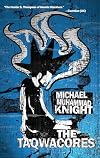
I saw this book at Everybody Reads (one of my local bookstores) and had to buy it because: a) the cover, b) Soft Skull Press, c) I loved Knight's book Magic in Islam. I am so glad that I did. This book kind of blew me away.
Portrayals of Muslims in this culture tend to fall in one of two categories: suicide-bomber extremists, or morally upright peace-loving middle class folk who give to charity after every tragedy. But of course, if you think about it for two seconds, this can't be all there show more actually is. This book presents a dizzying array of young Muslims trying to define their own lives in punk culture, as Muslims, and as wildly misunderstood minorities in America. Sometimes some of the characters come off as caricatures, but then, so did a bunch of the people I knew in college who held really rigid beliefs of one stripe or another. These are kids trying to walk their own lines between rebellion and faith, anarchy and obedience.
I loved Rabeya, the band-patch-covered-burqa wearing feminist with a fierceness, but then, one of our first introductions to her character is her blasting "Muhammad My Friend" by Tori Amos from her room, so that's pretty obvious. But she takes her Islam as seriously as her feminism, even as she sings profane and explicit punk songs, publishes zines called "Ayesha's Hymen," and seems to make it her personal mission to trouble the perceptions of gender of every Muslim in the house. How could I not love her?
So maybe bits of the final punk show felt a bit over the top, but I still closed this book with a sense of amazed gratitude. Also, I need to find myself some radical Islamic feminist writing. show less
Portrayals of Muslims in this culture tend to fall in one of two categories: suicide-bomber extremists, or morally upright peace-loving middle class folk who give to charity after every tragedy. But of course, if you think about it for two seconds, this can't be all there show more actually is. This book presents a dizzying array of young Muslims trying to define their own lives in punk culture, as Muslims, and as wildly misunderstood minorities in America. Sometimes some of the characters come off as caricatures, but then, so did a bunch of the people I knew in college who held really rigid beliefs of one stripe or another. These are kids trying to walk their own lines between rebellion and faith, anarchy and obedience.
I loved Rabeya, the band-patch-covered-burqa wearing feminist with a fierceness, but then, one of our first introductions to her character is her blasting "Muhammad My Friend" by Tori Amos from her room, so that's pretty obvious. But she takes her Islam as seriously as her feminism, even as she sings profane and explicit punk songs, publishes zines called "Ayesha's Hymen," and seems to make it her personal mission to trouble the perceptions of gender of every Muslim in the house. How could I not love her?
So maybe bits of the final punk show felt a bit over the top, but I still closed this book with a sense of amazed gratitude. Also, I need to find myself some radical Islamic feminist writing. show less

This book takes place in and around a student house in Buffalo. All the house's residents (and sofa-crashers) are American Muslims, but that's about the only resemblance. They come from different ethnic and social backgrounds, and while they pray together and read the Qur'an, they each set different boundaries to their religion - and their musical tastes are equally important to their identity. Dope-smoking Fasiq is a punk, Rude Dawud likes ska, Umar is straightedge - which should mesh well show more with Islam except for all the tattoos (which, it turns out, are haram). Rebeya is a feminist and riot grrrl who wears a full burqa but takes her turn leading Friday prayers along with the rest of the house - then sings Stooges covers at the Friday night parties. Our narrator, Yusef Ali, isn't quite sure where he fits in. Before he moved to Buffalo for university, he says, he had at least a clear concept of what Islam was, even if he didn't always live up to it. Now, he sees a much wider range of options, but this is also confusing. He loves all his housemates, enjoys the parties and the hanging out with the cool kids, but himself doesn't drink and is periodically tormented with thoughts that everything the house stands for is wrong.
If Friday afternoons meant jumaa, Friday nights meant my home would play host to stupid wasted kids from all walks of life. Everyone in the house would unload their CDs by the stereo and fight for turns at DJ. Besides his beloved taqwacore bands that varied in style and sound, Jehangir Tabari liked the '77 working-class heroic drinking-buddy songs. Rude Dawud played his Desmond Dekker and Specials and Skatalites. Umar put on the expected Minor Threat and Youth of Today though he never got into the straightedge taqwacore bands that Jehangir talked about, as though he were unsure whether someone could really be Muslim and Punk simultaneously. In way that he reminded me of my father, who when I was growing up would buy nearly every animated Disney video but then say that for me to draw living things was haram.
I really enjoyed this book. It was fun to read, and thought-provoking. It's very good for a first novel, with only the odd clunky moment when Yusef turns from the party scene in front of him to consider his soul. The characters are vividly conveyed, and feel like real people rather than people who are there to express a particular point of view. They do spend a lot of time talking about what it means to be an American Muslim and how to deal with the unpleasant aspects of the religion. But they don't want to leave it behind.
Punk rock means deliberately bad music, deliberately bad clothing, deliberately bad language and deliberately bad behaviour. Means shooting yourself in the foot when it comes to every expectation society will ever have for you but still standing tall about it, loving who you are and somehow forging a shared community with all the other fuck-ups.
Taqwacore is the application of this virtue to Islam. I was surrounded by deliberately bad Muslims but they loved Allah with a gonzo kind of passion that escaped sleepy brainless ritualism and the dumb fantasy-camp Islams claiming that our deen had some inherent moral superiority making the world rightfully ours. show less
If Friday afternoons meant jumaa, Friday nights meant my home would play host to stupid wasted kids from all walks of life. Everyone in the house would unload their CDs by the stereo and fight for turns at DJ. Besides his beloved taqwacore bands that varied in style and sound, Jehangir Tabari liked the '77 working-class heroic drinking-buddy songs. Rude Dawud played his Desmond Dekker and Specials and Skatalites. Umar put on the expected Minor Threat and Youth of Today though he never got into the straightedge taqwacore bands that Jehangir talked about, as though he were unsure whether someone could really be Muslim and Punk simultaneously. In way that he reminded me of my father, who when I was growing up would buy nearly every animated Disney video but then say that for me to draw living things was haram.
I really enjoyed this book. It was fun to read, and thought-provoking. It's very good for a first novel, with only the odd clunky moment when Yusef turns from the party scene in front of him to consider his soul. The characters are vividly conveyed, and feel like real people rather than people who are there to express a particular point of view. They do spend a lot of time talking about what it means to be an American Muslim and how to deal with the unpleasant aspects of the religion. But they don't want to leave it behind.
Punk rock means deliberately bad music, deliberately bad clothing, deliberately bad language and deliberately bad behaviour. Means shooting yourself in the foot when it comes to every expectation society will ever have for you but still standing tall about it, loving who you are and somehow forging a shared community with all the other fuck-ups.
Taqwacore is the application of this virtue to Islam. I was surrounded by deliberately bad Muslims but they loved Allah with a gonzo kind of passion that escaped sleepy brainless ritualism and the dumb fantasy-camp Islams claiming that our deen had some inherent moral superiority making the world rightfully ours. show less
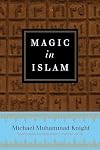
I wanted to read this book from the second I learned of its existence from my friend Matt's goodreads feed. It wasn't at the bookstore and I was pondering a special order when I saw it at the library. (Though now that I've read it, I'm pretty sure I'm still going to need my own copy.)
The best thing about this book is how it interrogates the meanings of the words "magic" and "Islam." Knight pushes at the boundaries and examines what is intended to stay inside and outside. For instance, I show more think I learned about as much about the history of Christianity as I did about Islam, because both, existing in the same times and at nearly the same places, had similar world views about things like what and where the stars were, and how they related to Earth. And as those views changed along with the writings of new philosophers and scientists which would have been read by all the cultures in the area at the time (given time for translation and percolation).
I really could go on and on and on, and on...
This was exactly the book I didn't know I wanted until it was there. I need to put a copy on order right now. show less
The best thing about this book is how it interrogates the meanings of the words "magic" and "Islam." Knight pushes at the boundaries and examines what is intended to stay inside and outside. For instance, I show more think I learned about as much about the history of Christianity as I did about Islam, because both, existing in the same times and at nearly the same places, had similar world views about things like what and where the stars were, and how they related to Earth. And as those views changed along with the writings of new philosophers and scientists which would have been read by all the cultures in the area at the time (given time for translation and percolation).
I really could go on and on and on, and on...
This was exactly the book I didn't know I wanted until it was there. I need to put a copy on order right now. show less
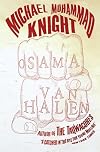
Embarrassingly (or not), pretty much everything I know about Islam comes from MMK's novels.
If you haven't read Taqwacores, this novel (?!) will not make a bit of sense. If you didn't like Taqwacores, you will hate it. But what the fuck, you should read it anyway because it's amazing. Read Taqwacores and then this and then kidnap Matt Damon.
Michael Muhammad Knight and Joshua Cohen are my favorite young writers. Fucking maniacs. Give me more more more.
If you haven't read Taqwacores, this novel (?!) will not make a bit of sense. If you didn't like Taqwacores, you will hate it. But what the fuck, you should read it anyway because it's amazing. Read Taqwacores and then this and then kidnap Matt Damon.
Michael Muhammad Knight and Joshua Cohen are my favorite young writers. Fucking maniacs. Give me more more more.
Lists
You May Also Like


Statistics
- Works
- 19
- Members
- 658
- Popularity
- #38,342
- Rating
- 4.1
- Reviews
- 23
- ISBNs
- 61
- Languages
- 5