
Aharon Appelfeld (1932–2018)
Author of Badenheim 1939
About the Author
Aharon Appelfeld was born in a town near Czernowitz, Romania on February 16, 1932. When he was 8 years old, he and his father endured a forced march to a labor camp in Ukraine. He escaped the camp and spent the next three years as a shepherd working for various peasants and always concealing his show more Jewish identity. He then joined the Soviet Army as a cook's helper. After World War II, he spent months in a refugee camp in Italy before going to Palestine in 1946. He worked on a kibbutz, fought in the 1948 Arab-Israeli war, and studied philosophy at Hebrew University. The Holocaust was the main subject of his books. His first novel, The Skin and the Gown, was published in 1971. His other works include Badenheim 1939, The Age of Wonders, To the Land of the Cattails, The Healer, The Immortal Bartfuss, For Every Sin, and Writing and the Holocaust. He received the Israel Prize for literature, The Prime Minister's Prize for Creative Writing, and two Anne Frank Literary Prizes. He taught Hebrew literature for many years at Ben-Gurion University of the Negev, in Beersheba. He died on January 4, 2018 at the age of 85. (Bowker Author Biography) show less
Image credit: Frederic Brenner
Works by Aharon Appelfeld
העור והכותונת 6 copies
מכות האור 4 copies
Ashan : sipurim עשן 4 copies
רצפת אש 2 copies
חמישה סיפורים 2 copies
שישה מספרים : ט"ז ספורים 2 copies
APPELFELD, AHARON 2 copies
פריחה פראית 1 copy
פולין ארץ ירוקה 1 copy
... como la niña del ojo 1 copy
בגיא הפורה: סיפורים 1 copy
האיש שלא פסק לישון 1 copy
בגיא הפורה 1 copy
אדני הנהר 1 copy
מסות בגוף ראשון 1 copy
כמאה עדים 1 copy
Chamishim Sipurim 1 copy
Demir Raylar 1 copy
Associated Works
Tagged
Common Knowledge
- Canonical name
- Appelfeld, Aharon
- Legal name
- אפלפלד, אהרן
- Other names
- אפלפלד אהרון
Appelfeld, Aron
Аппельфельд, Аарон
Appelfeld, Ervin - Birthdate
- 1932-02-16
- Date of death
- 2018-01-04
- Gender
- male
- Education
- Hebrew University of Jerusalem
- Occupations
- novelist
Holocaust survivor
Hebrew literature professor
short story writer
autobiographer
essayist - Organizations
- Ben Gurion University
- Awards and honors
- Israel Prize (1983)
Bialik Prize (1979)
Man Booker International Prize Finalist (2013)
Brenner Prize (1975) - Short biography
- Aharon Appelfeld, né Ervin Appelfeld, was born to a Jewish family in Cernăuți, Bukovina, then Romania (present-day Chernivtsi, Ukraine). In 1941, when he was eight years old, Nazi troops captured the town after a year of Soviet annexation, and his mother and grandmother were murdered. He and his father were deported to a forced labor camp in Ukraine. Appelfeld escaped and spent the next three years roaming the forests, occasionally working for shepherds and peasants and always concealing his Jewish identity. In 1944, he joined the Soviet Army as a cook's helper in field kitchens. After World War II, he spent months in a refugee camp in Italy before making his way alone, at age 14, to the British Mandate of Palestine in 1946. He worked on a kibbutz, fought in the 1948 Israeli War of Independence, and studied with Max Brod, Martin Buber, and Gershom Scholem at Hebrew University. He was finally reunited with his father in 1960. Appelfeld became a writer and the Holocaust in Europe was the main subject of his more than 40 books. He was one of the foremost Hebrew language authors despite the fact that he did not learn the language until he was a teenager. His mother tongue was German, and he was also proficient in Yiddish, Ukrainian, Romanian, Russian, English, and Italian. His debut novel, The Skin and the Gown, was published in 1971. Among his other works were Badenheim 1939 (1979), The Age of Wonders (1978), Until the Dawn's Light (1995), and several collections of short stories. His work received international critical and popular acclaim, and he was awarded the Israel Prize for literature and the Bialik Prize for literature among many other honors. His autobiography, The Story of a Life: A Memoir, won the Prix Médicis in France. He taught Hebrew literature for many years at Ben-Gurion University of the Negev in Beersheba.
- Nationality
- Israel
- Birthplace
- Czernowitz, Romania (now part of Ukraine)
- Places of residence
- Jerusalem, Israel
Beersheva, Israel - Place of death
- Petah Tikva, Israel
- Associated Place (for map)
- Israel
Members
Discussions
Borukh Dayan HaEmes, Aharon Appelfeld 1932-2018 in Yiddish Library Thingers (January 2018)
Reviews
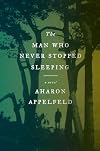
Aharon Appelfeld’s loosely autobiographical novel, The Man Who Never Stopped Sleeping, charts the gruelling and pain-filled rite of passage of a teenage Holocaust survivor named Erwin, a passage that encompasses a lengthy physical journey as well as a process of convalescence and self-discovery. Like the author, Erwin, a Jew, grew up in Czernowitz, in Bukovina, a mountainous region that straddles modern day Romania and Ukraine. Erwin survived WWII by hiding in the cellar of a neighbour, show more who, after agreeing to shelter him, instead held him captive and forced him to perform slave labour, making articles of clothing that the neighbour would sell. Having escaped, he joined the flow of refugees and ended up in Naples. But Erwin’s case is unusual. Overwhelmed by a profound weariness, he cannot recall the journey because he slept most of the time and was conveyed along by the more tolerant and generous of his fellow travelers. In Naples he is recruited out of the refugee camp, and along with other young Jewish men is given military training and instruction in Hebrew by the charismatic Ephraim, who tells them that they will fight for their new country when they get to Palestine. Again, though, he is compelled to request days off from training to sleep. As part of the ritual of emigrating to Palestine, he is also expected to renounce his given name and adopt a new name. He chooses Aharon. Erwin/Aharon is devoted to his calling, to fight for the new Jewish state, but in his team’s first manoeuvre he is gravely injured (his leg is shattered), and he spends the next couple of years (and the rest of the novel) recuperating and undergoing a series of painful surgeries. Though disappointed, he comes to realize over time that, like his father, he was meant to be a writer, and he trains himself for this by copying passages from the Hebrew Bible (in order to internalize the language and its cadences) and the works of famous Jewish writers. As well, in his dreams from this period he connects with his parents and other relatives, who advise him on the most honest and truthful way to live his life. The novel ends with the still very young Aharon living by himself in an apartment in Tel Aviv pursuing the vocation of his father. The action of this novel builds gradually, and is often slowed by Aharon’s dreams, which he recounts in detail. Throughout the novel’s 70 very short chapters, the reader is kept off balance, wondering what’s next for Aharon, where life will take him, and how the pressures brought to bear on him will be resolved. A chief allure of The Man Who Never Stopped Sleeping is the prose: Appelfeld’s unadorned but stunningly evocative writing provides an unsentimental and sometimes surreal rendering of the struggle to establish a Jewish state and homeland, a pivotal event in world history. Central to the story are themes of healing and survival, and young Aharon’s attitude toward his past is emblematic of this: pragmatic acceptance of what has befallen him and a firmly held resolve to not let it define or limit him. Despite his tribulations, Aharon remains cautiously hopeful for the future. Appelfeld does not dwell on the horrors of the Holocaust in this novel, instead focusing on the aftermath as experienced by one young man whose determination to live a worthy life and achieve something meaningful gives him the strength to move forward. show less

The story starts off unremarkably and quietly, lulling the reader into peaceful relaxation... and then on page 64, a bombshell drops. The owner of the tavern tells the protagonist "this village is cursed." I myself have lived in a cursed village in southwestern Ontario and that ominous announcement stunned me. Of course, the curse in both cases stems from a heinous crime committed against innocent people by the neighbours among whom they lived, a crime seldom mentioned and never punished, show more that looms over the living inhabitants. As Yaakov's sojourn in the home of his ancestors continues, we discover that there are layers and layers of meaning and mystery, hatred and horror, as well as beauty and welcome in Poland, a Green Land. show less
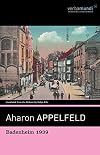
A Japanese proverb states that 'The nail that sticks out gets hammered down'. Now, let's play the perspective game, imbuing some life into the nails and into the hammer. The nails sticking out, whether deliberately or not, the hammer coming down, steady, inevitable, fast or slow, the impact is in the wings and it won't be softened or lessened, it can't, these things don't factor in. Now, what to make of it? What, if anything, can be done?
With that salvo fired, let me say that this book is a show more bit of an anomaly. But then, so is the author. Aharon Appelfeld is an Israeli author who was born outside of the country in the town of Sadhora which is now a sub-district of another town in Ukraine. Appelfeld writes in Hebrew which, to him, is a language he only started to learn when he was 15 after having escaped the collapsing horror that was much of Europe for Jews. What sets Appelfeld apart from his colleagues is what he chooses to write about. Unlike his fellows who write about Israel as it is now, or what it was in the not so distant past, or what it possibly might become in the not too distant future, Appelfeld writes about Jews in the galut/diaspora/exile, specifically in Europe.
Now, there's a joke here. Yair, you're reading a book by an Israeli-Jewish author about Jews in a town near Vienna, Austria in the year 1939...what the hell were you expecting? A farce? A summer romance? Maybe a spot of joy?
Of course not. This book is fecund, but mostly fetid. It's a book of rotting and decay and delusions about excess and decadence and how these things can, somehow, stave off the inevitable. They can't. In an odd but resonant way this book feels like the opposite number of Gabriel Garcia Marquez's '100 Years of Solitude'. Both take great pains to describe the lush details of their respective settings that acts almost as a commentary, or even a near Greek style chorus. But where Marquez shows life in its multifarious faces despite its eventual supplanting of humanity, this book (very much like Lars von Trier's Melancholia which through apparent kismet I watched in the time I read this) shows only the one unreadable expression of death and people's coping, or lack thereof, with it.
You know from page one what's going to happen, where this is going to lead for the characters. And the dialogue is loaded with foreboding to the point of cliche and even black comedy. I wondered as I read what Appelfeld was trying to say with all this. Just by dint of his own experiences I highly doubt he was mocking or gloating, not at all. Similarly, I don't think he was playing into the tired and sagging meta-narrative of all golden roads leading through the woods of exile and into the honey pot of Israel for the Jews. There's a brief mention of a half-crazed prophet warning of the coming doom of the Jews if they don't 'save their souls' who's quickly disregarded as a lecher (a fairly sly reference to, I believe, Zeev Jabotinksy) but for the most part Israel is barely touched upon, even, jarringly absent. Curiously, the one stated religious Jew, the rabbi, is decrepit and jeering, resigned to fate and secured by his assumed superior knowledge but doing nothing to warn, to help, to even comfort or teach others to understand.
And that's what this book seems to be about. Missing pieces, missing halves more specifically. The rabbi is disdainful of the secular and offers them nothing. The mostly secular Jews pay face value, if that, to religion and don't acknowledge it at all, relegating it to an obligated labor well symbolized by the tottering rabbi's being consigned to a wheelchair for the majority of his described time. But the most curious thing Appelfeld does is to imply that these missing halves have no counterparts, that their other halves either stopped existing, never existed, or the gaps separating them have altered both so irrevocably that there is only the path forward, the path of lacking that essential half. Or, as Appelfeld shows us as an alternative, the path of denial, stagnation, and eventually, death.
I rated this book lower than 'The Conversion' because that work better straddled the line between story in a novel and parable in a Jewish meta-narrative. Here, the line dissolves completely in favor of the parable, of the allegory, and suffers for it. The hammering away of Appelfeld's dialogue and descriptions while suffused with melancholy and dread and a grim harbinger of things to come, serve only to drown the characters into near irrelevance. Returning to the initial visual metaphor, do we cry for the nails, scream at the hammer, or question or even rage against the hands holding and controlling everything?
Here, Appelfeld gives us death as inevitability, which as a truism is fairly standard. But where he falters is thinking life is only the deluded and rushed preamble when, in fact, it is the half that gives the other its power, as the latter sweetens the former into something eternal. show less
With that salvo fired, let me say that this book is a show more bit of an anomaly. But then, so is the author. Aharon Appelfeld is an Israeli author who was born outside of the country in the town of Sadhora which is now a sub-district of another town in Ukraine. Appelfeld writes in Hebrew which, to him, is a language he only started to learn when he was 15 after having escaped the collapsing horror that was much of Europe for Jews. What sets Appelfeld apart from his colleagues is what he chooses to write about. Unlike his fellows who write about Israel as it is now, or what it was in the not so distant past, or what it possibly might become in the not too distant future, Appelfeld writes about Jews in the galut/diaspora/exile, specifically in Europe.
Now, there's a joke here. Yair, you're reading a book by an Israeli-Jewish author about Jews in a town near Vienna, Austria in the year 1939...what the hell were you expecting? A farce? A summer romance? Maybe a spot of joy?
Of course not. This book is fecund, but mostly fetid. It's a book of rotting and decay and delusions about excess and decadence and how these things can, somehow, stave off the inevitable. They can't. In an odd but resonant way this book feels like the opposite number of Gabriel Garcia Marquez's '100 Years of Solitude'. Both take great pains to describe the lush details of their respective settings that acts almost as a commentary, or even a near Greek style chorus. But where Marquez shows life in its multifarious faces despite its eventual supplanting of humanity, this book (very much like Lars von Trier's Melancholia which through apparent kismet I watched in the time I read this) shows only the one unreadable expression of death and people's coping, or lack thereof, with it.
You know from page one what's going to happen, where this is going to lead for the characters. And the dialogue is loaded with foreboding to the point of cliche and even black comedy. I wondered as I read what Appelfeld was trying to say with all this. Just by dint of his own experiences I highly doubt he was mocking or gloating, not at all. Similarly, I don't think he was playing into the tired and sagging meta-narrative of all golden roads leading through the woods of exile and into the honey pot of Israel for the Jews. There's a brief mention of a half-crazed prophet warning of the coming doom of the Jews if they don't 'save their souls' who's quickly disregarded as a lecher (a fairly sly reference to, I believe, Zeev Jabotinksy) but for the most part Israel is barely touched upon, even, jarringly absent. Curiously, the one stated religious Jew, the rabbi, is decrepit and jeering, resigned to fate and secured by his assumed superior knowledge but doing nothing to warn, to help, to even comfort or teach others to understand.
And that's what this book seems to be about. Missing pieces, missing halves more specifically. The rabbi is disdainful of the secular and offers them nothing. The mostly secular Jews pay face value, if that, to religion and don't acknowledge it at all, relegating it to an obligated labor well symbolized by the tottering rabbi's being consigned to a wheelchair for the majority of his described time. But the most curious thing Appelfeld does is to imply that these missing halves have no counterparts, that their other halves either stopped existing, never existed, or the gaps separating them have altered both so irrevocably that there is only the path forward, the path of lacking that essential half. Or, as Appelfeld shows us as an alternative, the path of denial, stagnation, and eventually, death.
I rated this book lower than 'The Conversion' because that work better straddled the line between story in a novel and parable in a Jewish meta-narrative. Here, the line dissolves completely in favor of the parable, of the allegory, and suffers for it. The hammering away of Appelfeld's dialogue and descriptions while suffused with melancholy and dread and a grim harbinger of things to come, serve only to drown the characters into near irrelevance. Returning to the initial visual metaphor, do we cry for the nails, scream at the hammer, or question or even rage against the hands holding and controlling everything?
Here, Appelfeld gives us death as inevitability, which as a truism is fairly standard. But where he falters is thinking life is only the deluded and rushed preamble when, in fact, it is the half that gives the other its power, as the latter sweetens the former into something eternal. show less
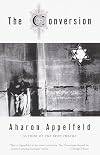
A numbing and depressive, but altogether an excellently sharp and bracing book. Aharon Appelfeld's 'The Conversion' is written as both the story of an individual and as a parable/metaphor likened to the fighting of the tides or the efforts of rational but flawed people in the early stages of an horrific catastrophe.
Among the Israeli writers I've read so far (Oz, Yehoshua, a bit of Kaniuk and Agnon, as well as Keret) Appelfeld distinguishes himself from the rest, at least I can say in this show more work as this is the first of his I've read, in writing about the past of Jews and Judaism as opposed to the Jews and Judaism of Israel's present. Eschewing politics and absolutist judgments so prevalent among those who look upon history (especially Jewish history in exile/the diaspora) as something to be downplayed, ignored, re-written, or even just spat upon, by offering no easy answers to complicated and dire circumstances.
The protagonist of the novel, Karl, is a convert from Judaism to Christianity, in an Austrian town where most of the Jews have indeed converted as well. The circumstances regarding his conversion are social and bureaucratic, he basically wishes to ease the friction in his life engendered by his being Jewish in a non-Jewish world and rise up the ranks in the municipal government. Appelfeld neither condemns nor condones this decision rather he, very wisely, leaves it to the reader to decide for a time. He (Appelfeld) offers the readers multiple perspectives on judgment regarding the conversion, there are the Jews who are rightly disgusted by the apostates and consider them something less than human, animal even yet who offer nothing in the way of consolation or sympathy. And, given the circumstances again, Appelfeld shows the justifications for the act of conversion, less as a solution, but more as a grasping at straws move of desperation for an oppressed people to, basically, live like human beings, in the voices and characters of not only those who also converted, but of those who do possess more than an iota of human compassion and the capacity to understand. One of the funnier aspects of the novel (black comedy without a doubt) that arises from all this is the actual NON-IMPORTANCE of religion, but rather the corresponding label that each religious title stamps into each person, essentially the title of 'the big them' and 'the little us', silent and ambivalent (many times malicious) majority and cornered and frightened (and cutting and brutal in its own way) minority.
The apostate Jews in this story are shown as being part of a fringe state. Hated by many of their own and still distrusted by those they've tried to appease, they become a smaller minority within an already microcosmic minority.
Like I said before no easy answers are given to Karl's situation. Needless to say without giving away the events of the plot or the story's conclusion, things end very grimly. But to depict the end of these characters in any other way would have certainly rung false and come off as something like a sad and cheap attempt at revisionist history fairy tale creation.
Appelfeld hits hard in this book, sparing little and showing a cold time in history for all involved. A great and haunting story, at times even seeming necessary no matter the brutality of the content. show less
Among the Israeli writers I've read so far (Oz, Yehoshua, a bit of Kaniuk and Agnon, as well as Keret) Appelfeld distinguishes himself from the rest, at least I can say in this show more work as this is the first of his I've read, in writing about the past of Jews and Judaism as opposed to the Jews and Judaism of Israel's present. Eschewing politics and absolutist judgments so prevalent among those who look upon history (especially Jewish history in exile/the diaspora) as something to be downplayed, ignored, re-written, or even just spat upon, by offering no easy answers to complicated and dire circumstances.
The protagonist of the novel, Karl, is a convert from Judaism to Christianity, in an Austrian town where most of the Jews have indeed converted as well. The circumstances regarding his conversion are social and bureaucratic, he basically wishes to ease the friction in his life engendered by his being Jewish in a non-Jewish world and rise up the ranks in the municipal government. Appelfeld neither condemns nor condones this decision rather he, very wisely, leaves it to the reader to decide for a time. He (Appelfeld) offers the readers multiple perspectives on judgment regarding the conversion, there are the Jews who are rightly disgusted by the apostates and consider them something less than human, animal even yet who offer nothing in the way of consolation or sympathy. And, given the circumstances again, Appelfeld shows the justifications for the act of conversion, less as a solution, but more as a grasping at straws move of desperation for an oppressed people to, basically, live like human beings, in the voices and characters of not only those who also converted, but of those who do possess more than an iota of human compassion and the capacity to understand. One of the funnier aspects of the novel (black comedy without a doubt) that arises from all this is the actual NON-IMPORTANCE of religion, but rather the corresponding label that each religious title stamps into each person, essentially the title of 'the big them' and 'the little us', silent and ambivalent (many times malicious) majority and cornered and frightened (and cutting and brutal in its own way) minority.
The apostate Jews in this story are shown as being part of a fringe state. Hated by many of their own and still distrusted by those they've tried to appease, they become a smaller minority within an already microcosmic minority.
Like I said before no easy answers are given to Karl's situation. Needless to say without giving away the events of the plot or the story's conclusion, things end very grimly. But to depict the end of these characters in any other way would have certainly rung false and come off as something like a sad and cheap attempt at revisionist history fairy tale creation.
Appelfeld hits hard in this book, sparing little and showing a cold time in history for all involved. A great and haunting story, at times even seeming necessary no matter the brutality of the content. show less
Lists
Awards


You May Also Like


Associated Authors
Statistics
- Works
- 76
- Also by
- 3
- Members
- 3,659
- Popularity
- #6,915
- Rating
- 3.8
- Reviews
- 88
- ISBNs
- 323
- Languages
- 18
- Favorited
- 13
