
Julian Rathbone (1935–2008)
Author of The Last English King
About the Author
Writer Julian Rathbone was born in London, England on February 10, 1935. He graduated from Magdaline College, Cambridge, England, in 1958. He taught from 1959 until 1973, first in Turkey, then in England. He has written thrillers, historical novels, screenplays, short stories and poetry. King show more Fisher Lives (1976) and Joseph: The Life of Joseph Bosham, Self-Styled Third Viscount of Bosham, Covering the Years from 1970 to 1813 (1979) were both nominated for the Booker Prize. He has also received the Crime Writers of America Silver Dagger for Best Short Story for 'Some Sunny Day" (1993). He died on February 28, 2008. (Bowker Author Biography) show less
Image credit: Courtesy of Serpent's Tail Press
Series
Works by Julian Rathbone
Eurovrahovia 1 copy
Associated Works
The Year's 25 Finest Crime and Mystery Stories: Third Annual Edition (1994) — Contributor — 10 copies
The Year's 25 Finest Crime and Mystery Stories: Fifth Annual Edition (1996) — Contributor — 7 copies
Tagged
Common Knowledge
- Legal name
- Rathbone, Julian Christopher
- Birthdate
- 1935-02-10
- Date of death
- 2008-02-28
- Gender
- male
- Education
- University of Cambridge (Magdalene College)
- Occupations
- novelist
- Nationality
- UK
- Birthplace
- Blackheath, London, England, UK
- Places of residence
- Cambridge, Cambridgeshire, England, UK
Turkey
Spain - Place of death
- Thorney Hill, Hampshire, England, UK
- Associated Place (for map)
- England, UK
Members
Reviews

This novel is different from your average historical novel. Every now and then, a phrase just stops me dead in my track, because it's just not the sort of thing that characters in historical novels usually say! The men from the more civilised east bring their own viewpoint to the description of mediaeval Europe; the piles of sh*t in the street in Calais and the men and dogs urinating and worse in the Earl of Warwick's great hall, are not something that you usually read about. There are three show more narrators of the story and it is immediately obvious that their voices and preoccupations are very different from each other. Ali's approach is by turns mystical and practical, while Harihari is mainly interested in weapons and politics and Uma seems to be trying to turn it from an adventure story into porn (or at least erotica); her approach to the story is very sensual, full of sights, sounds and sex.
The events in the story tend to be on the serious side, with lots of battles, executions and torture. The reader's amusement mostly comes from noticing the many references to later historical and cultural events that Julian Rathbone has sneakily inserted into the story, such as recreating scenes from the films "Titanic" and "The Shining". Other references that I noticed were Pils lager and Boddington's Beer, football fans and the 1966 World Cup Final, evolution and the rise of the middle classes, the fire-bombing of Coventry in WWII and the poem Adlestrop by Edward Thomas.
The religious elements of the story were fascinating. The cult of the goddess and the linking of the Virgin Mary and old folk beliefs and fertility rites still existing in England to the Indian goddess Parvati/Kali via Uma acting as her avatar, was a counterpart to the heresy of the Brothers of the Free Spirit, which linked non-believers from England to their non-believing counterparts across Europe and the Assassins of the Arab world. They drew characters from far-flung places together, as well as providing a theme that runs throughout the story. I wouldn't have said that I was particularly interested in military history, but the fact that the use of cannons depended heavily on the weather (being impossible to move if the ground was muddy) and the discussions about the problems of fighting in armour and the merits of longbows versus crossbows, were strangely compelling.
I had thought Kings of Albion would be fun to read, but it was actually way more interesting than I had expected, catering well to my interest in mediaeval history and mythology. show less
The events in the story tend to be on the serious side, with lots of battles, executions and torture. The reader's amusement mostly comes from noticing the many references to later historical and cultural events that Julian Rathbone has sneakily inserted into the story, such as recreating scenes from the films "Titanic" and "The Shining". Other references that I noticed were Pils lager and Boddington's Beer, football fans and the 1966 World Cup Final, evolution and the rise of the middle classes, the fire-bombing of Coventry in WWII and the poem Adlestrop by Edward Thomas.
The religious elements of the story were fascinating. The cult of the goddess and the linking of the Virgin Mary and old folk beliefs and fertility rites still existing in England to the Indian goddess Parvati/Kali via Uma acting as her avatar, was a counterpart to the heresy of the Brothers of the Free Spirit, which linked non-believers from England to their non-believing counterparts across Europe and the Assassins of the Arab world. They drew characters from far-flung places together, as well as providing a theme that runs throughout the story. I wouldn't have said that I was particularly interested in military history, but the fact that the use of cannons depended heavily on the weather (being impossible to move if the ground was muddy) and the discussions about the problems of fighting in armour and the merits of longbows versus crossbows, were strangely compelling.
I had thought Kings of Albion would be fun to read, but it was actually way more interesting than I had expected, catering well to my interest in mediaeval history and mythology. show less
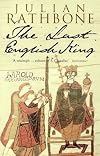
Review: Julian Rathbone The Last English King (1997)
Probably the most memorable historical fiction I’ve ever read. ‘The last English King’ is Harold Godwinson, of course, but Rathbone tells the story of the Norman Conquest of England (in 1066AD, for our foreign readers) from the point of view of Walt, a simple member of King Harold’s personal bodyguard. Traumatised – as much by his failure to die protecting his king as by the loss of the battle and half an arm – Walt nevertheless show more manages to escape to Europe. There he falls in with a motley crew of outcasts and vagrants, and embarks upon a confused and unconsummated journey, more odyssey than pilgrimage, towards the Holy Land.
Walt’s story is brutal, tender, oddly erotic, often funny, slightly surreal and, ultimately, very angry. The brutality begins before the Norman invasion with the Godwinsons’ bored, pointless ‘harrowing’ of disobedient villagers, and continues with the battles of Stamford Bridge and Hastings. This violence is interleaved with Walt’s tender recollections of the wooing of his wife and now, on his journey, with the strange erotic healing of the damaged stump of his arm (p.193). But the brutality resurfaces when Walt returns to England, to his home village, to discover the charred bodies of his wife and son in his burnt-out hut. Rathbone is very angry that William the Bastard and a bunch of mercenary psychopaths should have been dignified by history as ‘William the Conqueror’ and ‘the Norman Invasion’.
Nonetheless, the story remains warm and wry and witty overall. One of the particular delights (for me, anyhow) is Rathbone’s deployment of the occasional ‘proleptic’ anachronism. That is to say, as he admits in a prefatory note on ‘Anachronisms and Historical Accuracy’, ‘Occasionally characters, and even the narrator, let slip quotations or near quotations of later writers or make oblique references to later times . . .. For reasons I find difficult to explain, it amuses me, and may amuse others . . .. But it also serves a more serious purpose . . . to remind readers, especially English readers, that it was out of all this that we came’ (p.viii).
In my favourite example, two of his companions discuss poor Walt (p.190):
‘He’s a mess. Traumatised –’
‘Eh?’
‘Word I made up. From the Germanic word for “wound” – applied here to wounds in the mind. Even before the battle . . . I doubt he was up to much. He fears the female orgasm . . .. Anglo-Saxon, you see. Attitudes. Attitudes to the female sex. See the conquering hero comes.’
Bliss. Actually, Julian, it’s from the Greek or late Latin . In German ‘Traum’ means ‘dream’. Are you teasing us? Even so, bliss. show less
Probably the most memorable historical fiction I’ve ever read. ‘The last English King’ is Harold Godwinson, of course, but Rathbone tells the story of the Norman Conquest of England (in 1066AD, for our foreign readers) from the point of view of Walt, a simple member of King Harold’s personal bodyguard. Traumatised – as much by his failure to die protecting his king as by the loss of the battle and half an arm – Walt nevertheless show more manages to escape to Europe. There he falls in with a motley crew of outcasts and vagrants, and embarks upon a confused and unconsummated journey, more odyssey than pilgrimage, towards the Holy Land.
Walt’s story is brutal, tender, oddly erotic, often funny, slightly surreal and, ultimately, very angry. The brutality begins before the Norman invasion with the Godwinsons’ bored, pointless ‘harrowing’ of disobedient villagers, and continues with the battles of Stamford Bridge and Hastings. This violence is interleaved with Walt’s tender recollections of the wooing of his wife and now, on his journey, with the strange erotic healing of the damaged stump of his arm (p.193). But the brutality resurfaces when Walt returns to England, to his home village, to discover the charred bodies of his wife and son in his burnt-out hut. Rathbone is very angry that William the Bastard and a bunch of mercenary psychopaths should have been dignified by history as ‘William the Conqueror’ and ‘the Norman Invasion’.
Nonetheless, the story remains warm and wry and witty overall. One of the particular delights (for me, anyhow) is Rathbone’s deployment of the occasional ‘proleptic’ anachronism. That is to say, as he admits in a prefatory note on ‘Anachronisms and Historical Accuracy’, ‘Occasionally characters, and even the narrator, let slip quotations or near quotations of later writers or make oblique references to later times . . .. For reasons I find difficult to explain, it amuses me, and may amuse others . . .. But it also serves a more serious purpose . . . to remind readers, especially English readers, that it was out of all this that we came’ (p.viii).
In my favourite example, two of his companions discuss poor Walt (p.190):
‘He’s a mess. Traumatised –’
‘Eh?’
‘Word I made up. From the Germanic word for “wound” – applied here to wounds in the mind. Even before the battle . . . I doubt he was up to much. He fears the female orgasm . . .. Anglo-Saxon, you see. Attitudes. Attitudes to the female sex. See the conquering hero comes.’
Bliss. Actually, Julian, it’s from the Greek or late Latin . In German ‘Traum’ means ‘dream’. Are you teasing us? Even so, bliss. show less
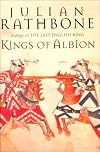
Packed with anachronisms that are excused in a witty note prefacing the work, this quasi-historical novel is filled with referential jests woven into a fine tale of a quest through late medieval England during the Wars of the Roses. You should avoid this if you prefer the historical Richard III to the propagandist Tudor version and worry that the Free Spirit heresy was a fiction created by someone other than this author.
Packed with anachronisms that are excused in a witty note prefacing the work, this quasi-historical novel is filled with referential jests woven into a fine tale of a quest through late medieval England during the Wars of the Roses. You should avoid this if you prefer the historical Richard III to the propagandist Tudor version and worry that the Free Spirit heresy was a fiction created by someone other than this author.
Lists
Awards


You May Also Like


Associated Authors
Statistics
- Works
- 42
- Also by
- 9
- Members
- 1,700
- Popularity
- #15,098
- Rating
- 3.4
- Reviews
- 37
- ISBNs
- 154
- Languages
- 8
- Favorited
- 2