
David Ramsay (1749–1815)
Author of The History of the American Revolution
About the Author
David Ramsay attended Trinity, Cambridge, where he became fascinated with twentieth-century history, particularly the two world wars and Winston Churchill. He lives in Indian Wells, California.
Image credit: Courtesy of the NYPL Digital Gallery (image use requires permission from the New York Public Library)
Series
Works by David Ramsay
The history of the revolution of South-Carolina, from a British province to an independent state (1787) 18 copies
David Ramsay, 1749-1815 : Selections from his Writings (Transactions of the American Philosophical Society. New series Volume 55 Part 4) (1965) 2 copies
The History of South-Carolina: From Its First Settlement in 1670, to the Year 1808; Volume 2 (2022) 1 copy
The History of the American Revolution. By David Ramsay, ... In two Volumes. ... of 2; Volume 2 (2018) 1 copy
The History of the American Revolution. By David Ramsay, M.D. In two Volumes. Volume I[-II]. of 2; Volume 1 (2018) 1 copy
Associated Works
The Debate on the Constitution, Part Two: January 1788 to August 1788 (1993) — Contributor — 710 copies, 4 reviews
Tagged
Common Knowledge
- Birthdate
- 1749-04-02
- Date of death
- 1815-05-08
- Gender
- male
- Education
- Princeton University (1765)
University of Pennsylvania (M.D., 1773) - Occupations
- U.S. Congressman
historian
physician - Organizations
- Continental Congress
South Carolina Senate - Places of residence
- Lancaster County, Pennsylvania, USA
Charleston, South Carolina, USA - Associated Place (for map)
- USA
Members
Reviews
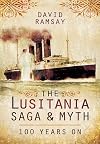
On the 7th May 1915 The Lusitania was sunk off the coast of Ireland by a German U-Boat and it eventually helped to precipitate the entry of America in to the First World War. David Ramsey has written The Lusitania Saga and Myth 100 Years On which is one of the more interesting books that has recently been published on the subject and certainly the most objective.
The Lusitania when Cunard put her in to service in 1907 was one of the most advanced liners on the high seas; she was the first show more express liner on the Atlantic routes to have steam turbines to generate her power and outclassed all her rivals. She was a success on the New York routes and was very much a commercial success, and also had regular passengers.
When a German U-Boat sunk her on 7th May 1915 there was a very heavy loss of life and was one of the major times there were mass casualties amongst civilians rather than military personnel. After the sinking Captain William Turner had to defend himself from charges of incompetence from all sides and had to fight to defend his previously excellent reputation. The sinking was condemned by the allied countries and neutral alike especially the savagery of the attack.
Since the sinking many myths have grown from it, such as the ship was carrying gold, or that it was carrying German Spies who were about to be arrested. Since that day so many legends and conspiracy theories have grown, some encouraged by the Germans propaganda at the time.
David Ramsey through some excellent research delves in to the history of the ship, the challenges that the Lusitania faced both prior to the war and also during the war, and the political recriminations after its sinking. This is one of the most fascinating studies in to a maritime disaster that really did have world changing consequences, and various myths have grown since.
This really is a well researched, well written account that all those who read it will enjoy, as the writing is engaging and it is well illustrated throughout with maps and pictures. Ramsey also reminds us that The Lusitania took 18 minutes to sink and that 1,198 people lost their lives, or 39% of those on board had survives, compared to the Titanic which took over 2 hours to sink and only 32% survived.
This is an excellently updated book for historian, enthusiast and general reader alike. show less
The Lusitania when Cunard put her in to service in 1907 was one of the most advanced liners on the high seas; she was the first show more express liner on the Atlantic routes to have steam turbines to generate her power and outclassed all her rivals. She was a success on the New York routes and was very much a commercial success, and also had regular passengers.
When a German U-Boat sunk her on 7th May 1915 there was a very heavy loss of life and was one of the major times there were mass casualties amongst civilians rather than military personnel. After the sinking Captain William Turner had to defend himself from charges of incompetence from all sides and had to fight to defend his previously excellent reputation. The sinking was condemned by the allied countries and neutral alike especially the savagery of the attack.
Since the sinking many myths have grown from it, such as the ship was carrying gold, or that it was carrying German Spies who were about to be arrested. Since that day so many legends and conspiracy theories have grown, some encouraged by the Germans propaganda at the time.
David Ramsey through some excellent research delves in to the history of the ship, the challenges that the Lusitania faced both prior to the war and also during the war, and the political recriminations after its sinking. This is one of the most fascinating studies in to a maritime disaster that really did have world changing consequences, and various myths have grown since.
This really is a well researched, well written account that all those who read it will enjoy, as the writing is engaging and it is well illustrated throughout with maps and pictures. Ramsey also reminds us that The Lusitania took 18 minutes to sink and that 1,198 people lost their lives, or 39% of those on board had survives, compared to the Titanic which took over 2 hours to sink and only 32% survived.
This is an excellently updated book for historian, enthusiast and general reader alike. show less

A must read for anyone especially interested in the American Revolution. Dr. Ramsay was a delegate from South Carolina to the Continental Congress and an eye witness to many of the events and personally interviewed many of the participants, including George Washington. He begins with a preliminary chapter on the settlement of the colonies and continues with the antecedents of the Revolutionary War from 1760 to the Declaration of Independence in volume I. The second volume continues with the show more revolutionary war up, with a final chapter covering events from 1783 to the Constitutional convention.
The book is well made and is inexpensive, available from www.libertyfund.org. It is an easy and absorbing read in spite of being written in the eighteenth century. show less
The book is well made and is inexpensive, available from www.libertyfund.org. It is an easy and absorbing read in spite of being written in the eighteenth century. show less
You May Also Like


Associated Authors
Statistics
- Works
- 37
- Also by
- 3
- Members
- 298
- Popularity
- #78,714
- Rating
- 4.3
- Reviews
- 2
- ISBNs
- 40
- Favorited
- 1