
Alison Littlewood
Author of The Hidden People
About the Author
Series
Works by Alison Littlewood
Associated Works
The Mammoth Book of Halloween Stories: Terrifying Tales Set on the Scariest Night of the Year! (2018) — Contributor — 72 copies
The Other Side of Never: Dark Tales from the World of Peter & Wendy (2023) — Contributor — 30 copies
Stories of Hope and Wonder: In Support of the UK's Healthcare Workers (2020) — Contributor — 11 copies, 1 review
The Future of Horror: The Collected Solaris Horror Anthologies, featuring House of Fear, Magic and End of the Road (2015) — Contributor — 8 copies
Four for Fear: A Quartet of Spooky Stories Commissioned for the Humber Mouth Literature Festival 2012 (2012) — Contributor — 5 copies
TFF-X: Ten years of The Future Fire: A speculative fiction anthology (2015) — Contributor — 3 copies
Tagged
Common Knowledge
- Other names
- Littlewood, Alison J.
Elwood, A. J. - Gender
- female
- Education
- University of Northumbria at Newcastle (BA) (English and History)
- Occupations
- capitalist
writer - Awards and honors
- Shirley Jackson Award for Short Fiction (2014)
- Nationality
- UK
- Birthplace
- Penistone, South Yorkshire, UK
- Places of residence
- West Yorkshire, England, UK
Penistone, South Yorkshire, England, UK
Doncaster, Yorkshire, England, UK - Associated Place (for map)
- England, UK
Members
Reviews
4.5*
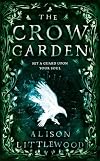
Following the folklore-soaked mystery “[b:The Hidden People|30052003|The Hidden People|Alison Littlewood|https://images.gr-assets.com/books/1461876563s/30052003.jpg|50461044]”, Alison Littlewood returns to the Victorian era with her latest book, “The Crow Garden”. The novel’s narrator is Nathaniel Kerner, a young “alienist” or “mad-doctor”, who has found a placing as under-physician at Crakethorne Manor, a remote asylum in desolate, rural Yorkshire. The son of a doctor, show more Kerner has his demons to exorcise – he still feels guilty about having, when still a boy, indirectly encouraged his father’s suicide. This gives him the incentive to prove himself as a “progressive” physician, a proponent of a more humane approach to the treatment of psychological problems. The asylum director, Doctor Chettle, is not too keen about Kerner’s methods, preferring his own phrenological theories and experiments with electric shock treatments. Yet, he gives Kerner a free hand with their latest patient, the “hysterical” Mrs Victoria Harleston, who has been admitted at the behest of her husband. Harleston claims that she is haunted by the ghost of her husband’s son, and that she has the gift of conversing with the dead. After initial sessions with the patient leave little effect, Kerner invites a “mesmerist” in the hope of curing Harleston. The session, however, has unexpected consequences, leaving Kerner in doubt as to whether Harleston is really mad or whether there might be some truth in her allegations and imaginings.
The novel shifts between the mists of Yorkshire and the thick, industrial fog of London; between the oppressive ambience of the mental asylum and the creepy goings-on of the City’s “spiritualist” circles. These settings are well researched and, apart from building a chilling atmosphere, they also give us an authentic snapshot of 19th Century life. The Victorian era however does not merely provide a backdrop to the plot. On the contrary, I felt that the novel is itself a tribute to the popular novels of the time, particularly those of a Gothic, supernatural bent. The narrative voice and dialogue are perfectly pitched – they could have come out of Dickens or, better still, Wilkie Collins. There are also plenty of Gothic tropes – ghostly manifestations, noctural perambulations in grimy streets, madness, obsession and (with more than a nod to “[b:The Woman in White|5890|The Woman in White|Wilkie Collins|https://images.gr-assets.com/books/1295661017s/5890.jpg|1303710]”) the wife placed in an asylum against her will. And as with the best supernatural fiction, there is that constant niggling doubt as to whether the allegedly otherworldly manifestations are all a product of the mind.
Some of Wilkie Collins’s works had a radical (for their time), proto-feminist message. I feel that Littlewood cannily taps into this vein, giving her Victorian novel a more contemporary flavour and going beyond mere pastiche. Her subject-matter and approach – making the 19th Century relevant and appealing to contemporary readers – reminded me of Sarah Waters’s brilliant early novels “[b:Fingersmith|8913370|Fingersmith|Sarah Waters|https://images.gr-assets.com/books/1348622459s/8913370.jpg|1014113]” and “[b:Affinity|25337939|Affinity|Sarah Waters|https://images.gr-assets.com/books/1428720323s/25337939.jpg|1413038]”. “The Crow Garden” certainly deserves to share a shelf with them. show less
Following the folklore-soaked mystery “[b:The Hidden People|30052003|The Hidden People|Alison Littlewood|https://images.gr-assets.com/books/1461876563s/30052003.jpg|50461044]”, Alison Littlewood returns to the Victorian era with her latest book, “The Crow Garden”. The novel’s narrator is Nathaniel Kerner, a young “alienist” or “mad-doctor”, who has found a placing as under-physician at Crakethorne Manor, a remote asylum in desolate, rural Yorkshire. The son of a doctor, show more Kerner has his demons to exorcise – he still feels guilty about having, when still a boy, indirectly encouraged his father’s suicide. This gives him the incentive to prove himself as a “progressive” physician, a proponent of a more humane approach to the treatment of psychological problems. The asylum director, Doctor Chettle, is not too keen about Kerner’s methods, preferring his own phrenological theories and experiments with electric shock treatments. Yet, he gives Kerner a free hand with their latest patient, the “hysterical” Mrs Victoria Harleston, who has been admitted at the behest of her husband. Harleston claims that she is haunted by the ghost of her husband’s son, and that she has the gift of conversing with the dead. After initial sessions with the patient leave little effect, Kerner invites a “mesmerist” in the hope of curing Harleston. The session, however, has unexpected consequences, leaving Kerner in doubt as to whether Harleston is really mad or whether there might be some truth in her allegations and imaginings.
The novel shifts between the mists of Yorkshire and the thick, industrial fog of London; between the oppressive ambience of the mental asylum and the creepy goings-on of the City’s “spiritualist” circles. These settings are well researched and, apart from building a chilling atmosphere, they also give us an authentic snapshot of 19th Century life. The Victorian era however does not merely provide a backdrop to the plot. On the contrary, I felt that the novel is itself a tribute to the popular novels of the time, particularly those of a Gothic, supernatural bent. The narrative voice and dialogue are perfectly pitched – they could have come out of Dickens or, better still, Wilkie Collins. There are also plenty of Gothic tropes – ghostly manifestations, noctural perambulations in grimy streets, madness, obsession and (with more than a nod to “[b:The Woman in White|5890|The Woman in White|Wilkie Collins|https://images.gr-assets.com/books/1295661017s/5890.jpg|1303710]”) the wife placed in an asylum against her will. And as with the best supernatural fiction, there is that constant niggling doubt as to whether the allegedly otherworldly manifestations are all a product of the mind.
Some of Wilkie Collins’s works had a radical (for their time), proto-feminist message. I feel that Littlewood cannily taps into this vein, giving her Victorian novel a more contemporary flavour and going beyond mere pastiche. Her subject-matter and approach – making the 19th Century relevant and appealing to contemporary readers – reminded me of Sarah Waters’s brilliant early novels “[b:Fingersmith|8913370|Fingersmith|Sarah Waters|https://images.gr-assets.com/books/1348622459s/8913370.jpg|1014113]” and “[b:Affinity|25337939|Affinity|Sarah Waters|https://images.gr-assets.com/books/1428720323s/25337939.jpg|1413038]”. “The Crow Garden” certainly deserves to share a shelf with them. show less
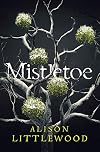
Alison Littlewood’s previous novels, particularly The Hidden People and The Crow Garden, show her mastery of what one could call “neo-Victorian” fiction. Besides successfully evoking the atmosphere of the era, these novels reference the popular genres of the time, particularly the “Gothic” and “sensation” novels of Wilkie Collins and others.
Littlewood’s latest book, Mistletoe, appears at first to be quite a different proposition – an atmospheric ghost story set over the show more Christmas period in modern-day, rural Yorkshire. Then again, the custom of telling ghost stories around the fire during the festive season is a long-established one. It hardly needs reminding that Dickens’ Christmas books – such as A Christmas Carol and The Chimes – are seasonal supernatural tales. Mistletoe taps into this rich tradition.
The initial chapters of the novel introduce us to young widow Leah Hamilton. Having just lost her husband and son, Leah feels she must honour a project her late husband had been planning – that of acquiring and converting a farm in remote, rural Yorkshire which might actually have belonged to Leah’s ancestors.
Leah wants to avoid the stress of a city Christmas: “the gaudy shop windows, the ever-repeating chirp of carols, the cheerfulness of her colleagues that faded when they saw her watching…” She rushes through the move from Manchester to Yorkshire, even though Maitland Farm still needs a lot of hard work for it to be made comfortably habitable. Leah arrives to a scene of picture-postcard (or should I say Christmas card?) prettiness: fields covered in snow and a sense of expectation “hidden in the spaces between snowflakes, almost visible through their flicker and dance”. Quite soon, however, Leah discovers that the house harbours dark secrets. Barely into the second chapter, she must face unexplained happenings such as snowballs thrown by invisible figures, disembodied voices, strange visions and upsetting discoveries.
In its first part, Mistletoe presents us with many typical “haunted house” tropes: the “naïve” city dweller who relocates to the country; the overeager estate agent; the pangs of ‘buyer’s guilt’; restless spirits awakened by new residents; neighbours who clearly know more about the house’s past than they are willing to let on.
Once the scene is set, however, the novel comes into its own and reveals some pleasant surprises. Firstly, although subtitled “A Ghost Story”, Mistletoe is more of a time-slip novel. As the barrier between past and present crumbles, Leah starts having increasingly detailed visions related to heinous deeds connected to the house. The book retains its supernatural bent, but the scenes set in the past take us into the realm of uncanny historical fiction at which Littlewood excels.
Another distinctive feature of the novel is that it weaves into its plot strong elements of folklore, particularly plant lore related to Christmas. The “mistletoe” of the title, of course, features heavily, but there are also references to holly and ivy, and other seasonal traditions such as wassailing. In other words, Christmas and its customs are not simply a convenient “frame” for the story but play a central role in the novel.
Because of its plot, Mistletoe is best savoured opposite a fireplace on a long winter’s night, preferably accompanied by hot punch and mince pies. However, its delightful brand of spookiness ensures that, like Dickens’ seasonal novels, it can be enjoyed all the year round.
For the full review including an (early) playlist of carols and folksongs for Christmas, head to:
https://endsoftheword.blogspot.com/2019/10/alison-littlewood-mistletoe.html show less
Littlewood’s latest book, Mistletoe, appears at first to be quite a different proposition – an atmospheric ghost story set over the show more Christmas period in modern-day, rural Yorkshire. Then again, the custom of telling ghost stories around the fire during the festive season is a long-established one. It hardly needs reminding that Dickens’ Christmas books – such as A Christmas Carol and The Chimes – are seasonal supernatural tales. Mistletoe taps into this rich tradition.
The initial chapters of the novel introduce us to young widow Leah Hamilton. Having just lost her husband and son, Leah feels she must honour a project her late husband had been planning – that of acquiring and converting a farm in remote, rural Yorkshire which might actually have belonged to Leah’s ancestors.
Leah wants to avoid the stress of a city Christmas: “the gaudy shop windows, the ever-repeating chirp of carols, the cheerfulness of her colleagues that faded when they saw her watching…” She rushes through the move from Manchester to Yorkshire, even though Maitland Farm still needs a lot of hard work for it to be made comfortably habitable. Leah arrives to a scene of picture-postcard (or should I say Christmas card?) prettiness: fields covered in snow and a sense of expectation “hidden in the spaces between snowflakes, almost visible through their flicker and dance”. Quite soon, however, Leah discovers that the house harbours dark secrets. Barely into the second chapter, she must face unexplained happenings such as snowballs thrown by invisible figures, disembodied voices, strange visions and upsetting discoveries.
In its first part, Mistletoe presents us with many typical “haunted house” tropes: the “naïve” city dweller who relocates to the country; the overeager estate agent; the pangs of ‘buyer’s guilt’; restless spirits awakened by new residents; neighbours who clearly know more about the house’s past than they are willing to let on.
Once the scene is set, however, the novel comes into its own and reveals some pleasant surprises. Firstly, although subtitled “A Ghost Story”, Mistletoe is more of a time-slip novel. As the barrier between past and present crumbles, Leah starts having increasingly detailed visions related to heinous deeds connected to the house. The book retains its supernatural bent, but the scenes set in the past take us into the realm of uncanny historical fiction at which Littlewood excels.
Another distinctive feature of the novel is that it weaves into its plot strong elements of folklore, particularly plant lore related to Christmas. The “mistletoe” of the title, of course, features heavily, but there are also references to holly and ivy, and other seasonal traditions such as wassailing. In other words, Christmas and its customs are not simply a convenient “frame” for the story but play a central role in the novel.
Because of its plot, Mistletoe is best savoured opposite a fireplace on a long winter’s night, preferably accompanied by hot punch and mince pies. However, its delightful brand of spookiness ensures that, like Dickens’ seasonal novels, it can be enjoyed all the year round.
For the full review including an (early) playlist of carols and folksongs for Christmas, head to:
https://endsoftheword.blogspot.com/2019/10/alison-littlewood-mistletoe.html show less
4.5*
Following the folklore-soaked mystery “[b:The Hidden People|30052003|The Hidden People|Alison Littlewood|https://images.gr-assets.com/books/1461876563s/30052003.jpg|50461044]”, Alison Littlewood returns to the Victorian era with her latest book, “The Crow Garden”. The novel’s narrator is Nathaniel Kerner, a young “alienist” or “mad-doctor”, who has found a placing as under-physician at Crakethorne Manor, a remote asylum in desolate, rural Yorkshire. The son of a doctor, show more Kerner has his demons to exorcise – he still feels guilty about having, when still a boy, indirectly encouraged his father’s suicide. This gives him the incentive to prove himself as a “progressive” physician, a proponent of a more humane approach to the treatment of psychological problems. The asylum director, Doctor Chettle, is not too keen about Kerner’s methods, preferring his own phrenological theories and experiments with electric shock treatments. Yet, he gives Kerner a free hand with their latest patient, the “hysterical” Mrs Victoria Harleston, who has been admitted at the behest of her husband. Harleston claims that she is haunted by the ghost of her husband’s son, and that she has the gift of conversing with the dead. After initial sessions with the patient leave little effect, Kerner invites a “mesmerist” in the hope of curing Harleston. The session, however, has unexpected consequences, leaving Kerner in doubt as to whether Harleston is really mad or whether there might be some truth in her allegations and imaginings.
The novel shifts between the mists of Yorkshire and the thick, industrial fog of London; between the oppressive ambience of the mental asylum and the creepy goings-on of the City’s “spiritualist” circles. These settings are well researched and, apart from building a chilling atmosphere, they also give us an authentic snapshot of 19th Century life. The Victorian era however does not merely provide a backdrop to the plot. On the contrary, I felt that the novel is itself a tribute to the popular novels of the time, particularly those of a Gothic, supernatural bent. The narrative voice and dialogue are perfectly pitched – they could have come out of Dickens or, better still, Wilkie Collins. There are also plenty of Gothic tropes – ghostly manifestations, noctural perambulations in grimy streets, madness, obsession and (with more than a nod to “[b:The Woman in White|5890|The Woman in White|Wilkie Collins|https://images.gr-assets.com/books/1295661017s/5890.jpg|1303710]”) the wife placed in an asylum against her will. And as with the best supernatural fiction, there is that constant niggling doubt as to whether the allegedly otherworldly manifestations are all a product of the mind.
Some of Wilkie Collins’s works had a radical (for their time), proto-feminist message. I feel that Littlewood cannily taps into this vein, giving her Victorian novel a more contemporary flavour and going beyond mere pastiche. Her subject-matter and approach – making the 19th Century relevant and appealing to contemporary readers – reminded me of Sarah Waters’s brilliant early novels “[b:Fingersmith|8913370|Fingersmith|Sarah Waters|https://images.gr-assets.com/books/1348622459s/8913370.jpg|1014113]” and “[b:Affinity|25337939|Affinity|Sarah Waters|https://images.gr-assets.com/books/1428720323s/25337939.jpg|1413038]”. “The Crow Garden” certainly deserves to share a shelf with them. show less
Following the folklore-soaked mystery “[b:The Hidden People|30052003|The Hidden People|Alison Littlewood|https://images.gr-assets.com/books/1461876563s/30052003.jpg|50461044]”, Alison Littlewood returns to the Victorian era with her latest book, “The Crow Garden”. The novel’s narrator is Nathaniel Kerner, a young “alienist” or “mad-doctor”, who has found a placing as under-physician at Crakethorne Manor, a remote asylum in desolate, rural Yorkshire. The son of a doctor, show more Kerner has his demons to exorcise – he still feels guilty about having, when still a boy, indirectly encouraged his father’s suicide. This gives him the incentive to prove himself as a “progressive” physician, a proponent of a more humane approach to the treatment of psychological problems. The asylum director, Doctor Chettle, is not too keen about Kerner’s methods, preferring his own phrenological theories and experiments with electric shock treatments. Yet, he gives Kerner a free hand with their latest patient, the “hysterical” Mrs Victoria Harleston, who has been admitted at the behest of her husband. Harleston claims that she is haunted by the ghost of her husband’s son, and that she has the gift of conversing with the dead. After initial sessions with the patient leave little effect, Kerner invites a “mesmerist” in the hope of curing Harleston. The session, however, has unexpected consequences, leaving Kerner in doubt as to whether Harleston is really mad or whether there might be some truth in her allegations and imaginings.
The novel shifts between the mists of Yorkshire and the thick, industrial fog of London; between the oppressive ambience of the mental asylum and the creepy goings-on of the City’s “spiritualist” circles. These settings are well researched and, apart from building a chilling atmosphere, they also give us an authentic snapshot of 19th Century life. The Victorian era however does not merely provide a backdrop to the plot. On the contrary, I felt that the novel is itself a tribute to the popular novels of the time, particularly those of a Gothic, supernatural bent. The narrative voice and dialogue are perfectly pitched – they could have come out of Dickens or, better still, Wilkie Collins. There are also plenty of Gothic tropes – ghostly manifestations, noctural perambulations in grimy streets, madness, obsession and (with more than a nod to “[b:The Woman in White|5890|The Woman in White|Wilkie Collins|https://images.gr-assets.com/books/1295661017s/5890.jpg|1303710]”) the wife placed in an asylum against her will. And as with the best supernatural fiction, there is that constant niggling doubt as to whether the allegedly otherworldly manifestations are all a product of the mind.
Some of Wilkie Collins’s works had a radical (for their time), proto-feminist message. I feel that Littlewood cannily taps into this vein, giving her Victorian novel a more contemporary flavour and going beyond mere pastiche. Her subject-matter and approach – making the 19th Century relevant and appealing to contemporary readers – reminded me of Sarah Waters’s brilliant early novels “[b:Fingersmith|8913370|Fingersmith|Sarah Waters|https://images.gr-assets.com/books/1348622459s/8913370.jpg|1014113]” and “[b:Affinity|25337939|Affinity|Sarah Waters|https://images.gr-assets.com/books/1428720323s/25337939.jpg|1413038]”. “The Crow Garden” certainly deserves to share a shelf with them. show less
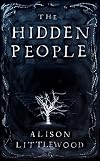
The mid-Victorian Gothic novel, Byronic Romanticism and the 'Female Gothic' appear to be alive and well in the carefully crafted pages of Alison Littlewood's THE HIDDEN PEOPLE. It's an elegantly crafted novel that plays wonderfully with 21st century psychological horror themes, while simultaneously conjuring up the literary spectres of both Arthur Machen and Emily Bronte, and then wrapping them within the superficial framework of The Wicker Man. It's one hell of a juggling act, yet show more Littlewood never drops even a single ball.
The use of language is simply brilliant, whether in terms of grounding time and place (1862 Yorkshire) or in building a deceptively effective sense of dread, the usage is 'pastiche perfect' across the board. The plot is relatively simple: Young Albie Millais met his lovely and intriguing cousin, Lizzie, at the Crystal Palace, some ten years previously and is now disturbed to find she has suddenly died a grisly death at the hands of her husband, who believed she had been taken by the Fair Folk and replaced with a changeling, so newly married Albie heads to the rural village of Halfoak to handle funeral arrangements and look into the circumstances surrounding her death. What this rational, if all too socially proper, young man finds is a village utterly in thrall to ancient superstitions. While this easily could have devolved into a basic rational vs. supernatural story, there is considerably more depth at work, in that Littlewood also manages to engage in questions surrounding gender roles and the inherent restrictions in a patriarchal society and the seemingly transgressive approach taken by women looking to make their way within it. Add to that the dichotomy of thought and behaviour between rural and city folk, plus the same again with class distinctions, as well as the war between rational and irrational thought processes, to say little of the power of belief, and that simplicity of plot expands into a richly layered and surprisingly deep, and largely satisfying, read.
My only niggles with the book are in respect to the climax and denouement, both of which seemed less adroitly handled than the lead up. In this instance that translates to the difference between a 4 and 5 star rating, so not even close to a deal breaker. Still, a truly fine read, particularly for those who enjoy the twisted intricacies of a Victorian Gothic. Quite frankly, this is an impressive work.
If you enjoyed this novel, hunt up a copy of Littlewood's recent novella COTTINGLEY. It's a very tight and atmospheric work and mines a similar, if more traditional, vein. show less
The use of language is simply brilliant, whether in terms of grounding time and place (1862 Yorkshire) or in building a deceptively effective sense of dread, the usage is 'pastiche perfect' across the board. The plot is relatively simple: Young Albie Millais met his lovely and intriguing cousin, Lizzie, at the Crystal Palace, some ten years previously and is now disturbed to find she has suddenly died a grisly death at the hands of her husband, who believed she had been taken by the Fair Folk and replaced with a changeling, so newly married Albie heads to the rural village of Halfoak to handle funeral arrangements and look into the circumstances surrounding her death. What this rational, if all too socially proper, young man finds is a village utterly in thrall to ancient superstitions. While this easily could have devolved into a basic rational vs. supernatural story, there is considerably more depth at work, in that Littlewood also manages to engage in questions surrounding gender roles and the inherent restrictions in a patriarchal society and the seemingly transgressive approach taken by women looking to make their way within it. Add to that the dichotomy of thought and behaviour between rural and city folk, plus the same again with class distinctions, as well as the war between rational and irrational thought processes, to say little of the power of belief, and that simplicity of plot expands into a richly layered and surprisingly deep, and largely satisfying, read.
My only niggles with the book are in respect to the climax and denouement, both of which seemed less adroitly handled than the lead up. In this instance that translates to the difference between a 4 and 5 star rating, so not even close to a deal breaker. Still, a truly fine read, particularly for those who enjoy the twisted intricacies of a Victorian Gothic. Quite frankly, this is an impressive work.
If you enjoyed this novel, hunt up a copy of Littlewood's recent novella COTTINGLEY. It's a very tight and atmospheric work and mines a similar, if more traditional, vein. show less
Lists
Awards


You May Also Like


Associated Authors
Statistics
- Works
- 26
- Also by
- 61
- Members
- 646
- Popularity
- #39,072
- Rating
- 3.4
- Reviews
- 37
- ISBNs
- 71
- Languages
- 1
