
Kwame Anthony Appiah
Author of Cosmopolitanism: Ethics in a World of Strangers
About the Author
Kwame Anthony Appiah was born in 1954 in London and raised in Ghana. After graduating with a degree in philosophy from Cambridge University, he taught at Yale, Duke, and Cornell universities. He is currently a professor of Philosophy and African American Studies at Harvard University. Appiah has show more written on such topics as language in Assertion and Conditional and For Truth in Semantics, and racial philosophy and identities in Color Conscious and In My Father's House. In addition to his scholarly publications, Appiah is the author of the popular Sir Patrick Scott Series of mysteries. In this series, which includes Avenging Angel and Another Death in Venice, Barrister Patrick Scott uses his intellectual skills to solve murders in a most British fashion. (Bowker Author Biography) show less
Image credit: Kwame A. Appiah, Laurance S. Rockefeller University Professor of Philosophy and the University Center for Human Values, Princeton University. Photo by Denise Applewhite, 2005 (photo courtesy of Princeton University)
Series
Works by Kwame Anthony Appiah
Africana, the Encyclopedia of the African and African American Experience (1999) — Editor — 168 copies, 1 review
Africana, the Encyclopedia of the African and African American Experience. The Concise Desk Reference (2003) — Editor — 105 copies, 1 review
Africana: The Encyclopedia of the African and African-American Experience (5 Volume Set) (2005) — Author — 28 copies
Angelo Soliman : ein Afrikaner in Wien ; [376. Sonderausstellung des Wien-Museums, Wien-Museum 29. September 2011 bis 29. Jänner 2012] (2011) — Contributor — 10 copies, 1 review
Attention, Please 5 copies
Africana: Encyclopedia of the African and African American Experience, Vol. 1: Aardvark-Catholic (2005) 3 copies
Africana: Encyclopedia of the African and African American Experience, Vol. 4: Michael-Sobukwe (2005) 3 copies
Africana: Encyclopedia of the African and African American Experience, Vol. 2: Catimbo-Giovanni (2005) 2 copies
Africana: Encyclopedia of the African and African American Experience, Vol. 3: Giraffe-Miami (2005) 2 copies
Examined Life 1 copy
Associated Works
The African Trilogy: Things Fall Apart / No Longer At Ease / Arrow of God (1988) — Foreword, some editions — 573 copies, 7 reviews
Narrative of the Life of Frederick Douglass, an American Slave {and} Incidents in the Life of a Slave Girl (1845) 371 copies, 5 reviews
Dusk of Dawn: An Essay Toward an Autobiography of a Race Concept (1975) — Introduction, some editions — 159 copies
Know the Past, Find the Future: The New York Public Library at 100 (2011) — Contributor — 133 copies, 4 reviews
The Force of Argument: Essays in Honor of Timothy Smiley (Routledge Studies in Contemporary Philosophy) (2015) — Contributor — 2 copies
Tagged
Common Knowledge
- Canonical name
- Appiah, Kwame Anthony
- Legal name
- Appiah, Kwame Anthony Akroma-Ampim Kusi
- Other names
- Appiah, Anthony
Appiah, K. Anthony - Birthdate
- 1954-05-08
- Gender
- male
- Education
- Clare College, University of Cambridge (BA|Ph.D|Philosophy|1981)
- Occupations
- novelist
philosopher
professor - Organizations
- New York University
Princeton University
Harvard University
Yale University
PEN American Center - Awards and honors
- American Philosophical Society (2001)
Royal Society of Literature (Fellow, 2017)
American Academy of Arts & Sciences (1995)
American Academy of Arts and Letters (2008)
National Humanities Medal (2012)
Ralph J. Bunche Award (1997) (show all 15)
Herskovits Award (1993)
Anisfield-Wolf Book Award (1993)
The National Institute of Social Sciences Gold Medal (2021)
Arthur Ross Book Award (2007)
North American Society for Social Philosophy Annual Book Award (1996)
John W. Kluge Prize for Achievement in the Study of Humanity (2024)
BBC Reith Lectures (2016)
Don M. Randel Award for Humanistic Studies (2024)
Joseph B. and Toby Gittler Prize (2008) - Agent
- Lynn Nesbit (Janklow & Nesbit Associates)
- Relationships
- Gutmann, Amy (co-author)
Gates, Henry Louis (co-editor)
Bunzl, Martin (co-editor)
Appiah, Peggy (mother)
Cripps, Richard Stafford (grandfather)
Parmoor, Lord (great grandfather - Charles Alfred Cripps) (show all 9)
Webb, Beatrice (great grand aunt)
Finder, Henry (spouse)
Edun, Adetomiwa (nephew) - Nationality
- UK
USA (naturalized) - Birthplace
- London, England, UK
- Places of residence
- London, England, UK
Kumasi, Ghana
Manhattan, New York, USA
Pennington, New Jersey, USA
Members
Reviews
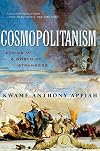
There's something really clever going on in Appiah's take on ethics in a global world. He goes out of his way to point out that while the main thrust of his positive argument is "you care about X because your neighbour does" is easy to articulate, it's damn hard to get there in most ethical systems.
I don't think this will appeal or even make sense to anyone interested in defining their identity with nations and states. In many ways, Appiah's moral compass only makes sense in a post-colonial show more context. If you think some accident of your birth entitles you to a special or nobler moral value then he has nothing to offer you. The very point of Appiah's approach to ethics is to first realize that most of the historical precedents that are pointed to for defining moral identities are themeselves mutable. Judgements aren't static. They change over time and they change dramatically when in contact with the wider world.
Why bother reading this? In a political era where nationalism and populism is surprisingly effective, Appiah points out that the purity of moral identities is fiction. This isn't ivory tower philosophy. It's applied ethics that gets the experience of the world from a non-majority point of view--something that's really hard to find articulated so well in any work on ethics. show less
I don't think this will appeal or even make sense to anyone interested in defining their identity with nations and states. In many ways, Appiah's moral compass only makes sense in a post-colonial show more context. If you think some accident of your birth entitles you to a special or nobler moral value then he has nothing to offer you. The very point of Appiah's approach to ethics is to first realize that most of the historical precedents that are pointed to for defining moral identities are themeselves mutable. Judgements aren't static. They change over time and they change dramatically when in contact with the wider world.
Why bother reading this? In a political era where nationalism and populism is surprisingly effective, Appiah points out that the purity of moral identities is fiction. This isn't ivory tower philosophy. It's applied ethics that gets the experience of the world from a non-majority point of view--something that's really hard to find articulated so well in any work on ethics. show less
Appiah argues for the necessity of talking with others; not necessarily agreeing with them or changing our minds, but trying to understand them. That alone is an important lesson for our fractious republic, where both sides think they have a monopoly on truth and talk past each other. The first part of book includes a lot about Appiah's early life in Ghana, as the child of British-educated Ghanaian barrister and an English mother. Much on the importance of individual and societal narratives show more and how our stories define and explain us. Later he takes on the issue of "cultural patrimony" and who owns artifacts of the past. Appiah shows a good deal of common sense in this and will annoy a lot of zealots. Finally he addresses the issue of what we owe to others, again with much common sense, and neatly skewers the simplistic sophistries of Peter Singer and his ilk. This is a book rooted in an old-fashioned humanism, which immediately brought to mind Terence's homo sum, humani nil a me alienum puto, a quotation that Appiah indeed discusses part way through the book. I doubt that professional philosophers will like the book much; too much common sense and not enough opaque jargon. show less
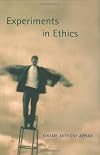
"Astronomers have stars, geologists have rocks, but what do moral theorists have to work with?"
In a field that is full of abstraction, Appiah brings you what you rarely get in a philosophy classroom: a collision with real world research on applied ethics. The thrust of this book is not so much the Appiah is championing contemporary experiments so much as he's exploring how such works complicate the ivory tower normative systems that we've used from Aristotle, to Kant to Rawls.
This is not show more the sort of book you read to tie up your moral theories in a bow, which not by accident, is also why it's such an interesting work no matter where you fall in between deontological, consequentialist or virtue approaches to moral reasoning. show less
In a field that is full of abstraction, Appiah brings you what you rarely get in a philosophy classroom: a collision with real world research on applied ethics. The thrust of this book is not so much the Appiah is championing contemporary experiments so much as he's exploring how such works complicate the ivory tower normative systems that we've used from Aristotle, to Kant to Rawls.
This is not show more the sort of book you read to tie up your moral theories in a bow, which not by accident, is also why it's such an interesting work no matter where you fall in between deontological, consequentialist or virtue approaches to moral reasoning. show less
I thought for sure a book on political ethics was going to be either infuriating or paternalistic, but Appiah managed to thread the needle to give a good view of the intersection of morality, ethics, culture, history, and philosophy. The main thrust of Appiah's arguments are to give time, space, and perspective to the history and viewpoints of others before passing judgments or laws. This isn't a book you can read straight through. I sat with it for about 10 days, and I think that was a show more pretty good pace. Overall, a very well-written book. show less
Lists
Awards


You May Also Like


Associated Authors
Statistics
- Works
- 56
- Also by
- 20
- Members
- 4,047
- Popularity
- #6,219
- Rating
- 3.8
- Reviews
- 55
- ISBNs
- 147
- Languages
- 11
- Favorited
- 5

