
Richard Neville (1) (1941–2016)
Author of Playpower
For other authors named Richard Neville, see the disambiguation page.
About the Author
Richard Clive Neville was born in Sydney, Australia on December 15, 1941. He received a bachelor's degree from the University of New South Wales, where he edited the student newspaper. In 1963, he founded the satirical countercultural magazine Oz with Richard Walsh and Martin Sharp. Oz ceased show more publication in November 1973. He wrote several books during his lifetime including Playpower and Hippie Hippie Shake. He also collaborated with Julie Clarke, a television reporter, on The Life and Crimes of Charles Sobhraj. Neville was a commentator on television programs in Australia in the 1980s and founded the Australian Futures Foundation in 1997. He died from complications of dementia on September 4, 2016 at the age of 74. (Bowker Author Biography) show less
Series
Works by Richard Neville
OZ Magazine (Issue #40) "Fifth Anniversary Issue" - "Critical Look at America's Underground Press" - "Dick Leitsch Opens Up on Gay History" (1972) — Editor — 2 copies
Tagged
Common Knowledge
- Birthdate
- 1941-12-15
- Date of death
- 2016-09-04
- Gender
- male
- Education
- University of New South Wales
- Occupations
- author
editor - Organizations
- Australian Futures Foundation
OZ Magazine
Sydney Push libertarians - Relationships
- Neville, Jill (sister)
- Nationality
- Australia
- Birthplace
- Sydney, New South Wales, Australia
- Place of death
- Canberra, Australian Capital Territory, Australia
- Associated Place (for map)
- Australia
Members
Reviews

A very competent write up of the life of serial killer Charles Sobhraj. The hippie trail across Asia in the 1970s is vividly described, a time when picking up mail once a week was your only contact with home; Afghanistan was on the tourist map then and Freak Street in Katmandu, with its limitless ganja. was the Mecca. Enter Charles Sobhraj with his bag of pharmaceuticals to drug unsuspecting travellers. He wanted passports and money, he sold jewels, he gambled. Many women found him show more irresistible even after they discovered his crimes. He had no qualms about killing people if they knew too much about him, and it's hinted that he also killed for pleasure. He was extremely resourceful, escaping from prisons in France, Greece, Afghanistan and India. He would think nothing of dropping everything and driving his car from France to India. Neville, the author, was an Australian journalist and an expert on counter-culture, his wife Julie Neville helped him research. In this updated version she has written an introduction and a conclusion. I was going to give Richard Neville's account four solid stars until I read Julie Clarke's conclusion written forty years later. She really hit the nail on the head:
I’ve come to see that these ‘hero’s journey’ stories, which occur in all cultures, are a fascinating tool. We are the hero of our own stories. Setting off in innocence down whatever road we randomly choose when we are too young to know what we are doing, we all meet helpers, and tricksters. We face dangers, find and lose friends and love, trip over cliffs, and usually in one way or another, survive adversity. Through our mistakes and our suffering, most of us slowly learn the lessons of kindness, forgiveness, acceptance, tolerance, gratitude, and of living in the present. As we mature through this process, if we are fortunate, we realize that life is a mixture of light and dark. It’s an adventure which ‘must be lived forwards but can only be understood backwards,’ as Kierkegaard said. But psychopaths are on a mission to exploit everyone and every situation for their own purposes. Their journey is a different one. They are not pebbles to be smoothed by the ebb and flow of life’s currents. They are igneous rock that stay for ever jagged and dangerous, with remorse and empathy unknown emotions. Their journey is one solely of exploitation. One of the lessons of this cautionary tale should be an awareness that such ‘inhuman humans’ do live amongst us. Many don’t end up in jail, but rather reach the highest level in the corporate and political spheres. By their very existence they can allow us to appreciate what it means to be a flawed, suffering, well-meaning human being. show less
I’ve come to see that these ‘hero’s journey’ stories, which occur in all cultures, are a fascinating tool. We are the hero of our own stories. Setting off in innocence down whatever road we randomly choose when we are too young to know what we are doing, we all meet helpers, and tricksters. We face dangers, find and lose friends and love, trip over cliffs, and usually in one way or another, survive adversity. Through our mistakes and our suffering, most of us slowly learn the lessons of kindness, forgiveness, acceptance, tolerance, gratitude, and of living in the present. As we mature through this process, if we are fortunate, we realize that life is a mixture of light and dark. It’s an adventure which ‘must be lived forwards but can only be understood backwards,’ as Kierkegaard said. But psychopaths are on a mission to exploit everyone and every situation for their own purposes. Their journey is a different one. They are not pebbles to be smoothed by the ebb and flow of life’s currents. They are igneous rock that stay for ever jagged and dangerous, with remorse and empathy unknown emotions. Their journey is one solely of exploitation. One of the lessons of this cautionary tale should be an awareness that such ‘inhuman humans’ do live amongst us. Many don’t end up in jail, but rather reach the highest level in the corporate and political spheres. By their very existence they can allow us to appreciate what it means to be a flawed, suffering, well-meaning human being. show less
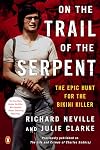
Richard Neville and his partner were the two Australian journalists who got the story of Charles Sobhraj after he was arrested in Delhi. Random House got the contract to tell his story.
I like that Julie Clark ended the book by interviewing Herman Knippenberg. And, I am surprised that, as journalists, they bought the story that Charles had been hired as a 'hit man' to knock off drug peddlers. As Herman Knippenberg pointed out, hired hitmen do not draw attention to themselves. Neither do they show more burn people while they are still alive.
To me, when they told the tale, is a weakness. I get the impression that Richard Neville was deeply impressed - hypnotized - by Charles, and Julie Clarke mentioned it as well.
Their description of "Monique" is considerably more generous than other accounts I have read.
While they covered most of the areas, I think that the analysis was poor.
They did indeed cover, to some extent, Knippenberg's investigation. If you consider that they were hired to write the story they should have covered this in more detail. It would have been fascinating.
All in all - they tick the boxes, but they don't bring his character to life. show less
I like that Julie Clark ended the book by interviewing Herman Knippenberg. And, I am surprised that, as journalists, they bought the story that Charles had been hired as a 'hit man' to knock off drug peddlers. As Herman Knippenberg pointed out, hired hitmen do not draw attention to themselves. Neither do they show more burn people while they are still alive.
To me, when they told the tale, is a weakness. I get the impression that Richard Neville was deeply impressed - hypnotized - by Charles, and Julie Clarke mentioned it as well.
Their description of "Monique" is considerably more generous than other accounts I have read.
While they covered most of the areas, I think that the analysis was poor.
They did indeed cover, to some extent, Knippenberg's investigation. If you consider that they were hired to write the story they should have covered this in more detail. It would have been fascinating.
All in all - they tick the boxes, but they don't bring his character to life. show less

Richard Neville was the editor of the hippie alternative magazine Oz which was prosecuted for obscenity and corrupting society.
The book starts with Neville as a teenager with his first job as a copywriter and editor of a college magazine, but most of it is concerned with his time in London. The author moves through the events in breakneck speed, without ever going into much depth on some incidents which surely would have been interesting, but the heady pace perhaps does suit the subject. show more Tellingly at one point he does say that he became an editor because he wasn't a very good writer!
There is a large cast of people in the book, including some famous names, but very few of them come to life for me and most still seemed like little more than names even by the end. I was also struck by how the majority of the people were middle or upper class kids just playing at being radicals. This is especially true of the author himself.
Where the book does come into its own is in the retelling of the Oz trial. Several chapters are devoted to this so it is looked at in an in-depth way which would have benefitted other aspects of the book. The premise of the trial offers an eye-opening perspective on how strict society was back in those days. The trial itself was pretty much a farce so provided some entertaining anecdotes as well as food for thought. show less
The book starts with Neville as a teenager with his first job as a copywriter and editor of a college magazine, but most of it is concerned with his time in London. The author moves through the events in breakneck speed, without ever going into much depth on some incidents which surely would have been interesting, but the heady pace perhaps does suit the subject. show more Tellingly at one point he does say that he became an editor because he wasn't a very good writer!
There is a large cast of people in the book, including some famous names, but very few of them come to life for me and most still seemed like little more than names even by the end. I was also struck by how the majority of the people were middle or upper class kids just playing at being radicals. This is especially true of the author himself.
Where the book does come into its own is in the retelling of the Oz trial. Several chapters are devoted to this so it is looked at in an in-depth way which would have benefitted other aspects of the book. The premise of the trial offers an eye-opening perspective on how strict society was back in those days. The trial itself was pretty much a farce so provided some entertaining anecdotes as well as food for thought. show less

The microfilm of this (Underground Newspapers Collection) was pretty unreadable. What I could read sounded pretty pretentious, but, hey, it was the sixties.
You May Also Like


Associated Authors
Statistics
- Works
- 54
- Members
- 382
- Popularity
- #63,244
- Rating
- 3.6
- Reviews
- 6
- ISBNs
- 47
- Languages
- 3