
Jared Shurin
Author of The Djinn Falls in Love & Other Stories
Series
Works by Jared Shurin
Speculative Fiction 2012: The best online reviews, essays and commentary (Volume 1) (2013) — Editor, some editions; Editor — 41 copies, 3 reviews
Associated Works
Tagged
Common Knowledge
- Gender
- male
Members
Discussions
26Shorts2026: prompt --- quest in 26 Short Stories for 2026 (June 9)
Reviews
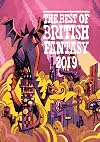
So far, 2020 feels like it could be the backdrop for the kind of story that makes up most of this collection of fantasy stories. Although focused on work from last year from authors working in Britain and Ireland, editor Jarid Shurin, has drawn together a collection of pieces which feel entirely contemporary with the strange times we are living through.
The introduction was written a couple of months into pandemic-caused lockdown across the UK and I can’t imagine the choices were entirely show more coincidental. Unlike last year’s compendium, which I also reviewed and noted as being full of swords and sorcery, there is precious little of either of those to be found across this collection of tales. That said, if you allow the genre to go further than Robert E Howard’s Cimmeria, there are plenty of gems to be found.
Helen McClory’s A Manual for Avoiding Further Harm from [REDACTED] opens the collection and seems a good bellwether for the likelihood of the reader appreciating the rest of the stories. Many have modern settings although some, like Canst Thou Draw Out the Leviathan (Christopher Caldwell), take us back in time and others, like Sin Eater (Chikodili Emelumadu) take us clearly to other nations.
If I had to pick a favourite, I would probably go for Demolition, where Nick Adams spins a tale of a shopping mall that goes rogue on the eve of its planned destruction. There is certainly some kind of magic going on but it is also the kind of brainworm that is likely to pop into mind when wandering through the bowels of such glass and concrete monsters in real life: fantasy that succeeds by serving to seed the imagination.
This is a very different range of works from the 2018 edition but, if anything, I enjoyed it more. I am looking forward to seeing what next year’s edition shows in its mirrors of what is and what has been. show less
The introduction was written a couple of months into pandemic-caused lockdown across the UK and I can’t imagine the choices were entirely show more coincidental. Unlike last year’s compendium, which I also reviewed and noted as being full of swords and sorcery, there is precious little of either of those to be found across this collection of tales. That said, if you allow the genre to go further than Robert E Howard’s Cimmeria, there are plenty of gems to be found.
Helen McClory’s A Manual for Avoiding Further Harm from [REDACTED] opens the collection and seems a good bellwether for the likelihood of the reader appreciating the rest of the stories. Many have modern settings although some, like Canst Thou Draw Out the Leviathan (Christopher Caldwell), take us back in time and others, like Sin Eater (Chikodili Emelumadu) take us clearly to other nations.
If I had to pick a favourite, I would probably go for Demolition, where Nick Adams spins a tale of a shopping mall that goes rogue on the eve of its planned destruction. There is certainly some kind of magic going on but it is also the kind of brainworm that is likely to pop into mind when wandering through the bowels of such glass and concrete monsters in real life: fantasy that succeeds by serving to seed the imagination.
This is a very different range of works from the 2018 edition but, if anything, I enjoyed it more. I am looking forward to seeing what next year’s edition shows in its mirrors of what is and what has been. show less
 This review was written for LibraryThing Early Reviewers.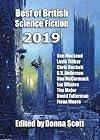
When I chose to read this contemporary collection of fantasy tales, I expected to find modern versions of imaginary worlds in which magic is a part of the physical laws of the universem or fantastic creatures confronted with unimaginable situations that would parallel with those of the real world. It seems that contemporary authors don't conceive fantasy that way anymore.
This set of stories happens in the actual world. Their protagonists are mostly normal people, with monotonous existence show more and the usual work and family responsibilities. Their lives are disturbed by some supernatural event or the appearance of some imaginary creature. Those events are experienced not as the beginning of and epic adventure with a possible happy ending, but as one more obstacle to overcome in the daily existence. Even in some of the stories, the characters have incorporated those events in his life as new ways of earning a living.
In general, It seems this set of stories wants to answer the question: what would happen if those unreal beings, those situations, crossed paths in the lives of normal people of the real world in this time and age? And the answer could be that those situations would cause light fears in their lives. Magic can be very macabre, indeed. Would those normal people become unexpected heroes and adventurers? The Authors think rather not. Those affected by these unreal events would face these paranormal situations with much resignation, a few doses of fear, and in cases where the fantastic disturbance would spread over time, it would be assimilated to the daily monotony like any other new technology.
Despite what has been said, in this collection you can find: ancestral monsters, versions of Cthulhu myths, chinese ghosts, irish myths, african sin-eaters, nordic silkens, misterious giant robots protecting humans, plagues of angels, genies who grant wishes at exorbitant prices, wrathful sea gods, unexpected heroes, shapeshifters willingly looking for equal ones, flying carpets looking for new owners, paradises in cyberpunk dystopias and even buildings with their own life and feelings.
Serve yourself. show less
This set of stories happens in the actual world. Their protagonists are mostly normal people, with monotonous existence show more and the usual work and family responsibilities. Their lives are disturbed by some supernatural event or the appearance of some imaginary creature. Those events are experienced not as the beginning of and epic adventure with a possible happy ending, but as one more obstacle to overcome in the daily existence. Even in some of the stories, the characters have incorporated those events in his life as new ways of earning a living.
In general, It seems this set of stories wants to answer the question: what would happen if those unreal beings, those situations, crossed paths in the lives of normal people of the real world in this time and age? And the answer could be that those situations would cause light fears in their lives. Magic can be very macabre, indeed. Would those normal people become unexpected heroes and adventurers? The Authors think rather not. Those affected by these unreal events would face these paranormal situations with much resignation, a few doses of fear, and in cases where the fantastic disturbance would spread over time, it would be assimilated to the daily monotony like any other new technology.
Despite what has been said, in this collection you can find: ancestral monsters, versions of Cthulhu myths, chinese ghosts, irish myths, african sin-eaters, nordic silkens, misterious giant robots protecting humans, plagues of angels, genies who grant wishes at exorbitant prices, wrathful sea gods, unexpected heroes, shapeshifters willingly looking for equal ones, flying carpets looking for new owners, paradises in cyberpunk dystopias and even buildings with their own life and feelings.
Serve yourself. show less
This review was written for LibraryThing Early Reviewers.This collection of 23 fantasy stories roams the world, time, and reality quite entertainingly. You'll find ghosts, gods, gay whalers, sentient houses and maybe a mermaid. What you won't find is young princes, sorcerers, dragons, unicorns, or other standbys of traditional fantasy. I'd refer to most of the entries as urban fantasy, although some are far from urban and some are not contemporary.
Standouts for me include “Why Aren't Millennials Continuing Traditional Worship of the Elder show more Dark?” which made me consider that author Matt Dovey was the spawn of H.P. Lovecraft and Terry Pratchett. “Burrowing Machines” reminded me of Ben Aaronovitch. “Wake the Dead” is proper Irish creepiness.
There are several stories that are not for the squeamish, by which I mean those who avoid tales of human consumption. You've been warned. show less
Standouts for me include “Why Aren't Millennials Continuing Traditional Worship of the Elder show more Dark?” which made me consider that author Matt Dovey was the spawn of H.P. Lovecraft and Terry Pratchett. “Burrowing Machines” reminded me of Ben Aaronovitch. “Wake the Dead” is proper Irish creepiness.
There are several stories that are not for the squeamish, by which I mean those who avoid tales of human consumption. You've been warned. show less
This review was written for LibraryThing Early Reviewers.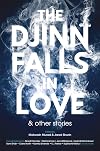
This collection of short stories is one of the strongest I’ve seen in a while; definitely the strongest I’ve yet read in 2017.
This collection takes stories by twenty-two authors from all over the world, all dealing in some form with the djinn – the fantastical beings of smoke and fire. I picked up this collection due to some authors who’s work I was already familiar with – Neil Gaiman, Claire North, Amal El-Mohtar, Helene Wecker, and Nnedi Okorafor. Turns out, most of my favorite show more stories were by authors who were new to me. Oh, and the Neil Gaiman story was an excerpt from American Gods, so don’t pick this collection up based on him.
Some of my favorite stories were those that added djinns to futuristic, science fiction settings. In “The Jinn Hunger’s Apprentice” by E.J. Swift, a spaceship is haunted by jinn. The crew is desperate enough to call in an exorcist, but who is the woman who answers their call? This short story was so much fun and I’d actually love to read more in this universe. The same is true of “Bring Your Own Spoon” by Saad Hossein. In this future, the very air is toxic and the vast majority of the population has never known real food, only artificial stuff that comes out of a processor. But a chef and a djinn begin to change things when they work together to create a restaurant in this delightful tale. There was one other science fiction story, but I found it confusing. “Duende 2077” by Jamal Mahjoub is a murder mystery set in the future. Some of the world building concepts seem interesting, but I still don’t understand who was behind the murder.
Some of the other stories in the collection are confusing as well. “The Sand in the Glass is Right” by James Smythe wins the award in this category. The story’s constantly switching POV characters, and I’d probably need to read it again to figure out what’s going on. Another confusing but ultimately more successful story is “Black Powder” by Maria Dahvana Headley, in which an old rifle is possessed by a djinn. I loved the character of the Huntress, a mysterious woman who lives through centuries and seems to be searching for djinn. I might not have understood everything going on in “Black Powder,” but I still enjoyed the journey.
“Glass Lights” by J.Y. Yang is beautifully written, but it did feel aimless and like it ended suddenly. Still, the writing made me excited to try more J.Y. Yang, particularly those queer fantasy novellas they’ve got coming out in August. “A Tale of Ash in Seven Birds” by Amal El-Mohtar is also a lyrically told story, but I didn’t enjoy it as much as I have other works by El-Mohtar. Maybe it was too abstract for me.
There were other stories that left me cold. “Queen of Sheba” by Catherine King was a solid but forgettable story of a girl who’s inherited the ability to see spirits. “How We Remember You” by Kuzhali Manickavel falls too close to magical realism for my taste. “Authenticity” by Monica Byrne was so not my sort of story – a college student seeking authentic experiences visits a porn shoot. “History” by Nnedi Okorafor was one I was looking forward to based on the author. However, I never connected with the pop star diva who summons spirits to use in her performances, and I don’t think it will be too long before the story slides from my mind. “The Emperor’s of Jinn” by Usman Malik and “The Righteous Guide of Arabsat” by Sophia Al-Maria fall into this category as well.
Of all the authors I was already familiar with, I enjoyed Claire North and Helene Wecker’s stories the most. Claire North wrote “Hurrem and the Djinn.” The sultan’s favorite concubine is so powerful that it’s obvious that she must be using dark magic! How else could a woman achieve such influence? In “Majnun” by Helene Wecker, a djinn has become an exorcist, even as his ex-lover pleads with him to come back to her.
But as I previously mentioned, most of the stand out stories were by authors whose work I’d never encountered before. “The Congregation” by Kamila Shamsie is a bittersweet story of a boy who encounters a congregation of djinn and a strong connection with one of them. “Message in a Bottle” by K.J. Parker didn’t seem to involve much in the way of djinn at all, but I liked the conundrum of whether a bottle in a medieval city contains the cure for a plague or a more virulent strain that will wipe out humankind. In “The Spite House” by Kirsty Logan, the daughter of a djinn finds herself overcome by a woman’s wishes. This story uses a sense of rising horror quite wonderfully, much like my favorite story of the collection…
“REAP” by Sami Shah was undoubtedly my favorite. First of all, the method of storytelling is brilliant. The protagonist is a member of an American team observing and analyzing the feed of a drone stationed over Iraq. But through their video feed, the team becomes witness to a horrific supernatural tale.
While the stories I picked this collection up for ended up not being as wonderful as I’d liked, it meant that I discovered many new authors whose works I will have to read more of! I would not hesitate to recommend this collection.
Originally posted on The Illustrated Page.
I received an ARC of this collection in exchange for a free and honest review. show less
This collection takes stories by twenty-two authors from all over the world, all dealing in some form with the djinn – the fantastical beings of smoke and fire. I picked up this collection due to some authors who’s work I was already familiar with – Neil Gaiman, Claire North, Amal El-Mohtar, Helene Wecker, and Nnedi Okorafor. Turns out, most of my favorite show more stories were by authors who were new to me. Oh, and the Neil Gaiman story was an excerpt from American Gods, so don’t pick this collection up based on him.
Some of my favorite stories were those that added djinns to futuristic, science fiction settings. In “The Jinn Hunger’s Apprentice” by E.J. Swift, a spaceship is haunted by jinn. The crew is desperate enough to call in an exorcist, but who is the woman who answers their call? This short story was so much fun and I’d actually love to read more in this universe. The same is true of “Bring Your Own Spoon” by Saad Hossein. In this future, the very air is toxic and the vast majority of the population has never known real food, only artificial stuff that comes out of a processor. But a chef and a djinn begin to change things when they work together to create a restaurant in this delightful tale. There was one other science fiction story, but I found it confusing. “Duende 2077” by Jamal Mahjoub is a murder mystery set in the future. Some of the world building concepts seem interesting, but I still don’t understand who was behind the murder.
Some of the other stories in the collection are confusing as well. “The Sand in the Glass is Right” by James Smythe wins the award in this category. The story’s constantly switching POV characters, and I’d probably need to read it again to figure out what’s going on. Another confusing but ultimately more successful story is “Black Powder” by Maria Dahvana Headley, in which an old rifle is possessed by a djinn. I loved the character of the Huntress, a mysterious woman who lives through centuries and seems to be searching for djinn. I might not have understood everything going on in “Black Powder,” but I still enjoyed the journey.
“Glass Lights” by J.Y. Yang is beautifully written, but it did feel aimless and like it ended suddenly. Still, the writing made me excited to try more J.Y. Yang, particularly those queer fantasy novellas they’ve got coming out in August. “A Tale of Ash in Seven Birds” by Amal El-Mohtar is also a lyrically told story, but I didn’t enjoy it as much as I have other works by El-Mohtar. Maybe it was too abstract for me.
There were other stories that left me cold. “Queen of Sheba” by Catherine King was a solid but forgettable story of a girl who’s inherited the ability to see spirits. “How We Remember You” by Kuzhali Manickavel falls too close to magical realism for my taste. “Authenticity” by Monica Byrne was so not my sort of story – a college student seeking authentic experiences visits a porn shoot. “History” by Nnedi Okorafor was one I was looking forward to based on the author. However, I never connected with the pop star diva who summons spirits to use in her performances, and I don’t think it will be too long before the story slides from my mind. “The Emperor’s of Jinn” by Usman Malik and “The Righteous Guide of Arabsat” by Sophia Al-Maria fall into this category as well.
Of all the authors I was already familiar with, I enjoyed Claire North and Helene Wecker’s stories the most. Claire North wrote “Hurrem and the Djinn.” The sultan’s favorite concubine is so powerful that it’s obvious that she must be using dark magic! How else could a woman achieve such influence? In “Majnun” by Helene Wecker, a djinn has become an exorcist, even as his ex-lover pleads with him to come back to her.
But as I previously mentioned, most of the stand out stories were by authors whose work I’d never encountered before. “The Congregation” by Kamila Shamsie is a bittersweet story of a boy who encounters a congregation of djinn and a strong connection with one of them. “Message in a Bottle” by K.J. Parker didn’t seem to involve much in the way of djinn at all, but I liked the conundrum of whether a bottle in a medieval city contains the cure for a plague or a more virulent strain that will wipe out humankind. In “The Spite House” by Kirsty Logan, the daughter of a djinn finds herself overcome by a woman’s wishes. This story uses a sense of rising horror quite wonderfully, much like my favorite story of the collection…
“REAP” by Sami Shah was undoubtedly my favorite. First of all, the method of storytelling is brilliant. The protagonist is a member of an American team observing and analyzing the feed of a drone stationed over Iraq. But through their video feed, the team becomes witness to a horrific supernatural tale.
While the stories I picked this collection up for ended up not being as wonderful as I’d liked, it meant that I discovered many new authors whose works I will have to read more of! I would not hesitate to recommend this collection.
Originally posted on The Illustrated Page.
I received an ARC of this collection in exchange for a free and honest review. show less
Lists
Awards


You May Also Like


Associated Authors
Statistics
- Works
- 20
- Also by
- 6
- Members
- 746
- Popularity
- #34,062
- Rating
- 3.5
- Reviews
- 47
- ISBNs
- 37
