
Hugo Hamilton (2) (1953–)
Author of The Speckled People
For other authors named Hugo Hamilton, see the disambiguation page.
Works by Hugo Hamilton
Associated Works
Tagged
Common Knowledge
- Birthdate
- 1953-01-28
- Gender
- male
- Occupations
- journalist
- Awards and honors
- Rooney Prize for Irish Literature (1992)
- Nationality
- Ireland
- Birthplace
- Dublin, Ireland
- Places of residence
- Dublin, Ireland
- Associated Place (for map)
- Dublin, Ireland
Members
Reviews
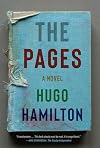
The narrator of this book is another book—one saved from the Nazi fires. It recalls Heinrich Heine’s prescient observation: “That was only a prelude; where they burn books, they will in the end also burn people.” This first edition is Joseph Roth’s “Rebellion (1924).” That novel depicts a WWI amputee who, as compensation for his service, is given a medal and permission to work in the streets as an organ grinder. This leads to intense disillusionment and rebellion. Hamilton show more takes advantage of the timeless nature of literature to focus on nationalistic fervor then and now. “The past is no longer safe.” the book observes, “My time is coming back.” Indeed, today’s political expediencies seem to reflect what the book calls the Nazi’s “appetite for dishonesty…” blurring “the boundaries between fact and fiction.”
The plot involves an intriguing mystery surrounding the book. It originally belonged to Professor David Gluckstein who taught German literature in Berlin in 1933. He entrusted it to one of his students, Dieter Knecht, for safekeeping during the Nazi book burning frenzy. You see, Roth and Gluckstein were suspect to the book burners because both were Jews. Knecht bequeathed the book to his son, who later passed it on to his granddaughter, Lena, an artist living today in NYC. She discovers an enigmatic hand drawn map on one of the book’s end papers and takes it along with her on a business trip to Berlin with the vague aim of discovering the map’s location and thus (maybe?) revealing its meaning. Along the way, a purse snatcher steals and abandons the book in a dumpster. A Chechen refugee, named Armin Schneider, discovers it there and returns it to Lena.
Hamilton has a great story here, but he risks losing focus by including too many subplots. Clearly, this material is not extraneous because it highlights most of Hamilton’s agendas: the potential for inhumanity in state politics; the dangers of extreme nationalism; how hatreds can fester throughout history; the interconnectedness of events through time; and ideas about homeland. He follows Joseph Roth’s true-life marriage to Frieda through her mental breakdown and murder by the Nazis. He also documents Roth’s own descent into despair and early death at 44 from alcoholism. Lena has an affair with Armin, a man whose family was killed in a Chechnyan bombing which left him with shrapnel wounds and his sister, Madina, an amputee. The latter, along with her role as a musician, is a not-so subtle reminder of Roth’s protagonist in “Rebellion.” Bogdanov is a hate filled right-wing extremist who is obsessed with Madina and terrorizes her brother in retribution for her spurning him. Mike, Lena’s significant other, works as a security consultant in the U.S. and relates his mother’s land dispute to Lena from a distance. Clearly, this is meant to represent the historical European conflicts that gave rise to the wars and their aftermath.
The multiple interlocking narratives distract from Hamilton’s main story and risk confusion. Although revealing, the subplots and characters seem more allegorical than real. They render a mythic quality to the narrative. Clearly, the ending is intended to be thrilling, yet it seems hurried and contrived. Notwithstanding such shortcomings, Hamilton succeeds in presenting Berlin as a community haunted by its past but embracing multiculturalism and freedom. show less
The plot involves an intriguing mystery surrounding the book. It originally belonged to Professor David Gluckstein who taught German literature in Berlin in 1933. He entrusted it to one of his students, Dieter Knecht, for safekeeping during the Nazi book burning frenzy. You see, Roth and Gluckstein were suspect to the book burners because both were Jews. Knecht bequeathed the book to his son, who later passed it on to his granddaughter, Lena, an artist living today in NYC. She discovers an enigmatic hand drawn map on one of the book’s end papers and takes it along with her on a business trip to Berlin with the vague aim of discovering the map’s location and thus (maybe?) revealing its meaning. Along the way, a purse snatcher steals and abandons the book in a dumpster. A Chechen refugee, named Armin Schneider, discovers it there and returns it to Lena.
Hamilton has a great story here, but he risks losing focus by including too many subplots. Clearly, this material is not extraneous because it highlights most of Hamilton’s agendas: the potential for inhumanity in state politics; the dangers of extreme nationalism; how hatreds can fester throughout history; the interconnectedness of events through time; and ideas about homeland. He follows Joseph Roth’s true-life marriage to Frieda through her mental breakdown and murder by the Nazis. He also documents Roth’s own descent into despair and early death at 44 from alcoholism. Lena has an affair with Armin, a man whose family was killed in a Chechnyan bombing which left him with shrapnel wounds and his sister, Madina, an amputee. The latter, along with her role as a musician, is a not-so subtle reminder of Roth’s protagonist in “Rebellion.” Bogdanov is a hate filled right-wing extremist who is obsessed with Madina and terrorizes her brother in retribution for her spurning him. Mike, Lena’s significant other, works as a security consultant in the U.S. and relates his mother’s land dispute to Lena from a distance. Clearly, this is meant to represent the historical European conflicts that gave rise to the wars and their aftermath.
The multiple interlocking narratives distract from Hamilton’s main story and risk confusion. Although revealing, the subplots and characters seem more allegorical than real. They render a mythic quality to the narrative. Clearly, the ending is intended to be thrilling, yet it seems hurried and contrived. Notwithstanding such shortcomings, Hamilton succeeds in presenting Berlin as a community haunted by its past but embracing multiculturalism and freedom. show less
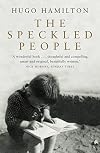
As someone of dual heritage myself (half English, half Polish), born in the same period as Hamilton I was interested to read this account from a man with a German mother and Irish father. His story is told in a series of vignettes, which gradually provide a coherent picture of the family's day-to-day life over the years of Hmilton's childhood. His mother brings with her memories of her family's anti-Nazi stance - yet in Ireland she and her family are called Nazi, Hitler, Eichmann or worse. show more His father insists on the family's Irishness - which meant denying everything English in their lives, from language to popular culture to newspapers. Both these threads isolated them all from their peers. They were rather poor, though Hamilton's father had all kinds of unusual and ultimately unsuccessful business ideas. This is an account of a young boy's growth into adolescence and adulthood, trying to find a path towards the adult he thought he wanted to be. A sensitive and restrained and thought-provoking narrative. show less
Hamilton, Hugo. The Pages. digital. 2022. Penguin Random House Audio.
A tattered old copy of Joseph Roth's, Rebellion, narrates its own history - from 1930's Germany, to the story itself about a barrel organ player, all the way to modern day New York. The novel's story weaves between readers of this particular first edition to a mystery included in it by one of the book's very first owners. The current owner of Rebellion, Lena Knecht, knows from her father that this edition was saved from a show more book burning in Nazi Germany and it is one of her prized possessions. She is determined to discover where the hand drawn map at the back of the book leads. When Lena misplaces the book it finds her way back to her via an unlikely ally and thus the book crosses another path. Rebellion delights in jumping timelines and telling the stories of those who have held this book in their hands. Some feature prominently and others are fleeting characters, just barely passing by - but all have been impacted by the book or have impacted the book itself. Brilliantly narrated by Nicholas Guy Smith, who delights in bringing a myriad of accents to life. At times, the narrative appears to get in its own way - but overall, a unique book about a book that bibliophiles will delight in. - Erin Cataldi, Johnson Co. Public Library, Franklin, IN show less
A tattered old copy of Joseph Roth's, Rebellion, narrates its own history - from 1930's Germany, to the story itself about a barrel organ player, all the way to modern day New York. The novel's story weaves between readers of this particular first edition to a mystery included in it by one of the book's very first owners. The current owner of Rebellion, Lena Knecht, knows from her father that this edition was saved from a show more book burning in Nazi Germany and it is one of her prized possessions. She is determined to discover where the hand drawn map at the back of the book leads. When Lena misplaces the book it finds her way back to her via an unlikely ally and thus the book crosses another path. Rebellion delights in jumping timelines and telling the stories of those who have held this book in their hands. Some feature prominently and others are fleeting characters, just barely passing by - but all have been impacted by the book or have impacted the book itself. Brilliantly narrated by Nicholas Guy Smith, who delights in bringing a myriad of accents to life. At times, the narrative appears to get in its own way - but overall, a unique book about a book that bibliophiles will delight in. - Erin Cataldi, Johnson Co. Public Library, Franklin, IN show less

2022 Advent, Day 17: Today's book was Dublin Palms and read like a Joyce fanfiction except without being able to use the name. The main character's wife kept her maiden name of Boyce, it is revealed halfway through and that just seems to close for coincidence. I didn't really like this book mostly because the protagonist talks a lot about his struggles but others definitely had it worse. (Like it's so hard to live in Germany at this time but the whole family are members of the Nazi party and show more no one is being taken away or in hiding.... hard to sympathize with the struggle in that context) show less
Lists
Awards


You May Also Like


Associated Authors
Statistics
- Works
- 14
- Also by
- 4
- Members
- 1,001
- Popularity
- #25,757
- Rating
- 3.4
- Reviews
- 16
- ISBNs
- 124
- Languages
- 10
- Favorited
- 1