

Robert Antoni
Author of My grandmother's erotic folktales
About the Author
Works by Robert Antoni
Associated Works
Tagged
Common Knowledge
- Birthdate
- 1958
- Gender
- male
- Education
- Johns Hopkins University (MA)
University of Iowa (MFA)
University of Iowa (PhD)
Iowa Writers' Workshop - Occupations
- university professor
creative writing teacher
author
scholar of Caribbean literature - Organizations
- Columbia University
University of Miami
New School
Barnard College - Nationality
- USA
- Places of residence
- New York, New York, USA
The Bahamas - Associated Place (for map)
- New York, USA
Members
Reviews
Rating: 4* of five
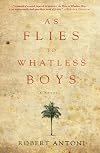
The Publisher Says: In 1845 London, an engineer, philosopher, philanthropist, and bold-faced charlatan, John Adolphus Etzler, has invented machines that he thinks will transform the division of labor and free all men. He forms a collective called the Tropical Emigration Society (TES), and recruits a variety of London citizens to take his machines and his misguided ideas to form a proto-socialist, utopian community in the British colony of Trinidad.
Among his recruits is a show more young boy (and the book's narrator) named Willy, who falls head-over-heels for the enthralling and wise Marguerite Whitechurch. Coming from the gentry, Marguerite is a world away from Willy's laboring class. As the voyage continues, and their love for one another strengthens, Willy and Marguerite prove themselves to be true socialists, their actions and adventures standing in stark contrast to Etzler's disconnected theories.
Robert Antoni's tragic historical novel, accented with West Indian cadence and captivating humor, provides an unforgettable glimpse into nineteenth-century Trinidad & Tobago.
My Review:
Catnip. This book was catnip for me, pure uncut catnip of the finest grade. Robert Antoni teaches master's degree fiction-writing classes at the New School. Lucky men and women who take the classes, to hear him tell his stories!
At its heart, this is a simple tale of greed, passion, and the lifelong effects of believing in a dream. Chicanery is always a worry for the True Believer, because the promise of a dream come true is ever the best bait to lure them into disaster, personal and financial and, not infrequently, mortal. Something dies when a person's True Belief is taken from them, or lost, or simply abandoned (as if this abandonment is ever simple). Many times, I suspect, the pain of it is unendurable and the bereft believer sees no reason to go on...disease or despair carry him off.
Others, like our narrator Willy, live on and make life, actual life, work for them without dreams, but with some weird, warped hopes left, hopes that don't see much daylight as the ex-dreamer isn't likely to chat them about. Willy doesn't really want to have hopes. He wants to find his dreams. I think all of us know that quest's end. But the novel, well, a novel is a place to work out the truths of endings and the frailties of beginnings. This novel's truth is in the ending, and it stings the soft places of a tender soul. It also rings perfectly true and wistfully beautiful. A family, once created, is a hard thing to leave, to destroy; even death doesn't do the job.
But most families have invisible members. Some have more than others. Willy...Mr. Tucker, as he becomes...carried the invisible members of his family until, exhausted, he lost the eternal battle with gravity. How, and why, and what he made, these are all the subject of the novel, and the meat of life as we all live it.
Only most of us don't have beautiful words to wrap our truth in. Fortune smiled on William Tucker. His truth comes enrobed in lovely, lovely language, satisfyingly musical in the inward ear.
A pleasure of a read. A lovely artifact of a book. A delight on many levels, and a deeply felt, deeply moving novel. show less
The Publisher Says: In 1845 London, an engineer, philosopher, philanthropist, and bold-faced charlatan, John Adolphus Etzler, has invented machines that he thinks will transform the division of labor and free all men. He forms a collective called the Tropical Emigration Society (TES), and recruits a variety of London citizens to take his machines and his misguided ideas to form a proto-socialist, utopian community in the British colony of Trinidad.
Among his recruits is a show more young boy (and the book's narrator) named Willy, who falls head-over-heels for the enthralling and wise Marguerite Whitechurch. Coming from the gentry, Marguerite is a world away from Willy's laboring class. As the voyage continues, and their love for one another strengthens, Willy and Marguerite prove themselves to be true socialists, their actions and adventures standing in stark contrast to Etzler's disconnected theories.
Robert Antoni's tragic historical novel, accented with West Indian cadence and captivating humor, provides an unforgettable glimpse into nineteenth-century Trinidad & Tobago.
My Review:
We sat in silence, exhausted, filled-up. We didn't move. We couldn't have moved--not a muscle--because we didn't exist yet. Neither me nor him. Only the story existed, during those few final moments of silence after my father's voice had come to a halt.
Catnip. This book was catnip for me, pure uncut catnip of the finest grade. Robert Antoni teaches master's degree fiction-writing classes at the New School. Lucky men and women who take the classes, to hear him tell his stories!
At its heart, this is a simple tale of greed, passion, and the lifelong effects of believing in a dream. Chicanery is always a worry for the True Believer, because the promise of a dream come true is ever the best bait to lure them into disaster, personal and financial and, not infrequently, mortal. Something dies when a person's True Belief is taken from them, or lost, or simply abandoned (as if this abandonment is ever simple). Many times, I suspect, the pain of it is unendurable and the bereft believer sees no reason to go on...disease or despair carry him off.
Others, like our narrator Willy, live on and make life, actual life, work for them without dreams, but with some weird, warped hopes left, hopes that don't see much daylight as the ex-dreamer isn't likely to chat them about. Willy doesn't really want to have hopes. He wants to find his dreams. I think all of us know that quest's end. But the novel, well, a novel is a place to work out the truths of endings and the frailties of beginnings. This novel's truth is in the ending, and it stings the soft places of a tender soul. It also rings perfectly true and wistfully beautiful. A family, once created, is a hard thing to leave, to destroy; even death doesn't do the job.
But most families have invisible members. Some have more than others. Willy...Mr. Tucker, as he becomes...carried the invisible members of his family until, exhausted, he lost the eternal battle with gravity. How, and why, and what he made, these are all the subject of the novel, and the meat of life as we all live it.
Only most of us don't have beautiful words to wrap our truth in. Fortune smiled on William Tucker. His truth comes enrobed in lovely, lovely language, satisfyingly musical in the inward ear.
A pleasure of a read. A lovely artifact of a book. A delight on many levels, and a deeply felt, deeply moving novel. show less
 This review was written for LibraryThing Early Reviewers.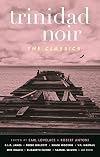
I enjoy the cadence and the sound of the English language in the mouths of the people of Trinidad and Tobago, so it was a pleasure to see it reproduced in so many of the stories in this collection.
The 'classics' refers to the most well-known of Trinidad's authors: VS Naipaul, Samuel Selvon, going as far back as a 1927 story by CLR James. The chronological sequence of the stories presents a picture of the changing people and society over the almost ninety years covered by the stories. In the show more older stories, male authors predominate, but women are well represented in the newer stories. The story of Trinidad must include the story of emigration, and one of my favorites is the 1957 story, The Cricket Match. Here, Samuel Selvon captures, with humor, Trinidadians in the London of the 1950s. This is the only explicit 'away' story, but others touch on characters with relatives who live elsewhere, or are trying to move away. However, most of all, the stories are of the people who live in that two-island nation. show less
The 'classics' refers to the most well-known of Trinidad's authors: VS Naipaul, Samuel Selvon, going as far back as a 1927 story by CLR James. The chronological sequence of the stories presents a picture of the changing people and society over the almost ninety years covered by the stories. In the show more older stories, male authors predominate, but women are well represented in the newer stories. The story of Trinidad must include the story of emigration, and one of my favorites is the 1957 story, The Cricket Match. Here, Samuel Selvon captures, with humor, Trinidadians in the London of the 1950s. This is the only explicit 'away' story, but others touch on characters with relatives who live elsewhere, or are trying to move away. However, most of all, the stories are of the people who live in that two-island nation. show less
This review was written for LibraryThing Early Reviewers.One reason I like Robert Antoni's As Flies to Whatless Boys (2013) may be that it features some fictional correspondence with the Director of the Trinidad and Tobago National Archives. The reason that I loved the novel, though, is because the archivist has fictional sex with the "Robert Antoni" character, but still refuses to let him make photocopies of the diary he is using to write the story how his great-great grandfather came to Trinidad. PHOTOCOPIES ARE AGAINST THE RULES, DUDE! She show more will, however, gladly continue to have sex with him while he is in town.
[full review here: http://spacebeer.blogspot.com/2014/07/as-flies-to-whatless-boys-by-robert.html ] show less
[full review here: http://spacebeer.blogspot.com/2014/07/as-flies-to-whatless-boys-by-robert.html ] show less
This review was written for LibraryThing Early Reviewers.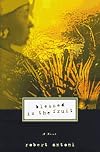
Lil Grandsol lives alone in the decaying old house that is all that remains of her family's plantation wealth. Vel is the young woman who has come to replace the long-time house servant. Together, Lil and Vel battle their histories and personal demons in a poignant attempt to survive. Antoni's tale of two West Indian women, one black and one white, from different socio-economic backgrounds is a wonderful example of stepping out of oneself to write. Antoni, a male writer, did this so well show more that one can only attribute his artistic ability to the unique mastery of mental gender crossing. Rich in West Indian culture, with pages of perfectly rendered dialect, and one in which religion plays heavily, this novel weaves in and out of sexuality alternately confusing and intensifying the narrative.This is a novel about the power of women and connections, and it forcefully evokes the real emotions that go into unexpected and untraditional love. It is amazing that the book has not gotten more attention. Antoni is brilliant, and his book deserves to be a West Indian classic along the order of Jean Rhys' WIDE SARGASSO SEA. show less
Lists
Awards


You May Also Like


Associated Authors
Statistics
- Works
- 8
- Also by
- 3
- Members
- 293
- Popularity
- #79,899
- Rating
- 3.5
- Reviews
- 23
- ISBNs
- 27
- Languages
- 3
- Favorited
- 1
