
Felix Dahn (1834–1912)
Author of A Struggle for Rome
About the Author
Image credit: Photo © ÖNB/Wien
Works by Felix Dahn
A Struggle for Rome, Vol. II 8 copies
Die schlimmen Nonnen von Poitiers : historischer Roman aus der Vkerwanderung (a. 589 n. Chr.) 2 copies
Ein Kampf um Rom, Band III 1 copy
Uskkollinen kuolemaan asti 1 copy
Kaempfende Herzen 1 copy
Fredigundis 1 copy
Kampf um Rom (2. Teil) 1 copy
Bissula 1 copy
Trogen in i döden 1 copy
Taistelu Roomasta 2 1 copy
Taistelu Roomasta 1 1 copy
PT1841.K3 Ein Kampf um Rom 1 copy
Frigga's Ja 1 copy
Gesammelte Werke. 2. Serie. 1. Bd: Julian der Abtrünnige - Der Vater und die Söhne - Sind Götter! 1 copy
Gesammelte Werke. 1. Serie. Bd 5: Sigwalt und Sigridh - Stilicho - Walhall - Dramatische Werke 1 copy
Die Goten, Band 2 1 copy
Die Goten, Band 1 1 copy
Die Franken, Band 2 1 copy
Die Franken, Band 1 1 copy
Odin's Wraak en Skirnir 1 copy
Gelimer. Karl der Grosse 1 copy
Julian der Abtrünnige 1 copy
Weltuntergang (Erweiterte Ausgabe): Geschichtliche Erzählung aus dem Jahre 1000 n. Chr. (2014) 1 copy
Sämtliche Werke 1 1 copy
Tagged
Common Knowledge
- Canonical name
- Dahn, Felix
- Legal name
- Dahn, Felix Ludwig Julius
- Other names
- Sophus, Ludwig
- Birthdate
- 1834-02-09
- Date of death
- 1912-01-03
- Gender
- male
- Education
- Universität München (Jura, Philosophie)
Universität Berlin - Occupations
- lawyer
historian - Organizations
- Pegnesischer Blumenorden
- Nationality
- Germany
- Birthplace
- Hamburg, Germany
- Places of residence
- Hamburg, Germany
Munich, Bavaria, Germany
Würzburg, Germany
Königsberg, Prussia
Breslau, Prussia - Place of death
- Breslau, Poland (was Germany)
- Associated Place (for map)
- Germany
Members
Reviews
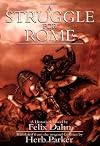
This epic 1877 novel, magnificently translated from the German by Herb Parker, is one of the greatest historical novels I have ever read. It relates the tragic story of the last years of Gothic rule in Italy during the mid-6th century after the death of its greatest ruler Theodoric in 526 until its demise in 552 at the foot of Mount Vesuvius. The heroism of King Teias (the last Gothic king) at the final confrontation is extraordinary and reminded me of King Leonidas and the Spartans at show more Thermopylae. The major fictional character is Cethegus, the Prefect of Rome, who will stop at nothing to recover the Eternal City from the Goths and the Byzantines. I believe that the Goths were depicted in a somewhat more favorable light considering the author's nationality, but in any event they are more deserving of our sympathy than the scheming Cethegus or greedy and weak Justinian (the latter so-called "the Great" by history but revealed here to be completely under the influence of his dissolute and notorious wife Theodora). I strongly recommend this book to anyone interested in a compelling story based on real events and people that lived almost 1500 years ago. For a less sympathetic view of the Goths, read Count Belisarius by Robert Graves. Belisarius was one of Justinian's two great generals (the other being Narses, both of whom play large roles in the two books). I feel that reading both books will afford a more balanced view of the Goths, Italians, and Byzantines. show less
One could consider this book as a long eulogy to the Ostrogoths, the branch of the Goths who dominated Italy in the 5th and 6th century. Starting with a strong base in Ravenna, eventually they are honourably and heroically defeated on the slopes of My Vesuvius.
However, the story as told by Felix Dahn is majestic. The Goths portrayed as kind and inclusive, but yet pagan. On the other hand there are the cruel, cynical and conniving Romans and Byzantines, but nominally Christian.
Central to the show more story is the prefect of Rome, the fictional character Cathegus, who is both brilliant and brave, and also manipulative and most untrustworthy. As fictional as he is, the author has woven him into the true story as it appears to be understood (not by me, but according to the translator), with the Romans keen to be rid of the Goths and remain independent, and the Byzantines keen to regain the Western part of their Empire.
It a massive book, but really worth the effort to read. show less
However, the story as told by Felix Dahn is majestic. The Goths portrayed as kind and inclusive, but yet pagan. On the other hand there are the cruel, cynical and conniving Romans and Byzantines, but nominally Christian.
Central to the show more story is the prefect of Rome, the fictional character Cathegus, who is both brilliant and brave, and also manipulative and most untrustworthy. As fictional as he is, the author has woven him into the true story as it appears to be understood (not by me, but according to the translator), with the Romans keen to be rid of the Goths and remain independent, and the Byzantines keen to regain the Western part of their Empire.
It a massive book, but really worth the effort to read. show less
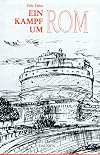

Ik las deze historische roman als tiener en nooit heb ik sindsdien nog een indrukwekkender historisch verhaal gelezen als dit. Tegen het historische decor van de machtsstrijd tussen de Gothen in Italië, de oorspronkelijke Romaanse bevolking en de Griekse keizer worden een aantal fantastische personages geplaatst die de lezer nooit meer zullen verlaten. De 'final stand' van de Gothenleider Teja op de flanken van de Vesuvius kan zonder twijfel wedijveren met die van koning Leonidas in de slag show more bij Thermopilae. Dit is een opera in boekvorm, dat omschrijft nog het beste het effect. De moderne lezer moet zichzelf enkele tientallen pagina's de kans geven om zich aan te passen aan het tragere, bredere, zwaardere ritme van de tijd waarin dit geschreven werd, maar indien men die inspanning doet is de beloning adembenemend. Eén van de beste boeken die ik ooit las. show less
You May Also Like


Associated Authors
Statistics
- Works
- 97
- Members
- 415
- Popularity
- #58,724
- Rating
- 3.6
- Reviews
- 5
- ISBNs
- 85
- Languages
- 4
- Favorited
- 1