
Anakana Schofield
Author of Martin John
About the Author
Image credit: Author Anakana Schofield at the 2015 Texas Book Festival. By Larry D. Moore, CC BY-SA 4.0, https://commons.wikimedia.org/w/index.php?curid=44636326
Works by Anakana Schofield
Library of Brothel : A Novel 2 copies
Associated Works
Tagged
Common Knowledge
- Birthdate
- 20th century
- Gender
- female
- Nationality
- Ireland
Canada - Birthplace
- England
- Places of residence
- Dublin, Ireland
Vancouver, British Columbia, Canada
Members
Reviews
This was like a loose end of yarn on a sweater. You pull it and the string just gets longer and longer and the sweater just keeps unravelling until you're left with a pile of tangled string. You're not sure what's real and what's just a figment of a character's imagination. Your face hurts from being scrunched up in reaction to the things you're reading. It was bloody hard work. I can't imagine how hard it was to write.
There's a line in this book, "That's aggressive, but you see this hasn't show more been an easy book for any of us."
Yes. That. show less
There's a line in this book, "That's aggressive, but you see this hasn't show more been an easy book for any of us."
Yes. That. show less
I loved this novel. It will not be to everyone’s liking, but I found it a compelling read.
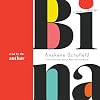
Bina (pronounced Bye-na) is an angry 74-year-old woman who has “had enough.” From her bed, on discarded envelopes and receipts, she writes her story: “I was always remarking to myself, but now I’m doing my remarking in a more formal capacity for yourselves, and for after I’m gone, and I am very glad of it. For it has been a long life of being talked at, often unintelligently, and at this show more late hour in the departure lounge of life, I am happy to do the full remarking aloud and down onto these papers.”
Bina tells us about Eddie who inserted himself into her life for a decade during which time “Within these four walls it was persistence, it was never living.” She calls him an “ordeal creator” who became violent and used her property for criminal activities: “The man is a lying hoar. He has lied far and wide and double-eared for 10 years. He’ll lie til the pyramids are fully eroded and rebuilt in Lego.” She is overjoyed that he is gone but is ever fearful that he will return.
Bina introduces us to the Tall Man who recruited her into a group; “What he wanted me to do eventually became a mountain of woe and had me sent inside prison for a week.” Now she is awaiting trial on serious charges. Members of the group, whom she calls Crusties, are camped out in her yard: “They are outside camping with their clipboards, in case the Guards come for me.”
Bina had two friends, Tomás and Phil, but both are gone so she finds herself very much alone. She has decided to write her story to warn people not to repeat her mistakes; she feels she has “been handed this here undertaking. To. Deliver. These. Warnings. I am a practical woman, there’s nothing I like more than to be useful and this here makes me useful.” In fact, much of what she writes consists of warnings. For example, “if you are thinking of opening your hearth or your heart. Don’t.” and “I would warn you never to disclose your dark thoughts but to constantly disclose your truthful thoughts, because it’s only the dark ones that follow when the truthful ones are hid.” and “Don’t do the things you’re not supposed to do. Even if people ask you to do them. Don’t.” and “Another warning: Careful what you think you are hiding, as it’s probably on full view. Careful not to hide suffering because you are only making more work for the people who have yet to discover it.” and “Sacrifice is a stupid thing that women do. Don’t do it. The men don’t notice.”
Bina also writes her conclusions about life based on what she has experienced. She comments on various topics like ageism (“I’m not a young person so I am used to being ignored”) and media (“It’s a funny thing when the papers write about you or the TV tells about you, but they have not talked to you. . . . They give you a voice based on what they believe your actions are. They talk about you like they are speculating through binoculars”) and the treatment of women (“They were not giving up because I was a woman and I was grabable”). She mentions that “There’s nothing quite as confusing as yourself, I concluded. This is likely why so many of us succumb to absolute confusion, the dementia, in the end.” and “if you tell people the truth they won’t believe you, but tell them lies and they’ll believe all of it.” and “We cannot know every reason a person has for doing a thing.”
There are some wonderful touches of humour:
“A man though, he could get into your kidneys and irritate them & you in a very special way. It’s why women are up in the night to go to the toilet as they age. They are widdling the confused strain of anger gathered up in there all day. I’ve no explanation as to why men are up piddling all night too, except perhaps it’s God’s subtle way of tormenting them. He goes straight for the pipe does our Saviour.”
and
“There’s a new fella out there, the lanky looper I call him, with a thin face and a long beard that might have food gone relic inside it. He has it twisted down to a point and a red elastic band put on it with a bead or three, and he looks surgically demented. I don’t care what you put on yourself. I wouldn’t care if you tattooed a droopy spider on your baldhead like a lampshade, but a grown man with three pink beads hanging from his chin is disturbing.”
and
When her lawyer tells her to watch her words because “’You’re going to scupper us all if you keep this up,’” she thinks, “Last I checked there are no double berths for the convicted and their solicitors in any prison in this country.”
Because the style is unconventional, the narrative is fractured. Bina circles around events without fully explaining herself so it takes a while to understand, for example, what work she actually did with the group. She says that she is being vague so she doesn’t implicate herself; because of legal reasons, she “cannot articulate without getting in trouble.” She repeats herself to emphasize her message but also because she is forgetful. She admits that “My memory isn’t great so you may have to read a few things twice” and bemoans how “A name, a word, a meaning, a person, it’s all unthreading and blowing out the backdoor of my mind.” She often addresses the reader directly: “Don’t forget, when you can’t remember, it’ll come back to you.” Sometimes he speaks about herself in the third person.
There are sections which read more like poetry than prose:
I panicked too much.
It’s been a lifetime of panic. Eddie would make you panic. It’s how he is.
Sirenic.
Claxonic.
Awful.
Awful.
Awful.
At times the language reminded of e e cumming’s poem “anyone lived in a pretty how town”: “This wasn’t unusual heard. It wasn’t unusual to hear it. You could not at all it. You could not at all them. But you couldn’t eradicate the thought of it. You couldn’t get at the part of them that had started to feel it or had maybe felt it all their lives. You wouldn’t even know what someone felt all their lives and whether it was now or then they were feeling it and when was then and how was now? Maybe they could barely arrive at now because of then.”
This would probably be considered a difficult book. Early on, Bina actually mentions this:
But this hasn’t been a difficult book yet.
Bina’s not for difficult books.
Life is full of difficulty, so if she were ever to lie down and take up a book, it couldn’t be a difficult one.
I’d never read that rubbish, she’d say of this book.
It would give me bad dreams.
Despite the book’s challenging style, serious subject and often melancholic tone, I highly recommend it. Bina’s voice is one you will not soon forget.
Note: I received a digital galley of this book from the publisher via NetGalley.
Please check out my reader's blog (https://schatjesshelves.blogspot.com) and follow me on Twitter (@DCYakabuski). show less
Bina (pronounced Bye-na) is an angry 74-year-old woman who has “had enough.” From her bed, on discarded envelopes and receipts, she writes her story: “I was always remarking to myself, but now I’m doing my remarking in a more formal capacity for yourselves, and for after I’m gone, and I am very glad of it. For it has been a long life of being talked at, often unintelligently, and at this show more late hour in the departure lounge of life, I am happy to do the full remarking aloud and down onto these papers.”
Bina tells us about Eddie who inserted himself into her life for a decade during which time “Within these four walls it was persistence, it was never living.” She calls him an “ordeal creator” who became violent and used her property for criminal activities: “The man is a lying hoar. He has lied far and wide and double-eared for 10 years. He’ll lie til the pyramids are fully eroded and rebuilt in Lego.” She is overjoyed that he is gone but is ever fearful that he will return.
Bina introduces us to the Tall Man who recruited her into a group; “What he wanted me to do eventually became a mountain of woe and had me sent inside prison for a week.” Now she is awaiting trial on serious charges. Members of the group, whom she calls Crusties, are camped out in her yard: “They are outside camping with their clipboards, in case the Guards come for me.”
Bina had two friends, Tomás and Phil, but both are gone so she finds herself very much alone. She has decided to write her story to warn people not to repeat her mistakes; she feels she has “been handed this here undertaking. To. Deliver. These. Warnings. I am a practical woman, there’s nothing I like more than to be useful and this here makes me useful.” In fact, much of what she writes consists of warnings. For example, “if you are thinking of opening your hearth or your heart. Don’t.” and “I would warn you never to disclose your dark thoughts but to constantly disclose your truthful thoughts, because it’s only the dark ones that follow when the truthful ones are hid.” and “Don’t do the things you’re not supposed to do. Even if people ask you to do them. Don’t.” and “Another warning: Careful what you think you are hiding, as it’s probably on full view. Careful not to hide suffering because you are only making more work for the people who have yet to discover it.” and “Sacrifice is a stupid thing that women do. Don’t do it. The men don’t notice.”
Bina also writes her conclusions about life based on what she has experienced. She comments on various topics like ageism (“I’m not a young person so I am used to being ignored”) and media (“It’s a funny thing when the papers write about you or the TV tells about you, but they have not talked to you. . . . They give you a voice based on what they believe your actions are. They talk about you like they are speculating through binoculars”) and the treatment of women (“They were not giving up because I was a woman and I was grabable”). She mentions that “There’s nothing quite as confusing as yourself, I concluded. This is likely why so many of us succumb to absolute confusion, the dementia, in the end.” and “if you tell people the truth they won’t believe you, but tell them lies and they’ll believe all of it.” and “We cannot know every reason a person has for doing a thing.”
There are some wonderful touches of humour:
“A man though, he could get into your kidneys and irritate them & you in a very special way. It’s why women are up in the night to go to the toilet as they age. They are widdling the confused strain of anger gathered up in there all day. I’ve no explanation as to why men are up piddling all night too, except perhaps it’s God’s subtle way of tormenting them. He goes straight for the pipe does our Saviour.”
and
“There’s a new fella out there, the lanky looper I call him, with a thin face and a long beard that might have food gone relic inside it. He has it twisted down to a point and a red elastic band put on it with a bead or three, and he looks surgically demented. I don’t care what you put on yourself. I wouldn’t care if you tattooed a droopy spider on your baldhead like a lampshade, but a grown man with three pink beads hanging from his chin is disturbing.”
and
When her lawyer tells her to watch her words because “’You’re going to scupper us all if you keep this up,’” she thinks, “Last I checked there are no double berths for the convicted and their solicitors in any prison in this country.”
Because the style is unconventional, the narrative is fractured. Bina circles around events without fully explaining herself so it takes a while to understand, for example, what work she actually did with the group. She says that she is being vague so she doesn’t implicate herself; because of legal reasons, she “cannot articulate without getting in trouble.” She repeats herself to emphasize her message but also because she is forgetful. She admits that “My memory isn’t great so you may have to read a few things twice” and bemoans how “A name, a word, a meaning, a person, it’s all unthreading and blowing out the backdoor of my mind.” She often addresses the reader directly: “Don’t forget, when you can’t remember, it’ll come back to you.” Sometimes he speaks about herself in the third person.
There are sections which read more like poetry than prose:
I panicked too much.
It’s been a lifetime of panic. Eddie would make you panic. It’s how he is.
Sirenic.
Claxonic.
Awful.
Awful.
Awful.
At times the language reminded of e e cumming’s poem “anyone lived in a pretty how town”: “This wasn’t unusual heard. It wasn’t unusual to hear it. You could not at all it. You could not at all them. But you couldn’t eradicate the thought of it. You couldn’t get at the part of them that had started to feel it or had maybe felt it all their lives. You wouldn’t even know what someone felt all their lives and whether it was now or then they were feeling it and when was then and how was now? Maybe they could barely arrive at now because of then.”
This would probably be considered a difficult book. Early on, Bina actually mentions this:
But this hasn’t been a difficult book yet.
Bina’s not for difficult books.
Life is full of difficulty, so if she were ever to lie down and take up a book, it couldn’t be a difficult one.
I’d never read that rubbish, she’d say of this book.
It would give me bad dreams.
Despite the book’s challenging style, serious subject and often melancholic tone, I highly recommend it. Bina’s voice is one you will not soon forget.
Note: I received a digital galley of this book from the publisher via NetGalley.
Please check out my reader's blog (https://schatjesshelves.blogspot.com) and follow me on Twitter (@DCYakabuski). show less
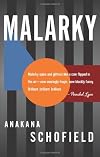
One of those books that hangs loose in your head, rattled around a bit, then shoots a shaft of light through your heart. The tale is of a woman and her family- she is an unreliable narrator and so fascinating- she is lonely and destroyed by her loneliness but rather than wallow, she takes a sort of mad control of herself and those about her. She does not go quietly.
I loved all the expressions that come out of her mind, “our woman”, and the thoughts. I felt for her as she becomes show more unhinged, loses the thread. I won’t forget her.
A great read. Like the author’s Martin John, a wee bit disturbing, unsettling. I’m impressed with the author’s ability to dance around madness. show less
I loved all the expressions that come out of her mind, “our woman”, and the thoughts. I felt for her as she becomes show more unhinged, loses the thread. I won’t forget her.
A great read. Like the author’s Martin John, a wee bit disturbing, unsettling. I’m impressed with the author’s ability to dance around madness. show less
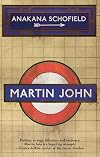
Disconcerting probably best sums up Martin John. It is undoubtedly a tour de force. Anakana Schofield has imagined a thoroughly distasteful and disturbed individual and sustained a close first person narration of his actions and thoughts for much of the novel. I suppose it is a sort of achievement. Of course his thoughts are rather random, fixated, and perverse. It is not pleasant to be inside his head for any length of time. And it is unclear how much of the surrounding details we can fully show more trust.
I don’t know if a novel like this gives us any insight into the mind of a seriously disturbed individual. With such extremes, how can the reader ever judge? We are either forced to accept the novelist’s point of view whole, or reject it entirely, I think. Or perhaps we vacillate between those poles as we push on to the end of the book. In the end, I guess I come down on the side of not thinking that I learn much through such a book despite its technical achievement. And so, not recommended. show less
I don’t know if a novel like this gives us any insight into the mind of a seriously disturbed individual. With such extremes, how can the reader ever judge? We are either forced to accept the novelist’s point of view whole, or reject it entirely, I think. Or perhaps we vacillate between those poles as we push on to the end of the book. In the end, I guess I come down on the side of not thinking that I learn much through such a book despite its technical achievement. And so, not recommended. show less
Lists
Awards


You May Also Like


Associated Authors
Statistics
- Works
- 5
- Also by
- 2
- Members
- 349
- Popularity
- #68,499
- Rating
- 3.6
- Reviews
- 29
- ISBNs
- 22
- Languages
- 1
- Favorited
- 1