

Gerald Vizenor
Author of The Heirs of Columbus
About the Author
Gerald Vizenor is Distinguished Professor of American Studies at the University of New Mexico and a professor emeritus of American studies at the University of California, Berkeley. He is the author or editor of more than thirty books, including Survivance: Narratives of Native Presence, Manifest show more Manners: Narratives on Postindian Survivance, and Native Storiers: Five Selections, all published by the University of Nebraska Press show less
Works by Gerald Vizenor
Narrative Chance: Postmodern Discourse on Native American Indian Literatures (American Indian Literature and Critical Studies Series) (1989) 42 copies
Summer in the Spring: Anishinaabe Lyric Poems and Stories (American Indian Literature and Critical Studies Series) (1981) 37 copies, 1 review
Associated Works
When the Light of the World Was Subdued, Our Songs Came Through: A Norton Anthology of Native Nations Poetry (2020) — Contributor — 378 copies, 4 reviews
The Year's Best Fantasy and Horror: Tenth Annual Collection (1997) — Contributor — 301 copies, 5 reviews
Walking the Clouds: An Anthology of Indigenous Science Fiction (2012) — Author — 218 copies, 3 reviews
Talking Leaves: Contemporary Native American Short Stories (1991) — Contributor — 218 copies, 2 reviews
Gone to Croatan: Origins of North American Dropout Culture (1994) — Contributor — 110 copies, 5 reviews
Songs from This Earth on Turtle's Back: Contemporary American Indian Poetry (1983) — Contributor — 73 copies
I Tell You Now: Autobiographical Essays by Native American Writers (1987) — Contributor — 61 copies, 1 review
Nothing But the Truth: An Anthology of Native American Literature (2000) — Contributor — 54 copies, 2 reviews
Earth Power Coming: Short Fiction in Native American Literature (1983) — Contributor — 37 copies, 1 review
The Lightning Within: An Anthology of Contemporary American Indian Fiction (1991) — Contributor — 32 copies
Without Discovery: A Native Response to Columbus (Turning Point Series) (1992) — Contributor — 17 copies
Buried Roots and Indestructible Seeds: The Survival Of American Indian Life In Story, History, and Spirit (1993) — Contributor — 16 copies
True West: Authenticity and the American West (Postwestern Horizons) (2004) — Contributor — 16 copies
Tagged
Common Knowledge
- Birthdate
- 1934-10-22
- Gender
- male
- Education
- New York University
Harvard University
University of Minnesota - Occupations
- writer
Director of Native American Studies, University of California, Berkeley
human rights activist - Organizations
- University of California, Berkeley
- Awards and honors
- Western Literature Association's Distinguished Achievement Award (2005)
- Nationality
- Anishinaabe
- Birthplace
- Minneapolis, Minnesota, USA
- Places of residence
- Minneapolis, Minnesota, USA
- Map Location
- USA
Members
Reviews
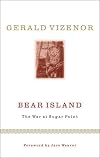
A lyrical telling of a bizarre moment in U.S. military history. Reported as "the last Indian war" by contemporary newspapers, in October 1898 an infantry company was dispatched to Sugar Point to retrieve an elderly medicine man who had escaped being apprehended by a marshal after refusing to testify in court.
This massive overreaction led to a standoff on Bear Island that exploded into a firefight after a soldier accidentally discharged his weapon. Vastly outnumbered by the army, the band of show more warriors routed their enemies in one day.
The poem covers recounts the events with a mournful and sparse beauty. The author is able to expose the pattern of injustice against the native people while not glorifying the senseless loss that war always engenders.
The dead and injured soldiers are each named and humanized and the whole disaster cast as a senseless tragedy.
This was an educational and moving read that will stay with me. show less
This massive overreaction led to a standoff on Bear Island that exploded into a firefight after a soldier accidentally discharged his weapon. Vastly outnumbered by the army, the band of show more warriors routed their enemies in one day.
The poem covers recounts the events with a mournful and sparse beauty. The author is able to expose the pattern of injustice against the native people while not glorifying the senseless loss that war always engenders.
The dead and injured soldiers are each named and humanized and the whole disaster cast as a senseless tragedy.
This was an educational and moving read that will stay with me. show less
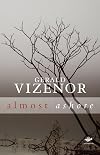
This collection twinkles with life, flickers in the breeze and is lively with chattering birds. Reading through, I found a theme in the repetition of the word "tease." It appears in many verses and draws my attention to the clipped lines and playful observations.
The lines speak to a deep history of colonization and pain. But the beauty of nature shines through, conveying the rich nuance of existence. Although frequently longer than haiku, the author evokes the power of that form to evoke an show more extremely specific place and moment, which then evaporates leaving the reader gasping.
Favorite Poems: Family Photograph, Raising the Flag, Winter Camp, Snow Crowns, September Light, Tyranny of Moths, Camp Grounds, Homewood Hospital, Paper Plane show less
The lines speak to a deep history of colonization and pain. But the beauty of nature shines through, conveying the rich nuance of existence. Although frequently longer than haiku, the author evokes the power of that form to evoke an show more extremely specific place and moment, which then evaporates leaving the reader gasping.
Favorite Poems: Family Photograph, Raising the Flag, Winter Camp, Snow Crowns, September Light, Tyranny of Moths, Camp Grounds, Homewood Hospital, Paper Plane show less
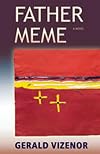
University of New Mexico Press, Hardcover $21.95 (120pp) 978-0-8263-4515-8
Told from the difficult and rarely employed second person point of view, Vizenor’s story is one of altar boy abuse on a Native American reservation, at the hands of the Catholic clergy. The narrator, a retired journalist and former altar boy, offers a captivating account of his rejection of victimization, a rejection which ends in the eventual sacrifice of the priest.
Vizenor employs explicit prose and salient show more detailing to haunt with a realism not unlike creative nonfiction. His is a story worthy of staunch attention, a story too arresting to ignore. From the arrival of Father Meme on the reservation to the planning and staging of the resistance known as the Fourteen Torments, the altar boys draw the reader in with a sense of shared suffering and shared outrage. Entangled with the universality of boyhood mischievousness are graphic tales of sexual abuse and unanswered cries for help. “The wicked priest was invulnerable, madame, and forever saved from criminal prosecution. Only some saints, demons, stray priests, certain spies, and presidents enjoy such aegis, patronage, and absolute immunity. Surely you can appreciate that sacrifice was the only remedy.” It is this notion, that of the invulnerability of the priest, that causes the altar boys to seize the reigns of destiny and unequivocally end their abuse.
There is an ominous sense of doom surrounding Father Meme. The “coldness” of Father Meme is reiterated through descriptions such as his likeness to a “winter cannibal” and the inclusion of tales of masturbation over an icy fish hole. Winter is often used to suggest death, as in Robert Frost’s “Stopping by the Woods on a Snowy Evening” or to suggest a lack of hope, like in C.S. Lewis’ The Lion, The Witch and The Wardrobe. Father Meme symbolizes both the element of death and the hopelessness of the altar boys, a hopelessness doomed to continue as long as he is alive. “Father Meme is dead,” declares the narrator, “deservedly beaten and pushed under the ice.” It is a fitting end to a decidedly icy figure.
Gerald Vizenor, a Native American writer and member of the Minnesota Chippewa Tribe, has over 25 books to his credit including Griever: An American Monkey King in China. He is a recipient of the New York Fiction Collective Prize and an American Book Award. Vizenor is a Distinguished Professor of American studies, University of New Mexico, and professor emeritus, University of California, Berkeley.
by Shewanda Pugh Garner
Copyright ForeWord Magazine, Volume 12, no. 1 show less
Told from the difficult and rarely employed second person point of view, Vizenor’s story is one of altar boy abuse on a Native American reservation, at the hands of the Catholic clergy. The narrator, a retired journalist and former altar boy, offers a captivating account of his rejection of victimization, a rejection which ends in the eventual sacrifice of the priest.
Vizenor employs explicit prose and salient show more detailing to haunt with a realism not unlike creative nonfiction. His is a story worthy of staunch attention, a story too arresting to ignore. From the arrival of Father Meme on the reservation to the planning and staging of the resistance known as the Fourteen Torments, the altar boys draw the reader in with a sense of shared suffering and shared outrage. Entangled with the universality of boyhood mischievousness are graphic tales of sexual abuse and unanswered cries for help. “The wicked priest was invulnerable, madame, and forever saved from criminal prosecution. Only some saints, demons, stray priests, certain spies, and presidents enjoy such aegis, patronage, and absolute immunity. Surely you can appreciate that sacrifice was the only remedy.” It is this notion, that of the invulnerability of the priest, that causes the altar boys to seize the reigns of destiny and unequivocally end their abuse.
There is an ominous sense of doom surrounding Father Meme. The “coldness” of Father Meme is reiterated through descriptions such as his likeness to a “winter cannibal” and the inclusion of tales of masturbation over an icy fish hole. Winter is often used to suggest death, as in Robert Frost’s “Stopping by the Woods on a Snowy Evening” or to suggest a lack of hope, like in C.S. Lewis’ The Lion, The Witch and The Wardrobe. Father Meme symbolizes both the element of death and the hopelessness of the altar boys, a hopelessness doomed to continue as long as he is alive. “Father Meme is dead,” declares the narrator, “deservedly beaten and pushed under the ice.” It is a fitting end to a decidedly icy figure.
Gerald Vizenor, a Native American writer and member of the Minnesota Chippewa Tribe, has over 25 books to his credit including Griever: An American Monkey King in China. He is a recipient of the New York Fiction Collective Prize and an American Book Award. Vizenor is a Distinguished Professor of American studies, University of New Mexico, and professor emeritus, University of California, Berkeley.
by Shewanda Pugh Garner
Copyright ForeWord Magazine, Volume 12, no. 1 show less

I would love to say that Vizenor turns genre on its head, forging a mystical exhilarating hybrid between fiction and nonfiction; that he, unlike other post-whatever writers, always considers how to use fewer words as opposed to succumbing to logorrhea; and how he eviscerates and transvalues everything you thought you knew about native americans. But I'm not going to say that.I'm going to say that the secret ecstatic nonlogical spot deep within my neural system that I thought no one else knew show more about, that holy unnameable spot that I thought no one else could touch, he touches it it and makes it glow blue like the hands of the healers that populate his works. Thank you Gerald Vizenor for making me feel so weird. show less
Lists
Awards


You May Also Like


Associated Authors
Statistics
- Works
- 60
- Also by
- 26
- Members
- 1,098
- Popularity
- #23,391
- Rating
- 3.8
- Reviews
- 15
- ISBNs
- 118
- Languages
- 1
- Favorited
- 1
