
Tom Jackson (4) (1972–)
Author of The Elements Book: A Visual Encyclopedia of the Periodic Table
For other authors named Tom Jackson, see the disambiguation page.
Series
Works by Tom Jackson
The Elements Book: A Visual Encyclopedia of the Periodic Table (2017) — Author — 361 copies, 2 reviews
The Magic School Bus Presents: The Rainforest: A Nonfiction Companion to the Original Magic School Bus Series (2014) 311 copies
The Magic School Bus Presents: Planet Earth: A Nonfiction Companion to the Original Magic School Bus Series (2014) 240 copies, 1 review
The Magic School Bus Presents: Sea Creatures: A Nonfiction Companion to the Original Magic School Bus Series (2014) 223 copies
The Magic School Bus Presents: Volcanoes & Earthquakes: A Nonfiction Companion to the Original Magic School Bus Series (2014) 218 copies
The Magic School Bus Presents: Our Solar System: A Nonfiction Companion to the Original Magic School Bus Series (2014) 170 copies, 2 reviews
The Magic School Bus Presents: Dinosaurs: A Nonfiction Companion to the Original Magic School Bus Series (2014) 162 copies
The Magic School Bus Presents: Insects: A Nonfiction Companion to the Original Magic School Bus Series (2014) 129 copies, 1 review
Engineering: An Illustrated History from Ancient Craft to Modern Technology (2016) 109 copies, 1 review
Psychology: An Illustrated History of the Mind from Hypnotism to Brain Scans (2018) 16 copies, 1 review
The Short Story of Science: A Pocket Guide to Key Histories, Experiments, Theories, Instruments and Methods (2022) 10 copies
Endangered Animals Atlas: A Journey Across the World and into the Wild (Amazing Adventures) (2023) 4 copies, 1 review
Out of Balance 1 copy
Tagged
Common Knowledge
- Legal name
- Jackson, Tom William
- Birthdate
- 1972-07-28
- Gender
- male
- Education
- University of Bristol (Zoology)
- Occupations
- Zoologe
Sachbuchautor - Nationality
- Vereinigtes Königreich
Members
Reviews
Physics: An Illustrated History of the Foundations of Science (Ponderables 100 Breakthroughs That Changed History Who Did What When) (Ponderables 100 Breakthroughs Taht Changed History) by Tom Jackson

In November, 1887, the physicists Albert Michelson and Edward Morley revolutionized physics by not finding evidence of a mysterious, ghostly substance they called the luminiferous ether, which was thought to serve as a medium for light waves.
Thus, November is a good month to consider reading this wonderfully interesting book by Tom Jackson which presents 100 of the greatest breakthroughs in physics.
Physics provides, in a chronological progression, significant developments in both show more cosmological and elementary particle physics. That is, this is the story of how we have found out about both the smallest and the largest scales known to us in the universe. As the author states, “Physics in the foundation of all science. Without it all of our other knowledge would crumble and collapse.” [And math is the foundation of physics. But Jackson manages to lay out the magic of physics without requiring readers to decipher equations.]
The author has a daunting task. Whole books have been written on each of the subjects he covers in only one or two pages. But he does an excellent job, and will no doubt inspire readers to continue investigating the subjects on their own.
After he takes us through 100 discoveries, explained with the help of fascinating photos and diagrams, he then goes back to the basics, appending a section on concepts like mass, force, waves and electromagnetism. Next, he includes a short explication of today’s “imponderables”: a review of questions still in need of answers, such as the nature of dark energy. A short biography of some of the greatest physicists follows. He does a nice job here too, managing to convey the gist of their discoveries with some of their quirks and “fun stuff” about them. (However, some may view this as an unfortunate distraction in the book. I suppose it depends upon the reader. Richard Feynman, who played bongos, inter alia, resented that his eccentricities were used to give, as one publisher said, “a human approach to a presentation of the difficult matter that theoretical physics represents." Feynman wrote to the publisher, quite irritated, as shown in the quote below.)
"Dear Sir,
The fact that I beat a drum has nothing to do with the fact that I do theoretical physics. Theoretical physics is a human endeavor, one of the higher developments of human beings, and the perpetual desire to prove that people who do it are human by showing that they do other things that a few other humans do (like playing bongo drums) is insulting to me.
I am human enough to tell you to go to hell.
Yours, RPF"
Finally, a large foldout included with the book gives over 1,000 milestone facts. This foldout is outstanding. On one side, it features such useful information as a table of derived units (pascals, joules, watts and so on); a great list of constants, providing their symbols, mathematical values, and relative standard uncertainties; conversion tables; and the periodic table. The other side is a timeline, showing important events that occurred simultaneously in four categories: Physics, Science & Invention, World Events, and Culture. Some of the "Cultural Events" included are quite odd, like: “1801: The Union Jack is adopted as the official British flag.” But the worst, in my opinion, is the 2013 entry. While the entry for Physics is the discovery of the Higgs Boson - a truly monumental event, the entry for Culture is “2013: Michael Jackson’s family accuse the dead musician’s promotors of negligence and sue for $40 billion.” Really? I shudder to think what that means if that is how “culture” is defined for 2013.
Evaluation: Small quibbles aside, this book would make an excellent gift or addition to anyone’s library, either as a coffee table book for intermittent perusal; as a book to excite young readers to look further into some of the many exciting findings; or as an introduction to the most important things we know about what we are, where we came from, and where we might be heading. show less
Thus, November is a good month to consider reading this wonderfully interesting book by Tom Jackson which presents 100 of the greatest breakthroughs in physics.
Physics provides, in a chronological progression, significant developments in both show more cosmological and elementary particle physics. That is, this is the story of how we have found out about both the smallest and the largest scales known to us in the universe. As the author states, “Physics in the foundation of all science. Without it all of our other knowledge would crumble and collapse.” [And math is the foundation of physics. But Jackson manages to lay out the magic of physics without requiring readers to decipher equations.]
The author has a daunting task. Whole books have been written on each of the subjects he covers in only one or two pages. But he does an excellent job, and will no doubt inspire readers to continue investigating the subjects on their own.
After he takes us through 100 discoveries, explained with the help of fascinating photos and diagrams, he then goes back to the basics, appending a section on concepts like mass, force, waves and electromagnetism. Next, he includes a short explication of today’s “imponderables”: a review of questions still in need of answers, such as the nature of dark energy. A short biography of some of the greatest physicists follows. He does a nice job here too, managing to convey the gist of their discoveries with some of their quirks and “fun stuff” about them. (However, some may view this as an unfortunate distraction in the book. I suppose it depends upon the reader. Richard Feynman, who played bongos, inter alia, resented that his eccentricities were used to give, as one publisher said, “a human approach to a presentation of the difficult matter that theoretical physics represents." Feynman wrote to the publisher, quite irritated, as shown in the quote below.)
"Dear Sir,
The fact that I beat a drum has nothing to do with the fact that I do theoretical physics. Theoretical physics is a human endeavor, one of the higher developments of human beings, and the perpetual desire to prove that people who do it are human by showing that they do other things that a few other humans do (like playing bongo drums) is insulting to me.
I am human enough to tell you to go to hell.
Yours, RPF"
Finally, a large foldout included with the book gives over 1,000 milestone facts. This foldout is outstanding. On one side, it features such useful information as a table of derived units (pascals, joules, watts and so on); a great list of constants, providing their symbols, mathematical values, and relative standard uncertainties; conversion tables; and the periodic table. The other side is a timeline, showing important events that occurred simultaneously in four categories: Physics, Science & Invention, World Events, and Culture. Some of the "Cultural Events" included are quite odd, like: “1801: The Union Jack is adopted as the official British flag.” But the worst, in my opinion, is the 2013 entry. While the entry for Physics is the discovery of the Higgs Boson - a truly monumental event, the entry for Culture is “2013: Michael Jackson’s family accuse the dead musician’s promotors of negligence and sue for $40 billion.” Really? I shudder to think what that means if that is how “culture” is defined for 2013.
Evaluation: Small quibbles aside, this book would make an excellent gift or addition to anyone’s library, either as a coffee table book for intermittent perusal; as a book to excite young readers to look further into some of the many exciting findings; or as an introduction to the most important things we know about what we are, where we came from, and where we might be heading. show less
Engineering: An Illustrated History from Ancient Craft to Modern Technology (100 Ponderables) by Tom Jackson
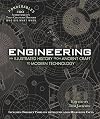
Ever since I can remember, I have been fascinated by feats of engineering, even though I wouldn’t have known back then they were products of “engineering.” For example, I was obsessed with knowing more about the improbable construction of pyramids, how it was that voices could be sent over telephones, how tunnels could be built underwater, and more recently, how the world wide web could be so fast.
All of these topics and more are part of this overview of engineering feats from the show more beginning of civilization. As the author writes:
“The scientists who push back the boundaries of knowledge are rightly applauded, but it is the engineers who turn that knowledge into something that changes the world.”
The book reviews all sorts of machines that enabled people to pedal, sail, fly, communicate over long distances, and power up any number of devices. The author writes about the refrigerator, the transcontinental railroad, the Panama Canal, lasers, satellites, LCDs, DVDs, MRIs, smartphones, and even manmade islands and coastlines.
Jackson not only focuses on individual engineering achievements, but also reviews the basics of engineering, from the fundamentals of internal combustion, to the structural engineering that enables bridges to span large gaps, to a look at the different materials that make it all possible. You might be surprised to learn that mud, a simple mixture of earth and water, is surprisingly strong. The Great Mosque at Djenné, in Mali, is made of mud, still exists, and is now 800 years old!
He adds a list of “imponderables” - what possible innovations are in our future? Here he discusses Elon Musk’s proposed Hyperloop; the challenge of building in space; robots; clean fuels; and even how engineering might solve climate change.
A short biography of some of the greatest engineers follows. The author does a nice job here too, managing to convey the gist of their discoveries along with some of their quirks and “fun stuff” about them. For example, Heron (or Hero) of Alexandria was born around 10 CE, and yet described hundreds of mechanical devices, including dancing puppets, coin-operated machines, and a fire engine.
John Roebling, whose name many will recognize as the designer of the Brooklyn Bridge, died of tetanus after pouring unsterilized well-water on a wound. Nikola Tesla quarreled with Edison and went to work for Edison's rival Westinghouse. Tesla died in poverty however (he liked to gamble) at The New Yorker Hotel in Manhattan. Elon Musk also is featured; the author reports that actor Robert Downey modeled his Iron Man character on Musk.
Finally, a large foldout included with the book gives over 1,000 milestone facts. This poster includes a timeline showing important events corresponding to engineering achievements in the areas of Culture, World Events, and Science & Invention.
Evaluation: This book would make an excellent gift, either as a coffee table book for intermittent perusal and a goad to discussion; as a book for students to help them in school; or as an introduction to the most important artifacts and achievements in civilization. show less
All of these topics and more are part of this overview of engineering feats from the show more beginning of civilization. As the author writes:
“The scientists who push back the boundaries of knowledge are rightly applauded, but it is the engineers who turn that knowledge into something that changes the world.”
The book reviews all sorts of machines that enabled people to pedal, sail, fly, communicate over long distances, and power up any number of devices. The author writes about the refrigerator, the transcontinental railroad, the Panama Canal, lasers, satellites, LCDs, DVDs, MRIs, smartphones, and even manmade islands and coastlines.
Jackson not only focuses on individual engineering achievements, but also reviews the basics of engineering, from the fundamentals of internal combustion, to the structural engineering that enables bridges to span large gaps, to a look at the different materials that make it all possible. You might be surprised to learn that mud, a simple mixture of earth and water, is surprisingly strong. The Great Mosque at Djenné, in Mali, is made of mud, still exists, and is now 800 years old!
He adds a list of “imponderables” - what possible innovations are in our future? Here he discusses Elon Musk’s proposed Hyperloop; the challenge of building in space; robots; clean fuels; and even how engineering might solve climate change.
A short biography of some of the greatest engineers follows. The author does a nice job here too, managing to convey the gist of their discoveries along with some of their quirks and “fun stuff” about them. For example, Heron (or Hero) of Alexandria was born around 10 CE, and yet described hundreds of mechanical devices, including dancing puppets, coin-operated machines, and a fire engine.
John Roebling, whose name many will recognize as the designer of the Brooklyn Bridge, died of tetanus after pouring unsterilized well-water on a wound. Nikola Tesla quarreled with Edison and went to work for Edison's rival Westinghouse. Tesla died in poverty however (he liked to gamble) at The New Yorker Hotel in Manhattan. Elon Musk also is featured; the author reports that actor Robert Downey modeled his Iron Man character on Musk.
Finally, a large foldout included with the book gives over 1,000 milestone facts. This poster includes a timeline showing important events corresponding to engineering achievements in the areas of Culture, World Events, and Science & Invention.
Evaluation: This book would make an excellent gift, either as a coffee table book for intermittent perusal and a goad to discussion; as a book for students to help them in school; or as an introduction to the most important artifacts and achievements in civilization. show less
Philosophy: An Illustrated History of Thought (Ponderables 100 Ideas That Changed Histoy Who Did What When) (Ponderables: 100 Ideas That Changed the World: Who Did What When) by Tom Jackson
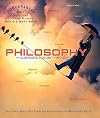
The study of philosophy has the reputation of being dry or boring, but nothing could be further from the case. In fact, almost every question you have asked yourself or argue about at parties has been thoroughly considered by philosophers: Has the universe always existed? Is human nature to blame for aggression and greed? Is there such a thing as “natural law” governing morality, or must we have an overlay of religion to keep us decent? Is the female mind the same as the male mind? Do show more our brains operate like computers, or is there a soul? How do our ways of seeing affect our realities?
Many of you will remember the scene in The Little Prince by Antoine de Saint-Exupéry in which the narrator explains that, as a young boy, he once drew a picture of a boa constrictor with an elephant digesting in its stomach. To his surprise, every adult who saw the picture mistakenly interpreted it as a drawing of a hat. Readers were delighted, but actually the nature of this illusion had already been explored in depth by the philosopher Ludwig Wittgenstein, who used the “duckrabbit” to show how different perspectives could identify the creature as either a duck or a rabbit.
In fact, you will learn the origin of many popular cultural memes in this book (as well as the origin of the idea of “memetics”).
Readers are bound to find much of interest in this colorful guide to 100 of the greatest ideas in the history of thought.
Philosophy: An Illustrated History reviews, in a chronological progression, significant developments in thinking about ethics, religion, politics, justice, pleasure, friendship, language, perceptual frameworks, and how we make decisions, among other ideas.
The author does an excellent job in explaining complex doctrines succinctly and understandably. Obviously he can’t be totally comprehensive, but for those wondering about ideas you hear about in conversation or see on t-shirts, like “Schrödinger's cat,” “The Liar’s Paradox” or “paradigm shifts,” this book will give you a well-written summary.
After the author reviews his selection of the top 100 philosophical concepts - explained with the help of photos and sidebars, he then explores the field of philosophy itself, appending a section on schools of philosophy. For each school, he provides a short synopsis of its main thrust, as well as a list of the school's leading figures, major works, notable quotes, and relevant questions for discussion (e.g., Do ends justify the means? Does everything happen for a reason?)
He extends his list of top ideas explored in the past with a glimpse at new issues being debated by philosophers, such as whether or not it is fair that justice is distributed unequally among rich and poor.
A short biography of some of the greatest philosophers follows. The author does a nice job here too, managing to convey the gist of their discoveries along with some of their quirks and “fun stuff” about them. (For example, Plato’s real name was Aristocles, but (as some stories claim) his wrestling teacher gave him the name of "Plato" meaning “broad” in reference to Aristocles' wide figure and wrestling stance.)
Finally, a large foldout included with the book gives over 1,000 milestone facts. This poster includes a timeline showing important events corresponding to the expression of philosophical ideas in the areas of Culture, World Events, and Science & Invention.
Evaluation: This book would make an excellent gift, either as a coffee table book for intermittent perusal and a goad to discussion; as a book for students to help them in school; or as an introduction to the most important things we know about what we are, where we came from, and where we might be heading.
Shelter Harbor Press is producing a series of these graphical books on breakthroughs that changed history. Previous topics have been about the elements, mathematics, physics, and the universe. show less
Many of you will remember the scene in The Little Prince by Antoine de Saint-Exupéry in which the narrator explains that, as a young boy, he once drew a picture of a boa constrictor with an elephant digesting in its stomach. To his surprise, every adult who saw the picture mistakenly interpreted it as a drawing of a hat. Readers were delighted, but actually the nature of this illusion had already been explored in depth by the philosopher Ludwig Wittgenstein, who used the “duckrabbit” to show how different perspectives could identify the creature as either a duck or a rabbit.
In fact, you will learn the origin of many popular cultural memes in this book (as well as the origin of the idea of “memetics”).
Readers are bound to find much of interest in this colorful guide to 100 of the greatest ideas in the history of thought.
Philosophy: An Illustrated History reviews, in a chronological progression, significant developments in thinking about ethics, religion, politics, justice, pleasure, friendship, language, perceptual frameworks, and how we make decisions, among other ideas.
The author does an excellent job in explaining complex doctrines succinctly and understandably. Obviously he can’t be totally comprehensive, but for those wondering about ideas you hear about in conversation or see on t-shirts, like “Schrödinger's cat,” “The Liar’s Paradox” or “paradigm shifts,” this book will give you a well-written summary.
After the author reviews his selection of the top 100 philosophical concepts - explained with the help of photos and sidebars, he then explores the field of philosophy itself, appending a section on schools of philosophy. For each school, he provides a short synopsis of its main thrust, as well as a list of the school's leading figures, major works, notable quotes, and relevant questions for discussion (e.g., Do ends justify the means? Does everything happen for a reason?)
He extends his list of top ideas explored in the past with a glimpse at new issues being debated by philosophers, such as whether or not it is fair that justice is distributed unequally among rich and poor.
A short biography of some of the greatest philosophers follows. The author does a nice job here too, managing to convey the gist of their discoveries along with some of their quirks and “fun stuff” about them. (For example, Plato’s real name was Aristocles, but (as some stories claim) his wrestling teacher gave him the name of "Plato" meaning “broad” in reference to Aristocles' wide figure and wrestling stance.)
Finally, a large foldout included with the book gives over 1,000 milestone facts. This poster includes a timeline showing important events corresponding to the expression of philosophical ideas in the areas of Culture, World Events, and Science & Invention.
Evaluation: This book would make an excellent gift, either as a coffee table book for intermittent perusal and a goad to discussion; as a book for students to help them in school; or as an introduction to the most important things we know about what we are, where we came from, and where we might be heading.
Shelter Harbor Press is producing a series of these graphical books on breakthroughs that changed history. Previous topics have been about the elements, mathematics, physics, and the universe. show less
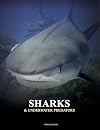
Sharks & Underwater Predators by Tom Jackson is the ideal coffee table book if you want stunning images and informative captions.
I have been reading a number of books like this, ones that allow me to take a break from both the nonfiction and fictional worlds some of my other reading takes me into. This volume is so effective because the photographs make me want to look closely at them, try to decipher more information from them. At the same time the captions give me some insight and, more show more important for someone like me, information I can use to look up more details on the species or habitats that pique my interest.
If you want a coffee table book that is both attractive and informative, this will make you happy. Additionally, if you want a book for a young reader to get them interested in science, this is an excellent option, especially if you engage with them while they go through it and show them how to find additional information.
Reviewed from a copy made available by the publisher via NetGalley. show less
I have been reading a number of books like this, ones that allow me to take a break from both the nonfiction and fictional worlds some of my other reading takes me into. This volume is so effective because the photographs make me want to look closely at them, try to decipher more information from them. At the same time the captions give me some insight and, more show more important for someone like me, information I can use to look up more details on the species or habitats that pique my interest.
If you want a coffee table book that is both attractive and informative, this will make you happy. Additionally, if you want a book for a young reader to get them interested in science, this is an excellent option, especially if you engage with them while they go through it and show them how to find additional information.
Reviewed from a copy made available by the publisher via NetGalley. show less
Awards


You May Also Like


Associated Authors
Statistics
- Works
- 112
- Members
- 4,180
- Popularity
- #6,023
- Rating
- 4.0
- Reviews
- 25
- ISBNs
- 711
- Languages
- 16