
Brayton Harris
Author of Admiral Nimitz: The Commander of the Pacific Ocean Theater
About the Author
Brayton Harris is a retired U.S. Navy captain who served as a military censor in Korea and as a coordinator of in-country media activities during two tours in Vietnam
Works by Brayton Harris
Johann Gutenberg and the invention of printing (A Franklin Watts biography) (1972) 24 copies, 1 review
Tagged
Common Knowledge
- Gender
- male
Members
Reviews
When I received this book in the mail, I was doubtful that a book so thin could do its subject matter any justice. Afterall, we are talking about one of the major allied figures of World War Two, none other than Admiral Chester Nimitz. I was wrong. With admirable economy of words Brayton Harris manages to give the reader a good look at a man whose deeds in the service of the United States Navy during war and peace were larger than life. Yet the quiet, unassuming manner of Nimitz meant that show more other more colorful and egotistical personalities such as MacArthur and Halsey became associated with the American victory in the Pacific while the name of Nimitz, over the years has faded in public recognition. Harris's biography reminds us of the enormous role played by Admiral Nimitz in winning the war against Japan as well as his other contributions which have shaped the current American navy. Although a more detailed record of Nimitz's career and personal life would be appreciated in another treatment, Brayton Harris's biography is a very enjoyable and readable introduction to the life of a man worthy of great esteem. show less
 This review was written for LibraryThing Early Reviewers.
Admiral Nimitz: The Commander of the Pacific Ocean Theater is an extraordinarily interesting and revealing book on at least two levels. Early in the book, Brayton Harris begins building a profile of Nimitz as a remarkable leader – “a hands-off commander” who “did not smother subordinates.” Harris attributes this to the Navy need to train officers for independent action. Nimitz himself was tested early and often with command responsibilities; first as the commander of a gunboat, show more then a destroyer, then four different submarines – all six of these afloat commands within his first six years of commissioned service. As a young officer, Nimitz learned to lead and to delegate, skills that would be tested on a much larger scale during World War II. Every young military officer in any branch of US military service could learn much from the positive example set by Nimitz and described by Harris.
On a second level, Harris describes the growing tension within and between the US military services spawned by the emerging importance of both air power and nuclear weapons. Aircraft carriers displaced battleships as the core element of naval power; long-range land-based aircraft threatened the survival of all surface ships; and nuclear weapons, only deliverable by heavy bombers in the 1940s, seemed to diminish the importance of both land and sea power. Concurrent with his retirement, Nimitz addressed these issues publicly arguing that aircraft carriers, heavy surface ships, and submarines – not strategic bombers – were keys to projecting US national power. His comments and Secretary of Defense Louis Johnson’s action cancelling construction of a new aircraft carrier, the United States, in favor of building Air Force B-36 bombers, intensified service rivalries. Senior naval officers began an organized assault, known as “The Revolt of the Admirals,” on both the B-36 program and the Air Force.
Unfortunately, in an otherwise excellent biography, Harris defends the irrationality of that postwar period by labeling the deployment of thirty B-29s to Europe as one of several “headline-grabbing stunts” by the Air Force. In fact, in 1948 the Air Force routinely rotated one squadron (fifteen aircraft) from the United States to forward bases in Europe. When the Soviets restricted surface access to Berlin in 1948, the Air Force began airlifting supplies to the US garrison in the city. President Truman approved the dispatch of a substantial number of jet fighters and another thirty B-29s to Germany as a contingency force should the crisis escalate. More B-29s arrived later that summer. Objective analysis suggests that rather than a “headline-grabbing stunt” to inflate the Air Force budget, this action was a prudent response to an unfolding Soviet threat to the US presence in Berlin. show less
On a second level, Harris describes the growing tension within and between the US military services spawned by the emerging importance of both air power and nuclear weapons. Aircraft carriers displaced battleships as the core element of naval power; long-range land-based aircraft threatened the survival of all surface ships; and nuclear weapons, only deliverable by heavy bombers in the 1940s, seemed to diminish the importance of both land and sea power. Concurrent with his retirement, Nimitz addressed these issues publicly arguing that aircraft carriers, heavy surface ships, and submarines – not strategic bombers – were keys to projecting US national power. His comments and Secretary of Defense Louis Johnson’s action cancelling construction of a new aircraft carrier, the United States, in favor of building Air Force B-36 bombers, intensified service rivalries. Senior naval officers began an organized assault, known as “The Revolt of the Admirals,” on both the B-36 program and the Air Force.
Unfortunately, in an otherwise excellent biography, Harris defends the irrationality of that postwar period by labeling the deployment of thirty B-29s to Europe as one of several “headline-grabbing stunts” by the Air Force. In fact, in 1948 the Air Force routinely rotated one squadron (fifteen aircraft) from the United States to forward bases in Europe. When the Soviets restricted surface access to Berlin in 1948, the Air Force began airlifting supplies to the US garrison in the city. President Truman approved the dispatch of a substantial number of jet fighters and another thirty B-29s to Germany as a contingency force should the crisis escalate. More B-29s arrived later that summer. Objective analysis suggests that rather than a “headline-grabbing stunt” to inflate the Air Force budget, this action was a prudent response to an unfolding Soviet threat to the US presence in Berlin. show less
This review was written for LibraryThing Early Reviewers.This is a very good book. Harris portrays Nimitz the individual rather than an endless analysis of his tactics and strategy for fighting the war. The writing is very warm, like listening to someone telling the Nimitz story while sitting in a living room, in a couple of easy chairs. Understanding Nimitz the man helps put my father-in-law’s story about meeting Nimitz in perspective. My father-in-law didn’t salute Nimitz when he should have and instead chewing him out, the admiral stopped show more and asked why he didn’t salute.
Nimitz talked with him for a minute and reminded him to salute next time.
One can only hope that Brayton Harris will write similar biographies of the other five star admirals. show less
Nimitz talked with him for a minute and reminded him to salute next time.
One can only hope that Brayton Harris will write similar biographies of the other five star admirals. show less
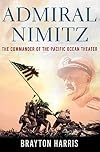
This review was written for LibraryThing Early Reviewers.In a period when biographers seem to want to communicate the worth of the subject by the heft of the volume, Brayton Harris would have made Admiral Nimitz proud with this modest, economical volume that communicates a great deal about an under-written giant of WWII history in its relatively few pages. It's perhaps fitting that the cover shows a somewhat faint image of Nimitz, above and in the background of Joe Rosenthal's famous photo of Marines raising the flag at Iwo Jima. Unlike many other show more leaders in WWII, Nimitz did not actively seek the spotlight. And while that certainly has not led history to treat him unfairly, it has led him to be overlooked relative to his importance in the Pacific Theater.
In addition to presenting the historical narrative about Nimitz as a commander, Harris writes a great deal about Nimitz' leadership style and makes a point to show how his leadership style made him an unusually effective developer of flag officers. (This point likely being under-appreciated when comparing the records of WWII leaders.)
The book also provides insight into the inter-service rivalries of the inter-war and post-war period. And Nimitz' influence on the current structure of the US armed forces can certainly be seen through the lens of history.
In summary, it's refreshing to read a briskly written account of a great leader that is chock full of great lessons for today.
Disclosure: I received copy of the book via the LibraryThing Early Reviewers program show less
In addition to presenting the historical narrative about Nimitz as a commander, Harris writes a great deal about Nimitz' leadership style and makes a point to show how his leadership style made him an unusually effective developer of flag officers. (This point likely being under-appreciated when comparing the records of WWII leaders.)
The book also provides insight into the inter-service rivalries of the inter-war and post-war period. And Nimitz' influence on the current structure of the US armed forces can certainly be seen through the lens of history.
In summary, it's refreshing to read a briskly written account of a great leader that is chock full of great lessons for today.
Disclosure: I received copy of the book via the LibraryThing Early Reviewers program show less
This review was written for LibraryThing Early Reviewers.You May Also Like


Statistics
- Works
- 6
- Members
- 175
- Popularity
- #122,546
- Rating
- 3.9
- Reviews
- 19
- ISBNs
- 11
