
Franz Hohler
Author of Es klopft
About the Author
Image credit: by Hannes Röst
Series
Works by Franz Hohler
Aller Anfang: Geschichten. Mit farbigen Bildern von Jutta Bauer (2006) — Author — 10 copies, 1 review
Franz Hohler & friends: Begegnungen mit Elias Canetti, Friedrich Dürrenmatt, Klaus Wagenbach u.v.a. (2024) 3 copies
Du 570: Die achtziger Jahre 1 copy
2000 1 copy
Associated Works
Tagged
Common Knowledge
- Canonical name
- Hohler, Franz
- Birthdate
- 1943-03-01
- Gender
- male
- Occupations
- Kabarettist
Liedermacher
Schriftsteller - Organizations
- Autorinnen und Autoren der Schweiz (AdS)
International P.E.N. - Awards and honors
- Preis der C.F. Meyer Stiftung (1968)
Deutscher Kleinkunstpreis (1973)
Hans-Sachs-Preis der Stadt Nürnberg (1976)
Oldenburger Kinderbuchpreis (1978)
Alemannischer Literaturpreis (1987)
Hans-Christian Andersen Diplom (1988) (show all 17)
Preis der Schweizerischen Schiller-Stiftung (1991)
Premio mundial "José Marti" de literatura infantil (1995)
Liederpreis des SWF (1997)
Kunstpreis der Stadt Olten (2000)
Binding-Preis für Natur- und Umweltschutz (2001)
Aargauer Kulturpreis (2002)
Kasseler Literaturpreis für grotesken Humor (2002)
Schillerpreis der ZKB (2005)
Kunstpreis der Stadt Zürich (2005)
Salzburger Stier (lifework ∙ 2008)
Conrad Ferdinand Meyer Prize (1968) - Nationality
- Switzerland
- Birthplace
- Biel, Bern, Schweiz
- Places of residence
- Zürich, Switzerland
Olten, Switzerland - Associated Place (for map)
- Switzerland
Members
Reviews

I'm not sure I read every story in here, but I really enjoyed what I did read. Wegwerfgeschichten (‘Disposable Tales’) was the first non-poetry book I've read in German and it suited my purposes perfectly: the stories within are witty, conversational and very short, like tall stories told to you in a bar over a stein of Feldschlösschen. Many of them have fun with genre conventions – one, for instance, runs in its entirety:
DETECTIVE STORY
All the evidence suggested that Slim Anton was show more responsible for the homicide of Sergeant Searle. His fingerprints had been found at the crime scene, some hairs from his left wrist adhered to the victim's wound, his alibi was implausible, and the Malay cudgel that had cost Sergeant Searle his life was a showpiece of Slim Anton's collection. Slim Anton was therefore arrested, confessed to the murder, and was sentenced to life in prison.
There is also a lot of linguistic playfulness, which appealed to me greatly. One of my favourite pieces, ‘Ectish’, which is like a kind of after-dinner story as told by Jorge Luis Borges, begins as follows:
Ectish is classed among the dead languages, and it seems to me to be the most interesting of all of them because it had only two words. The first of these is ‘m’ and the second ‘saskrüptloxptqwrstfgaksolömpääghrcks’. ‘M’ is feminine and means, ‘So what's going on now, then?’, and ‘saskrüptloxptqwrstfgaksolömpääghrcks’ is masculine and means, ‘Nothing’.
(If you're curious about pronunciation, you can hear Hohler reading ‘Ectish’ here.) Hohler is a cabaret performer, and many of these stories clearly started life as spoken-word pieces; there is a pleasantly direct, oral quality to almost all of them. Light, smart, and displaying a very dry, very Swiss sense of humour, this collection leaves me enthusiastic about reading a lot more of Hohler's extensive output. show less
DETECTIVE STORY
All the evidence suggested that Slim Anton was show more responsible for the homicide of Sergeant Searle. His fingerprints had been found at the crime scene, some hairs from his left wrist adhered to the victim's wound, his alibi was implausible, and the Malay cudgel that had cost Sergeant Searle his life was a showpiece of Slim Anton's collection. Slim Anton was therefore arrested, confessed to the murder, and was sentenced to life in prison.
There is also a lot of linguistic playfulness, which appealed to me greatly. One of my favourite pieces, ‘Ectish’, which is like a kind of after-dinner story as told by Jorge Luis Borges, begins as follows:
Ectish is classed among the dead languages, and it seems to me to be the most interesting of all of them because it had only two words. The first of these is ‘m’ and the second ‘saskrüptloxptqwrstfgaksolömpääghrcks’. ‘M’ is feminine and means, ‘So what's going on now, then?’, and ‘saskrüptloxptqwrstfgaksolömpääghrcks’ is masculine and means, ‘Nothing’.
(If you're curious about pronunciation, you can hear Hohler reading ‘Ectish’ here.) Hohler is a cabaret performer, and many of these stories clearly started life as spoken-word pieces; there is a pleasantly direct, oral quality to almost all of them. Light, smart, and displaying a very dry, very Swiss sense of humour, this collection leaves me enthusiastic about reading a lot more of Hohler's extensive output. show less
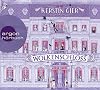
Published in English as Castle in the Clouds.
17-year-old Fanni Funke (Sophie Spark in English) has decided to drop out of high school after a miserable repeat of 10th grade. Eager to get far far away from her parents' nagging, Fanni finds a job interning at the Château Janvier luxury hotel in the Swiss Alps, a.k.a the Castle in the Clouds. Full of old-timey charm and protocol, the protagonist often feels transported into an alternate reality populated by fairytale-like characters: human and show more animal alike.
Gstaad Palace luxury hotel
I loved the episodic format of the first three quarters of the book. It sort of reminded me of The Grand Budapest Hotel 2014 movie, the parts where the young busboy tries to navigate aspects of his new job. To be fair, I can't really claim not to have found the last quarter exciting either, as I was earnestly rooting for the heroine to pull through. What I wasn't too keen on, was the very abrupt change in pacing and atmosphere. Without a gradual build-up of the atmosphere, it felt as if I had suddenly started a different book. One from the same series, but still.
Unexpectedly for me, I think that listening to the Audible version actually improved my experience. Ilka Teichmüller's rendition of 9-year-old Don is top notch; which is probably why the little devil spawn ended up becoming my favourite character from the entire book. Sadly, the English narrator doesn't quite manage to capture the same precociously patronizing tone of voice.
My least favourite aspect of the book was the romantic triangle. It was completely gratuitous, only meant to highlight the protagonist's supposed smashing good looks, which for some reason only attracts the attention of the two most desirable guys. On the one hand, I really liked how her infatuation with Tristan was only present when she saw the guy, while her feelings for Ben remain constant, and often spiral out of control when he wasn't even present. Yet I can't help but wish for Tristan to have been a bit more constant in expressing his interest for Fanni, if for no other reason than to add some unpredictability to the romantic outcome.
Score: 3.45/5 stars
I was planning to insert somewhere yet another rant on Christmas-themed media, to try to reason away my second holiday-themed read this month, but then I somehow found myself rewatching Love Actually for the umpteenth time... sooo basically not only am I far from a fashionable rebel, but also an unapologetic Hugh Grant fan.
Long story short: I wasn't expecting too much, but the German narrator made it all a rather fun experience.
=========================
Book #19 of my "read at least 20 books in German" challenge. show less
17-year-old Fanni Funke (Sophie Spark in English) has decided to drop out of high school after a miserable repeat of 10th grade. Eager to get far far away from her parents' nagging, Fanni finds a job interning at the Château Janvier luxury hotel in the Swiss Alps, a.k.a the Castle in the Clouds. Full of old-timey charm and protocol, the protagonist often feels transported into an alternate reality populated by fairytale-like characters: human and show more animal alike.
Gstaad Palace luxury hotel
I loved the episodic format of the first three quarters of the book. It sort of reminded me of The Grand Budapest Hotel 2014 movie, the parts where the young busboy tries to navigate aspects of his new job. To be fair, I can't really claim not to have found the last quarter exciting either, as I was earnestly rooting for the heroine to pull through. What I wasn't too keen on, was the very abrupt change in pacing and atmosphere. Without a gradual build-up of the atmosphere, it felt as if I had suddenly started a different book. One from the same series, but still.
Unexpectedly for me, I think that listening to the Audible version actually improved my experience. Ilka Teichmüller's rendition of 9-year-old Don is top notch; which is probably why the little devil spawn ended up becoming my favourite character from the entire book. Sadly, the English narrator doesn't quite manage to capture the same precociously patronizing tone of voice.
My least favourite aspect of the book was the romantic triangle. It was completely gratuitous, only meant to highlight the protagonist's supposed smashing good looks, which for some reason only attracts the attention of the two most desirable guys. On the one hand, I really liked how her infatuation with Tristan was only present when she saw the guy, while her feelings for Ben remain constant, and often spiral out of control when he wasn't even present. Yet I can't help but wish for Tristan to have been a bit more constant in expressing his interest for Fanni, if for no other reason than to add some unpredictability to the romantic outcome.
Score: 3.45/5 stars
I was planning to insert somewhere yet another rant on Christmas-themed media, to try to reason away my second holiday-themed read this month, but then I somehow found myself rewatching Love Actually for the umpteenth time... sooo basically not only am I far from a fashionable rebel, but also an unapologetic Hugh Grant fan.
Long story short: I wasn't expecting too much, but the German narrator made it all a rather fun experience.
=========================
Book #19 of my "read at least 20 books in German" challenge. show less

What a wonderful story. A librarian picks up the phone in a telephone booth because it has rung. On the phone was an unknown woman who asked him for help. He visited her and she handed him a packet of an ancient 8th-century manuscript. During the story you will learn the history of the old manuscript. On the one hand it is told how the unknown woman received it and on the other hand it is the story of the writer Haimo, who wrote the book as a monk in a monastery. But he was in love with show more Mary, who accompanied him on his journey through the south of Europe.
This story is written with much love for all the protagonists and also the love for old manuscripts. show less
This story is written with much love for all the protagonists and also the love for old manuscripts. show less
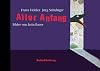
A charming little book containing short stories recounting different possibilities of the origins of the universe and life on earth. The stories are accompanied by wonderful illustrations by Jutta Bauer.
Lists
Awards


You May Also Like


Associated Authors
Statistics
- Works
- 85
- Also by
- 4
- Members
- 694
- Popularity
- #36,475
- Rating
- 4.0
- Reviews
- 14
- ISBNs
- 180
- Languages
- 6
- Favorited
- 3