
Nathalie Sarraute (1900–1999)
Author of Childhood
About the Author
Nathalie Sarraute has been an eloquent spokesperson and theorist of the new novel, as well as one of its most talented practitioners. In her essay on the art of fiction, The on The Age of Suspicion (1956), she condemned the techniques used in the novel of the past and took a stand beside show more Robbe-Grillet as a leader of the avant-garde. The novel, she feels, must express "that element of indetermination, of opacity, and mystery that one's own actions always have for the one who lives them." Her works have now become known to an international public. Her ability to render fleeting awareness and the psychological states underlying articulate speech has won both praise and disdain. Janet Flanner has called Sarraute "the only one among the New Novel experimenters who appears finally to have struck her own style---intense, observational, and personal." Of her novels, The Golden Fruits (1963)---about the Paris literary fortunes of an imaginary novel of the same name---is "the most barren of extraneous decor, the most accomplished from the standpoint of her esthetic aims" (SRSR). Tropisms (1939), her earliest (very brief) book, contains "all the raw material I have continued to develop in my later works." Her "tropisms," she says, are instinctive "sensations," or even "movements," "produced in us by the presence of others, or by objects from the outside world. [They hide] beneath the most commonplace conversations and the most everyday gestures." She regards her novels as composed of a series of tropisms of varying intensity. Sarraute died at the age of 99 in Paris, France. 020 show less
Works by Nathalie Sarraute
Isma; ou, Ce qui s'appelle rien 5 copies
Por um Sim ou Por Um Não 2 copies
Théâtre (Pour un oui ou pour un non / Elle est là / C'est beau / Isma / Le Mensonge / Le Silence) (Blanche) (2016) 2 copies
ΣΤΙΓΜΙΟΤΥΠΑ / ΤΡΟΠΙΣΜΟΙ 1 copy
ΟΙ ΧΡΥΣΟΙ ΚΑΡΠΟΙ 1 copy
Marteau 1 copy
Les Fruits D' Or 1 copy
Planetárium 1 copy
Associated Works
The Art of the Tale: An International Anthology of Short Stories (1986) — Contributor — 381 copies, 3 reviews
Tagged
Common Knowledge
- Canonical name
- Sarraute, Nathalie
- Legal name
- Tcherniak, Nathalie Ilyanova
- Birthdate
- 1900-07-18
- Date of death
- 1999-10-19
- Gender
- female
- Education
- University of Paris (1925)
University of Berlin
University of Oxford - Occupations
- lawyer
novelist
essayist
autobiographer
playwright
French Resistance - Organizations
- French Resistance
- Awards and honors
- Grand Prix national des lettres(1982)
- Relationships
- Sarraute, Claude (daughter)
Sarraute, Anne (daughter) - Short biography
- Nathalie Sarraute was born Natalia Tcherniak to a family of assimilated, intellectual Russian Jews and brought up mostly in Paris by her emigré father after her parents divorced. She wrote her first novel at age 12. She attended the Lycée Fénelon and graduated with a licence in English from the University of Paris-Sorbonne in 1920. She then spent a year studying history at Oxford University and six months studying philosophy and sociology at the University of Berlin. In 1925, she was awarded a law degree by the Faculty of Law in Paris, where she met Raymond Sarraute, also a lawyer. The couple married that same year and had three daughters. Nathalie Sarraute was a practicing member of the bar from 1926 to 1941, before dedicating herself full-time to writing. Her first book, Tropisms, a collection of 24 brief texts that appeared in 1939, marked a fresh direction in French literature. Soon thereafter, Nathalie Sarraute went into hiding under a false name to survive the Nazi Occupation of her country during World War II. She participated in the French Resistance. Later she became a leading member of the French experimental style "new novel" movement along with Alain Robbe-Grillet, Claude Simon, and Marguerite Duras. In 1964, she received the prestigious Prix International de Littérature for her novel Les Fruits d'or (The Golden Fruits). She was 83 years old when she had her first bestseller, her autobiographical novel Enfance (Childhood, 1983). In 1996, Nathalie Sarraute had the rare honor of having her works published during her lifetime in the classic Pléiade collection.
- Nationality
- Russia
France - Birthplace
- Ivanovo, Russia
- Places of residence
- Ivanova, Russia (birth)
Paris, France
Cherence, Normandy, France - Place of death
- Paris, Île-de-France, France
- Burial location
- Chérence (France)
Members
Reviews

It is astonishing, how from a text about an elderly lady grieved by an inappropriate door-knob, with more suspension points than letters, after some 30 pages a novel of such structural beauty and precision emerges, authentic and realistic down to every word, a sad workshop in thought-hearing, well worth rereading most of it twice, thrice, spasmodically, paragraph-wise, sentence-wise, to understand whose head we have been placed in in this particular passage.

Very, very well done vignettes, with some totally gratuitous, almost nonsensical theory to back them up--these are meant to be more or less objective correlatives of subjective experiences, which is fine, but they're far more interesting than that: lots of grumpy social observations and touching moments of vulnerability. There is a little bit too much romantic individualism (oh, if only we could all fly free of social norms, then we would be truly ourselves!), but there's also good criticism show more of that kind of thing. The last six were written later than the first 18, and are substantially better. show less
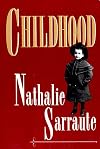
With lucid, engaging fragments, spoken in a dialogue with herself, she envelops us in the 'soft, whitish, cloudy layers' of childhood, of her childhood, a childhood spent as a pawn moved back and forth across the European chessboard by two strong-willed and distracted parents. The telling is more or less chronological, with her understanding of what her parents are doing to her growing clearer as she ages. At age eight she realizes there would never be any other home for her than the one she show more inhabits in Paris with her distant father and her cold, indifferent stepmother Vera. When her mother agrees to take her back at one point, on the condition that she not be responsible for the child's transport, her father forces her to choose where she will live.
How she loves her father, feels this connection with him, yet he is not really there, so absorbed as he is in his work. He does not show physical affection toward her. And sometimes, sometimes, when she shows her vulnerability, her need for his comfort, he shames her with his 'insulting contempt', his expectations of how she should act overpowering his ability to fulfill the role of a comforting parent.
Her stepmother's mother is the one adult figure who gives her what she needs, all the time, without reservation. But she is only there for a year. The familiar sequence of serial abandonment continues.
She feels the power of words. Vera's devastating phrase 'Because it isn't done', that 'brick wall which she drags me up against'. And then the feeling she has of being trapped in a word, when a woman says it is a 'tragedy' that she has no mother, and how she believes it, that she has no mother, feels this word 'tragedy' stretch around her...
And then, everything in me revolts, rises up, with all my strength I reject it, I smash it, I tear off this yoke, this carapace. I won't stay in this thing which that woman has imprisoned me... she doesn't know anything, she can't understand.
—Was that the first time you had been trapped like that, in a word?
—I don't remember it happening to me before. But how many times since, have I not escaped, terrified, out of words which pounce on you and hold you captive.
Yet there is also the nature of ideas and discovering she has the power to control them...
[I]deas have now become discreet, they merely pass through me, they obey me, I am the one who decides to hold them back, to make them stay as long as is necessary, when I happen to feel like examining them before I dismiss them. None of them can make me feel ashamed, none of them can affect me. Oh, how good I feel. That will never happen to me again. Never...
After two years she meets her mother again, feels her indifference toward her: 'There was no way of reaching her', with her 'calm coldness'. Her mother does not know how to treat her, thinks that at age 11 she is no longer a child, that she can talk to her as an adult.
She falls into a novel, becomes completely immersed.
Her mother returns again, they have a good time together, but the war is starting and her mother must return to Russia. Her mother can't hide the excitement she is feeling at the thought of returning, despite that it also means she is leaving her daughter again. The child's feelings spring forward and back, from despair to joy and again to despair.
She confronts her stepmother, wants her to admit to the feelings of hatred she emanates toward her. 'How can anyone hate a child?' asks Vera. She deconstructs this question, and wonders what it will mean to her when she is no longer a child.
I press my back, my arms outstretched, as hard as I can against the moss-covered earth so that all its saps can penetrate me, so that they will spread throughout my body, I look at the sky as I have never before looked at it... I melt into it, I have no limits, no end.
Vacation is ending and she will be entering a new school, a new life, a sweeping away of the wispy cloudy layers...
—Don't worry, I've finished, I won't take you any farther...
—Why now, all of a sudden, when you haven't been afraid to come this far?
—I don't really know... I don't feel like it any more... I'd like to go somewhere else... show less
Sarraute is considered to be part of the nouveau roman movement in France of the 1950s. These writers did away with literary conventions such as plot and characters in favor of experimenting with new literary forms. Having come across a reference to Sarraute I wanted to read her, and The Golden Fruits was the only novel of hers in my library.
The Golden Fruits has no characters. It has voices of various people, stripped of any individual traits or context. It doesn't have a plot, it has a show more subject: how works of art, in this case a novel, are established as worthy of adulation by august critics and those who follow them and then how they fall. It has little dialogue; it mostly consists of the interior thoughts of certain persons over time.
At a social gathering a new book, The Golden Fruits, is discussed. The wise elders proclaim its self-evident greatness. The confused sheep follow, eager to be told what to think of it so they can share the same opinion.
These taste setters use indecipherable jargon and a veil of resistance to challenge to play their tricks. Not everyone plays along however, and those who resist received critical opinion to stand by their own judgement are those who are able to recognize evil when they see it. It is strong language, to be sure.
So the book, despite a holdout here and there, becomes a sensation. After some time, who knows how long, voices start reflecting on its downfall, its critical re-examination that it failed spectacularly.
This review of mine has been heavy on the direct quotes, because if we're going to be reading this novel today, it's going to be due to its nonconforming style, and our interest in seeing how the definition of a novel can be stretched. It's not Joyce, but it follows along that path for the minority of readers who like to see what's down around the next bend. show less
The Golden Fruits has no characters. It has voices of various people, stripped of any individual traits or context. It doesn't have a plot, it has a show more subject: how works of art, in this case a novel, are established as worthy of adulation by august critics and those who follow them and then how they fall. It has little dialogue; it mostly consists of the interior thoughts of certain persons over time.
At a social gathering a new book, The Golden Fruits, is discussed. The wise elders proclaim its self-evident greatness. The confused sheep follow, eager to be told what to think of it so they can share the same opinion.
It has been said that what people dislike most, is to be accused of singing off key. I believe that to be suspected of having no taste is more painful. [p.172]
These taste setters use indecipherable jargon and a veil of resistance to challenge to play their tricks. Not everyone plays along however, and those who resist received critical opinion to stand by their own judgement are those who are able to recognize evil when they see it. It is strong language, to be sure.
They should go away. This befuddled flock should be disbanded. And the culprit brought to me. That man over there, yes, you. You are arrested. Handcuff him. Hold out your wrists. I've been watching you for a long time, I've been collecting evidence against you. This time I've got you. You're caught in the act. Let's talk a bit between ourselves about this gesture that, according to you, depicts the deep sentiments with such exquisite simplicity. This gesture with the scarf which, with what art, "tells everything" better than an entire book. You gave them that. You made them take that poisoned drug. I admired your self-assurance, your daring. You are so sure of impunity, you never make a miss. But here - we can't foresee everything, can we?- here is an obstacle, an unpredictable accident. One of the victims… I admire her force, what a strong personality… like Rasputin she resists miraculously, the deadly drug does not affect her… She rises, she shouts: What is it? What was that you made me swallow? What does it contain? Why, it's harmful, it's dangerous… a false truth… it is something that means nothing, that can mean just anything… she rejects it, she doesn't want it. Then you try another tactic, you bring out your case of soporifics and gags: Of course, by itself this gesture is nothing, only there is the highly complex whole, there is the construction. All this is what gives this gesture its meaning, all these prolongations, these resonances… Ah, because a work of art… In such cases your expression becomes vague, pensive, you are seen moving off toward heaven knows what unknown regions, what mysterious, strange countries… And they, as though hallucinated, and all drugged by you, uplifted… But where, I ask you, I want to know, are you taking them? What ineffable prolongations, what poetic radiance will they be able to see around this mass-produced rubbish, this cheap dime-store article? Show them to me. If you have succeeded in discovering a single particle of something that is intact, that vibrates, that is alive, then that's what you should talk about, that's what you should show them and not this trash - which you should have hidden.
This can't go on, you understand. You must be kept from doing harm. You are falsehood, you are evil itself. You must be uprooted, I'm going to grab you by the throat, lift you up, take the entire world as my witness, roar…[p.55-57]
So the book, despite a holdout here and there, becomes a sensation. After some time, who knows how long, voices start reflecting on its downfall, its critical re-examination that it failed spectacularly.
"Why, all of a sudden? What happened? Don't tell me they noticed something. That would be too good. Who rereads a book? Who's going to analyze it closely? But it's as though the word had gone round. For what reason? How? Where? When there exists no criterion of values. None. Did you see the exhibition of paintings that were famous in 1900? Eh? What a lesson! It's appalling…" His entire strength tensed with indignation, rage, a savage delight in destruction, he shakes the whole edifice. Let the whole thing collapse and crush them all, let him perish, he too, with them… "Things reach the point where people begin to wonder whether even those present…" his sacrilegious lips have uttered sacred names… "whether even they will last. Whether it is not all so much eyewash, eh? What does anybody know about it?"[p.131]
This review of mine has been heavy on the direct quotes, because if we're going to be reading this novel today, it's going to be due to its nonconforming style, and our interest in seeing how the definition of a novel can be stretched. It's not Joyce, but it follows along that path for the minority of readers who like to see what's down around the next bend. show less
Lists
Awards


You May Also Like


Associated Authors
Statistics
- Works
- 47
- Also by
- 4
- Members
- 2,521
- Popularity
- #10,180
- Rating
- 3.6
- Reviews
- 28
- ISBNs
- 214
- Languages
- 17
- Favorited
- 9

