

Francisco de Quevedo (1580–1645)
Author of Pablo de Segovia, the Spanish Sharper
About the Author
Image credit: Courtesy of the NYPL Digital Gallery (image use requires permission from the New York Public Library)
Works by Francisco de Quevedo
La cuna y la sepultura & doctrina moral/ The Cradle and the Grave & Moral Doctrine (Letras Hispanicas/ Hispanic Writings) (Spanish Edition) (2008) 8 copies, 1 review
The Dog & the Fever : A Perambulatory Novella by Don Francisco de Quevedo who Published under the Name of Pedro Espinosa (1954) 7 copies
Poesía completa. II, Poemas satíricos ; Sátiras personales ; Jácaras ; Bailes ; Poema heroico de las necedades y locuras de Orlando el enamorado ; La… (1995) 7 copies, 1 review
Teatro completo / Complete Theatre (Letras Hispanicas / Hispanic Writings) (Spanish Edition) (2011) 6 copies, 1 review
Prosa festiva completa/ Complete Festive Prose (Letras Hispanicas) (Spanish Edition) (1993) 5 copies, 1 review
Obras completas 5 copies
Psalmos : de psalmen van Quevedo 4 copies
Obras satíricas y festivas 3 copies
Poemas satíricos y burlescos 2 copies
Novelas 2 copies
Obras festivas 2 copies
LOS SUEÑOS II 2 copies
OBRAS SATÍRICAS Y FESTIVAS 2 copies
CLÁSICOS CASTELLANOS 2 copies
Antología Poética 2 copies
Francisco Quevedo 2 copies
Páginas escogidas 2 copies
The Works Of Don Francisco De Quevedo V1: Containing The Author's Life And The Visions (1798) (2008) 1 copy
Poemas satíricos y burlescos 1 copy
Poesía y prosa 1 copy
Избранное 1 copy
Quevedo : los sueños 1 copy
Historia y Vida del Buscón 1 copy
Obras Jocosas de Quevedo 1 copy
EL BUSCÓN I 1 copy
Obras selectas 1 copy
Prosa. Antología 1 copy
ANTOLOGIA 1 copy
Poesía 1 copy
Buenas Noches 1 copy
Poemas escogidos 1 copy
Romanzi picareschi 1 copy
Poemas satíricos 1 copy
EL MUNDO DE POR DENTRO 1 copy
EL SUEÑO DE LA MUERTE 1 copy
SUEÑO DEL JUICIO 1 copy
INFIERNO 1 copy
LOS SUEÑOS 1 copy
SUEÑOS Y DISCURSOS 1 copy
EL CHITÓN DE LAS TARABILLAS 1 copy
Biblioteca de Autores Españoles LXIX: Obras de Don Francisco de Quevedo Villegas ( tomo lII ) 1 copy
CÓMO HA DE SER PRIVADO 1 copy
Poemas satíricos 1 copy
El buscón - Los sueños 1 copy
Historia de la vida del Buscón. Llamado don Pablos, ejemplo de vagabundos y espejo de tacaños. 1 copy
Vida del Buscón 1 copy
Los sueños. Tom I 1 copy
Obras Satíricas y festivas 1 copy
Los sueños 1 copy
Obras satiricas y festivas 1 copy
ALGUACIL ENDEMONIADO 1 copy
CUENTO DE CUENTOS 1 copy
POESÍA LÍRICA 1 copy
Estratto de sogni di d. Francesco Quevedo. Trasportati dal franzese per Innocentio Maranaviti 1 copy
El buscón, Sueños 1 copy
Páginas escogidas 1 copy
El gran tacaño 1 copy
Cartas, documentos y escrituras de Francisco Gómez de Quevedo y Villegas (1580-1645) : caballero de la Orden de Santiago, señor de la villa de la Torre de Juan Abad… (2005) 1 copy, 1 review
Historia de la vida del Buscón, llamado Don Pablos ejemplo de vagamundos y espajo de tacaños 1 copy
LA IDA DEL BUSCÓN 1 copy
Historia de la vida del Busc llamado Pablos, ejemplo de vagamundos y espejo de tacas ; Los sues (1976) 1 copy
Artículos 1 copy
El buscon. El entremetido y la duena y el soplon. La hora de todos, y la fortuna con seso (Cultura clasica) (Spanish Edition) (1975) 1 copy
Quevedo, Obras inmortales 1 copy
Der abenteuerliche Buscon oder Leben und Taten des weitbeschrieenen Glücksritters Don Pablos aus Segovia (1980) 1 copy
Kruté sny 1 copy
Páginas escogidas 1 copy
Prosa : antología 1 copy
Gatuno, O 1 copy
Obras escogidas 1 copy
[Obras posthumas} 1 copy
Visita de los chistes 1 copy
LA CULTA LATINIPARLA 1 copy
Snoviđenja 1 copy
Obras Satiricas y Festivas de D. Francisco de Quevedo Villegas - Primary Source Edition (Spanish Edition) (2013) 1 copy
La Historia de la Vida del Buscón,: llamado Don Pablos, ejemplo de vagabundos y espejo de tacaños (Quevedo) (Spanish Edition) (2020) 1 copy
Vita del pitocco 1 copy
Selección poética (Edición de la Biblioteca Virtual Miguel de Cervantes) (Spanish Edition) (2011) 1 copy
Satirical Letter of Censure 1 copy
PERINOLA 1 copy
Poema heroico de las necedades y locuras de Orlando el enamorado (coleccion El parnasillo 59) (2003) 1 copy, 1 review
MEMORIAL PIDIENDO PLAZA EN UNA ACADEMIA, CON LAS INDULGENCIAS CONCEDIDAS A LOS DEVOTOS DE LAS MONJAS 1 copy
O gatuno 1 copy
OBRA COMPLETA - PROSA 1 copy
Prosa festiva 1 copy
Poemas metafisicos. Heraclito cristiano. Poemas morales. Tomo i (coleccion El parnasillo 57) 1 copy, 1 review
Desconsuelos de los dichosos para que reconozcan los peligros de serlo y sepan prevenirlos (2025) 1 copy
Poesías burlescas 1 copy
Selección de Quevedo FALTA 1 copy
Musa varia 1 copy
La novela picaresca española. El diablo cojuelo • El lazarillo de Tormes • La vida del buscón — Author — 1 copy
Poesías escogidas 1 copy
Los sueños - Tomo I: El sueño de las calaveras - El alguacil alguacilado - Las zahurdas de Plutón 1 copy
Obras completas en prosa 1 copy
Associated Works
World Poetry: An Anthology of Verse from Antiquity to Our Time (1998) — Contributor — 499 copies, 2 reviews
Choice Cuts: A Savory Selection of Food Writing from Around the World and Throughout History (2002) — Contributor — 367 copies, 2 reviews
Oogst Der Tijden. keur uit de werken van schrijvers en dichters aller volken en eeuwen (1940) — Contributor — 12 copies
The Masterpiece Library of Short Stories Vol. XVIII: Spanish & Portuguese (1900) — Contributor — 5 copies
Tagged
Common Knowledge
- Canonical name
- Quevedo, Francisco de
- Legal name
- Gómez de Quevedo y Santibáñez Villegas, Francisco
- Other names
- de Quevedo, Francisco
Quevedo - Birthdate
- 1580-09-14
- Date of death
- 1645-09-08
- Gender
- male
- Education
- Universidad de Alcalá (BA|1600)
Universidad de Valladolid
Colegio Imperial - Occupations
- poet
novelist
politician - Awards and honors
- Knight, Order of Santiago (1616)
- Nationality
- Spain
- Birthplace
- Madrid, Spain
- Places of residence
- Madrid, Spain
Villanueva de los Infantes, Spain
Valladolid, Spain
León, Spain - Place of death
- Villanueva del los Infantes, Spain
- Associated Place (for map)
- Spain
Members
Reviews

This one was a lot grittier and more bleak than The life of Lazarillo de Tormes: the main character genuinely suffers, and has the permanent scars on his face to show for it.
Unlike Lazaro, the narrator of The Swindler is not born into conning people: Pablo of Segovia starts off as a good-natured, naive youth, before bullying and an unreasonable first master abuse that out of him, and he sets himself the goal of becoming a systematic con-man, because that is exactly what the world deserves. show more As he travels around central Spain, he tells the reader all about his tricks, his cheats, his misadventures. But where Lazarillo de Tormes was cheeky and at least trying to arrive at a place of quiet and independent wealth, Pablo of Segovia is stuck in the Spanish underbelly, with no hope of ever leaving his dishonest days behind.
That also makes for a more boring book: there is no narrative arc, no movement towards an ultimate goal. Just episode after episode, and thenthe book just ends, promising the next episode that doesn’t materialize . show less
Unlike Lazaro, the narrator of The Swindler is not born into conning people: Pablo of Segovia starts off as a good-natured, naive youth, before bullying and an unreasonable first master abuse that out of him, and he sets himself the goal of becoming a systematic con-man, because that is exactly what the world deserves. show more As he travels around central Spain, he tells the reader all about his tricks, his cheats, his misadventures. But where Lazarillo de Tormes was cheeky and at least trying to arrive at a place of quiet and independent wealth, Pablo of Segovia is stuck in the Spanish underbelly, with no hope of ever leaving his dishonest days behind.
That also makes for a more boring book: there is no narrative arc, no movement towards an ultimate goal. Just episode after episode, and then
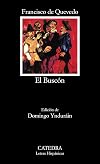
I recently upgraded my copy of Francisco de Quevedo’s El Buscón, going from an edition written and annotated for college students of Spanish here in America to a Cátedra critical edition. This means that instead of a rudimentary introduction explaining the customs of Spain in the early 16th century, I got a thorough explanation of El Buscón´s place in the Spanish picaresque genre, and a summary of hundreds of years of critical attempts to extract meaning and moral lessons from the show more text. The opinion of the editor, Domingo Ynduraín, is that El Buscón should be read as an exercise in literary ingenuity, where Quevedo used the picaresque template to string together a series of intricate and humorous situations that revolve around Pablos, the unfortunate protagonist of the story. There are repeated errors in continuity, which the editor cites to justify his idea that the book was written by Quevedo more or less from the seat of his pants. There is no self-reflection by the protagonist on his life´s journey, and little to no moral advice intermingled with the entertaining stories of Pablos, as opposed to the other great picaresque novel of the era, Guzmán de Alfarache. The book is meant first and foremost to entertain the reader through the author´s genius with language and storytelling. Comparing picaresque novels to TV shows, I´d say that Guzmán de Alfarache is like The Wire, with serious issues and ruminations on morality and survival on the lowest and most desperate levels of society intermingled with entertaining and often humorous representations of urban life. El Buscón is more like a season of Curb Your Enthusiasm, where the arch of the story is the vehicle for Larry David to develop his particularly hilarious brand of situational humor.
El Buscón is the story of Pablos, a young man born to less than noble parents in early 16th century Spain. Due to his desire to become a gentleman, he flees his home in Segovia and passes through the university in Alcalá, the court in Valladolid, and the cities of Madrid and Sevilla. He falls in with bad and criminal crowds wherever he goes, meeting a series of ridiculous and devious characters that scrape out a living preying on the moneyed class in whatever way they can. Many of the characters in this book, such as the poor nobleman who lives at the court through smoke and mirrors, his clothing a patchwork of fabrics tied together to appear dignified, are Quevedo´s interpretations of archetypes of Spanish literature of the time, seen anywhere from Don Quijote to the plays of Lope de Vega and others. There´s nothing revolutionary going on in terms of story or characters, but Quevedo puts the Spanish language to work like few others. I was glad for the extensive footnotes (sometimes it seemed like there were more footnotes than actual text), because they keyed me in to all the multiple meanings and plays on words that are present on every page. I remember being amazed the first time I read El Buscón at the intricacy of each of the chain of situations that make up the book, and it was nice to get a second glance at them with the depth of analysis and research that accompany the Cátedra edition. I don´t think I necessarily like Quevedo as a person, based on his stiff, elitist and often downright bigoted views on society as expressed here and in his Sueños, but El Buscón is a book filled with great storytelling, and a worthwhile read.
I don´t know how well picaresque novels would fare in translation, due to the central role that intricate language and wordplay take in them. I know that there is an edition that contains Lazarillo de Tormes and El Buscón, entitled Two Spanish Picaresque Novels, that can be had for a dollar or two on amazon.com or half.com. I think it´s interesting to see the beginnings of a genre that is so universal and far-reaching. There are so many works that can be classified as picaresque, from books by Dickens, Twain and Günter Grass amongst many others, to movies like City of God and Slumdog Millionaire. Quevedo´s book helped set the stage for so much great fiction that it will always be a great read, and I enjoyed reading it over the past few days.
February 28, 2012
A few comments upon re-reading El buscón:
I didn't touch upon Quevedo's dirty mind. A lot of what happens, especially in the first part of the book when Pablos is initiated into the rough life of the pícaro, is exceedingly disgusting. I'm talking showing up for his first day of university classes and being suddenly surrounded. Then a young man with a head cold steps up and says: "this I do" and hocks a loogie in his face. Then the rest of them open fire and soon Pablos is drenched in saliva. Finally, one student steps up and says "Enough! You'll kill the poor guy." Pablos thinks he's been saved and opens his eyes, only to have them filled with another massive loogie. But that's nothing compared to when, in another hazing episode, his roommates disturb his slumber and act like thieves have broken in. Pablos hides under the bed in fear, and while he's under there, somebody defecates in his bed. When he gets back in bed, he realizes that he's rolling around in human feces and also realizes that he's at the same time innocent and guilted: who will believe him if he tries to explain that no, he didn't soil himself out of fear? And really, even that's not as bad as when his uncle writes him a letter explaining how his father has been hanged (by the same uncle, who's the town executioneer), his body discarded by the side of the road (not being worthy of a proper burial). The uncle then comments that his father's body will either be eaten by the crows or scooped up by the town bakery and turned into some meat pies. Then, when Pablos visits the uncle later in the book, they're eating some meat pies and his uncle jokingly reminds him of what he told him about his father's fate...Pablos chooses to just eat the crust. Quevedo is not afraid of putting his great figurative powers to work in the depiction of some truly foul stuff.
I also don't think I conveyed the extent of his racism. Assuming that Pablos is something of a mouthpiece for his own views on Jews and Muslims, he makes his hatred of them entirely clear. Near the end of the book he comments that he'd rather marry a poor woman of clean blood than a distinguished Jew. At one time his landlord is a Moor, and when he mentions that man's thieving ways, he says that he'd never met a man who was both a dog and a cat at the same time (cat was slang for thief, and being a Moor made him quite simply a dog). It's tough to take. I know it was a different time. When reading books from back then, it's always reassuring to find examples of prominent figures going against the prejudices of the day, like when Cervantes tells the story of Ricote in the second part of Don Quijote, depicting the injustice of the expulsion of the Conversos (descendents of Moors who had converted to Christianity) from Spain. Here, though, it's the opposite. Even at a time when there were a lot of prejudices, I get the feeling Quevedo was particularly hateful. A friend of mine also reminded me that, in his longstanding rivalry with the poet Luis de Góngora, Quevedo often accused the poet of being of impure blood. He even wrote in a sonnet that he ought to rub his poetry in bacon so that Góngora wouldn't dare bite into them (figuratively speaking).
So he's a controversial figure who stretches the limits of decency, and his beliefs are difficult to stomach here in the 21st century. However, his book is also one of the most remarkable examples of the Spanish baroque. I came back to this book because Quevedo does incredible things with the written word. He takes the vocabulary of card games, the hierarchical relationship between clothing and social class, and the language of those who live on the margins of society, and weaves together a story that is meant to challenge and amuse the discerning reader. show less
El Buscón is the story of Pablos, a young man born to less than noble parents in early 16th century Spain. Due to his desire to become a gentleman, he flees his home in Segovia and passes through the university in Alcalá, the court in Valladolid, and the cities of Madrid and Sevilla. He falls in with bad and criminal crowds wherever he goes, meeting a series of ridiculous and devious characters that scrape out a living preying on the moneyed class in whatever way they can. Many of the characters in this book, such as the poor nobleman who lives at the court through smoke and mirrors, his clothing a patchwork of fabrics tied together to appear dignified, are Quevedo´s interpretations of archetypes of Spanish literature of the time, seen anywhere from Don Quijote to the plays of Lope de Vega and others. There´s nothing revolutionary going on in terms of story or characters, but Quevedo puts the Spanish language to work like few others. I was glad for the extensive footnotes (sometimes it seemed like there were more footnotes than actual text), because they keyed me in to all the multiple meanings and plays on words that are present on every page. I remember being amazed the first time I read El Buscón at the intricacy of each of the chain of situations that make up the book, and it was nice to get a second glance at them with the depth of analysis and research that accompany the Cátedra edition. I don´t think I necessarily like Quevedo as a person, based on his stiff, elitist and often downright bigoted views on society as expressed here and in his Sueños, but El Buscón is a book filled with great storytelling, and a worthwhile read.
I don´t know how well picaresque novels would fare in translation, due to the central role that intricate language and wordplay take in them. I know that there is an edition that contains Lazarillo de Tormes and El Buscón, entitled Two Spanish Picaresque Novels, that can be had for a dollar or two on amazon.com or half.com. I think it´s interesting to see the beginnings of a genre that is so universal and far-reaching. There are so many works that can be classified as picaresque, from books by Dickens, Twain and Günter Grass amongst many others, to movies like City of God and Slumdog Millionaire. Quevedo´s book helped set the stage for so much great fiction that it will always be a great read, and I enjoyed reading it over the past few days.
February 28, 2012
A few comments upon re-reading El buscón:
I didn't touch upon Quevedo's dirty mind. A lot of what happens, especially in the first part of the book when Pablos is initiated into the rough life of the pícaro, is exceedingly disgusting. I'm talking showing up for his first day of university classes and being suddenly surrounded. Then a young man with a head cold steps up and says: "this I do" and hocks a loogie in his face. Then the rest of them open fire and soon Pablos is drenched in saliva. Finally, one student steps up and says "Enough! You'll kill the poor guy." Pablos thinks he's been saved and opens his eyes, only to have them filled with another massive loogie. But that's nothing compared to when, in another hazing episode, his roommates disturb his slumber and act like thieves have broken in. Pablos hides under the bed in fear, and while he's under there, somebody defecates in his bed. When he gets back in bed, he realizes that he's rolling around in human feces and also realizes that he's at the same time innocent and guilted: who will believe him if he tries to explain that no, he didn't soil himself out of fear? And really, even that's not as bad as when his uncle writes him a letter explaining how his father has been hanged (by the same uncle, who's the town executioneer), his body discarded by the side of the road (not being worthy of a proper burial). The uncle then comments that his father's body will either be eaten by the crows or scooped up by the town bakery and turned into some meat pies. Then, when Pablos visits the uncle later in the book, they're eating some meat pies and his uncle jokingly reminds him of what he told him about his father's fate...Pablos chooses to just eat the crust. Quevedo is not afraid of putting his great figurative powers to work in the depiction of some truly foul stuff.
I also don't think I conveyed the extent of his racism. Assuming that Pablos is something of a mouthpiece for his own views on Jews and Muslims, he makes his hatred of them entirely clear. Near the end of the book he comments that he'd rather marry a poor woman of clean blood than a distinguished Jew. At one time his landlord is a Moor, and when he mentions that man's thieving ways, he says that he'd never met a man who was both a dog and a cat at the same time (cat was slang for thief, and being a Moor made him quite simply a dog). It's tough to take. I know it was a different time. When reading books from back then, it's always reassuring to find examples of prominent figures going against the prejudices of the day, like when Cervantes tells the story of Ricote in the second part of Don Quijote, depicting the injustice of the expulsion of the Conversos (descendents of Moors who had converted to Christianity) from Spain. Here, though, it's the opposite. Even at a time when there were a lot of prejudices, I get the feeling Quevedo was particularly hateful. A friend of mine also reminded me that, in his longstanding rivalry with the poet Luis de Góngora, Quevedo often accused the poet of being of impure blood. He even wrote in a sonnet that he ought to rub his poetry in bacon so that Góngora wouldn't dare bite into them (figuratively speaking).
So he's a controversial figure who stretches the limits of decency, and his beliefs are difficult to stomach here in the 21st century. However, his book is also one of the most remarkable examples of the Spanish baroque. I came back to this book because Quevedo does incredible things with the written word. He takes the vocabulary of card games, the hierarchical relationship between clothing and social class, and the language of those who live on the margins of society, and weaves together a story that is meant to challenge and amuse the discerning reader. show less

First, a touch of history: as my introduction says, "The word picaresque derives from the Spanish pícaro, which means rascal or crafty good-for-nothing, and is used to describe the hero of a similar novel, Guzmán de Alfarache (1599)." The word "hero" is rather a misnomer, seeing as the lead characters are basically thieving rascals. Lazarillo de Tormes is the first ever picaresque novel, and it was quite the change from the in-vogue chivalrous novels of the time (you know, those novels Don show more Quixote satirized), and the book was quite popular and actually banned by the Inquisition.
So, I can't say that I loved this. The novels (or rather, novellas) were interesting to read, in that they're basically a piece of history, but of themselves, I was not so enamored. To me, they were essentially a much shorter and less amusing version of Don Quixote. Because, Quixote is practically a rascal himself, but through imbecility and ignorance rather than choice like a pícaro, which serves to make him both more entertaining and less of a jerk. The style is episodic (again like Don Quixote), so they're really not like a novel with a plot, but rather, each chapter is some incident or short time period spent in company with a specific person/group, where bad things happen to the "hero."
Lazarillo is quite short at about 55 pages, and it ends quite abruptly. The swindler is longer at about 130 pages, and the writing is smoother. However, the intro does point out that Lazarillo has "only about 20,000 words and every one of them counts. The descriptions are pithy and economical, the language colloquial though not ephemeral. This is artistry artfully concealed," and I can see there being something to that. But, it's written basically like a letter to someone, and finishes telling about a last situation, of which the final sentence of the last paragraph is simply "I will inform Your Honor of my future in due course." And that's it. That's the end of the book. Out of nowhere. Meanwhile, The swindler flows better throughout, with a more steady timeline and not-so-abrupt ending. I think there were also more notably amusing moments, but given that it's nearly triple the length, it'd be unfair to hold that against Lazarillo. Even so, those aspects did make for a bit of a nicer read. That said, the back blurb calls it a "scatological adventure," and that's no lie. This book is repeatedly gross and the characters often exceedingly nasty and cruel, making me rather glad to live a few hundred years distant from them!
Overall, I might suggest the quick trip through Lazarillo to get a notion of this old famous novel type, but personally I would not be jumping to recommend the picaresque novel as a genre to someone simply looking for a fun time. show less
So, I can't say that I loved this. The novels (or rather, novellas) were interesting to read, in that they're basically a piece of history, but of themselves, I was not so enamored. To me, they were essentially a much shorter and less amusing version of Don Quixote. Because, Quixote is practically a rascal himself, but through imbecility and ignorance rather than choice like a pícaro, which serves to make him both more entertaining and less of a jerk. The style is episodic (again like Don Quixote), so they're really not like a novel with a plot, but rather, each chapter is some incident or short time period spent in company with a specific person/group, where bad things happen to the "hero."
Lazarillo is quite short at about 55 pages, and it ends quite abruptly. The swindler is longer at about 130 pages, and the writing is smoother. However, the intro does point out that Lazarillo has "only about 20,000 words and every one of them counts. The descriptions are pithy and economical, the language colloquial though not ephemeral. This is artistry artfully concealed," and I can see there being something to that. But, it's written basically like a letter to someone, and finishes telling about a last situation, of which the final sentence of the last paragraph is simply "I will inform Your Honor of my future in due course." And that's it. That's the end of the book. Out of nowhere. Meanwhile, The swindler flows better throughout, with a more steady timeline and not-so-abrupt ending. I think there were also more notably amusing moments, but given that it's nearly triple the length, it'd be unfair to hold that against Lazarillo. Even so, those aspects did make for a bit of a nicer read. That said, the back blurb calls it a "scatological adventure," and that's no lie. This book is repeatedly gross and the characters often exceedingly nasty and cruel, making me rather glad to live a few hundred years distant from them!
Overall, I might suggest the quick trip through Lazarillo to get a notion of this old famous novel type, but personally I would not be jumping to recommend the picaresque novel as a genre to someone simply looking for a fun time. show less

Un muestra del humor que se gastaba Don Francisco. A mi me hace gracia pero es un ejemplo del humor misógino del autor, así que igual no le agrada a todo el mundo (Aunque, tratándose de Quevedo, uno nunca puede estar seguro de hasta que punto era sincero o lo decía por epatar en la corte)
Lists
Awards


You May Also Like


Associated Authors
Statistics
- Works
- 358
- Also by
- 8
- Members
- 3,388
- Popularity
- #7,526
- Rating
- 3.9
- Reviews
- 120
- ISBNs
- 556
- Languages
- 12
- Favorited
- 10
