

Inge Auerbacher
Author of I Am a Star: Child of the Holocaust
About the Author
Image credit: Inge Auerbacher. USDA Photo by Lance Cheung.
Works by Inge Auerbacher
Tagged
Common Knowledge
- Birthdate
- 1934-12-31
- Gender
- female
- Education
- Queens College, City University of New York
- Occupations
- chemist
Holocaust survivor
memoirist
public speaker - Short biography
- Inge Auerbacher was born to an observant Jewish family in Kippenheim, a village in southwestern Germany. Her father, a textile merchant, had been a soldier in the German Army during World War I and received the Iron Cross for service to his country. In 1938, during the pogrom known as Kristallnacht, the family had to hide from the rioting mob in their backyard shed. They sold their house and moved in with Inga's grandparents in Jebenhausen. At the end of 1941, her grandmother and other members of her family were sent to Riga, Latvia, where they were shot; others were sent to Poland, never to be seen again. In 1942, Inge, age seven, and her parents were deported to Theresienstadt concentration camp in Czechoslovakia. She was among the one percent of children in the camp who survived. After three years, she and her parents were liberated by the Soviet Army in May 1945. They initially returned to Germany, but emigrated to the USA in 1946. Inge was hospitalized for two years, and eventually graduated with honors from Bushwick High School in Brooklyn. She completed a BS degree in chemistry at Queens College of CCNY in 1958, and continued with post-graduate work in biochemistry. She worked for more than 38 years as a chemist doing research and clinical work. She also published numerous poems and articles although was silent about her Holocaust experiences until 1981. Since then, she has lectured on the Holocaust to thousands of people in the USA, Canada and Germany, and appeared in several documentary films, including The Olympic Doll. Her memoirs include I Am A Star: Child of the Holocaust (1993), and Beyond the Yellow Star to America (2003). She has been awarded the Ellis Island Medal of Honor (1999) and other honors.
- Nationality
- Germany (birth)
USA - Birthplace
- Kippenheim, Germany
- Places of residence
- Jebenhausen, Germany
Theresienstadt, Czechoslovakia
New York, New York, USA - Associated Place (for map)
- Germany
Members
Reviews

I was aware of Terezin (Theresiendstadt), the fortress in Czechoslovakia used by the Nazis as a propaganda “model” ghetto/concentration camp during World War II; it was the setting for Kathy Kacer’s young adult novel Clara’s War. However, Inge Auerbacher’s I am a Star is the only memoir I’ve ever read by someone who survived the place. In 1942 when she was seven years old, Auerbacher was transported there with her mother and father, a disabled, decorated World-War-I German-Army show more veteran. Inge and her parents remained in the camp until the end of the war in the spring of 1945.
It is a rare thing to read the memoir of a Jewish child who was able to stay with her parents for the entire war. It’s an equally rare thing for all of them to have survived. They almost did not. In 1945, the Nazis, well aware that they were losing, rushed to end the lives of all the Jews they had in their concentration and labour camps. Terezin had mostly been a transit camp only, a place where Jews were held until an extermination camp could dispose of them. It was not equipped with gas chambers and crematoria. The Germans rushed to build these at Terezin in early 1945, but the Soviet army got there first, liberating the camp before the instruments of destruction could be used. By that point—in early May of 1945–after lobbing grenades at inmates and shooting the few they could, many of the guards had already run off. Just a little before the liberation, Inge’s best friend, Ruth, and her parents (who for two years had shared a room and bunks with Inge’s family) were on the last transport from Terezin to the death camps. Ruth was of a mixed religious background. Her father was Christian, and the girl had been raised with no knowledge of her Jewish heritage. It made no difference. She was killed by the Nazis.
Auerbacher’s memoir provides an account of her life before the war—when the German Jewish population was harassed, abused, and submitted to harsh and humiliating restrictions—and her experiences during it—when her family was transported to Terezin, where she became extremely ill with several childhood diseases due to the dire conditions. The book has a very different feel from many autobiographical works about children’s experiences during the Holocaust. I think this can be attributed to three things. First, Inge’s parents were always there, caring for her physically and supporting her emotionally. Second, Inge had other longer-term, stable relationships and friendships during her time in Terezin. Finally—and this may seem a small thing—Inge was able to keep her beloved doll, which gave her much solace. In her memoir, she actually includes a poem that testifies to the importance of that object in her life.
Unlike many other Holocaust memoirs for older children, Auerbacher’s spends a few chapters on the conditions in Germany leading up to the war. The author discusses Germany’s humiliation after World War I, the country’s failing economy, the inflation and widespread unemployment, the resentment towards and scapegoating of Jews, and the rise of Hitler. She identifies the führer’s ideology as being based on two principles: (1) Lebensraum, room for the expansion of the superior Aryan race and the right to invade other countries to get that room; and (2) Judenfrage, the complete elimination of the polluting Jewish race. The increasingly restrictive and inhumane measures against the Jewish population are briefly but well documented by Auerbacher. While this information may be dry reading for a younger audience, it provides valuable context.
I am a Star contains a great many black-and-white photographs. The historical ones help young readers to better visualize significant places in Inge’s childhood, while the family photos give them a sense of Inge’s personal relationships, particularly her closeness to her maternal grandparents with whom her family lived for a time. These family photos make Inge’s grief over the loss of her grandmother more real and palpable. Her mother’s mother was transported east to Latvia, where she was executed by Hitler’s Einsatzgruppen, the death squads that operated before “The Final Solution” was instituted. Auerbacher includes a poem written in memory of this beloved family member.
Along with the photos and text narrative, the author includes several of her own poems about her wartime experiences. While the poetry conveys important factual details, I cannot say that I appreciated it. Many poems consist of lines and lines of awkward couplets. The syntax is often clumsy, and the rhyming is trite. I really wish Auerbacher had stuck to prose. Having said that, I suspect children who read the book might not be as critical as I am.
At the end of the memoir, Auerbacher includes a useful timetable of key events and a list of books (now rather dated) for further reading. Though dry in places, I am a Star, is a valuable and informative book about the rise of Nazism in Germany, the Holocaust, and one girl’s experience in Terezin.
Rating: 3.5 show less
It is a rare thing to read the memoir of a Jewish child who was able to stay with her parents for the entire war. It’s an equally rare thing for all of them to have survived. They almost did not. In 1945, the Nazis, well aware that they were losing, rushed to end the lives of all the Jews they had in their concentration and labour camps. Terezin had mostly been a transit camp only, a place where Jews were held until an extermination camp could dispose of them. It was not equipped with gas chambers and crematoria. The Germans rushed to build these at Terezin in early 1945, but the Soviet army got there first, liberating the camp before the instruments of destruction could be used. By that point—in early May of 1945–after lobbing grenades at inmates and shooting the few they could, many of the guards had already run off. Just a little before the liberation, Inge’s best friend, Ruth, and her parents (who for two years had shared a room and bunks with Inge’s family) were on the last transport from Terezin to the death camps. Ruth was of a mixed religious background. Her father was Christian, and the girl had been raised with no knowledge of her Jewish heritage. It made no difference. She was killed by the Nazis.
Auerbacher’s memoir provides an account of her life before the war—when the German Jewish population was harassed, abused, and submitted to harsh and humiliating restrictions—and her experiences during it—when her family was transported to Terezin, where she became extremely ill with several childhood diseases due to the dire conditions. The book has a very different feel from many autobiographical works about children’s experiences during the Holocaust. I think this can be attributed to three things. First, Inge’s parents were always there, caring for her physically and supporting her emotionally. Second, Inge had other longer-term, stable relationships and friendships during her time in Terezin. Finally—and this may seem a small thing—Inge was able to keep her beloved doll, which gave her much solace. In her memoir, she actually includes a poem that testifies to the importance of that object in her life.
Unlike many other Holocaust memoirs for older children, Auerbacher’s spends a few chapters on the conditions in Germany leading up to the war. The author discusses Germany’s humiliation after World War I, the country’s failing economy, the inflation and widespread unemployment, the resentment towards and scapegoating of Jews, and the rise of Hitler. She identifies the führer’s ideology as being based on two principles: (1) Lebensraum, room for the expansion of the superior Aryan race and the right to invade other countries to get that room; and (2) Judenfrage, the complete elimination of the polluting Jewish race. The increasingly restrictive and inhumane measures against the Jewish population are briefly but well documented by Auerbacher. While this information may be dry reading for a younger audience, it provides valuable context.
I am a Star contains a great many black-and-white photographs. The historical ones help young readers to better visualize significant places in Inge’s childhood, while the family photos give them a sense of Inge’s personal relationships, particularly her closeness to her maternal grandparents with whom her family lived for a time. These family photos make Inge’s grief over the loss of her grandmother more real and palpable. Her mother’s mother was transported east to Latvia, where she was executed by Hitler’s Einsatzgruppen, the death squads that operated before “The Final Solution” was instituted. Auerbacher includes a poem written in memory of this beloved family member.
Along with the photos and text narrative, the author includes several of her own poems about her wartime experiences. While the poetry conveys important factual details, I cannot say that I appreciated it. Many poems consist of lines and lines of awkward couplets. The syntax is often clumsy, and the rhyming is trite. I really wish Auerbacher had stuck to prose. Having said that, I suspect children who read the book might not be as critical as I am.
At the end of the memoir, Auerbacher includes a useful timetable of key events and a list of books (now rather dated) for further reading. Though dry in places, I am a Star, is a valuable and informative book about the rise of Nazism in Germany, the Holocaust, and one girl’s experience in Terezin.
Rating: 3.5 show less
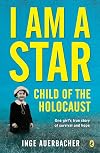
This is a memoir that will haunt you long after you've finished the book. Inge Auerbacher was sent to Terezin concentration camp when she was only seven years old. This isn't just a sad re-telling of her story of survival. She has filled this short book with pictures to help the youngest reader visualize that time period and the conditions she lived in. She has sprinkled poetry throughout. This is not just a sad story but a story of hope. Most importantly this story is the voice of every show more child who died at Terezin. show less
One of the best works of holocaust literature that I have ever read for a youth audience. The author was one of 13 people from her town who survived their forced relocation to Terezin concentration camp. There she lived for three years, and the level of detail she includes in the work really clarifies some of the "issues" around this era for children of today. Admittedly difficult to read at times - and definitely not a work I would recommend for really young children - I found her writing show more compelling with a story that everyone needs to hear. show less
I had the privledge of seeing Inge Auerbacher speak when I worked at Lake Region State College in Devils Lake, ND. She was awesome to behold as she told her story and spoke about the destructive nature of hate. This book is a beautiful and poingant historical document that should be read by children and adults. Her spirit is imense and she reminds us to speak out against hate and injustice.
Lists
Awards

You May Also Like


Associated Authors
Statistics
- Works
- 6
- Members
- 980
- Popularity
- #26,286
- Rating
- 3.9
- Reviews
- 9
- ISBNs
- 39
- Languages
- 3
- Favorited
- 1