
Jonathan Elphick
Author of RSPB Pocket Birds
About the Author
Jonathan Elphick, FZS, FLS, is a wildlife writer, editor, consultant, lecturer and broadcaster, specializing in ornithology. During a career spanning almost 40 years, he has written many books including The World of Birds and the award-winning Birdwatcher's Handbook. He was researcher for Birds show more People, the largest survey of cultural attitudes to birds worldwide, and spent five years as researcher on the acclaimed bestseller Birds Britannica. He lives in Exeter, UK. show less
Image credit: Ornithologist Jonathan Elphick photographed at Boquer Valley, Mallorca
Series
Works by Jonathan Elphick
The National Parks of Other Wild Places of Britain and Ireland (National/Pks Other Wild Places) (2002) 7 copies
Pocket Garden Bird Watch 1 copy
Birdsong 1 copy
Wereldatlas van de vogeltrek 1 copy
Associated Works
Tagged
Common Knowledge
- Canonical name
- Elphick, Jonathan
- Legal name
- Elphick, Jonathan
- Birthdate
- 1945
- Gender
- male
- Education
- University College, Swansea
- Occupations
- natural historian
author
editor
consultant
ornithologist
zoologist - Organizations
- Zoological Society of London
Linnean Society of London - Nationality
- Wales
UK - Birthplace
- Prestatyn, Flintshire, Wales
- Map Location
- UK
Members
Reviews
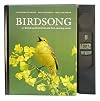
They say that the best ideas are the simplest. This book proves the point. I have never seen a book like this, and yet why not? A few minutes thought should have put the idea into my own head but, I confess that it didn't.
So, what is so clever about this book? It covers 150 British and Irish birds and, opening it at any page will show a fairly standard bird book layout: a good, clear colour photograph of the bird, sketches of plumage variations and a few paragraphs of well researched show more information about same. Nothing unusual there, but at the top of each page is a three digit number; select this on an attached LCD screen and press a button - the bird sings out to the reader/listener.
I am one of those people who are reasonably interested in birds but do not spend my life glued to a pair of binoculars, surrounded by geeks. I can tell a blackbird from a sparrow hawk, but get confused by some of those little brown jobbies. I worked out for myself that a little knowledge of the noise that they emit would be useful and have purchased several birdsong CD's. The better of these come with a leaflet giving a picture of each bird but, I find that I listen to the blackbird, get sidetracked, and next thing that I know, the zebra finch is chirruping away and I have missed everything in between. The simple system of this book, using one of those little computer chappies that make a young child's Thomas the Tank Engine book delight its owner by going, "Chuff-chuff", putting the reader in control. The recordings are surprisingly clear for such a reproductive unit and walking with my dogs the first morning after getting this book, the sounds of an idyllic country morning already meant more to me.
I would imagine that the fully fledged ornithologist might be a little insulted to receive this tome, the birds are of the common variety, but for a youngster setting out on the trail of 'geekhood', this would be ideal. Although the reading thereof should not phase the average twelve year old, the book is not presented in a patronising style and so, as a man of more than (oh, alright, considerably more than) fifty summers, I too can also enthuse about its qualities.
I was pleased to see that the playback unit works on standard batteries which may be easily replaced once my over enthusiastic attempts to fill my house with birdsong have worn out the included set. This book jumps to the front of my, admittedly modest, collection of bird books: it is more fun AND more useful than the rest put together - now excuse me, I think I hear a Great Crested Grebe calling me. show less
So, what is so clever about this book? It covers 150 British and Irish birds and, opening it at any page will show a fairly standard bird book layout: a good, clear colour photograph of the bird, sketches of plumage variations and a few paragraphs of well researched show more information about same. Nothing unusual there, but at the top of each page is a three digit number; select this on an attached LCD screen and press a button - the bird sings out to the reader/listener.
I am one of those people who are reasonably interested in birds but do not spend my life glued to a pair of binoculars, surrounded by geeks. I can tell a blackbird from a sparrow hawk, but get confused by some of those little brown jobbies. I worked out for myself that a little knowledge of the noise that they emit would be useful and have purchased several birdsong CD's. The better of these come with a leaflet giving a picture of each bird but, I find that I listen to the blackbird, get sidetracked, and next thing that I know, the zebra finch is chirruping away and I have missed everything in between. The simple system of this book, using one of those little computer chappies that make a young child's Thomas the Tank Engine book delight its owner by going, "Chuff-chuff", putting the reader in control. The recordings are surprisingly clear for such a reproductive unit and walking with my dogs the first morning after getting this book, the sounds of an idyllic country morning already meant more to me.
I would imagine that the fully fledged ornithologist might be a little insulted to receive this tome, the birds are of the common variety, but for a youngster setting out on the trail of 'geekhood', this would be ideal. Although the reading thereof should not phase the average twelve year old, the book is not presented in a patronising style and so, as a man of more than (oh, alright, considerably more than) fifty summers, I too can also enthuse about its qualities.
I was pleased to see that the playback unit works on standard batteries which may be easily replaced once my over enthusiastic attempts to fill my house with birdsong have worn out the included set. This book jumps to the front of my, admittedly modest, collection of bird books: it is more fun AND more useful than the rest put together - now excuse me, I think I hear a Great Crested Grebe calling me. show less

As I write this there is a female Great Spotted Woodpecker on the bird feeder, hammering away at the fat balls. I don’t hear it early morning now as it taps the bark on the dying Scots pine outside – maybe there’s no live food available, or maybe I’m not waking early enough – but it’s got bolder and no longer flies away in fright when we appear at the window, as the occasional shy jay does. The woodpecker is a sight to swell the heart, with its striking pied plumage and the bold show more splash of red under its tail clearly visible as it feeds.
As it’s winter now, with the first appearances of sleet and snow, it’s vital to keep the feeders replenished, with mixed seed and fat balls. The fat balls are loved not just by the woodpecker but also by the odd starling, and particularly by the various tits – Great, Blue, Coal and even the occasional Long-tailed or Willow Tit – which cluster greedily on them. Irritatingly, some of the tits, especially the Coal Tits, go for the seed feeder, seeking out the black sunflower seeds and spitting out the other seeds to carpet the ground. That’s great for the ground feeders such as solitary robins and thrushes and the cowardly magpies, but it’s a messy sight and we worry about it attracting vermin – rats, grey squirrels and so on.
Of the other common birds attracted by the never-ending feast we regularly see sparrows (who, hereabouts don’t seem to have realised that their species is in decline) and finches (especially chaffinches). There are often over ten birds on the feeders, with almost that number waiting their turn in nearby branches, such as on the small oak that sits potted up on the decking. Blackbirds hop around or flit from beech hedge to buddleia, the males asserting territorial dominance and ownership of the bashful female lurking quietly in the shadows.
We catch glimpses of other avians in the sky, some gliding around such as the ubiquitous buzzards and the occasional Red Kite, some passing overhead like the pair of ravens announcing their presence by a distinctive ‘cronk’ or, in season, the Canada geese who visit a neighbour’s lake and take a morning or evening turn in their pairs, calling exultantly to each other. High up we often see gulls wheeling or returning to the sea, and once we were lucky to see a flock of lapwings alight in a nearby field en route from or to somewhere exotic.
If it wasn’t for the various mini-guides we wouldn’t know even half the species that fly around our neck of the woods. The RSPB Pocket Birds guide is our usual first port of call, with its wealth of concise information, photos and distribution maps contained in half-page or full-page entries, though we supplement that with the Collins Complete British Birds photo guide, where the photos are in a little more detail. Every day, whether it’s grey and misty or less frequently sunny, when we go for a constitutional or just stare out the windows, we wonderingly repeat the mantra “We’re so lucky!” Thanks to guides like these we can appreciate just how lucky we are.
http://calmgrove.wordpress.com/2013/01/17/birds/ show less
As it’s winter now, with the first appearances of sleet and snow, it’s vital to keep the feeders replenished, with mixed seed and fat balls. The fat balls are loved not just by the woodpecker but also by the odd starling, and particularly by the various tits – Great, Blue, Coal and even the occasional Long-tailed or Willow Tit – which cluster greedily on them. Irritatingly, some of the tits, especially the Coal Tits, go for the seed feeder, seeking out the black sunflower seeds and spitting out the other seeds to carpet the ground. That’s great for the ground feeders such as solitary robins and thrushes and the cowardly magpies, but it’s a messy sight and we worry about it attracting vermin – rats, grey squirrels and so on.
Of the other common birds attracted by the never-ending feast we regularly see sparrows (who, hereabouts don’t seem to have realised that their species is in decline) and finches (especially chaffinches). There are often over ten birds on the feeders, with almost that number waiting their turn in nearby branches, such as on the small oak that sits potted up on the decking. Blackbirds hop around or flit from beech hedge to buddleia, the males asserting territorial dominance and ownership of the bashful female lurking quietly in the shadows.
We catch glimpses of other avians in the sky, some gliding around such as the ubiquitous buzzards and the occasional Red Kite, some passing overhead like the pair of ravens announcing their presence by a distinctive ‘cronk’ or, in season, the Canada geese who visit a neighbour’s lake and take a morning or evening turn in their pairs, calling exultantly to each other. High up we often see gulls wheeling or returning to the sea, and once we were lucky to see a flock of lapwings alight in a nearby field en route from or to somewhere exotic.
If it wasn’t for the various mini-guides we wouldn’t know even half the species that fly around our neck of the woods. The RSPB Pocket Birds guide is our usual first port of call, with its wealth of concise information, photos and distribution maps contained in half-page or full-page entries, though we supplement that with the Collins Complete British Birds photo guide, where the photos are in a little more detail. Every day, whether it’s grey and misty or less frequently sunny, when we go for a constitutional or just stare out the windows, we wonderingly repeat the mantra “We’re so lucky!” Thanks to guides like these we can appreciate just how lucky we are.
http://calmgrove.wordpress.com/2013/01/17/birds/ show less
After a very brief introduction which includes among other things the purpose of bird song and an explanation of bird plumage, this book gets straight down to business looking at each bird individually. Most entries are allocated a page with a half page photograph of the bird and half page of descriptive text, in a good number of cases the entry covers a double page with a full page photograph and a page of text along with an additional small illustration. The very readable text includes a show more description of the bird's appearance, its song and its habitat. The photographs are of a good standard, typically with the bird shown clearly against an out of focus background; all pictures are in full colour.
Then we come to real point of this publication. Across the top of each page is one or more brief titles: call, alarm call, song, warning call, wing sound etc, and then there is one or more numbers. To the right of the book and as an extension to the back cover is the player. By entering the appropriate number on the small LCD screen and pressing the play button one hears the chosen bird sound; and the sound quality is quite good considering the size of the set up.
This really is a delight, the book alone is well worth having for its lucid text and fine photographs, but to have the bird songs and sounds so easily at hand is a small wonder. In the past I have bought CDs of bird song, but they have never proved satisfactory mainly because it was always so difficult to tie the song to the correct bird, with this there is no question about that, and you have the page with the photograph and text right in front of you too - you can readily associate sound with the bird.
There are 150 birds catalogued here, from the common garden birds to those more rarely, and perhaps for many of us in reality, possibly never encountered.
This is a substantial publication, a quite heavy book measuring 28cm or 11" square and with a sturdy hard cover. The player fits neatly down the side of the book, and comes complete with three AAA batteries. Altogether a marvellous idea beautifully executed. show less
Then we come to real point of this publication. Across the top of each page is one or more brief titles: call, alarm call, song, warning call, wing sound etc, and then there is one or more numbers. To the right of the book and as an extension to the back cover is the player. By entering the appropriate number on the small LCD screen and pressing the play button one hears the chosen bird sound; and the sound quality is quite good considering the size of the set up.
This really is a delight, the book alone is well worth having for its lucid text and fine photographs, but to have the bird songs and sounds so easily at hand is a small wonder. In the past I have bought CDs of bird song, but they have never proved satisfactory mainly because it was always so difficult to tie the song to the correct bird, with this there is no question about that, and you have the page with the photograph and text right in front of you too - you can readily associate sound with the bird.
There are 150 birds catalogued here, from the common garden birds to those more rarely, and perhaps for many of us in reality, possibly never encountered.
This is a substantial publication, a quite heavy book measuring 28cm or 11" square and with a sturdy hard cover. The player fits neatly down the side of the book, and comes complete with three AAA batteries. Altogether a marvellous idea beautifully executed. show less
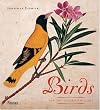
This is a truly beautiful book. The art is all beautiful and the short biographies of the artists just leave you wanting more.The only thing missing was a little more information on the birds themselves, but that was not the purpose of this book, so might as well say, it’s perfect
Awards


You May Also Like


Associated Authors
Statistics
- Works
- 68
- Also by
- 2
- Members
- 769
- Popularity
- #33,094
- Rating
- 4.0
- Reviews
- 6
- ISBNs
- 64
- Languages
- 8