
Graham Greene (1) (1904–1991)
Author of The Quiet American
For other authors named Graham Greene, see the disambiguation page.
About the Author
Born in 1904, Graham Greene was the son of a headmaster and the fourth of six children. Preferring to stay home and read rather than endure the teasing at school that was a by-product of his father's occupation, Greene attempted suicide several times and eventually dropped out of school at the age show more of 15. His parents sent him to an analyst in London who recommended he try writing as therapy. He completed his first novel by the time he graduated from college in 1925. Greene wrote both entertainments and serious novels. Catholicism was a recurring theme in his work, notable examples being The Power and the Glory (1940) and The End of the Affair (1951). Popular suspense novels include: The Heart of the Matter, Our Man in Havana and The Quiet American. Greene was also a world traveler and he used his experiences as the basis for many books. One popular example, Journey Without Maps (1936), was based on a trip through the jungles of Liberia. Greene also wrote and adapted screenplays, including that of the 1949 film, The Third Man, which starred Orson Welles. He died in Vevey, Switzerland in 1991. (Bowker Author Biography) show less
Image credit: Graham Greene in Antibes, France for Esquire magazine, 1971
Series
Works by Graham Greene
The Heart of the Matter / Stamboul Train / A Burnt-Out Case / The Third Man / The Quiet American / Loser Takes All / The Power and the Glory (1977) 233 copies
Brighton Rock / The Third Man / The Power and the Glory / The Heart of the Matter (1985) 49 copies, 1 review
Our Man in Havana / The End of the Affair / It's a Battlefield / England Made Me / The Ministry of Fear / Brighton Rock (1981) 37 copies
The Third Man: Enhanced Edition with Film Clips, Script and Archive Material from the Motion Picture (2015) 30 copies, 1 review
Graham Greene: The Last Interview: and Other Conversations (The Last Interview Series) (2019) 14 copies
The Collected Novels Volume Five: A Burnt-Out Case, The Captain and the Enemy, The Comedians, and The Man Within (2018) 9 copies
Author's Choice: The Power and the Glory / The Quiet American / Travels with My Aunt / The Honorary Consul (1985) 9 copies
Cheap in August 8 copies
Spiel im Dunkeln Kurzprosa 7 copies
Why do I write? : An exchange of views between Elizabeth Bowen, Graham Greene & V. S. Pritchett ; with a pref. by V. S. (1975) 6 copies
The Collected Novels Volume Four: Travels with My Aunt, The Confidential Agent, and The Ministry of Fear (2018) 6 copies, 1 review
The Invisible Japanese Gentleman (in The Penguin Book of Modern British Short Stories - BRADBURY) 6 copies, 1 review
Historia de una cobardía : Orient Express : Campo de batalla : Inglaterra me ha hecho así (1985) 5 copies, 1 review
The End of the Affair / The Quiet American / Our Man in Havana / A Burnt-Out Case (2015) 5 copies, 1 review
El consul honorario, Viajes con mi tia (Narrativa completa ii, coleccion Summa literaria 9) (1987) 5 copies, 1 review
Best-in-Books: Great American Short Novels - Lost Horizon / Red Pony / Third Man / Single Pebble / Light in the Piazza / Seize the Day (1966) 4 copies
The Collected Novels Volume Three: Orient Express, It's a Battlefield, and A Gun for Sale (2018) 4 copies
Obras 4 copies
The Collected Novels Volume Two: The Heart of the Matter, The Quiet American, and The Power and the Glory (2018) 4 copies
Obras 2 3 copies
[Title missing] 3 copies
Sort Of Life 3 copies
The heart of the matter. Parts 1-3 3 copies
Ensayos católicos 3 copies
A Sense of Reality Under the Garden, Dream of a Strange Land, a Discovery in the Woods, a Visit to Morin (1963) 3 copies
Our Man in Havana, And a Right Good Crew (Nelson Doubleday Best in Books, Volume 33) (1959) 3 copies
Manomorta (in Ci presti tuo marito?) 3 copies
Travels with My Aunt: Starring Dame Hilda Brackett & Charles Kay (BBC Radio Collection) (2000) 3 copies
Jádro věci ; Konec dobrodružství 2 copies
The Quiet American [QUIET AMER] 2 copies
24 short stories 2 copies
Obras Escogidas 2 copies
The Quiet American / Loser Takes All 2 copies
Graham Greene inedito 2 copies
La chaise vide et autres récits inédits : Suivi du Ministère de la peur ; Le Dixième Homme ; Une sorte de vie ; Les Chemins de l'évasion (2011) 2 copies
A visit to Morin 2 copies
Beauty (in Ci presti tuo marito?) 2 copies
Stamboel-expres / Geheim agent / Heerschappij van de Angst / De Verliezer wint (Omnibus II) 2 copies
Ucigasul platit 1 copy
Party/The Fallen Idol 1 copy
Suterén a jiné povídky 1 copy
Собрание сочинений, том 5. Почетный консул. Человеческий фактор. Доктор Фишер из Женевы, или Ужин с… (1992) 1 copy
Quem Perde Quem Ganha 1 copy
Obras Maestras del siglo XX 1 copy
The collected novels. Volume One, Brighton rock, the end of the affair, and our man in Havana (2018) 1 copy
Obras completas I 1 copy
Obras completas II 1 copy
Manual do espião 1 copy
Collected Stories including "May We Borrow Your Husband" A Sense of Reality Twenty One Stories 1 copy
The quiet man 1 copy
The Third Man [short story] 1 copy
der dritte mann illustriert 1 copy
o fim de festa 1 copy
NARRATIVA COMPLETA 1 copy
On The Frontier 1 copy
Vier Romane 1 copy
O ministério do medo 1 copy
Os Imortais 1 copy
Cuentos selectos 1 copy
Crimenes por amor 1 copy
The Great Jowett 1 copy
A Branch Of the Service 1 copy
Two Gentle People 1 copy
Below the Line 1 copy
Seize nouvelles 1 copy
The Tenth Man / The Third Man — Author — 1 copy
The Inventive Mr. Wormold 1 copy
A Hint of an Explanation 1 copy
The Root of All Evil 1 copy
Chagrin In Three Parts 1 copy
The Over-Night Bag 1 copy
Awful When You Think Of It 1 copy
Saggi cattolici 1 copy
Narrativa completa III 1 copy
23 opowiadania 1 copy
Narrativa completa I 1 copy
Narrativa completa II 1 copy
Wolf and the Lion, The 1 copy
A Quick Look Behind 1 copy
Oxford Poetry 1923 1 copy
Study guide 1 copy
Babbling April 1 copy
Francois Mauriac (1945) 1 copy
Men at Work [short story] 1 copy
Greene: Collected 1 copy
Associated Works
Perrine's Literature: Structure, Sound, and Sense (1970) — Contributor, some editions — 894 copies, 4 reviews
The World of the Short Story: A 20th Century Collection (1986) — Contributor — 512 copies, 4 reviews
The Art of the Tale: An International Anthology of Short Stories (1986) — Contributor — 381 copies, 3 reviews
75 Short Masterpieces: Stories from the World's Literature (1961) — Contributor — 319 copies, 2 reviews
First Fiction: An Anthology of the First Published Stories by Famous Writers (1994) — Contributor — 196 copies, 1 review
In Another Part of the Forest: An Anthology of Gay Short Fiction (1994) — Contributor — 192 copies, 2 reviews
Adaptations: From Short Story to Big Screen: 35 Great Stories That Have Inspired Great Films (2005) — Contributor — 136 copies, 1 review
The lucifer society;: Macabre tales by great modern writers (1972) — Contributor — 52 copies, 1 review
The Edge of the Chair: A Superlative Collection, Some Fact, Some Fiction, All Suspense (1967) — Contributor — 50 copies, 1 review
Alfred Hitchcock Presents : A Baker's Dozen of Suspense Stories (1963) — Contributor — 36 copies, 2 reviews
An Impossible Woman: The Memories of Dottoressa Moor of Capri (1975) — Editor, epilogue, some editions — 28 copies
The Best of Both Worlds: An Anthology of Stories for All Ages (1968) — Contributor — 25 copies, 1 review
Masters of the Macabre: An Anthology of Mystery, Horror, and Detection (1975) — Contributor — 13 copies
The Haunted and the Haunters: Tales of Ghosts and Other Apparitions (1975) — Contributor — 12 copies
Many-Colored Fleece: An Anthology of Twentieth-Century Catholic Fiction (2022) — Contributor — 9 copies
Great Mystery Books, 10 Volumes (Journey into Fear, The 39 Steps, And Then There Were None, Maltese Falcon, The Nine Tailors, The Doorbell Rang, The Confidential Agent, The Big… (1967) — Contributor — 6 copies
Die englische Literatur 09 in Text und Darstellung. 20. Jahrhundert. (2001) — Contributor — 3 copies
Dr. Fischer of Geneva — Original book — 3 copies
Diplomat : memoirs of a Swedish envoy in London, Paris, Berlin, Moscow, Washington (1972) — Foreword, some editions — 2 copies
Mexico : reisverhalen — Contributor — 2 copies
Then and Now. A Selection of Articles, Stories & Poems, Taken from the First Fifty Numbers of ‘Now & Then’, 1921–35. Together with Some Illustrations, etc. (1935) — Contributor — 2 copies
This Gun for Hire [1991 TV movie] — Original novel — 2 copies
The Spoken Word: Graham Greene (British Library - British Library Sound Archive) (2007) — Narrator — 2 copies
New English short stories — Contributor — 1 copy
Missing From Their Homes — Contributor — 1 copy
Touch Of Evil : The Third Man [DVD] — some editions — 1 copy
Tagged
Common Knowledge
- Legal name
- Greene, Henry Graham
- Birthdate
- 1904-10-02
- Date of death
- 1991-03-03
- Gender
- male
- Education
- Balliol College, Oxford (BA|1925)
- Occupations
- novelist
playwright
journalist
spy
critic - Awards and honors
- Order of Merit (1986)
Order of the Companions of Honour (1968)
Royal Society of Literature (Companion of Literature, 1983)
Mystery Writers of America Grand Master (1976)
John Dos Passos Prize (1980) [awarded before the award was limited to American authors]
Jerusalem Prize (1981) (show all 7)
Shakespeare Prize (1968) - Relationships
- Greene, Hugh (brother)
Greene, Raymond (brother)
Greene, Barbara (cousin) - Cause of death
- leukemia
- Nationality
- UK
- Birthplace
- Berkhamsted, Hertfordshire, England, UK
- Places of residence
- Berkhamsted, Hertfordshire, England, UK
Oxford, Oxfordshire, England, UK
London, Middlesex, England, UK
Nice, Alpes-Maritimes, Provence-Alpes-Côte d'Azur, France
Vevey, Switzerland
Sierra Leone - Place of death
- Vevey, Switzerland
- Burial location
- Corsier-sur-Vevey cemetery, Switzerland
- Map Location
- England, UK
Members
Discussions
Flash-mob! Catalog Graham Greene's Library in Legacy Libraries (August 2021)
February 2013: Graham Greene in Monthly Author Reads (November 2019)
Group Read, August 2017: The Heart of the Matter in 1001 Books to read before you die (August 2017)
Graham Greene Legacy Library problem in Bug Collectors (September 2015)
The Power and the Glory in Christianity (November 2013)
Reviews
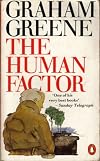
I’m not sure if Greene considered this novel one of his “entertainments” but I was entertained. This novel is more than just a Cold War era espionage yarn; it is a novel that deliberately complicates the motives of love and duty by mixing their objects.
Maurice Castle, our main character is a low-level MI6 officer. Much of the novel revolves around Castle’s past and his previous post in apartheid-era South Africa, where he (illegally) fell in love with Sarah, a black South African, show more and consequently ran into trouble with officers of the South African Bureau of State Security (BOSS) with all their deep-seated prejudices and racial animosity. Through Soviet contacts, Castle is surreptitiously able to arrange Sarah’s escape (via Swaziland) and they reunite in England. These events start a snowball of difficult times for the Castle family.
In exploring the difficulties that Maurice and Sarah (and their son Sam) face, Greene explores the ways that duty to and love of country overlaps and conflicts with duty to and love of family. The government that Castle works for demands duty and service and adherence to its political principles, but at a level that is difficult to sustain on professional ethics alone. It is Castle’s love of his colleague, Davis, of field contacts that he has known, and perhaps an ephemeral love of country that keeps Castle dutiful. At the same time, it is his love of family and his affection for his communist contacts who ensured Sarah’s escape from South Africa that creates duties that conflict with Castle’s professional duty and that push him to an inflection point in his career around which the majority of the book revolves.
This mixture of love and duty and the infiltration of love and duty into parts of our lives that many of us attempt to keep compartmentalized is deeply troubling and can lead to real mental distress. You may work in a place like this: where a workplace positions itself as “your family,” to which it is implied that you owe some filial duty. Even if this is not you, I’m guessing you can imagine such a scenario. Imagine, further, how those motivations can create conflicts where love of family might mean that you take time off to be at home but this conflicts with love of the organization that wants you to want to spend more time in the office. Imagine also where duty to family means that you deny yourself things in order to contribute to the family’s welfare and then imagine how the same sense of duty to a corporate family could be invoked as an argument to forgo a raise to contribute to the company’s welfare. Now add the complication of political and ethical values and a real mess starts to form.
Greene’s exploration of this stew of personal and professional conflict is very well done, convincing, and clear without being obvious or pedantic. I recommend this one. show less
Maurice Castle, our main character is a low-level MI6 officer. Much of the novel revolves around Castle’s past and his previous post in apartheid-era South Africa, where he (illegally) fell in love with Sarah, a black South African, show more and consequently ran into trouble with officers of the South African Bureau of State Security (BOSS) with all their deep-seated prejudices and racial animosity. Through Soviet contacts, Castle is surreptitiously able to arrange Sarah’s escape (via Swaziland) and they reunite in England. These events start a snowball of difficult times for the Castle family.
In exploring the difficulties that Maurice and Sarah (and their son Sam) face, Greene explores the ways that duty to and love of country overlaps and conflicts with duty to and love of family. The government that Castle works for demands duty and service and adherence to its political principles, but at a level that is difficult to sustain on professional ethics alone. It is Castle’s love of his colleague, Davis, of field contacts that he has known, and perhaps an ephemeral love of country that keeps Castle dutiful. At the same time, it is his love of family and his affection for his communist contacts who ensured Sarah’s escape from South Africa that creates duties that conflict with Castle’s professional duty and that push him to an inflection point in his career around which the majority of the book revolves.
“The use of his first name was a sign of love-when they were together it was an invitation to love. Endearments-dear and darling- were everyday currency to be employed in company, but a name was strictly private, never to be betrayed to a stranger outside the tribe” (57)
This mixture of love and duty and the infiltration of love and duty into parts of our lives that many of us attempt to keep compartmentalized is deeply troubling and can lead to real mental distress. You may work in a place like this: where a workplace positions itself as “your family,” to which it is implied that you owe some filial duty. Even if this is not you, I’m guessing you can imagine such a scenario. Imagine, further, how those motivations can create conflicts where love of family might mean that you take time off to be at home but this conflicts with love of the organization that wants you to want to spend more time in the office. Imagine also where duty to family means that you deny yourself things in order to contribute to the family’s welfare and then imagine how the same sense of duty to a corporate family could be invoked as an argument to forgo a raise to contribute to the company’s welfare. Now add the complication of political and ethical values and a real mess starts to form.
Greene’s exploration of this stew of personal and professional conflict is very well done, convincing, and clear without being obvious or pedantic. I recommend this one. show less
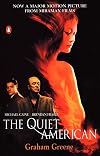
This doesn't express the infinite weight of living under the tension between autonomy and guilt (which in all Greene's works is how "responsibility" manifests) with the same nuanced, sad patience as some of the author's very best books: The Heart of the Matter or The Power and the Glory, say; that testimonial atmosphere is leavened with the tight allegory and rock-solid plotting that backbeat his "entertainments", and so this is a hybrid creature (as also The Third Man, Brighton Rock), show more drawing its power from its Shakespearean inexorability. It's prescient politically, of course (the CIA in Vietnam during the independence war against the French, perfecting the kind of "third force" "our guys" skulduggery they would pull all over the world in the second half of the twentieth century and that would bear such grim fruit in the twenty-first), and there is a good rate of period and place detail that doesn't usually fall over into exotica (and when it does, like with some of the narrator's observations about the Vietnamese people especially when refracted through Phuong and a gender politics that is both racialized-colonial and prefeminist, its very supersededness helps express the narrator's limits and adds a psychological dimension to the political allegory--and then too also, no doubt only partially at most with Greene's conscious acquiescence, opens the door for an explosive postcolonial recombination, the still here mostly elided perspective of the Vietnamese, who will be the actual victors in the liberation war and who will blow the British–American old hand–young turk structuring dynamic here to smithereens). But basically this is an existential work about "commitment," which for Greene as for Sartre is ultimately the only question, and about the different kinds of monsters it makes of those who embrace it and those who flee from it as long as possible, and how much of our humanity we may salvage under such circumstances, and in what way. Do you like novels that dramatize a moral choice? Then this one will resonate complexly and not with the flatness to which allegory is sometimes prone; if not, not.
(Also, I been drinking vermouth cassis like daily since I read this b, as they did, and so I have it for that to thank.) show less
(Also, I been drinking vermouth cassis like daily since I read this b, as they did, and so I have it for that to thank.) show less

Note: this review is a rewrite of my original 2011 review, with new comments for 2020 where appropriate.
This book was inspired by Greene’s experience working for MI6 during the Second World War and particularly the story of Agent Garbo, who invented a ring of agents he “controlled” (and, naturally, collected expenses for). On my first read of this book, back in 2011, I had read only a magazine article about Garbo. I have since read Ben Macintyre’s excellent Double Cross, and J. C. show more Masterman’s The Double-Cross System, which I think really added to my enjoyment this time. (“Aha, there’s that comment about the code grouping for the word ‘eunuch’!” I said to myself. Greene thought that was hilarious when he was in the intelligence service and actually found a way to work it into one of his cables.)
Although this is billed by Greene as an “entertainment” rather than a heavy-hitting novel, it is one that is read best at home with a cup of tea. It is very carefully put together, and the comedy is there in spades: the recruitment scene, the reports, the spiralling out of control as British intelligence think their man in Havana is really hot stuff. It is also rewarding to see Wormold develop as a person: he becomes more assured and assertive as he realizes what his priorities in life are.
This book and A Gun for Sale are probably my favourite Greenes. I’d definitely recommend them if you like le Carré, or perhaps as a warmup to le Carré if you are intimidated by the latter. show less
This book was inspired by Greene’s experience working for MI6 during the Second World War and particularly the story of Agent Garbo, who invented a ring of agents he “controlled” (and, naturally, collected expenses for). On my first read of this book, back in 2011, I had read only a magazine article about Garbo. I have since read Ben Macintyre’s excellent Double Cross, and J. C. show more Masterman’s The Double-Cross System, which I think really added to my enjoyment this time. (“Aha, there’s that comment about the code grouping for the word ‘eunuch’!” I said to myself. Greene thought that was hilarious when he was in the intelligence service and actually found a way to work it into one of his cables.)
Although this is billed by Greene as an “entertainment” rather than a heavy-hitting novel, it is one that is read best at home with a cup of tea. It is very carefully put together, and the comedy is there in spades: the recruitment scene, the reports, the spiralling out of control as British intelligence think their man in Havana is really hot stuff. It is also rewarding to see Wormold develop as a person: he becomes more assured and assertive as he realizes what his priorities in life are.
This book and A Gun for Sale are probably my favourite Greenes. I’d definitely recommend them if you like le Carré, or perhaps as a warmup to le Carré if you are intimidated by the latter. show less
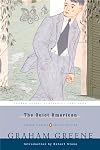
I've become a Graham Greene fan. Never disappointing, always engaging and thought-provoking. Like The Power and the Glory and Our Man in Havana, and others, The Quiet American places a very personal story within a momentous historical setting, finding the questions and the personal struggles the historical setting poses for the lives of ordinary people.
The Quiet American raises questions about the inevitability of taking a stand. There is no such thing as an observer. Sooner or later, merely show more observing is taking a stand, through knowledge and inaction.
It also recalls all the questions about western involvement in the cultures and politics of other countries. Fowler and Pyle, the British and American figures in the book, take different approaches. Fowler is the observer, Pyle the committer. They fall in love with the same woman, with Fowler seeking comfort and pleasure to pass the days while Pyle promises to marry the woman. Fowler professes disinterest in taking sides in the complicated politics of French-occupied Viet Nam. Pyle takes sides. Pyle's actions ultimately compel Fowler to make a choice.
There is certainly an eerie feeling to the book. Although written in 1955 about the French involvement in Viet Nam, it mirrors American involvement in the 60s and 70s. What we learned so much later was apparent to Greene in 1955. Fowler and others move among the native population with the air of being in charge of something, while the divided population carries on their struggles and their resistance invisibly to the westerners, until it's too late for them to do anything about it. The war is recognizably unwinnable for the French, as Fowler remarks and as everyone seems to know, except Pyle and his Harvard-inspired fantasy of a "third force" beyond colonialism and Communism. But the war continues on its own momentum. Viet Nam is itself the "third force" -- it reasserts itself inevitably, no matter what the French do to subdue it, just as it did no matter what we did later. show less
The Quiet American raises questions about the inevitability of taking a stand. There is no such thing as an observer. Sooner or later, merely show more observing is taking a stand, through knowledge and inaction.
It also recalls all the questions about western involvement in the cultures and politics of other countries. Fowler and Pyle, the British and American figures in the book, take different approaches. Fowler is the observer, Pyle the committer. They fall in love with the same woman, with Fowler seeking comfort and pleasure to pass the days while Pyle promises to marry the woman. Fowler professes disinterest in taking sides in the complicated politics of French-occupied Viet Nam. Pyle takes sides. Pyle's actions ultimately compel Fowler to make a choice.
There is certainly an eerie feeling to the book. Although written in 1955 about the French involvement in Viet Nam, it mirrors American involvement in the 60s and 70s. What we learned so much later was apparent to Greene in 1955. Fowler and others move among the native population with the air of being in charge of something, while the divided population carries on their struggles and their resistance invisibly to the westerners, until it's too late for them to do anything about it. The war is recognizably unwinnable for the French, as Fowler remarks and as everyone seems to know, except Pyle and his Harvard-inspired fantasy of a "third force" beyond colonialism and Communism. But the war continues on its own momentum. Viet Nam is itself the "third force" -- it reasserts itself inevitably, no matter what the French do to subdue it, just as it did no matter what we did later. show less
Lists
Best Satire (1)
AP Lit (1)
Fiction For Men (1)
Best First Lines (1)
Latin America (1)
Revolutions (1)
Schwob Nederland (1)
Movies/Shows (1)
Asia (1)
Read This Next (1)
Franklit (1)
Best War Stories (1)
Overdue Podcast (1)
. (1)
Summer Books (1)
Florida (1)
Greatest Books (1)
Books About Boys (1)
Fiction: Asia (1)
United Kingdom (1)
Americans Abroad (1)
My Wishlist (1)
1930s (3)
Africa (3)
Nifty Fifties (3)
1940s (3)
. (3)
Best Spy Fiction (3)
Folio Society (7)
My TBR (6)
1950s (4)
Unread books (4)
Short and Sweet (2)
Five star books (2)
THE WAR ROOM (2)
Books (1)
Fave Books (1)
Catalog (1)
Read These Too (2)
War Literature (2)
Obama Reads (2)
A Novel Cure (2)
1970s (2)
Favourite Books (2)
Awards


You May Also Like


Associated Authors
Statistics
- Works
- 364
- Also by
- 121
- Members
- 87,923
- Popularity
- #119
- Rating
- 3.8
- Reviews
- 1,742
- ISBNs
- 2,291
- Languages
- 32
- Favorited
- 58


