

Christian Wiman
Author of My Bright Abyss: Meditation of a Modern Believer
About the Author
Christian Wiman is The author of numerous books, including two memoirs, My Bright Abyss: Meditation of a Modern Believer (FSG, 2013) and He Held Radical Light: The Art of Faith, the Faith of Art (FSG, 2018); Every Riven Thing (FSG, 2010), winner of the Ambassador Book Award in poetry; and Once in show more the West (FSG, 2014), a National Book Critics Circle Award finalist in poetry. He is also the translator of Stolen Air: Selected Poems of Osip Mandelstam. He reaches religion and literature at the Yale Institute of Sacred Music and at Yale Divinity School. show less
Image credit: Christian Wiman
Works by Christian Wiman
Poetry [Magazine] 2008-2009 1 copy
Poetry 100 Years 1 copy
Associated Works
Tagged
Common Knowledge
Members
Reviews
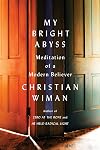
Though Wiman’s book is no more than 125 pages, it can easily take the same time to read as if it was 300 pages. Wiman straddles a beam which might sit poorly with rock solid believers and stone- cold atheists. He offers fine quotes from mystics more than theologians on the impossibility of knowing God. Wiman quotes Simone Weil, the convert-Catholic mystic, that all believers feel the anguish of God’s absence, but her problem (says Wiman) is that Weil stops at the anguish instead of going show more to the above absence as a call to His presence.
At his best, Wiman offers us this distinction: “Mysticism needs dogma so as not to dissipate into moments of spiritual intensity that are merely personal; dogma needs mysticism so as not to “calcify” into predictable unknowing, pontificating, anti-intellectual services.” And, unlike some writers who straddle the beam between belief, disbelief, and after reminding us throughout his book that he is a poet, quoting his own poems and those of other poets, including Frost, Herbert, Eliot, he offers this recommendation: We must refine and remake language to fit contemporary doubt and despair – and joys.
To his credit, Wiman does not narrate his struggle with a rare, life-threatening bone cancer in a solipsistic manner, but shares how his faith as well as his love of poetry and art sustains him. At times, I wanted to challenge some of is declarations on grief and loss, compassion, and pity. Hold onto the love for the one you lost, do not hold onto the grief, he lectures. Here he does become solipsistic, imo. We all have our way of living with loss. The millions of flowers and flags placed at the gravesides on Memorial Day can attest to it. He sounds like he experienced the kind of pity he criticizes when he tells us that pity is no more than a lament for the person ostensibly offering sympathy. It is tears for them, not you. Compassion takes the other person’s suffering and interweaves it among your own nerves. Perhaps. Like grief and loss, we all have our own way of reaching out to a friend or family member who is suffering. It may not fit Wiman’s distinctions.
If you read Wiman’s book, I recommend you do so with the space and time for reflection. I had to re-read not a few sentences for both meaning and for how his thought reverberated with my own thinking. A good recommendation. show less
At his best, Wiman offers us this distinction: “Mysticism needs dogma so as not to dissipate into moments of spiritual intensity that are merely personal; dogma needs mysticism so as not to “calcify” into predictable unknowing, pontificating, anti-intellectual services.” And, unlike some writers who straddle the beam between belief, disbelief, and after reminding us throughout his book that he is a poet, quoting his own poems and those of other poets, including Frost, Herbert, Eliot, he offers this recommendation: We must refine and remake language to fit contemporary doubt and despair – and joys.
To his credit, Wiman does not narrate his struggle with a rare, life-threatening bone cancer in a solipsistic manner, but shares how his faith as well as his love of poetry and art sustains him. At times, I wanted to challenge some of is declarations on grief and loss, compassion, and pity. Hold onto the love for the one you lost, do not hold onto the grief, he lectures. Here he does become solipsistic, imo. We all have our way of living with loss. The millions of flowers and flags placed at the gravesides on Memorial Day can attest to it. He sounds like he experienced the kind of pity he criticizes when he tells us that pity is no more than a lament for the person ostensibly offering sympathy. It is tears for them, not you. Compassion takes the other person’s suffering and interweaves it among your own nerves. Perhaps. Like grief and loss, we all have our own way of reaching out to a friend or family member who is suffering. It may not fit Wiman’s distinctions.
If you read Wiman’s book, I recommend you do so with the space and time for reflection. I had to re-read not a few sentences for both meaning and for how his thought reverberated with my own thinking. A good recommendation. show less
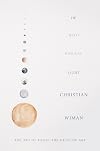
Reading Wiman, former editor of Poetry magazine, on poetry and faith is always a pleasure. Here he argues that poetry, or art generally, cannot be an end. The hunger that gives rise to art cannot be satisfied by it. But experiencing or creating great poetry, or art, I think he is saying, functions to quiet the incessant chatter and cacophony in one’s head (what I think Buddhism calls the “monkey mind”) forming a “spot in time” to quote Wordsworth, in which faith is present, before, show more inevitably, it slips away again in the currents. In this it is similar to being confronted with the hard fact of one’s imminent death, which also serves to still the mind. Wiman, a poet and rare cancer survivor, at least argues from firsthand knowledge.
Interestingly Wiman believes that even great poets who reject theistic faith - Ammons, Oliver, Larkin - express these spots of time in their works. They express the divine order in their poetry while rejecting it everywhere else, and indeed, this is a feature of modern artists. Even Larkin’s famous and possibly terrifying poem Aubade, reading in part, “The sure extinction that we travel to / And shall be lost in always. Not to be here, / Not to be anywhere, / And soon: nothing more terrible, nothing more true.” does this. The dark night of the soul, the scouring of the ego, is no stranger, no unknown companion, to faith. Larkin himself could not accept the signs of faith in his own work, but they are present.
What eternal outcome faith points to Wiman cannot say. He discounts the traditional Christian conception of the continuation of self in another form as a mere dream and fantasy, granting Larkin and other critics of religion a point when they say it is all about fear and trying to avoid death, though Wiman still identifies as Christian. Many believers would say his own faith is therefore weak, though it reminds me of Nabokov, writing in his fiction of how unoriginal and uncreative the human imagination is, that all we can envision eternity being is basically more of what we already know. We can’t know.
Wiman quotes Rabbi Heschel’s definition of faith as faithfulness to a time when we had faith. It’s a slippery thing, coming and going, impossible to pin down, but at times glancingly accessible. Great art being one of those times, capable of emerging even through persons who posses no faith at all, who may not recognize it in their own work. Poets treat their art as an ends rather than a means of expressing the greater order at their own peril, however, for “Understand that there is a beast within you / that can drink till it is / sick, but cannot drink till it is satisfied... / It does / not wish you well.” (Frank Bidart) show less
Interestingly Wiman believes that even great poets who reject theistic faith - Ammons, Oliver, Larkin - express these spots of time in their works. They express the divine order in their poetry while rejecting it everywhere else, and indeed, this is a feature of modern artists. Even Larkin’s famous and possibly terrifying poem Aubade, reading in part, “The sure extinction that we travel to / And shall be lost in always. Not to be here, / Not to be anywhere, / And soon: nothing more terrible, nothing more true.” does this. The dark night of the soul, the scouring of the ego, is no stranger, no unknown companion, to faith. Larkin himself could not accept the signs of faith in his own work, but they are present.
What eternal outcome faith points to Wiman cannot say. He discounts the traditional Christian conception of the continuation of self in another form as a mere dream and fantasy, granting Larkin and other critics of religion a point when they say it is all about fear and trying to avoid death, though Wiman still identifies as Christian. Many believers would say his own faith is therefore weak, though it reminds me of Nabokov, writing in his fiction of how unoriginal and uncreative the human imagination is, that all we can envision eternity being is basically more of what we already know. We can’t know.
Wiman quotes Rabbi Heschel’s definition of faith as faithfulness to a time when we had faith. It’s a slippery thing, coming and going, impossible to pin down, but at times glancingly accessible. Great art being one of those times, capable of emerging even through persons who posses no faith at all, who may not recognize it in their own work. Poets treat their art as an ends rather than a means of expressing the greater order at their own peril, however, for “Understand that there is a beast within you / that can drink till it is / sick, but cannot drink till it is satisfied... / It does / not wish you well.” (Frank Bidart) show less
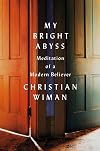
My Bright Abyss is not a book that you read, but one you must savor. It is slow-going, contradictory and painful; however, few books pull you deeper into the mysterious abyss of life like this one. It will be a book I read again.
It is a book that will challenge your faith and grow it, nudging you toward Jesus and confusing your connection to divinity. I loved the process of reading it; however, there's little I can recall after finishing. It's a book that gives very few answers but is a show more helpful companion for the journey. Recommended. show less
It is a book that will challenge your faith and grow it, nudging you toward Jesus and confusing your connection to divinity. I loved the process of reading it; however, there's little I can recall after finishing. It's a book that gives very few answers but is a show more helpful companion for the journey. Recommended. show less
This is an utterly astonishing book -- complex, thoughtful, elegaic, Wiman's book of essays are a profound medication on faith and poetry and the search for meaning. Wiman, the editor of POETRY magazine wrote the book during a period when he was undergoing treatment for incurable cancer (he is in remission, although not cured).
There are few books I've underlined as much as this one. His essays are complicated and never offer simple answers, either to questions of faith or art. He often show more recedes into the shadows of poetry -- his own and that of others -- to find the language of clarity he seeks to explore the concepts of an afterlife. He says, "You must let go of all conception of what eternity is, which means letting go of you you are, i order to feel the truth of eternity and its meaning in your life--and in your death." and "What do you do, what do you say, what in the world are you going to believe in when you are dying? It is not enough to act as if when the wave is closing over you, and that little whiff of the ineffable you get from meditation or mysticism is toxic to the dying man, who needs the rock of one real truth." Indeed.
Wiman is able to articulate concepts about time and God and Christ without proselytizing and in such a way as to be useful to anyone asking the Big Questions; one needn't be Christian.
I am deeply affected by this book -- both comforted and provoked -- and I know I'll refer to it often. I'll end with one of Wiman's final thoughts:
"So much of faith has so little to do with belief, and so much to do with acceptance. Acceptance of all the gifts that God, even in the midst of death, grants us. Acceptance of the fact that we are, as Paul Tillich says, accepted. Acceptance of grace." show less
There are few books I've underlined as much as this one. His essays are complicated and never offer simple answers, either to questions of faith or art. He often show more recedes into the shadows of poetry -- his own and that of others -- to find the language of clarity he seeks to explore the concepts of an afterlife. He says, "You must let go of all conception of what eternity is, which means letting go of you you are, i order to feel the truth of eternity and its meaning in your life--and in your death." and "What do you do, what do you say, what in the world are you going to believe in when you are dying? It is not enough to act as if when the wave is closing over you, and that little whiff of the ineffable you get from meditation or mysticism is toxic to the dying man, who needs the rock of one real truth." Indeed.
Wiman is able to articulate concepts about time and God and Christ without proselytizing and in such a way as to be useful to anyone asking the Big Questions; one needn't be Christian.
I am deeply affected by this book -- both comforted and provoked -- and I know I'll refer to it often. I'll end with one of Wiman's final thoughts:
"So much of faith has so little to do with belief, and so much to do with acceptance. Acceptance of all the gifts that God, even in the midst of death, grants us. Acceptance of the fact that we are, as Paul Tillich says, accepted. Acceptance of grace." show less
Lists
Awards


You May Also Like


Associated Authors
Statistics
- Works
- 136
- Also by
- 5
- Members
- 2,387
- Popularity
- #10,753
- Rating
- 4.0
- Reviews
- 33
- ISBNs
- 36
- Languages
- 1
- Favorited
- 1