

Don Share
Author of The Open Door: One Hundred Poems, One Hundred Years of "Poetry" Magazine
About the Author
Don Share is Curator of the George Edward Woodberry Poetry Room, Harvard College Library, and Poetry Editor at The Partisan Review and The Harvard Review.
Image credit: Poetry Foundation
Works by Don Share
The Open Door: One Hundred Poems, One Hundred Years of "Poetry" Magazine (2012) 124 copies, 3 reviews
Poetry Magazine Vol. 211 No. 3, December 2017 — Editor — 16 copies
Poetry Magazine Vol. 213 No. 4, January 2019 — Editor — 14 copies
Poetry Magazine Vol. 216 No. 1, April 2020 — Editor — 11 copies
Poems 2 copies
Poetry Volume 22, Number 4 1 copy
Harmonia 1 copy
Associated Works
Tagged
Common Knowledge
- Birthdate
- 1957
- Gender
- male
- Occupations
- editor, Poetry magazine
poetry editor, Partisan Review - Nationality
- USA
- Map Location
- USA
Members
Reviews
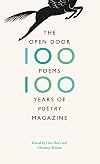
"The Open Door 100 Poems 100 Years of Poetry Magazine" (no touchstone), edited by Don Share and Christian Wiman, celebrates a century of poetry published by the venerable and now flush (thanks to Ruth Lilly) Poetry Magazine. They didn't decide to include the most well-known ones. In the introduction Christopher Wiman explains that they "approached the archive just as we do the hundred thousand submissions that come into our offices each year, poem by poem, with an eye out for the unexpected show more . . ."
In my mind what they went for were the strongest and freshest. They left out, for example, any from "a Pulitzer Prize winner, whose poems, just a couple of decades after his death, feel ambered in a dead idiom." Some of your favorites will no doubt be missing. No Billy Collins, really? Over some of these you decided to include?
Well, that's what happens when people are set up to judge what's best. We see it with the lists of "bests" all the time, we see with the various halls of fame, we see it with the judging on reality tv. Overall, IMO, they've done a stellar job here. I found all of the poems interesting, even some of them as they sailed gracefully over my head, and the book resulted in a very high "post-it concentration" from me. Huh? Well, I'm one of those who puts a post-it sticking out from the book where there's something I like and want to come back to later. I'm looking at a lot of them right now.
Wiman's introduction actually got several post-its, and I agree with a lot of what he says and poems he highlights there. I do wish they'd picked Wallace Steven's famous Sunday Morning instead of his "little known gem" (no, it's not a gem) called "Tea at the Palaz of Hoon", and "The Fisherman" is not "one of the most beautiful poems Yeats ever wrote", but that's only because he wrote so many other much more beautiful ones.
They did put in ones I've loved forever, like Pound's In the Station of the Metro and T.S. Eliot's Love Song of J. Alfred Prufrock. But it's the many new-to-me ones that really knocked me out. Roddy Lumsden's "The Young", watching his and our youth sail away on the farthest wave, Laura Kasischke's "Look", with wonderful imagery about her mother's rage at her father and a quiet, killer, ending, Mary Karr's "Disgraceland", with its surprisingly down to earth tale of Christian awakening that won't make anyone mad, and William Matthews' playful "Mingus at the Showplace" about bad poetry and the firing, mid-piece, of a piano player.
Some made me think about the time and limitations of the poet. Donald Justice's "Men at Forty" is really good, but there were and are a whole lot of men at that age who didn't and don't have a house and a woods and a mortgage. And now, at least, a whole lot of women do.
Some were were impressive with their formal grace, managing to follow forms faithfully while enhancing the poem and still moving the reader. One did something I'd never seen before, which was to take four lines from a Gwendolyn Brooks poem, and end each of the four stanzas with one of those lines, sequentially. That was P.K. Page in "My Chosen Landscape". What are they? "I am a continent, a violated geography/Yet still I journey to this naked country/to seek a form which dances in the sand./ This is my chosen landscape."
I loved a new one to me from a favorite old poet, John Berryman, called "The Traveler." He's not like others, though he travels with them. "They pointed me out at the station, and the guard/ Looked at me twice, thrice, thoughtfully and hard." Oh, darn, time's up. Pencils down. I'll return to finish this.
Whoops. That's plenty long, isn't it? "I didn't have enough time to make it shorter." Sure applies here. Anyway, lots of variety in this collection, and it's well worth reading. Please read the horrifying "The Lie" by Don Paterson and the remarkable "A Child's Garden of Gods" by Belle Randall if you get the chance. show less
In my mind what they went for were the strongest and freshest. They left out, for example, any from "a Pulitzer Prize winner, whose poems, just a couple of decades after his death, feel ambered in a dead idiom." Some of your favorites will no doubt be missing. No Billy Collins, really? Over some of these you decided to include?
Well, that's what happens when people are set up to judge what's best. We see it with the lists of "bests" all the time, we see with the various halls of fame, we see it with the judging on reality tv. Overall, IMO, they've done a stellar job here. I found all of the poems interesting, even some of them as they sailed gracefully over my head, and the book resulted in a very high "post-it concentration" from me. Huh? Well, I'm one of those who puts a post-it sticking out from the book where there's something I like and want to come back to later. I'm looking at a lot of them right now.
Wiman's introduction actually got several post-its, and I agree with a lot of what he says and poems he highlights there. I do wish they'd picked Wallace Steven's famous Sunday Morning instead of his "little known gem" (no, it's not a gem) called "Tea at the Palaz of Hoon", and "The Fisherman" is not "one of the most beautiful poems Yeats ever wrote", but that's only because he wrote so many other much more beautiful ones.
They did put in ones I've loved forever, like Pound's In the Station of the Metro and T.S. Eliot's Love Song of J. Alfred Prufrock. But it's the many new-to-me ones that really knocked me out. Roddy Lumsden's "The Young", watching his and our youth sail away on the farthest wave, Laura Kasischke's "Look", with wonderful imagery about her mother's rage at her father and a quiet, killer, ending, Mary Karr's "Disgraceland", with its surprisingly down to earth tale of Christian awakening that won't make anyone mad, and William Matthews' playful "Mingus at the Showplace" about bad poetry and the firing, mid-piece, of a piano player.
Some made me think about the time and limitations of the poet. Donald Justice's "Men at Forty" is really good, but there were and are a whole lot of men at that age who didn't and don't have a house and a woods and a mortgage. And now, at least, a whole lot of women do.
Some were were impressive with their formal grace, managing to follow forms faithfully while enhancing the poem and still moving the reader. One did something I'd never seen before, which was to take four lines from a Gwendolyn Brooks poem, and end each of the four stanzas with one of those lines, sequentially. That was P.K. Page in "My Chosen Landscape". What are they? "I am a continent, a violated geography/Yet still I journey to this naked country/to seek a form which dances in the sand./ This is my chosen landscape."
I loved a new one to me from a favorite old poet, John Berryman, called "The Traveler." He's not like others, though he travels with them. "They pointed me out at the station, and the guard/ Looked at me twice, thrice, thoughtfully and hard." Oh, darn, time's up. Pencils down. I'll return to finish this.
Whoops. That's plenty long, isn't it? "I didn't have enough time to make it shorter." Sure applies here. Anyway, lots of variety in this collection, and it's well worth reading. Please read the horrifying "The Lie" by Don Paterson and the remarkable "A Child's Garden of Gods" by Belle Randall if you get the chance. show less
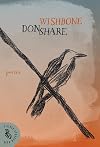
Share's new collection shows just as much debt to tradition, formalism, the influence of philosophy on a writing life, and the chain of poetic influence as it displays an innovative and unique poetics very much in tune with contemporary life. A wonderful example of this fusion of the old and the new is "Ready for a Psalm of My Own"; here, Share uses loose iambic pentameter while describing city life and the chaos of hypermodernity: "What language do you speak / into your iPhone?" In Share's show more hands, history and philosophy are also placed under a modern day microscope as in "Magna Carta":
My umbrella
isn't worth
the paper
it's written on.
There are also some very short poems here which seem to be a poetics of urgency in that hustle and bustle world distilled to lines one might scan. These shorter poems are often prescient and deeply resonant: in one after Rilke, entitled "Hwaet," Share invokes Rilke's metaphysical form of angelic interrogation in order to receive even mere fragments of divine truth, and Share then subverts this with a very physical and almost Munchian image of despair:
Who among the angels would hear me
if I started screaming my head off?
"Bowling on the Day of Atonement" is a short elegy that proves a poem's economy and its powerful images are often enough to convey what "news" a poem has to offer, to bring William Carlos Williams's famous phrase to mind. In "Bowling...," Share gives us anecdote and then poetic closure:
My old man used to say
a little rain never hurt anybody.
There were downpours
at his funeral.
Wishbone is a stellar collection that showcases an important contemporary poet "Rustling / in my own / silks" as Share elegantly puts it in "Poetry." There is autobiography, an interrogation of language and meaning, questions posed to the great poets of the past as well as the iconographic discord between images of the past and the present, there are lines and turns of phrase that will stick with the reader long after finishing the collection—in short, Wishbone is wise, witty and occasionally so poetically sacriligious ("I wonder if Emily Dickinson knew / about Chicken Little?" Share muses in "Ballad of the Foolish Man") that all poets and readers of contemporary poetry would do well to read and savor it slowly. show less
My umbrella
isn't worth
the paper
it's written on.
There are also some very short poems here which seem to be a poetics of urgency in that hustle and bustle world distilled to lines one might scan. These shorter poems are often prescient and deeply resonant: in one after Rilke, entitled "Hwaet," Share invokes Rilke's metaphysical form of angelic interrogation in order to receive even mere fragments of divine truth, and Share then subverts this with a very physical and almost Munchian image of despair:
Who among the angels would hear me
if I started screaming my head off?
"Bowling on the Day of Atonement" is a short elegy that proves a poem's economy and its powerful images are often enough to convey what "news" a poem has to offer, to bring William Carlos Williams's famous phrase to mind. In "Bowling...," Share gives us anecdote and then poetic closure:
My old man used to say
a little rain never hurt anybody.
There were downpours
at his funeral.
Wishbone is a stellar collection that showcases an important contemporary poet "Rustling / in my own / silks" as Share elegantly puts it in "Poetry." There is autobiography, an interrogation of language and meaning, questions posed to the great poets of the past as well as the iconographic discord between images of the past and the present, there are lines and turns of phrase that will stick with the reader long after finishing the collection—in short, Wishbone is wise, witty and occasionally so poetically sacriligious ("I wonder if Emily Dickinson knew / about Chicken Little?" Share muses in "Ballad of the Foolish Man") that all poets and readers of contemporary poetry would do well to read and savor it slowly. show less

4. Poetry October 2014 : Poetry from the United Kingdom (read Dec 12 - Jan 9)
edited by Don Share
There is, apparently, quite a divide between British and American poetry, a problem that started about 25 years ago or so. I find this odd. One consequence is that practically all the authors here, no matter how highly regarded they are in the UK, have never been published in Poetry magazine. Also, on the Poetry Foundation website, almost all their bios are very thin.
So, this a was good in that show more there are a whole bunch of names I didn't know, but it was bad in the sense that, well, every poetry issue is a whole bunch of names I don't know, only this issue lacked the supporting background about who these authors are. There is one very good essay by Todd Swift that reviews four young British poets and gave me a little sense of a foundation. (Link here) This led me to discover [[Emily Berry]], who is otherwise not in this issue but has two terrific poems on the Poetry Foundation website. (Link to Berry's page here)
Poets
(Asterisks mark favorites. The last several poems were much lighter and a bit fun which is I think why I liked them more.)
Leontia Flynn
Kathryn Simmonds
Mir Mahfuz Ali
Colette Bryce
Liz Berry
Ruby Robinson
Matthew Francis
Julian Stannard
Hugo Williams - three poems based on his experiences on dialysis
Caleb Klaces
Hannah Lowe
Claire Trévien
Tim Wells - a cockney and one-time something like a one-time skin head who reads in accent at length. One poem goes on at length on a specific toilet bowl.
John Wilkinson
Pascale Petit
David Harsent
James Brookes - reviewed in the Todd Swift essay
Rory Waterman
Sophie Collins
Martin Monahan
Sam Riviere
Frances Leviston
Toby Martinez de las Rivas - - reviewed in the Todd Swift essay, and heavily praised
Amy Key
David Wheatley*
Kathryn Maris*
John Greening*
Prose
Colette Bryce - Omphalos : Returning to the troubles of a Northern Irish childhood
Todd Swift - Four Englands : Four Debut British Poets Being Variously English* - A review of four books of poetry: Division Street by Helen Mort, Dear Boy by Emily Berry, Sins of the Leopard by James Brookes and Terror by Toby Martinez de las Rivas
Link to issue: http://www.poetryfoundation.org/poetrymagazine/toc/2444
2016
https://www.librarything.com/topic/185746#5034062 show less
edited by Don Share
There is, apparently, quite a divide between British and American poetry, a problem that started about 25 years ago or so. I find this odd. One consequence is that practically all the authors here, no matter how highly regarded they are in the UK, have never been published in Poetry magazine. Also, on the Poetry Foundation website, almost all their bios are very thin.
So, this a was good in that show more there are a whole bunch of names I didn't know, but it was bad in the sense that, well, every poetry issue is a whole bunch of names I don't know, only this issue lacked the supporting background about who these authors are. There is one very good essay by Todd Swift that reviews four young British poets and gave me a little sense of a foundation. (Link here) This led me to discover [[Emily Berry]], who is otherwise not in this issue but has two terrific poems on the Poetry Foundation website. (Link to Berry's page here)
Poets
(Asterisks mark favorites. The last several poems were much lighter and a bit fun which is I think why I liked them more.)
Leontia Flynn
Kathryn Simmonds
Mir Mahfuz Ali
Colette Bryce
Liz Berry
Ruby Robinson
Matthew Francis
Julian Stannard
Hugo Williams - three poems based on his experiences on dialysis
Caleb Klaces
Hannah Lowe
Claire Trévien
Tim Wells - a cockney and one-time something like a one-time skin head who reads in accent at length. One poem goes on at length on a specific toilet bowl.
John Wilkinson
Pascale Petit
David Harsent
James Brookes - reviewed in the Todd Swift essay
Rory Waterman
Sophie Collins
Martin Monahan
Sam Riviere
Frances Leviston
Toby Martinez de las Rivas - - reviewed in the Todd Swift essay, and heavily praised
Amy Key
David Wheatley*
Kathryn Maris*
John Greening*
Prose
Colette Bryce - Omphalos : Returning to the troubles of a Northern Irish childhood
Todd Swift - Four Englands : Four Debut British Poets Being Variously English* - A review of four books of poetry: Division Street by Helen Mort, Dear Boy by Emily Berry, Sins of the Leopard by James Brookes and Terror by Toby Martinez de las Rivas
Link to issue: http://www.poetryfoundation.org/poetrymagazine/toc/2444
2016
https://www.librarything.com/topic/185746#5034062 show less
A poet new to me, who I decided to try when making my order to David Godine this year. While I found an occasional interesting turn of phrase in these short poems (some are merely one or two lines), they simply were not written for me. That's not to say they are bad, but I'm not the one to judge. Share's poetry has won some prizes, and he was Editor-in-Chief of Poetry magazine (to which I once subscribed) from 2013-2020. He has also been recognized for his translations of the work of two show more Spanish poets, Dario Jaramillo Agudelo and Miguel Hernández . I did not rate this collection, as it didn't seem fair for me to do so. Give him a try, your mileage may vary.
Review written in 2022 show less
Review written in 2022 show less
Awards


You May Also Like


Associated Authors
Statistics
- Works
- 95
- Also by
- 1
- Members
- 922
- Popularity
- #27,829
- Rating
- 3.5
- Reviews
- 16
- ISBNs
- 10
