
Eileen Pollack
Author of The Only Woman in the Room: Why Science Is Still a Boys' Club
About the Author
Eileen Pollack is the author of the novels A Perfect Life, Breaking and Entering (a New York Times Editor's Choice selection), and Paradise, New York, as well as two collections of short fiction and an award-winning book of nonfiction. Her work has appeared in Best American Essays and Ben American show more Short Stories. She is a professor on the faculty of the Helen Zell MFA Program in Creative Writing at the University of Michigan. show less
Works by Eileen Pollack
Associated Works
The New Diaspora: The Changing Landscape of American Jewish Fiction (2015) — Contributor — 17 copies
Tagged
Common Knowledge
- Canonical name
- Pollack, Eileen
- Legal name
- Pollack, Eileen
- Birthdate
- 1956
- Gender
- female
- Education
- Yale University
- Nationality
- USA
- Places of residence
- Michigan, USA
- Associated Place (for map)
- Michigan, USA
Members
Reviews
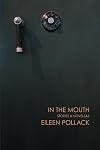
I've read two of Eileen Pollack's essay collections (MAYBE IT'S ME and THE ONLY WOMAN IN THE ROOM), both excellent, but IN THE MOUTH: STORIES & NOVELLAS (2008) is my first taste of her fiction, and I loved it. And no, it's not what you think. It contains several linked stories about the Rothstein family from Upstate New York, and the father, Milt, is a DENTIST. He is also a veteran of WWII. Daughter Wendy, forty-something, is a newspaper reporter, who has lived all over the country and been show more in numerous relationships, but remains unmarried and childless. We follow Milt through his retirement, his wife's final illness, his lonely exodus to Florida, and an unexpected and ill-fated romance there. There are tantalizing back stories of both Milt and Wendy throughout. Another unrelated story, "The Bris," about a dying father's final wishes, brought to mind Bernard Malamud's classic novel, THE ASSISTANT. I found all of these stories, about Jewish family life in modern America, to be very real, very human, universal in nature, and often very moving. This was particularly true in the last story, "Beached in Boca." In it, a depressed and terminally ill Milt tells Wendy -
"I have never read a single true word about getting old. Not in any book. Not in any newspaper. The truth about getting old is that every single person you've ever loved dies ... Well let me tell you, when every person you've ever loved dies, you feel like dying with them."
From having read Pollack's other two books - both memoirs in essay form - I can see that her stories are often semi-autobiographical. The father-daughter relationship is a dominant theme. These are wonderful, eloquent tales of family ties and tragedies. I loved all of them. My vey highest recommendation.
- Tim Bazzett, author of the memoir BOOKLOVER show less
"I have never read a single true word about getting old. Not in any book. Not in any newspaper. The truth about getting old is that every single person you've ever loved dies ... Well let me tell you, when every person you've ever loved dies, you feel like dying with them."
From having read Pollack's other two books - both memoirs in essay form - I can see that her stories are often semi-autobiographical. The father-daughter relationship is a dominant theme. These are wonderful, eloquent tales of family ties and tragedies. I loved all of them. My vey highest recommendation.
- Tim Bazzett, author of the memoir BOOKLOVER show less
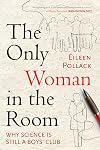
Some few years back, Lawrence Summers, then President of Harvard, made some off-the-cuff and disparaging remarks as to why women are not better represented in STEM (Science, Technology, Engineering and Mathematics) fields. While he attempted to walk back those statements later, many people still regard the moment as a clarion call for a better encouragement and representation of women and minorities in the hard sciences. Pollack takes up the gauntlet in her “The Only Woman in the Room: Why show more Science is Still a Boys’ Club.”
Pollack grew up in the ‘60’s and ‘70’s, in rather humble rural beginnings. Even though she had high test scores, she was regularly discouraged in her ardor for math and science. Her early education did not prepare her well for the rigors of the Yale physics department and she struggled to fit in as one of only two female physics students. Despite graduating with a BS summa cum laude, and lacking strong mentorship, Pollack ultimately succumbed to her inner doubts and sense of illegitimacy as a scientist and pursued writing instead. She went on to run the creative writing program at my alma mater, the University of Michigan. Her writing ability is quite evident throughout.
The first two thirds of Pollack’s book reflects on this personal history, recounting her subjective and anecdotal efforts in a male dominated field. Some of what she recounts rang true to someone who also pursued studies and a career in a male dominated field. Of course, in such a telling, everyone’s battle is their own, so what resonates of one might be less compelling for another. If other readers find her reflections off-putting, it is worth soldiering ahead.
The latter third of the book jumps ahead some 30-40 years and from the personal to the more objective to examine where American education and industry stands now in representation and support of women in STEM. This, to me, was the far more successful portion of the book, providing solid examples, data and studies. There is much that still discourages women in the hard sciences. I wish that Pollack had been more prescriptive in how to better address these issues. Ultimately, however, it’s encouraging that progress has been made. The current crop of young women ‘who don’t give a crap’ about how they are perceived (‘if they have a problem that we are women, that’s their problem’) gives one hope for the real changes happening even now. show less
Pollack grew up in the ‘60’s and ‘70’s, in rather humble rural beginnings. Even though she had high test scores, she was regularly discouraged in her ardor for math and science. Her early education did not prepare her well for the rigors of the Yale physics department and she struggled to fit in as one of only two female physics students. Despite graduating with a BS summa cum laude, and lacking strong mentorship, Pollack ultimately succumbed to her inner doubts and sense of illegitimacy as a scientist and pursued writing instead. She went on to run the creative writing program at my alma mater, the University of Michigan. Her writing ability is quite evident throughout.
The first two thirds of Pollack’s book reflects on this personal history, recounting her subjective and anecdotal efforts in a male dominated field. Some of what she recounts rang true to someone who also pursued studies and a career in a male dominated field. Of course, in such a telling, everyone’s battle is their own, so what resonates of one might be less compelling for another. If other readers find her reflections off-putting, it is worth soldiering ahead.
The latter third of the book jumps ahead some 30-40 years and from the personal to the more objective to examine where American education and industry stands now in representation and support of women in STEM. This, to me, was the far more successful portion of the book, providing solid examples, data and studies. There is much that still discourages women in the hard sciences. I wish that Pollack had been more prescriptive in how to better address these issues. Ultimately, however, it’s encouraging that progress has been made. The current crop of young women ‘who don’t give a crap’ about how they are perceived (‘if they have a problem that we are women, that’s their problem’) gives one hope for the real changes happening even now. show less
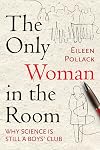
A most important book, completely engaging and yet uncovering the hidden barriers still facing women today who are subtly discouraged from STEM careers. I clearly remember the reaction in 1958 when I expressed an interest in taking physics my senior year. In the end, my girl friend and I were allowed to join about 20 boys in the class. The teacher was very avuncular and thought he was being nice when he said, "now you girls, even with levers to help, don't have the upper body strength to show more change a tire, just find a nice boy to do it for you." We laughed about him and didn't take it personally but perhaps it was one of the reasons we never seriously considered careers in science. It was very dismaying to read accounts from today's young women of similar encounters in school; subtle, and not so subtle. I'm planning to share this book with my daughter-in-law, who is a high school math teacher. show less
 This review was written for LibraryThing Early Reviewers.
I read THE ONLY WOMAN IN THE ROOM mostly because I so enjoyed Eilen Pollack's later memoir, MAYBE IT'S ME, and because she makes me laugh, something that's become increasingly important in today's polarized society. Well this one's A bit more serious, but there were still some chuckles. What's it about? Well, the subtitle is a pretty good clue: Why Science Is Still a Boys' Club. Because Pollack took on that closed club and cracked it, earning, despite numerous obstacles and frequent show more disparagement, a degree in Physics from Yale. Yes,YALE. There's a lot in here about her struggles with upper level, esoteric courses in science and math, which I found extremely interesting. Which surprised me, because math and science are NOT, and have NEVER been my thing. I took ONE Physics class in my senior year of high school. And no more. In college I took one semester of College Algebra, and that was the end of my math. No, wait, in grad school u was required to take a course in Statistics and Probability. Which I hated, never quite caught on, but scraped by. But Pollack makes her adventures in higher science and math INTERESTING. And she also makes very real how lonely it often was, being the only woman in the room, feeling left out and ostracized. But she persevered, got that degree. But then instead of grad school, she took a hard look at he life, then made a hard right turn to become a writer. And I believe it was indeed a RIGHT turn, because Pollack's is an immensely talented writer, or I wouldn't be reading her. There were a few things here I could definitely relate to, like washing dishes in a cafeteria to make a few needed bucks. Me too, Eileen. And scrubbing and waxing floors. But reading about the prejudice and slights she faced for being a woman made me a bit ashamed for my own sex, for being a man. I know that kind of sexist crap went on in college (and in the military too, where I spent eight years), and still does. Pollack spent nearly twenty years running a Creative Writing program at the University of Michigan and has published several books, so she's done okay for herself. And I've just begun reading her 2008 story collection, IN THE MOUTH, and was already laughing by page two. Did I say I just love how this woman writes, whatever the subject? Well I do. Loved this book. Very, very highly recommended. show less
Lists
Awards


You May Also Like


Associated Authors
Statistics
- Works
- 13
- Also by
- 2
- Members
- 457
- Popularity
- #53,729
- Rating
- 3.6
- Reviews
- 68
- ISBNs
- 38

