
John Skipp
Author of Book of the Dead
About the Author
Works by John Skipp
Gentlemen [short fiction] 3 copies
Monsterland 1 copy
The Price of a Slice 1 copy
Second Honeymoon — Author — 1 copy
Associated Works
The Year's Best Fantasy and Horror: First Annual Collection (1986) — Contributor — 332 copies, 6 reviews
Mister October: An Anthology in Memory of Rick Hautala (Volume 2) (2013) — Contributor — 62 copies, 18 reviews
In Heaven, Everything Is Fine: Fiction Inspired by David Lynch (2013) — Contributor — 56 copies, 1 review
Welcome to the Show: 17 Horror Stories - One Legendary Venue (2018) — Contributor — 34 copies, 1 review
Gauntlet: Exploring the Limits of Free Expression, No. 2 - Stephen King Special (1991) — Contributor — 31 copies, 1 review
Mister October: An Anthology in Memory of Rick Hautala (Volumes 1 and 2) (2013) — Contributor — 17 copies, 15 reviews
Gauntlet: Exploring the Limits of Free Expression, No. 5 - Porn in the USA (1993) — Contributor — 14 copies
A Haunting of Horrors: A Twenty-Novel eBook Bundle of Horror and the Occult (2014) — Contributor — 14 copies
Butcher Knives and Body Counts: Essays on the Formula, Frights, and Fun of the Slasher Film (2011) — Contributor — 14 copies, 1 review
Tagged
Common Knowledge
- Canonical name
- Skipp, John
- Legal name
- Skipp, John Mason
- Other names
- McQueen, Gina
Skipp, John Mason
Skipp, John M. - Birthdate
- 1957-05-20
- Gender
- male
- Occupations
- actor
musician - Nationality
- USA
- Birthplace
- Milwaukee, Wisconsin, USA
- Associated Place (for map)
- Wisconsin, USA
Members
Discussions
Skipp's THE LONG LAST CALL in Thing(amabrarian)s That Go Bump in the Night (January 2008)
Reviews
From the Files of Sheldon Nylander:
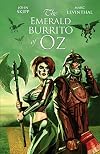
I came across a publication the other day called The Emerald Burrito of Oz, put together by John Skipp and Marc Levinthal. It was an account of Gene Spielman of Los Angeles' visit to his friend Aurora Jones, the proprietor of the Emerald Burrito which is the only Mexican restaurant in Oz, a magical world that seems to exist in parallel with our own and is the true world which L. Frank Baum based his books on. The gate exists in Salina, Kansas, but it show more requires special government permission to pass through. This would explain the recent influx of Munchkins working around Salina in recent years.
This world of Oz plays by its own rules, right down to the laws of science. Things don't work the same as they do over here, especially when it comes to technology. In Oz, only the simplest of technologies work. When any man-made technology passes through the gate, the results are...unpredictable, which leads to some odd situations, especially when reading through Gene's account written on the computer he took with him.
It becomes very easy to feel lost with this account, especially if you are only familiar with the Judy Garland movie (and to a lesser extent the much darker “Return to Oz” with Fairuza Balk; this book was originally published back in 2000, before “Oz, the Great and Powerful” was even a gleam in a studio executive's eye). There are references to individuals and creatures that, to my knowledge, are only accounted for in the L. Frank Baum books, which I haven't read.
The book has more violence than you might initially expect from something related to Baum's children's books, but then you remember that is the real life accounting of time in Oz during a civil war as they face off against someone known as the Hollow Man. When you get the real life counterparts of an axe-wielding Tin Man or the Lion, there's going to be violence and blood.
While the book seemed interesting for what it is, I had a hard time getting into it. Admittedly, this may be because, as I mentioned above, I haven't read Baum's original books, so there was some sense of feeling lost in a world that I should have reviewed the map for before traveling there. The players are interesting, with Aurora being the traditional tough hero while Gene is more of a wimp, but I would have liked to learn more details about the real life counterparts of the Scarecrow or the Lion. Still, you get quite a bit of story, character, and world-building, and The Emerald Burrito of Oz is one of the longer books to fall into the bizarro genre with very little padding, so you'll get more substance out of your reading.
The Emerald Burrito of Oz earns 3 flying monkeys out of 5.
Note: Just in case you can't tell (and there some are some out there who might not), this review was written in character. Yes, I know it's not real. show less
I came across a publication the other day called The Emerald Burrito of Oz, put together by John Skipp and Marc Levinthal. It was an account of Gene Spielman of Los Angeles' visit to his friend Aurora Jones, the proprietor of the Emerald Burrito which is the only Mexican restaurant in Oz, a magical world that seems to exist in parallel with our own and is the true world which L. Frank Baum based his books on. The gate exists in Salina, Kansas, but it show more requires special government permission to pass through. This would explain the recent influx of Munchkins working around Salina in recent years.
This world of Oz plays by its own rules, right down to the laws of science. Things don't work the same as they do over here, especially when it comes to technology. In Oz, only the simplest of technologies work. When any man-made technology passes through the gate, the results are...unpredictable, which leads to some odd situations, especially when reading through Gene's account written on the computer he took with him.
It becomes very easy to feel lost with this account, especially if you are only familiar with the Judy Garland movie (and to a lesser extent the much darker “Return to Oz” with Fairuza Balk; this book was originally published back in 2000, before “Oz, the Great and Powerful” was even a gleam in a studio executive's eye). There are references to individuals and creatures that, to my knowledge, are only accounted for in the L. Frank Baum books, which I haven't read.
The book has more violence than you might initially expect from something related to Baum's children's books, but then you remember that is the real life accounting of time in Oz during a civil war as they face off against someone known as the Hollow Man. When you get the real life counterparts of an axe-wielding Tin Man or the Lion, there's going to be violence and blood.
While the book seemed interesting for what it is, I had a hard time getting into it. Admittedly, this may be because, as I mentioned above, I haven't read Baum's original books, so there was some sense of feeling lost in a world that I should have reviewed the map for before traveling there. The players are interesting, with Aurora being the traditional tough hero while Gene is more of a wimp, but I would have liked to learn more details about the real life counterparts of the Scarecrow or the Lion. Still, you get quite a bit of story, character, and world-building, and The Emerald Burrito of Oz is one of the longer books to fall into the bizarro genre with very little padding, so you'll get more substance out of your reading.
The Emerald Burrito of Oz earns 3 flying monkeys out of 5.
Note: Just in case you can't tell (and there some are some out there who might not), this review was written in character. Yes, I know it's not real. show less

Art is the Devil is a short story by John Skipp that takes a satirical look at the art community. Well, maybe more specifically the art community in Los Angeles. Pretentiousness be thy name. It has a dark humor (very dark) that readers of bizarro fiction will love, although it could be off-putting to someone who is not familiar with bizarro or John Skipp. He engages in some rather in-your-face commentary, but there's also a more subtle layer of commentary that you'll need to dig for. What is show more the truth of art? Who can explain this truth? You'll have to read to find out. Quick and entertaining. At 99 cents, you can't go wrong here. Have at it! show less
Spore by John Skipp
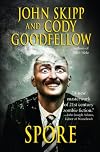
The only reason I picked up Spore by John Skipp and Cody Goodfellow was my fondness of the Splatterpunk literary movement of the 80s and 90s, of which Skipp was a major influential participant, and based on that expectation alone, Spore did not disappoint.
Spore bears a striking resemblance to Skipp’s previous work The Bridge – written at the height of Skipp’s writing relationship with coauthor Craig Spector – which was about chemical waste and pollution overtaking nature and the show more planet with an almost sentient malevolence. While Spore’s titular enemy doesn’t have the same origins, the hive-mind fungus invader’s very presence makes the novel seem like a logical spinoff of The Bridge’s environmentalist-based tone and imagery. Combine that with the book’s warts-and-all love affair with California – very reminiscent of fellow Splatterpunk author David J. Schow’s work – and Spore begins to feel like a callback to the old days of chunk-blowers and underground horror fandom.
Spore feels (at least, to me) a little more lighthearted than some might expect, but maybe that’s just another throwback to a horror genre that was more about being entertainingly gruesome than darkly foreboding. The zombie-plague aspect and far from nihilistic ending are somewhat formulaic, but if you aren’t obsessed with every book you read being a groundbreaking experience, that should keep you from enjoying this shameless attempt appeasing the gore-hound in your soul. show less
Spore bears a striking resemblance to Skipp’s previous work The Bridge – written at the height of Skipp’s writing relationship with coauthor Craig Spector – which was about chemical waste and pollution overtaking nature and the show more planet with an almost sentient malevolence. While Spore’s titular enemy doesn’t have the same origins, the hive-mind fungus invader’s very presence makes the novel seem like a logical spinoff of The Bridge’s environmentalist-based tone and imagery. Combine that with the book’s warts-and-all love affair with California – very reminiscent of fellow Splatterpunk author David J. Schow’s work – and Spore begins to feel like a callback to the old days of chunk-blowers and underground horror fandom.
Spore feels (at least, to me) a little more lighthearted than some might expect, but maybe that’s just another throwback to a horror genre that was more about being entertainingly gruesome than darkly foreboding. The zombie-plague aspect and far from nihilistic ending are somewhat formulaic, but if you aren’t obsessed with every book you read being a groundbreaking experience, that should keep you from enjoying this shameless attempt appeasing the gore-hound in your soul. show less
dude. was i ever happy when Skipp re-entered the horror scene. primarily writing with Craig Spector, he was one of most deranged, hip, and visceral authors and anthology editors of horror in the late 80s and early 90s. (Note that i said "visceral," not "gory" or "gross" -- sure, you'll find gorier works, but that's about all they have going for them. Edward Lee and John Pelan write ridiculous ditties for masturbating 13-year-old boys. yeah, i said it.)
Skipp, with a banshee scream, was show more instrumental in ushering in splatterpunk, which is still reverberating strongly in several genres today. splatterpunk's changed the face of the avant garde literary scenes for ever (Dunn, Homes, Leroy... yep), and we can confidently blame Skipp for this delicious transgression.
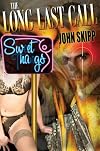
Skipp wrote the novella "The Long Last Call" in 2k6, and regaled us with it in novel form, along with the bonus short "Conscience" at the end of the book. ("Conscience" was somewhat of a meandering let-down). he'd been away for far too long. i loved TLLC, and read it in one sitting. while it didn't sucker-punch me quite as much as many of his earlier works with Spector, it still sucker-punched me. Skipp writes, hard, fast, and with no holds barred. more, John. more. show less
Skipp, with a banshee scream, was show more instrumental in ushering in splatterpunk, which is still reverberating strongly in several genres today. splatterpunk's changed the face of the avant garde literary scenes for ever (Dunn, Homes, Leroy... yep), and we can confidently blame Skipp for this delicious transgression.
Skipp wrote the novella "The Long Last Call" in 2k6, and regaled us with it in novel form, along with the bonus short "Conscience" at the end of the book. ("Conscience" was somewhat of a meandering let-down). he'd been away for far too long. i loved TLLC, and read it in one sitting. while it didn't sucker-punch me quite as much as many of his earlier works with Spector, it still sucker-punched me. Skipp writes, hard, fast, and with no holds barred. more, John. more. show less
Lists
Awards


You May Also Like


Associated Authors
Statistics
- Works
- 44
- Also by
- 47
- Members
- 2,717
- Popularity
- #9,457
- Rating
- 3.7
- Reviews
- 47
- ISBNs
- 87
- Languages
- 4
- Favorited
- 10