

Ilija Trojanow
Author of The Collector of Worlds
About the Author
Image credit: Photo by Effi Schweizer / Wikimedia Commons
Works by Ilija Trojanow
Angriff auf die Freiheit: Sicherheitswahn, Überwachungsstaat und der Abbau bürgerlicher Rechte (2009) 101 copies, 1 review
Nomade auf vier Kontinenten. Auf den Spuren von Sir Richard Francis Burton (2007) 32 copies, 3 reviews
Angelo Soliman : ein Afrikaner in Wien ; [376. Sonderausstellung des Wien-Museums, Wien-Museum 29. September 2011 bis 29. Jänner 2012] (2011) — Contributor — 10 copies, 1 review
Sehnsucht Ferne : Aufbruch in neue Welten — Contributor — 3 copies
Das Buch der Macht: Wie man sie erringt und (nie) wieder loslässt (Die Andere Bibliothek, Band 482) (2025) 2 copies
Das Buch der Macht: Wie man sie erringt und (nie) wieder loslässt (Die Andere Bibliothek, Band 482) 2 copies
Couchsurfen und andere Schlachten: Herausgegeben und mit einem Vorwort von Ilija Trojanow (detebe) (2017) 1 copy
Iza bijega 1 copy
Associated Works
Tagged
Common Knowledge
- Legal name
- Troyanov, Iliya
- Other names
- Iliya Troyanov
- Birthdate
- 1965-08-23
- Gender
- male
- Education
- University of Munich
- Occupations
- writer
translator
publisher - Organizations
- Bayrische Akademie der schönen Künste, Abteilung Literatur
PEN-Zentrum Deutschland (Beisitzer) - Awards and honors
- Adelbert-von-Chamisso-Preis (2000)
Leipzig Book Fair Prize (2006)
Berliner Literaturpreis (2007) - Nationality
- Bulgaria
Germany
Austria - Birthplace
- Sofia, Bulgaria
- Places of residence
- Nairobi, Kenya
Mumbai, India
Cape Town, South Africa
Mainz, Germany
Vienna, Austria
Members
Reviews
Angelo Soliman : ein Afrikaner in Wien ; [376. Sonderausstellung des Wien-Museums, Wien-Museum 29. September 2011 bis 29. Jänner 2012] by Philipp Blom

Angelo Soliman was an African slave who was trained as a fashion accessory for the nobility: Serving a cup of coffee in style. Via Southern Italy, he was a servant first of Count Lobkowitz and later Liechtenstein. Privileged and limited at the same time. he was quite successful and even influential, becoming a Freemason, marrying a woman of Dutch origin and acquiring a house extra muros. Not a bad life for an African slave! Alas, the Austrian Emperor had no respect of his black skin. Despite show more the protestations of his daughter, Soliman's body was skinned and a taxidermised exhibit of an African wild man complete with feathers created (which the cultured servant Soliman never was) and exhibited in the natural history collection for a few years (until the new director removed the strange item from public display. He did not, however, bury the remains. A fire during the 1848 revolution destroyed Soliman's skin and purged the museum's black stain.
Both the exhibition in the Wien Museum and its catalogue marvelously use the biography of Soliman to present larger concepts of 18th century society, e.g. the less well-known north-south African slave trade (where the majority of slaves ended up in the Ottoman Empire), the role of black servants as status symbols and fashion accessories (a human specimen among the Baroque ménagerie) to fascinating details such as one had to be a citizen of Vienna to acquire property intra muros. The catalogue is exceptionally well curated, with very little overlap, good coordination among the different authors and beautifully illustrated. Highly recommended. show less
Both the exhibition in the Wien Museum and its catalogue marvelously use the biography of Soliman to present larger concepts of 18th century society, e.g. the less well-known north-south African slave trade (where the majority of slaves ended up in the Ottoman Empire), the role of black servants as status symbols and fashion accessories (a human specimen among the Baroque ménagerie) to fascinating details such as one had to be a citizen of Vienna to acquire property intra muros. The catalogue is exceptionally well curated, with very little overlap, good coordination among the different authors and beautifully illustrated. Highly recommended. show less
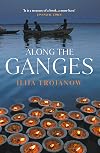
Ilija Trojanow's adventure along the Ganges unveils a mysterious culture of mythology and tradition in India. Traversing by boat, train, and on foot, Trojanow and his companion take in the sights, smells, sounds, and textures of the Ganges and surrounding landscape. Other reviewers are correct in saying Trojanow writes in such a way that you are right with him for every mile in India. There were times when reading Along the Ganges that I was reminded of Jeffrey Tayler's journey down the show more Congo in Facing the Congo. Like Tayler on the Congo, Trojanow needed protection while navigating the Ganges. A startling difference was that Tayler seemed to have researched his journey more thoroughly than Trojanow. Whereas Tayler carefully plotted his course, Trojanow admitted that he let the current take his boat wherever it wanted (and that turned out to be a mistake).
Interspersed between Trojanow's narrative about the Ganges, he tells the story of Shiva and Parvati, the legend of the dolphin, and the divide between castes. He meets a myriad of people from all walks of life. show less
Interspersed between Trojanow's narrative about the Ganges, he tells the story of Shiva and Parvati, the legend of the dolphin, and the divide between castes. He meets a myriad of people from all walks of life. show less
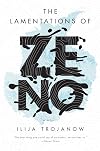
I am always in search of novels about climate change, which should have a great deal more literature about it than is in fact the case. Please recommend me any you find! In 'The Lamentations of Zeno', I was disappointed to find strong echoes of McEwan’s [b:Solar|7140754|Solar|Ian McEwan|https://i.gr-assets.com/images/S/compressed.photo.goodreads.com/books/1320510358l/7140754._SY75_.jpg|7404751], which I attempted to read then abandoned in annoyance. Once again, a man uses climate change as show more window dressing for his midlife crisis. It is a potentially civilisation-ending threat, so really deserves better than that. Just as with [b:Solar|7140754|Solar|Ian McEwan|https://i.gr-assets.com/images/S/compressed.photo.goodreads.com/books/1320510358l/7140754._SY75_.jpg|7404751], I was left wondering why I should give a damn about this man’s tedious love-life when the stability of the earth’s climate is at stake. Neither McEwan nor Trojanow managed to make me care about their narrator, or even believe that they actually studied climate change. Moreover, said narrators seemed very unlikely to be meaningfully affected by climate-related disaster. Basically, I don’t want literature that drapes climate change around flimsily as a backdrop for stories about middle aged men’s marital difficulties. I want books that explore the meanings and consequences of climate change for people’s lived experience. Examples I’ve come across are [b:Flight Behaviour|15705026|Flight Behaviour|Barbara Kingsolver|https://i.gr-assets.com/images/S/compressed.photo.goodreads.com/books/1345180767l/15705026._SY75_.jpg|18945788] (which manages to have a marital difficulties sub-plot without it dominating) and [b:The Carbon Diaries 2015|4935015|The Carbon Diaries 2015 (Carbon Diaries, #1)|Saci Lloyd|https://i.gr-assets.com/images/S/compressed.photo.goodreads.com/books/1273722854l/4935015._SY75_.jpg|5000676] (which remains a great climate change novel despite the title being overtaken by time).
I am willing to concede that ‘The Lamentations of Zeno’ quite possibly loses something in translation, especially the metatextual interludes at the end of each chapter. These didn’t really work for me; John Brunner did the same thing far better in [b:Stand on Zanzibar|41069|Stand on Zanzibar|John Brunner|https://i.gr-assets.com/images/S/compressed.photo.goodreads.com/books/1360613921l/41069._SY75_.jpg|2184253]. (Actually, Brunner’s [b:The Sheep Look Up|41074|The Sheep Look Up|John Brunner|https://i.gr-assets.com/images/S/compressed.photo.goodreads.com/books/1386924437l/41074._SY75_.jpg|900514] is a brilliant, devastating novel about environmental pollution. As it was written 1972, however, climate change is not mentioned.) Although the setup of a jaded glaciologist leading an Antarctic cruise for the very rich seemed ideally suited to interesting environmental commentary, not much materialised. The odd incident stood out, generally involving penguins, but the narrative was weighed down by awkward, pointless sex scenes and digressive anecdotes. The blurb claims it, ‘recalls the experimentation of high-modernist fiction without compromising a limpid sense of place or the pace of its narrative’. I’m afraid I must disagree on all fronts. As a novel it felt conventional rather than experimental to me, had very little sense of place, and the narrative pace was glacial (sorry, couldn’t resist). Quite possibly this is a great work of literature that merely failed to be what I expected and wanted. If you weren't bored by Ian McEwan's [b:Solar|7140754|Solar|Ian McEwan|https://i.gr-assets.com/images/S/compressed.photo.goodreads.com/books/1320510358l/7140754._SY75_.jpg|7404751], perhaps you might like it. Just don’t expect to find anything meaningful about climate change within. show less
I am willing to concede that ‘The Lamentations of Zeno’ quite possibly loses something in translation, especially the metatextual interludes at the end of each chapter. These didn’t really work for me; John Brunner did the same thing far better in [b:Stand on Zanzibar|41069|Stand on Zanzibar|John Brunner|https://i.gr-assets.com/images/S/compressed.photo.goodreads.com/books/1360613921l/41069._SY75_.jpg|2184253]. (Actually, Brunner’s [b:The Sheep Look Up|41074|The Sheep Look Up|John Brunner|https://i.gr-assets.com/images/S/compressed.photo.goodreads.com/books/1386924437l/41074._SY75_.jpg|900514] is a brilliant, devastating novel about environmental pollution. As it was written 1972, however, climate change is not mentioned.) Although the setup of a jaded glaciologist leading an Antarctic cruise for the very rich seemed ideally suited to interesting environmental commentary, not much materialised. The odd incident stood out, generally involving penguins, but the narrative was weighed down by awkward, pointless sex scenes and digressive anecdotes. The blurb claims it, ‘recalls the experimentation of high-modernist fiction without compromising a limpid sense of place or the pace of its narrative’. I’m afraid I must disagree on all fronts. As a novel it felt conventional rather than experimental to me, had very little sense of place, and the narrative pace was glacial (sorry, couldn’t resist). Quite possibly this is a great work of literature that merely failed to be what I expected and wanted. If you weren't bored by Ian McEwan's [b:Solar|7140754|Solar|Ian McEwan|https://i.gr-assets.com/images/S/compressed.photo.goodreads.com/books/1320510358l/7140754._SY75_.jpg|7404751], perhaps you might like it. Just don’t expect to find anything meaningful about climate change within. show less
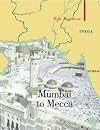
Those of us curious about what happens during a Hajj, the pilgrimage to the holy sites of Islam, can be thankful Trojanow made the journey. He writes with such beauty and grace, it is easy to get caught up in his descriptive words. Take the ritual of wazu, for example. There is a precise way to wash before any kind of prayer. At the end of the complicated process, one is supposed to feel calm, as if in a meditative state before prayer. I felt almost zen-like just reading about the process. I show more enjoyed learning about the Mumbai tea ceremonies and had a good laugh when Trojanow lost his sandals after a prayer session. Like any good travelogue, there is a decent mix of historical and personal. show less
Lists
Awards


You May Also Like


Associated Authors
Statistics
- Works
- 56
- Also by
- 2
- Members
- 1,363
- Popularity
- #18,858
- Rating
- 3.8
- Reviews
- 56
- ISBNs
- 152
- Languages
- 11
- Favorited
- 1
