
Genevieve Valentine
Author of Mechanique: A Tale of the Circus Tresaulti
About the Author
Image credit: Ellen Wright
Series
Works by Genevieve Valentine
A Bead of Jasper, Four Small Stones 5 copies
Demons, Your Body, and You 4 copies
Carthago Delenda Est 3 copies
DC Sneak Peek: Catwoman #1 3 copies
Asimov's Science Fiction: Vol. 48, No. 7 & 8 [July/August 2024] — Contributor — 3 copies
Study for Solo Piano 3 copies
The Last Run Of The Coppelia 3 copies
And the Next, and the Next 3 copies
The Red Shoes 3 copies
Abyssus Abyssum Invocat 2 copies
29 Union Leaders Can't Be Wrong 2 copies
Wondrous Days 2 copies
The Dire Wolf 2 copies
Catwoman (2011) #36 1 copy
Catwoman (2011) #37 1 copy
Catwoman (2011) #38 1 copy
Catwoman (2011) #46 1 copy
Future Perfect 1 copy
White Stone 1 copy
Strange Sports Stories (2015) #4 — Author — 1 copy
Catwoman (2011) #35 1 copy
Advection 1 copy
Catwoman: Bd. 8 1 copy
Good Fences 1 copy
Keep Calm and Carillon 1 copy
A Game Of Mars 1 copy
The Sandal-bride 1 copy
Seeing 1 copy
Overburden 1 copy
Hello, I’m Your Election 1 copy
Aberration 1 copy
Associated Works
The Mad Scientist's Guide to World Domination: Original Short Fiction for the Modern Evil Genius (2013) — Contributor — 433 copies, 22 reviews
Queen Victoria's Book of Spells: An Anthology of Gaslamp Fantasy (2013) — Contributor — 399 copies, 18 reviews
When Things Get Dark: Stories Inspired by Shirley Jackson (2021) — Contributor — 257 copies, 12 reviews
The Best Science Fiction and Fantasy of the Year, Volume 5 (2011) — Contributor — 166 copies, 4 reviews
Worlds Seen in Passing: Ten Years of Tor.com Short Fiction (2018) — Contributor — 162 copies, 1 review
Lost Transmissions: The Secret History of Science Fiction and Fantasy (2019) — Contributor — 154 copies, 5 reviews
The Best Science Fiction and Fantasy of the Year, Volume 7 (2013) — Contributor — 154 copies, 3 reviews
Mad Hatters and March Hares: All-New Stories from the World of Lewis Carroll's Alice in Wonderland (2017) — Contributor — 145 copies, 11 reviews
Willful Impropriety: 13 Tales of Society, Scandal, and Romance (2012) — Contributor — 88 copies, 4 reviews
HELP FUND MY ROBOT ARMY!!! and Other Improbable Crowdfunding Projects (2014) — Contributor — 82 copies, 4 reviews
The Best Science Fiction and Fantasy of the Year, Volume 9 (2015) — Contributor — 73 copies, 3 reviews
The Cutting Room: Dark Reflections of the Silver Screen (2014) — Introduction; Contributor — 72 copies, 9 reviews
The Final Frontier: Stories of Exploring Space, Colonizing the Universe, and First Contact (2018) — Contributor — 72 copies, 4 reviews
More Human Than Human: Stories of Androids, Robots, and Manufactured Humanity (2017) — Contributor — 62 copies, 2 reviews
The Best Science Fiction and Fantasy of the Year, Volume 10 (2016) — Contributor — 60 copies, 3 reviews
Hanzai Japan: Fantastical, Futuristic Stories of Crime From and About Japan (2015) — Contributor — 44 copies
Last Drink Bird Head : A Flash Fiction Anthology for Charity (2009) — Contributor — 33 copies, 1 review
Brave New Worlds {Second Edition ebook} — Contributor, some editions — 11 copies
Fantasy Fiction: A Writer's Guide and Anthology (Bloomsbury Writer's Guides and Anthologies) (2024) — Contributor — 2 copies
Subterranean Magazine Summer 2011 — Contributor — 2 copies
Tagged
Common Knowledge
- Birthdate
- 1981-07-01
- Gender
- female
- Agent
- Barry Goldblatt
- Nationality
- USA
- Birthplace
- Texas, USA
- Associated Place (for map)
- Texas, USA
Members
Reviews

Persona is about as different from Genevieve Valentine's The Girls at the Kingfisher Club as you can get. The latter is a fairytale retelling about twelve sisters with an abusive father, set during the jazz age in New York; Persona is a thriller about a diplomat and an undercover photographer who are on the run after an assassination attempt, set in a dystopian near-future in Paris.
But Valentine's writing style is absolutely recognisable: how the story hooks you in; how the narrative doesn't show more unfold in an entirely linear manner; the relevant tangents in parentheses; the careful sparseness of her prose; the way her characters have flaws and believable reasons for not warming to each other; the powerful punch of emotional moments; the way solutions are imperfect and have to be fought for; and the remarkably casual diversity of her characters.
Persona is set in a world where "diplomacy is celebrity". Ambassadors are "Faces", micromanaged by handlers who make decisions behind the scenes, and dependant upon public approval. Suyana, the delegate for the United Amazonian Rainforest Confederation, isn't one of the Big Nine - those "who had stable economies and agriculture and militaries not given to coups" - so her influence and allies are even more limited than some.
I loved the way Persona is written and I found it impossible to put down until I finished it. And then when I did, because I'd finished it, it was with that satisfying arm-flaily glow of Ahhh, this book was really good YOU SHOULD READ IT NOW.
It perhaps isn't a book that I'd read over and over - as a thriller, much of it's appeal was tied up the suspense of not knowing what was happening - but that's okay. There's going to be a sequel!
She had a part to play. There would be another part to play if she got out of this in one piece and went home. There would be another after that, for the cameras, and one for the Americans to save face, and another and another and another, trading out of the vast catalogue for the rest of her life, masks that never touched.
The first time Hakan had explained it to her she'd nearly cried. But the longer you did it, the easier it was; you didn't feel like much of a person, after a while, but that was a problem for later too. show less
But Valentine's writing style is absolutely recognisable: how the story hooks you in; how the narrative doesn't show more unfold in an entirely linear manner; the relevant tangents in parentheses; the careful sparseness of her prose; the way her characters have flaws and believable reasons for not warming to each other; the powerful punch of emotional moments; the way solutions are imperfect and have to be fought for; and the remarkably casual diversity of her characters.
Persona is set in a world where "diplomacy is celebrity". Ambassadors are "Faces", micromanaged by handlers who make decisions behind the scenes, and dependant upon public approval. Suyana, the delegate for the United Amazonian Rainforest Confederation, isn't one of the Big Nine - those "who had stable economies and agriculture and militaries not given to coups" - so her influence and allies are even more limited than some.
I loved the way Persona is written and I found it impossible to put down until I finished it. And then when I did, because I'd finished it, it was with that satisfying arm-flaily glow of Ahhh, this book was really good YOU SHOULD READ IT NOW.
It perhaps isn't a book that I'd read over and over - as a thriller, much of it's appeal was tied up the suspense of not knowing what was happening - but that's okay. There's going to be a sequel!
She had a part to play. There would be another part to play if she got out of this in one piece and went home. There would be another after that, for the cameras, and one for the Americans to save face, and another and another and another, trading out of the vast catalogue for the rest of her life, masks that never touched.
The first time Hakan had explained it to her she'd nearly cried. But the longer you did it, the easier it was; you didn't feel like much of a person, after a while, but that was a problem for later too. show less

This short story is about archivists retrieving and classifying evidence in the aftermath of an incident in New York City. It has the near-future dystopian vibe which Valentine does so well, and a level of bleakness which I find satisfying in short stories (but tend to be less of a fan of in novels). I listened to the audio/podcast version read by Kate Baker.
The first time I’d ever even been to any of those streets was the morning I reported to my scope leader, who was sitting behind a show more desk that looked like it had once belonged to a teacher, but there had been a couple of schools in the neighborhood and it was better not to think too much about it.
When you applied to the Homeland Archive, they asked a lot of questions about how many questions you asked. show less
The first time I’d ever even been to any of those streets was the morning I reported to my scope leader, who was sitting behind a show more desk that looked like it had once belonged to a teacher, but there had been a couple of schools in the neighborhood and it was better not to think too much about it.
When you applied to the Homeland Archive, they asked a lot of questions about how many questions you asked. show less
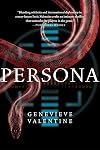
In this if-this-goes-on thriller, diplomacy and reality TV have merged so that national representatives are Faces. Our protagonist, Face of a rainforest (though increasingly deforested) nation, barely survives an assassination attempt due to the timely intervention of a snap, a young man who’s snuck into the country to become a member of the new paparazzi. She has to use her political savvy, and he has to use his acute understanding of his vulnerable situation and of the public’s demand show more for “candids” of Faces, in order to survive, even as his survival may require him to betray her. Understanding myself as someone on the autism spectrum really helped me think about this book, which reminded me of the Lymond Chronicles. It goes like this: Character: *uses small verbal and physical clues to figure out the motives, emotions and intentions of someone she doesn’t know very well*. Me: Okay … that sounds fake, but okay. It’s not that I don’t believe that such people exist, I just can’t imagine what it’s like to be one of them. So all the half-articulated calculations and inferences were obscure to me. If you’re more in tune with those kinds of characters, you might enjoy this. show less

Dream Houses is a separately published (something I have been reading a lot of recently) novella, and while it is comparatively short, Genieve Valentine manages to pack a lot into the small number of pages. The set-up is almost classical – Amadis (and I doubt the name is quite coincidental, in spite of the gender swap), our protagonist and first person narrator wakes up from cold sleep on board of the starship she is a crew member (or, more precisely, an auxiliary) to find out that show more everyone but her is dead and she somehow has to survive the next five years with insufficient food supplies and an AI named Capella as her only company.
That bare outline of the story might already remind you of several things, and indeed Genevieve Valentine cheerfully plunders a whole arsenal of famous Science Fiction movies: Alien (space truckers!), 2001 (possibly malicious spaceship computer!) and Dark Star (bored in space!) and probably a lot more I did not notice. She does make no attempt to hide it, either, because she does not need to: In spite of all the references, Dream Houses never feels derivative, but does very much its own thing. Part of which consists of not just describing how Amadis attempts to survive and stay sane while also attempting to figure out what exactly went wrong on board of her ship, but in also presenting the reader with long flashbacks from Amadis’ past, centered mostly around her relationship with her brother. Those parts are as bleak as the description of her struggle for survival on board of the space ship, and overall it has to be said that, in spite of occasional flashes of humour, Dream Houses is not a cheerful book by any standard, in fact it is quite depressing. This actually is in favour of the book, as it shows the emotional impact it has on the reader as well as Genevieve Valentine’s skill as a writer to keep us reading even as things become increasingly bleaker towards the unavoidable end – Dream Houses will leave you sad, but it will not leave you untouched.
This is very much a “Golden Age SF” novella – but Golden Age the way I define it, i.e. harkening back to the late 1960s / early 1970s when for SF the exploration of man’s Inner Space became at least as important as imagining bug-eyed aliens Out There – or rather, when there was a keen realization that both were pretty much the same thing, and when writers attempted to find weird new literary forms that would be able to embody all the weird new ideas buzzing around at the time. While Dream Houses is not exactly experimental in its form, it does not subscribe to a simple beginning-middle-end structure either; the flashbacks in particular stir up chronology to slowly coalesce into a picture of what happened in Amadis’ past. She is also not the most reliable of narrators (who would be, after years alone in space?) all of which makes reading Dream Houses a somewhat shifty, unsteady experience, where we can never be sure that things are quite what Amadis makes them appear. Maybe I’m just imagining it, but it seems to me that in recent years there has, after a decade or two where pretty much all published Sf (with, of course, the occasional exception) was either some TV/movie/whatever tie-in or Military SF an increasing trend back towards emphatically literary SF that is not afraid to explore and play with language and narrative structures. But whether it is part of a trend or not, Dream Houses is very recommended – especially for those who enjoy the work of authors like Robert Silverberg or Barry Malzberg. show less
That bare outline of the story might already remind you of several things, and indeed Genevieve Valentine cheerfully plunders a whole arsenal of famous Science Fiction movies: Alien (space truckers!), 2001 (possibly malicious spaceship computer!) and Dark Star (bored in space!) and probably a lot more I did not notice. She does make no attempt to hide it, either, because she does not need to: In spite of all the references, Dream Houses never feels derivative, but does very much its own thing. Part of which consists of not just describing how Amadis attempts to survive and stay sane while also attempting to figure out what exactly went wrong on board of her ship, but in also presenting the reader with long flashbacks from Amadis’ past, centered mostly around her relationship with her brother. Those parts are as bleak as the description of her struggle for survival on board of the space ship, and overall it has to be said that, in spite of occasional flashes of humour, Dream Houses is not a cheerful book by any standard, in fact it is quite depressing. This actually is in favour of the book, as it shows the emotional impact it has on the reader as well as Genevieve Valentine’s skill as a writer to keep us reading even as things become increasingly bleaker towards the unavoidable end – Dream Houses will leave you sad, but it will not leave you untouched.
This is very much a “Golden Age SF” novella – but Golden Age the way I define it, i.e. harkening back to the late 1960s / early 1970s when for SF the exploration of man’s Inner Space became at least as important as imagining bug-eyed aliens Out There – or rather, when there was a keen realization that both were pretty much the same thing, and when writers attempted to find weird new literary forms that would be able to embody all the weird new ideas buzzing around at the time. While Dream Houses is not exactly experimental in its form, it does not subscribe to a simple beginning-middle-end structure either; the flashbacks in particular stir up chronology to slowly coalesce into a picture of what happened in Amadis’ past. She is also not the most reliable of narrators (who would be, after years alone in space?) all of which makes reading Dream Houses a somewhat shifty, unsteady experience, where we can never be sure that things are quite what Amadis makes them appear. Maybe I’m just imagining it, but it seems to me that in recent years there has, after a decade or two where pretty much all published Sf (with, of course, the occasional exception) was either some TV/movie/whatever tie-in or Military SF an increasing trend back towards emphatically literary SF that is not afraid to explore and play with language and narrative structures. But whether it is part of a trend or not, Dream Houses is very recommended – especially for those who enjoy the work of authors like Robert Silverberg or Barry Malzberg. show less
Lists
Awards


You May Also Like


Associated Authors
Statistics
- Works
- 83
- Also by
- 118
- Members
- 2,097
- Popularity
- #12,275
- Rating
- 3.6
- Reviews
- 155
- ISBNs
- 48
- Languages
- 3
- Favorited
- 6
