
Ekaterina Sedia
Author of The Alchemy of Stone
About the Author
Image credit: Tait Chirenje
Works by Ekaterina Sedia
Willful Impropriety: 13 Tales of Society, Scandal, and Romance (2012) — Editor — 89 copies, 4 reviews
Tin Cans 3 copies
Cherrystone And Shards Of Ice 3 copies
Virus Changes Skin 2 copies
Citizen Komarova Finds Love 2 copies
Zombie Lenin 2 copies
The Disemboweler 2 copies
Just Chutney 1 copy
Redemption of Nepheli 1 copy
The Taste of Wheat 1 copy
Manuel and the Magic Fox 1 copy
Two Of Cups 1 copy
The Mind of a Pig 1 copy
Whale Meat 1 copy
A Handsome Fellow 1 copy
Fungal Gardens 1 copy
Ebb and Flow {short story} 1 copy
Red 1 copy
You Dream 1 copy
Seas of the World 1 copy
Associated Works
The Thackery T. Lambshead Cabinet of Curiosities: Exhibits, Oddities, Images, and Stories from Top Authors and Artists (2011) — Contributor — 486 copies, 17 reviews
Lost Transmissions: The Secret History of Science Fiction and Fantasy (2019) — Contributor — 154 copies, 5 reviews
We See a Different Frontier: A Postcolonial Speculative Fiction Anthology (2013) — Afterword — 76 copies, 3 reviews
Fantasy Magazine, Issue 59 (December 2015) - Queers Destroy Fantasy! Special Issue (2015) — Contributor — 48 copies
Last Drink Bird Head : A Flash Fiction Anthology for Charity (2009) — Contributor — 33 copies, 1 review
Professor Charlatan Bardot's Travel Anthology to the Most (Fictional) Haunted Buildings in the Weird, Wild World (2021) — Contributor — 22 copies, 3 reviews
Clarkesworld: Issue 018 (March 2008) — Contributor — 2 copies
Tagged
Common Knowledge
- Other names
- Sedia, E.
Sedia, Kathy - Birthdate
- 1970-07-09
- Gender
- female
- Education
- Moscow State University
Rutgers University-Camden - Occupations
- fantasy writer
fantasy novelist
professor
magazine editor - Short biography
- Ekaterina "Kathy" Sedia, née Holland, was born in Moscow, Russia and attended Moscow State University. She came to the USA to work as a research assistant at the Massachusetts Institute of Technology and then enrolled for graduate studies at Rutgers University-Camden, New Jersey, where she earned a Ph.D. in 2001. She is a professor of plant ecology and evolution at Richard Stockton College of NJ. She is best known as a fantasy novelist, her most famous work to date being The Alchemy of Stone (2008). Her other novels include The Secret History of Moscow, According to Crow, and The House of Discarded Dreams. She has also written short stories, poems, and nonfiction books. She was the editor of Jigsaw Nation and the World Fantasy Award-winning Paper Cities: An Anthology of Urban Fantasy.
- Nationality
- Russia
- Birthplace
- Moscow, Russia
- Places of residence
- New Jersey, USA
Moscow, Russia - Associated Place (for map)
- Russia
Members
Discussions
The Secret History of Moscow in Fans of Russian authors (January 2016)
Reviews

A pilot tries to reach out to her granddaughter in a world where the government has restricted all information regarding the world outside their country. The worldbuilding in this story is sort of oddly fragmentary, and I don't know that it would support a longer piece of fiction. But I really enjoyed how swiftly, deeply, and honestly the relationships between the three generations of women are developed, and that's the heart of the story. Plus, I learned that vegetable sheep is a real plant!
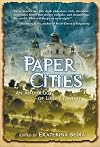
An amazing, beautiful, and haunting collection. A highly concentrated dose of problematic quests, populations isolated in their own destruction, and people in and of the cities around them. Powerful stuff, with the words to back it up.
There is a lot about identity, and people being capable of more than they thought they were in this collection. Connections, intertwining, separations, and the folly of staying remote also show up pretty often. There are no less than two stories about people show more who don't have names - but are themselves none the less. show less
There is a lot about identity, and people being capable of more than they thought they were in this collection. Connections, intertwining, separations, and the folly of staying remote also show up pretty often. There are no less than two stories about people show more who don't have names - but are themselves none the less. show less
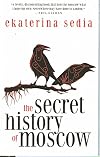
The Secret History of Moscow is, judging by the wide range of reviews, the literary equivalent of an optical illusion:
You might read it and feel disconnected from the characters, as if you were living in a grey ice-slushy day with errands to run that mean wet boots and snow down your neck. Or you might read it and see the characters as part of a cultural mosaic, set against the background of gentle, fat flakes of snow falling out of a soft grey sky, the air crisp and fresh. The first time I show more read it, it was more of the first. The second, I was concentrating less on the primary characters and plot, and enjoying the tale-within-a-tale style, that gave tiny glimpses into Moscow and by extension, Russia.
"Yakov tried to keep the disappointment out of his voice. Nothing was ever easy, and he resented that his visit to a magical kingdom of fairytales was turning into a series of interviews. And corpse examinations."
It begins with Galina in the bathroom, struggling with her feelings. Her sister takes over and before one can turn around three times, has turned into a jackdaw and left her newborn baby behind. Finding her sister, Masha, becomes Galina's quest and raison d'être, bringing her first into contact with Fyodor, an alcoholic street artist, and then to Yakov, a divorced policeman settling uncomfortably into failure. When they witness a flock of crows disappear into a puddle, they know something mysterious is going on. Fyodor leads them to a subway station and they fall through an opening into the Underground.
"She always knew it would be a subway, and once again she lamented her lack of persistence. All this time she thought she was delusional, but in reality she wasn’t delusional enough to keep the hope alive."
Comparisons--not the least of which is Neil himself--abound to American Gods, but I'll be honest--this was far more palatable and charming. As we meet each entity in the narrative, we learn about a small piece of Russian history. Galina is a story of both mental illness and being a single female in modern Moscow. Fyodor indirectly illustrates the relationship between the Gypsies and townfolk. Yakov's grandfather gives insight into the days of control by the state and suspicion of outsiders. Countess Elena, wife of a member of the Decembrists' Revolt explains the no-win choices she faced. Sovin is a portrait of a plant scientist who fought in the wars and still ended up sent to a labor camp. Hershel was a Russian Jew in 1886 when persecution ramped up.
"Everyone liked to think that the worst was over, and that they were either important or inconspicuous enough to survive. Herschel smiled sadly at their self deception and felt embarrassed by his conceit—he was not so different from them after all."
Much of the history can be said to be grim, but that's what forgotten history means, isn't it? New York City's underground would no doubt have indentured servants, refugees starving in an overcrowded Irish tenement, women who were burned to death in factory fires with no exits. So perhaps these missing stories are indeed grim, and hard to connect to, but there's something to be said for just bearing witness to the descriptions, endeavoring to understand the cultural moment, that makes it worthwhile. That it is wrapped up in solid writing with interspersed forgotten fairy tale characters makes it more interesting.
"This place is for those of us who don’t mind being small, who can live without being noticed. Those who are not ashamed to hide. But even we fade away eventually— you can’t be small forever without disappearing."
The plot becomes almost secondary; though Galina has a single-minded focus on her sister, nearly no one else does, including Sedia. The Underworld is concerned about the incursion of the top world into their own and wants some reconnaissance done. For the plot-driven reader, this may prove unsatisfying. The format is almost--but not quite--the tale-within-tale story of [b:In the Night Garden|202769|In the Night Garden (The Orphan's Tales, #1)|Catherynne M. Valente|https://images.gr-assets.com/books/1320548374s/202769.jpg|196179] or [b:Life and Death are Wearing Me Out|1320279|Life and Death are Wearing Me Out|Mo Yan|https://images.gr-assets.com/books/1348876602s/1320279.jpg|1309625]. I finished the book quickly, but something about it called for a re-read. I thought the second time even better, a very satisfying, cathartic experience. A truly modern fairy tale, it may be one I have to add to my own library.
“He was still wide awake when the morning came - the light changed imperceptibly underground, with the glowtrees flaring up brightly, and the shimmer of golden dust that remained suspended in the musty air, as if millions of butterflies had shed the scales of their wings in midair.”
four and a half nesting matryoshka dolls show less
You might read it and feel disconnected from the characters, as if you were living in a grey ice-slushy day with errands to run that mean wet boots and snow down your neck. Or you might read it and see the characters as part of a cultural mosaic, set against the background of gentle, fat flakes of snow falling out of a soft grey sky, the air crisp and fresh. The first time I show more read it, it was more of the first. The second, I was concentrating less on the primary characters and plot, and enjoying the tale-within-a-tale style, that gave tiny glimpses into Moscow and by extension, Russia.
"Yakov tried to keep the disappointment out of his voice. Nothing was ever easy, and he resented that his visit to a magical kingdom of fairytales was turning into a series of interviews. And corpse examinations."
It begins with Galina in the bathroom, struggling with her feelings. Her sister takes over and before one can turn around three times, has turned into a jackdaw and left her newborn baby behind. Finding her sister, Masha, becomes Galina's quest and raison d'être, bringing her first into contact with Fyodor, an alcoholic street artist, and then to Yakov, a divorced policeman settling uncomfortably into failure. When they witness a flock of crows disappear into a puddle, they know something mysterious is going on. Fyodor leads them to a subway station and they fall through an opening into the Underground.
"She always knew it would be a subway, and once again she lamented her lack of persistence. All this time she thought she was delusional, but in reality she wasn’t delusional enough to keep the hope alive."
Comparisons--not the least of which is Neil himself--abound to American Gods, but I'll be honest--this was far more palatable and charming. As we meet each entity in the narrative, we learn about a small piece of Russian history. Galina is a story of both mental illness and being a single female in modern Moscow. Fyodor indirectly illustrates the relationship between the Gypsies and townfolk. Yakov's grandfather gives insight into the days of control by the state and suspicion of outsiders. Countess Elena, wife of a member of the Decembrists' Revolt explains the no-win choices she faced. Sovin is a portrait of a plant scientist who fought in the wars and still ended up sent to a labor camp. Hershel was a Russian Jew in 1886 when persecution ramped up.
"Everyone liked to think that the worst was over, and that they were either important or inconspicuous enough to survive. Herschel smiled sadly at their self deception and felt embarrassed by his conceit—he was not so different from them after all."
Much of the history can be said to be grim, but that's what forgotten history means, isn't it? New York City's underground would no doubt have indentured servants, refugees starving in an overcrowded Irish tenement, women who were burned to death in factory fires with no exits. So perhaps these missing stories are indeed grim, and hard to connect to, but there's something to be said for just bearing witness to the descriptions, endeavoring to understand the cultural moment, that makes it worthwhile. That it is wrapped up in solid writing with interspersed forgotten fairy tale characters makes it more interesting.
"This place is for those of us who don’t mind being small, who can live without being noticed. Those who are not ashamed to hide. But even we fade away eventually— you can’t be small forever without disappearing."
The plot becomes almost secondary; though Galina has a single-minded focus on her sister, nearly no one else does, including Sedia. The Underworld is concerned about the incursion of the top world into their own and wants some reconnaissance done. For the plot-driven reader, this may prove unsatisfying. The format is almost--but not quite--the tale-within-tale story of [b:In the Night Garden|202769|In the Night Garden (The Orphan's Tales, #1)|Catherynne M. Valente|https://images.gr-assets.com/books/1320548374s/202769.jpg|196179] or [b:Life and Death are Wearing Me Out|1320279|Life and Death are Wearing Me Out|Mo Yan|https://images.gr-assets.com/books/1348876602s/1320279.jpg|1309625]. I finished the book quickly, but something about it called for a re-read. I thought the second time even better, a very satisfying, cathartic experience. A truly modern fairy tale, it may be one I have to add to my own library.
“He was still wide awake when the morning came - the light changed imperceptibly underground, with the glowtrees flaring up brightly, and the shimmer of golden dust that remained suspended in the musty air, as if millions of butterflies had shed the scales of their wings in midair.”
four and a half nesting matryoshka dolls show less
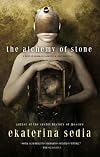
[b:Harrow the Ninth|39325105|Harrow the Ninth (The Locked Tomb, #2)|Tamsyn Muir|https://i.gr-assets.com/images/S/compressed.photo.goodreads.com/books/1569871560l/39325105._SY75_.jpg|60943273] was always going to be a hard act to follow. 'The Alchemy of Stone' is a thoughtful steampunk novel, taking a more analytical approach to the subgenre than most. However it didn't grab me in a visceral way. I was interested in the characters and plot without being emotionally invested in them. The show more protagonist, Mattie, is an automaton who technically has freedom from the man who made her, yet he still has the only key that can wind her clockwork mechanism. She works as an alchemist in a politically unstable city. The story opens when she's approached by gargoyles, who have a job for her. There were several rather baffling bits of world-building, of which the gargoyles were the most significant. While the conflicts between aristocracy, bourgeoisie, and proletariat are shown well, the role of the gargoyles didn't make a lot of sense to me. The elemental magic and blood homunculi were also a bit confusing. Nonetheless, Mattie's perspective as an outsider to events, often disregarded and ignored, is an appealing one. Sedia manages to give her subtle otherness with asides like this:
I liked that Mattie's grasp of the Marxist class dynamics in play across the city was tempered by compassion and pragmatism. Her response to the giant computer the engineers wanted to delegate decisions to felt quite prescient for something published in 2008:
That's a tidy critique of machine learning, delivered by an intelligent machine. Mattie's friendships were rather lovely, although the romance elements seemed wholly unnecessary. Why is romantic love a prerequisite for any being to demonstrate their humanity? I would have preferred more about her experience of gender, which is only briefly mentioned. The horror elements were effective, though, notably Mattie having her eyes removed as a punishment. 'The Alchemy of Stone' is certainly worth reading, yet didn't cohere into an involving enough narrative for my taste. show less
Mattie's memories had shapes - some were oblong and soft, like the end of a thick blanket tucked under a sleeping man's cheek; others had sharp edges, and one had to think about them carefully in order not to get hurt. Still others took on the shapes of cones and cubes, of metal joints and peacock feathers, and her mind felt cluttered and grew more so by the day, as she accumulated more awkward shapes, just like Loharri collecting more and more garbage in his workshop.
I liked that Mattie's grasp of the Marxist class dynamics in play across the city was tempered by compassion and pragmatism. Her response to the giant computer the engineers wanted to delegate decisions to felt quite prescient for something published in 2008:
"What it is?" she asked.
"A machine," he said. "An automaton, but without a body, just pure mind, like yours - only bigger. It's like a hundred of your brains, stuck together, made for analysis. We tell it what happened, and it figures out who had the most to gain and therefore who is responsible, and what we should do next. Amazing, no?"
"Wouldn't its answer change depending on what you told it?" Mattie asked.
Loharri stopped smiling and squinted at her in suspicion. "Of course it would. So we'll just tell it everything."
"You don't know everything," Mattie said. "No-one does."
Loharri frowned now. "Seriously, Mattie. We certainly know enough about this city and what's happening here to give it enough information to figure things out. And imagine, a rational machine that can figure out the future! We won't need the Stone Monks' cryptic advice anymore... not that I ever thought it was useful, but maybe with this machine others will realise how ridiculous they are."
"Maybe," Mattie said. "I just doubt it would be much more reliable."
That's a tidy critique of machine learning, delivered by an intelligent machine. Mattie's friendships were rather lovely, although the romance elements seemed wholly unnecessary. Why is romantic love a prerequisite for any being to demonstrate their humanity? I would have preferred more about her experience of gender, which is only briefly mentioned. The horror elements were effective, though, notably Mattie having her eyes removed as a punishment. 'The Alchemy of Stone' is certainly worth reading, yet didn't cohere into an involving enough narrative for my taste. show less
Lists
io9 Book Club (1)
Gaslamp Fantasy (1)
Awards


You May Also Like


Associated Authors
Statistics
- Works
- 42
- Also by
- 56
- Members
- 2,533
- Popularity
- #10,135
- Rating
- 3.6
- Reviews
- 123
- ISBNs
- 38
- Languages
- 5
- Favorited
- 5